
In This Article
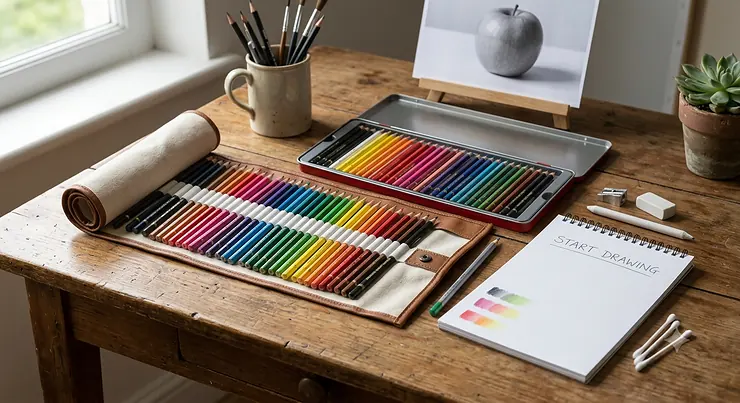
Stand in front of the pencil aisle in any UK art shop and you’ll understand the problem instantly: forty different tins, all promising to unlock your inner artist, none of them explaining what actually separates a lovely set from a waste of a tenner. A coloured pencil set for beginners is, in the simplest possible terms, a starter collection of wax or oil-based pencils — usually 24 to 72 colours — chosen for smooth laydown, break-resistant cores and forgiving blending, so a newcomer gets satisfying results without needing artist-grade technique. That’s the textbook definition. The lived reality is messier, because “beginner-friendly” gets slapped on packaging by marketing teams who’ve never sharpened a pencil in anger.
We’ve spent this guide doing the unglamorous bit: digging through real UK product listings, aggregated customer sentiment, and independent testing coverage to work out which sets genuinely earn their beginner label. You’ll find seven real products here, spanning pocket-money budget to genuinely-good mid-range, each pulled apart for what its specs mean in practice rather than what the box says. Coloured pencils are also one of the more accessible forms of creative self-care recommended by UK youth mental health charities, which is part of why the hobby has exploded well beyond the school stationery cupboard.
Whether you’re buying your first tin, replacing a childhood set that’s gone dry and chalky, or hunting for a gift that won’t disappoint, this article covers the comparisons, the techniques, the common buying mistakes, and the honest trade-offs nobody puts on the label.
Quick Comparison Table
| Pencil Set | Pieces | Core Type | Price Range | Best For |
|---|---|---|---|---|
| Crayola Colouring Pencils | 50 | Wax, firm | Under £10 | Absolute first-timers, kids |
| Black Widow Colouring Pencils | 24 | Wax, soft | £10-£15 | Budget blending practice |
| Staedtler Ergosoft | 36 | Wax, soft | £15-£20 | Grip comfort, long sessions |
| Derwent Academy | 24 | Wax, creamy | £10-£15 | Neat, British-made basics |
| Faber-Castell Colour Grip | 24 | Wax, water-soluble | £15-£20 | Mixed-media beginners |
| Castle Art Supplies 72-Piece | 72 | Wax, soft | £20-£25 | Wide colour range, hobbyists |
| Castle Art Supplies Gold Standard | 72 | Oil-based | £30-£40 | Detail work, levelling up |
Looking across the table, there’s a clear ladder rather than a cliff edge: Crayola Colouring Pencils and Derwent Academy sit at the accessible end for anyone who just wants to try the hobby without committing much money, while the Castle Art Supplies Gold Standard set is really where “beginner” starts shading into “serious hobbyist” thanks to its oil-based core. The two ergonomic options — Staedtler Ergosoft and Faber-Castell Colour Grip — earn their higher price mainly through comfort during long colouring sessions, not through pigment quality alone, which matters if you or your child struggle with grip fatigue. If budget is your only filter, skip straight to the “Best For” column and match it to your actual use case rather than the piece count, because a 72-set of pencils you never reach for is worse value than a 24-set you use every week.
💬 Found a set that jumps out already? Bookmark this page and keep comparing — the detailed breakdowns below explain exactly why each one earns its spot.
Top 7 Coloured Pencil Sets for Beginners: Expert Analysis
1. Crayola Colouring Pencils (50-Count) — cheapest reliable entry point
The Crayola Colouring Pencils 50-count box is the set most of us encountered as children, and it turns out that familiarity is doing some genuine work here rather than just nostalgia. The thick 3.3mm lead is deliberately soft enough to lay down colour without much scratch, but firm enough that it survives being dropped, chewed on, or handed to an over-eager six-year-old without snapping. That durability-over-precision trade-off is exactly what a genuine first-timer needs, because the number one reason people abandon a new hobby is frustration, not lack of talent. Based on the spec comparison with pricier sets, what you’re sacrificing here is depth: the pigment lays down fairly flat, and heavy blending or layering shows its limits quickly compared with a soft wax-based artist pencil. Reviewers consistently note that the colours are vibrant straight out of the box and that pencils arrive pre-sharpened and rarely break, though a recurring theme is that a handful of shades (particularly some greens) feel duller than the rest of the set. For anyone testing the water — a parent buying for a curious child, or an adult wondering if colouring will actually hold their attention — this is the lowest-risk way to find out.
Pros:
- ✅ Extremely low financial risk to try the hobby
- ✅ Thick, break-resistant cores survive heavy-handed beginners
- ✅ Pre-sharpened and ready to use out of the box
Cons:
- ❌ Limited blending depth compared with softer, artist-leaning cores
- ❌ A few shades feel noticeably weaker than the rest of the set
Expect to pay under £10 for the 50-count box, which makes it close to unbeatable value for a genuine trial run, though anyone already fairly confident they’ll stick with colouring may prefer to put that money toward a set with more blending headroom.
2. Black Widow Colouring Pencils — best budget blending performance
Black Widow Colouring Pencils built their reputation on a fairly simple pitch: proper soft-core blending performance without the artist-grade price tag, and on the evidence available that pitch largely holds up. The 24-pencil Spider set uses a 3.3mm wax core that lands somewhere between a school pencil and a premium one — soft enough to layer colour in passes without much pressure, which is the single most important skill a beginner needs to develop. What most buyers overlook about this brand is that it was originally designed with accessibility in mind, aimed at people managing anxiety or low grip strength through adult colouring books, so the barrel and lead were tuned for ease rather than raw pigment saturation. Reviewers consistently describe the colours as smooth and blend-friendly, with one recurring theme in aggregated feedback being praise for how comfortably the pencils sharpen without shattering. The honest limitation, and it’s a real one for a 24-piece set, is colour range: with only two dozen shades you’ll hit gaps in greens fairly quickly and need to mix your way around them, which is itself a useful beginner skill to learn early rather than avoid.
Pros:
- ✅ Genuinely soft, blend-friendly wax core for the price
- ✅ Sharpens cleanly without frequent core breakage
- ✅ Designed with comfort and accessibility in mind
Cons:
- ❌ Only 24 colours, so gaps appear quickly in greens
- ❌ Black barrel makes colour identification harder without the tip
Price sits around £10-£15, and the value verdict here is strong specifically for anyone prioritising blending practice over having every shade under the sun.
3. Staedtler Ergosoft Triangular Colouring Pencils (Tin of 36) — best for grip comfort
The Staedtler Ergosoft set solves a problem most beginner guides ignore entirely: hand fatigue. The triangular barrel isn’t a gimmick — it genuinely reduces the finger pressure needed to hold a pencil steady over a long colouring session, which matters enormously for children, older adults, or anyone with joint discomfort. Staedtler’s Anti-Break-System wraps the pigment core in a white protective coating, so the 3mm lead resists snapping even under a firm grip, a detail that shows up repeatedly in independent reviews as the standout feature. Here’s what to weigh: the lead is genuinely soft and vibrant, but the 36-colour range, while broader than the base 24-set, is still on the tighter side once you compare it against 72-piece competitors, and the colours skew towards the bright end rather than offering many muted or earthy tones. Reviewers who work on smaller, detailed pieces particularly rate how well the tip holds after sharpening, which the ergonomic shape and firmer construction both support. This is very much a “buy it for the hand, stay for the colour” set.
Pros:
- ✅ Triangular barrel meaningfully reduces grip fatigue
- ✅ ABS coating gives excellent break resistance
- ✅ Holds a sharp point well for detailed work
Cons:
- ❌ 36-colour range leans bright rather than offering muted tones
- ❌ Noticeably pricier per pencil than comparable wax sets
At around £15-£20, the price premium buys ergonomics specifically, so this is the pick to choose if comfort during long sessions is your priority over sheer colour variety.
4. Derwent Academy Colour Pencils (Tin of 24) — best British-made basics
Derwent Academy carries the weight of Derwent’s decades-long reputation as a proper British pencil maker, and the Academy line is deliberately pitched as the accessible entry point into that world rather than a scaled-down afterthought. The 3.3mm creamy core lays down colour smoothly with minimal pressure, and the round wooden barrel — a genuine departure from the triangular ergonomic trend — gives freer hand movement for anyone who prefers a more traditional pencil feel. On paper this means Derwent is betting on core quality over gimmicky comfort features, and reviewers back that up: the consistent theme in aggregated feedback is that the pigment feels a notch above other pencils in this price bracket, particularly for blending soft gradients. The trade-off is coverage — 24 colours is workable but tight, and this set doesn’t come in the wider 36 or 72-colour tins that Derwent offers elsewhere, so growing hobbyists may outgrow it faster than expected. It’s a sensible middle-ground choice for someone who wants a taste of “real” pencil quality without jumping straight to artist-grade pricing.
Pros:
- ✅ Smooth, creamy core with strong pigment for the price
- ✅ Trusted British brand heritage and consistent quality control
- ✅ Secure metal tin keeps pencils tidy and travel-ready
Cons:
- ❌ Only available in the smaller 24-colour tin
- ❌ Round barrel offers less grip stability than triangular rivals
Typical pricing runs £10-£15, and the value verdict is that you’re paying a small premium for pigment consistency rather than piece count — worth it if quality matters more to you than quantity.
5. Faber-Castell Colour Grip Pencils (Tin of 24) — best for mixed-media beginners
The Faber-Castell Colour Grip set does something none of the previous four can: it doubles as a watercolour pencil. Brush a little water over the water-soluble lead and the colour lifts and blends into a soft wash, which opens up an entirely different set of beginner techniques beyond dry layering. The patented grip zone — small rubberised dots along the triangular barrel — genuinely improves control, and it’s aimed at “young artists” but works equally well for adults who find slim barrels awkward to hold. Here’s what the spec sheet won’t tell you, but user reports suggest: the water-soluble formulation means colours can look slightly less saturated dry compared with a dedicated non-soluble wax pencil, because some of the pigment’s punch is reserved for how it behaves once wetted. Reviewers consistently praise how comfortable the grip feels during extended use and how forgiving the eco-friendly water-based varnish coating is on small hands. For a beginner who wants to experiment with more than one technique from a single tin, this is genuinely excellent value for the versatility on offer.
Pros:
- ✅ Doubles as a watercolour pencil for wet blending techniques
- ✅ Rubberised grip zone noticeably improves control
- ✅ Water-based, eco-friendly, washable-out-of-fabric coating
Cons:
- ❌ Dry colour saturation is a touch softer than non-soluble rivals
- ❌ 24-colour range limits fine gradient work
Prices generally sit around £15-£20, and the value case is strongest for beginners who want to try both dry colouring and watercolour techniques before committing to separate sets for each.
6. Castle Art Supplies 72-Piece Colouring Pencils — best colour range for hobbyists
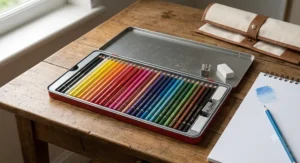
Once you cross into the Castle Art Supplies 72-Piece set, the calculation changes: this is where a genuinely wide colour range starts removing the need to mix your way around gaps, which is a real skill-development milestone for a beginner moving past their first few months. The soft wax core is specifically engineered for adult colouring books and detailed illustration, and the set is presented in a slim tin that travels well. Based on the spec comparison with the smaller 24-piece sets above, the headline advantage isn’t really about superior pigment chemistry — it’s coverage. Having a dedicated mid-tone green or a specific skin tone on hand instead of blending three pencils to approximate it saves time and produces cleaner results, especially for anyone working through intricate coloring books. Aggregated customer sentiment is strongly positive on smoothness and blendability, with a recurring theme being that buyers who tried the smaller sets first often return specifically to upgrade into this 72-piece range. The honest downside for a true beginner is that 72 shades is genuinely more than most people need starting out, and a chunk of that investment goes toward colours you might not touch for months.
Pros:
- ✅ Wide 72-colour range removes most beginner colour-mixing gaps
- ✅ Soft, blendable core well-suited to adult colouring books
- ✅ Slim, sturdy presentation tin for storage and travel
Cons:
- ❌ More colours than most absolute beginners immediately need
- ❌ Sits at the upper end of “beginner” pricing
Expect a price range around £20-£25, and the value verdict favours anyone who already knows colouring is their thing and wants to skip the “outgrowing a small set” phase entirely.
7. Castle Art Supplies Gold Standard 72-Piece — best for levelling up detail work
The Castle Art Supplies Gold Standard set is the one entry here that quietly nudges past “true beginner” territory into “beginner who’s serious about progressing,” and it earns that distinction through its oil-based core rather than the more common wax formulation used elsewhere in this list. Oil-based pencils hold their point for longer between sharpenings and resist breaking under the firmer pressure that detailed, layered work demands — genuinely useful once someone starts attempting shading, cross-hatching, or burnishing rather than simple flat colouring. What most buyers overlook about oil-based cores is that they blend differently to wax: layering builds gradually rather than instantly, which rewards patience and, frankly, teaches better habits than a pencil that blends too easily on the first pass. Reviewers consistently highlight the included 36-page technique guide as unusually useful for newcomers, walking through blending, layering, and burnishing rather than just shipping pencils and hoping for the best. The honest trade-off is price and learning curve: this is the most expensive set on our list, and the firmer oil core takes slightly more pressure and patience to master than the instant gratification of a soft wax pencil.
Pros:
- ✅ Oil-based core holds a point longer and resists breakage
- ✅ Comes with a structured technique guide, not just pencils
- ✅ Rewards proper layering technique as skills develop
Cons:
- ❌ Highest price point of any set on this list
- ❌ Firmer core has a steeper learning curve than soft wax
Pricing generally lands in the £30-£40 range, and the value verdict is that it’s worth the jump specifically for beginners who already know they want to develop real technique rather than just relax with a colouring book.
Top 7 Products: Detailed Comparison
| Pencil Set | Core Type | Barrel Shape | Water-Soluble | Price Range | Best For |
|---|---|---|---|---|---|
| Crayola Colouring Pencils | Wax, firm | Round | No | Under £10 | First trial run |
| Black Widow Colouring Pencils | Wax, soft | Hexagonal | No | £10-£15 | Budget blending |
| Staedtler Ergosoft | Wax, soft | Triangular | No | £15-£20 | Comfort, long sessions |
| Derwent Academy | Wax, creamy | Round | No | £10-£15 | Pigment quality on a budget |
| Faber-Castell Colour Grip | Wax, soluble | Triangular | Yes | £15-£20 | Mixed dry/wet techniques |
| Castle Art Supplies 72-Piece | Wax, soft | Round | No | £20-£25 | Wide colour coverage |
| Castle Art Supplies Gold Standard | Oil-based | Round | No | £30-£40 | Detail and technique growth |
This table makes the real decision-driver obvious once you strip away the marketing: core hardness and barrel shape matter more to a beginner’s day-to-day experience than raw colour count. Faber-Castell Colour Grip is the only genuinely dual-purpose option here, useful if you’re not sure whether you’ll gravitate toward dry blending or wet washes. Meanwhile Castle Art Supplies Gold Standard stands alone as the only oil-based set, which explains both its higher price and why it suits someone consciously choosing to skip ahead in skill development rather than ease in gently.
How to Choose a Starter Coloured Pencil Set
Picking the right starter coloured pencil set comes down to matching a handful of concrete factors to how you’ll actually use it, not chasing the biggest tin on the shelf. Here’s the reasoning, step by step:
- Decide your budget ceiling first. Setting a number before browsing stops you being swayed by an eye-catching 120-colour tin you don’t need yet — under £15 comfortably covers a genuinely usable starter set.
- Check the core hardness, not just “soft” or “hard.” Softer wax cores blend more easily but wear down faster; firmer cores last longer between sharpens but need more pressure to layer colour.
- Match piece count to your actual project type. Mandala colouring books benefit from 36+ shades for gradient variety; simple sketching or note-taking doodles rarely need more than 24.
- Consider barrel shape if sessions run long. Triangular grips genuinely reduce hand fatigue over 30+ minute sessions, which matters more than people expect until they experience it.
- Look for water-solubility if you want technique variety. A water-soluble set effectively gives you two mediums in one tin, which is efficient for a beginner still working out their preferences.
- Read aggregated review themes, not star ratings alone. A 4.6-star average tells you little; recurring comments about breakage, colour accuracy, or tin durability tell you a great deal.
- Buy the storage tin, not the cardboard box, if you’ll travel with them. Loose cardboard packaging degrades fast and pencils go missing; a tin or wallet case protects your investment.
As independent buying guides such as Creative Bloq’s coloured pencil testing point out, the way pencils perform across shading, blending, and lightfastness varies enormously between brands even at similar price points, which is exactly why spec-reading beats brand-name assumptions every time.
✨ Ready to Start Colouring Today! 🎨 Pick the set that matches your budget and project type above, then check current pricing and availability before you commit — stock and offers shift often on popular sets like these.
Beginner Coloured Pencil Techniques: A Practical Usage Guide
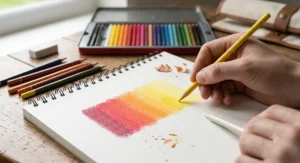
Getting good results from any coloured pencil set for beginners has less to do with which tin you bought and more to do with a handful of habits that take about a week to build. Start by sharpening properly: a pencil sharpened to a long, gentle taper rather than a stubby point gives you far more control over pressure and line width, and it reduces the snapped-tip frustration that puts a lot of beginners off in their first fortnight. Layer, don’t press — the single biggest first-30-days mistake is bearing down hard to get intense colour immediately, which flattens the paper’s tooth and makes further blending nearly impossible. Instead, build colour gradually across several light passes; it takes longer, but the result is smoother and far easier to correct.
Maintenance matters more than people expect from something as simple as a pencil. Store your set flat rather than upright in a mug, since gravity and temperature swings can cause wax cores to shift slightly inside the barrel over months, leading to breakage the next time you sharpen. A basic two-hole sharpener with a sharp, replaceable blade will treat a soft-core pencil far more gently than the cheap single-blade sharpeners bundled with school stationery sets. One optimisation trick that rarely makes it onto packaging: test your paper first. Standard printer paper is too thin and slick for proper blending — cheap cartridge or sketchbook paper with a bit of tooth will transform how any of the seven sets above perform, often more dramatically than upgrading the pencils themselves.
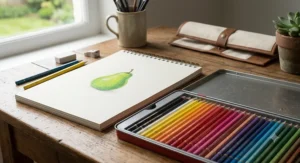
Real-World Scenarios: Matching Sets to Different Beginners
Picture three genuinely different people walking into this decision. First, a parent buying for a seven-year-old who’s shown interest in drawing but has the attention span of, well, a seven-year-old — durability and low cost matter more than blending nuance here, which points straight to the Crayola Colouring Pencils or Derwent Academy tin, since either survives a dropped pencil case without the parent wincing at wasted money.
Second, consider a stressed adult who’s picked up an intricate mandala colouring book on a friend’s recommendation, hoping for twenty quiet minutes a day away from screens. This person benefits from a softer, more blendable core and a wider colour range to avoid frustration with gaps mid-page, making Black Widow Colouring Pencils or the Castle Art Supplies 72-Piece set the more sensible choice — both were built with exactly this relaxation-focused use case in mind.
Third, imagine a university art student on a tight budget who’s genuinely trying to develop technique rather than simply unwind — layering, shading, maybe eventually life drawing. This person needs a core that rewards patience and holds detail, which is precisely where the oil-based Castle Art Supplies Gold Standard earns its higher price, even on a student budget, because buying twice (a starter set, then an upgrade six months later) usually costs more in total than buying the right tool once.
Coloured Pencil Set Amazon: What to Check Before You Buy
Shopping for a coloured pencil set on Amazon specifically comes with its own small checklist, separate from picking the right product line. First, check who’s actually fulfilling and selling the item — “Sold by Amazon” or “Fulfilled by Amazon” listings generally offer more consistent returns handling than obscure third-party sellers, particularly for lower-cost sets where counterfeit or mislabelled stock occasionally slips through. Second, read the most recent reviews rather than the top-voted ones; art supply formulations occasionally change between production runs, so a glowing review from three years ago may not reflect what arrives in your parcel today. Third, check the piece count against the photographs carefully — some listings for larger sets show a 120-colour tin in the hero image while the actual product title specifies 72, which is a genuinely common source of beginner disappointment.
Whatever you buy and wherever you buy it, your statutory rights as a UK consumer still apply to online purchases: retailers generally must accept returns within a set window and issue refunds without undue delay if goods are faulty or not as described, and it’s worth knowing the specifics of when a shop can and can’t legally refuse a return before you need that knowledge in a hurry. Prices on Amazon also fluctuate constantly with demand and promotions, so always check the current price at checkout rather than relying on a figure quoted anywhere online, including this article.
Affordable Coloured Pencil Set for Beginners: Long-Term Cost & Value
Chasing the cheapest possible coloured pencil set for beginners can be a false economy, and it’s worth doing the maths honestly rather than assuming price alone tells the story. A £6 set that needs replacing every few months because cores keep snapping or colours fade quickly can end up costing more across a year than a £15 set that lasts through genuinely heavy use. That said, expensive doesn’t automatically mean better value either — the Castle Art Supplies Gold Standard at £30-£40 is genuinely excellent, but a true beginner who colours occasionally gets little extra benefit from oil-based cores over a well-chosen £12 wax set, because the skill to exploit that firmer core simply hasn’t developed yet.
The more useful way to think about affordability is cost-per-colour and cost-per-session rather than sticker price alone. A 24-piece set at £12 works out to 50p per pencil; a 72-piece set at £24 works out to roughly 33p per pencil, which sounds like better value until you factor in how many of those 72 colours you’ll realistically use in your first year. For most genuine beginners, a mid-range 24 to 36-piece set in the £10-£20 bracket delivers the best real-world value: enough colour variety to avoid constant frustration, without paying for capability you’re not yet using. Growing hobbyists can always add individual open-stock pencils later to fill specific gaps, which is usually cheaper than buying an entirely new large set from scratch.
Common Mistakes When Buying a Coloured Pencil Set
Even careful buyers fall into a handful of predictable traps when choosing their first coloured pencil set, and most of them are avoidable once you know to look out for them. The most frequent mistake is buying purely on piece count — a 150-colour set sounds impressive, but if the core is thin, brittle, and poorly pigmented, you’ve simply bought 150 disappointments instead of 24. A second common error is ignoring paper compatibility entirely; even the best pencil on this list will look mediocre on glossy or very thin paper, so budgeting a few pounds for suitable sketchbook paper alongside your pencils genuinely changes the outcome. Third, many beginners assume “artist-grade” branding automatically means “better for beginners,” when in reality artist-grade pencils are often firmer, pricier, and less forgiving — genuinely better suited to someone who already understands pressure control. Finally, a subtler mistake is buying a set as a gift without checking whether the recipient actually wants to colour dry, wet, or both; a water-soluble set gifted to someone who exclusively works dry adds cost without adding value.
Coloured Pencils vs Other Colouring Mediums
Coloured pencils occupy a specific niche among colouring tools, and understanding where they win and lose against the alternatives helps confirm whether they’re the right starting medium at all. Against felt-tip or brush pens, coloured pencils offer far more control over shading and gradual blending — you can build intensity gradually rather than committing to full saturation the moment nib touches paper — but they’re slower to cover large areas and can’t match a marker’s flat, vibrant fill. Against crayons, the comparison is almost entirely one-sided in the pencil’s favour for anyone past early childhood: pencils allow finer detail, cleaner layering, and don’t leave the waxy build-up crayons are prone to on textured paper. Against watercolour paints, pencils are dramatically more forgiving and portable — no water, brushes, or drying time required — though paints will always outperform pencils for smooth, large-area colour washes and dramatic tonal blending.
| Medium | Control | Portability | Learning Curve | Best For |
|---|---|---|---|---|
| Coloured pencils | High | Excellent | Gentle | Detail, layering, beginners |
| Felt-tip/brush pens | Medium | Good | Gentle | Fast, bold colouring |
| Crayons | Low | Excellent | Very gentle | Young children |
| Watercolour paint | Medium-High | Poor | Steep | Washes, large areas |
The pattern across the table is that coloured pencils sit in an unusually forgiving middle ground — more controllable than paint, more detailed than crayons or markers — which is precisely why they remain the most commonly recommended starting medium in beginner art guides.
First Coloured Pencil Set Recommendation: Buyer’s Decision Framework
If you genuinely just want one clear answer rather than working through seven full reviews, here’s a simple decision framework to shortcut the process. If your budget is under £10 and you’re testing whether colouring interests you at all, choose the Crayola Colouring Pencils — low risk, adequate quality, done. If you want proper blending practice on a modest budget, choose Black Widow Colouring Pencils or Derwent Academy, both of which punch above their price for core softness and pigment. If comfort during long sessions is your priority — for a child, an older relative, or anyone with hand discomfort — choose Staedtler Ergosoft for the ergonomic barrel. If you want flexibility to try both dry and wet techniques without buying two separate sets, choose Faber-Castell Colour Grip. If you already know colouring books are your thing and want fewer colour gaps, choose the Castle Art Supplies 72-Piece set. And if you’re committed to developing real technique — shading, layering, eventual life drawing — invest in the Castle Art Supplies Gold Standard and its oil-based core from the start, because you’ll likely reach for it anyway within a year.
Coloured Pencil Starter Guide: Safety & Regulations
Anyone buying a coloured pencil set for a child in the UK benefits from knowing, briefly, what regulatory protections already sit behind the product. Toys and children’s art materials sold in Great Britain must comply with the Toys (Safety) Regulations 2011, which set requirements covering chemical safety, choking hazards, and labelling before a product can legally reach shelves, whether that’s under the UKCA mark or, currently, an accepted CE mark. In practice this means a legitimately sold coloured pencil set — wood barrel, standard pigment core — carries very low inherent risk for children over three, though small parts like caps or sharpener components on some sets warrant a glance at the age guidance on the box. For adults with sensitivities, note that a small number of budget sets use synthetic dyes that some reviewers report as slightly odorous when new; airing pencils out of their tin for a day before first use resolves this in most cases. None of the seven sets reviewed here raised safety concerns in aggregated feedback, but checking for a CE or UKCA mark on the packaging remains sensible due diligence whenever you’re buying for a young child specifically.
What to Expect: Real-World Performance
Specs on a box rarely translate directly into what you’ll feel with a pencil in hand, so here’s the honest everyday experience across the range tested. Budget wax cores like Crayola genuinely do lay colour down easily on the first pass, but push for a second or third layer and you’ll notice the paper starting to resist — that’s the wax reaching saturation faster than a softer, more expensive core would. Mid-range sets like Derwent Academy and Black Widow noticeably extend that layering headroom; you can build two or three passes before the paper starts to fight back, which is the difference beginners actually feel between “cheap” and “decent” pencils, more than any colour-count difference. The ergonomic sets — Staedtler Ergosoft and Faber-Castell Colour Grip — perform similarly to their non-ergonomic wax-core peers in terms of pigment, but the physical comfort difference over a 45-minute session is significant and genuinely reduces the cramping that makes some beginners quit early. The oil-based Castle Art Supplies Gold Standard feels different from the first stroke — firmer, more resistant, requiring visibly more pressure to lay down colour — which some beginners initially read as “worse” before realising it’s what allows the fine burnishing and detail the set is built for.
Features That Actually Matter (And Those That Don’t)
Marketing copy on coloured pencil boxes loves to emphasise piece count and flashy tin designs, but a handful of quieter specs matter far more to your actual results. Core diameter and softness matter enormously — a 3.3-4mm soft core blends and layers dramatically better than a thin, hard one, regardless of brand prestige. Break-resistance technology, like Staedtler’s ABS coating, genuinely matters if pencils get dropped or used with pressure by children. What matters far less than the packaging suggests: metallic or neon “bonus” pencils bundled into large sets, which look eye-catching in photos but see minimal actual use once the novelty wears off, and elaborate tin artwork, which has zero bearing on how the pencils perform. If you’re comparing two similarly priced sets and one advertises “120 vibrant colours!” in bold while the other quietly lists core composition and barrel material, the second listing usually reflects the more thoughtfully engineered product.
FAQ
❓ What is the best coloured pencil set for a complete beginner?
❓ How many colours should a starter coloured pencil set have?
❓ Are expensive coloured pencils worth it for beginners?
❓ Do coloured pencils expire or go bad in storage?
❓ Can adults use the same coloured pencil sets as children?
Conclusion
Choosing a coloured pencil set for beginners really comes down to being honest about how you’ll actually use it, rather than being swept along by the biggest tin on the shelf. If you’re just testing the water, the low-cost Crayola Colouring Pencils or Derwent Academy tin removes financial risk from the equation entirely. If comfort and long sessions matter, Staedtler Ergosoft and Faber-Castell Colour Grip justify their premium through genuinely reduced hand fatigue and, in Faber-Castell’s case, added versatility with water-soluble blending. Once you know colouring is sticking, Black Widow and the Castle Art Supplies 72-Piece set reward you with better blending headroom and wider colour coverage, and the oil-based Castle Art Supplies Gold Standard is there waiting for whenever you’re ready to properly develop technique rather than just relax.
None of these seven sets is objectively “the best” in isolation — the right choice is the one that matches your budget, your project type, and how seriously you plan to take the hobby over the coming months. Start with honest expectations, layer your colour gradually, and the rest genuinely does come with practice.
Recommended for You
- Oil Based vs Wax Based Coloured Pencils: 7 Proven Picks (2026)
- Oil Based Coloured Pencils: 7 Brilliant Picks for 2026
- Watercolour Pencils vs Watercolour Paints: 7 Best Picks 2026
Disclaimer: This article contains affiliate links. As an Amazon Associate, I earn from qualifying purchases. If you purchase products through these links, we may earn a small commission at no additional cost to you.
✨ Found this helpful? Share it with your friends! 💬🤗
