In This Article
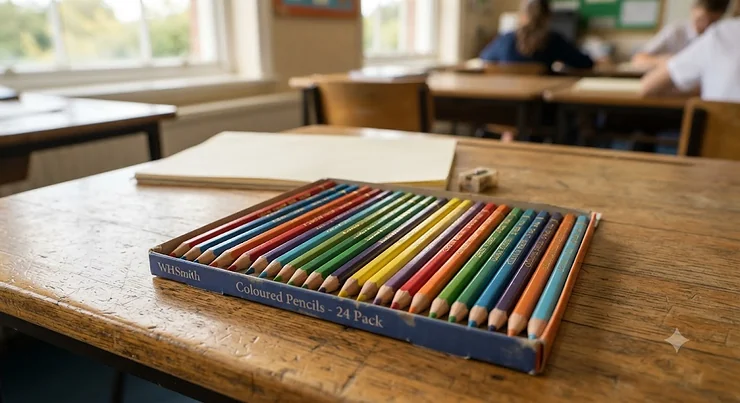
Somewhere between “I fancy trying colouring” and “I own £200 of pencils I’ve used twice” lies a very sensible middle ground: cheap coloured pencils. Not the pound-shop ones that snap the second you look at them funny, but genuinely decent sets that happen to cost less than a round of coffees for four. Cheap coloured pencils are budget-friendly wood-cased or wax-based pencils, typically priced from around £4 to £20, designed to deliver usable pigment, reasonable blendability and enough colour range for hobby, school or casual art use without the artist-grade price tag. That’s the whole definition, really — affordability without total compromise.
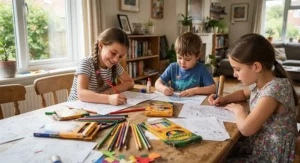
Here’s the thing nobody tells you before you start browsing Amazon at 11pm with seventeen tabs open: the gap between a £5 set and a £50 set is a lot smaller than the price tags suggest. Colour pencils span a huge range of price and quality, from student-grade to professional-grade, with pigment concentration, lightfastness, core durability and softness all pulling the price lever, as the broader research into coloured pencils as a medium explains. What that means practically is this: a well-chosen cheap set can absolutely hold its own for colouring books, school projects, sketching practice, or anyone dipping a toe into art without wanting to remortgage for it.
This guide dives into seven real, currently available sets on Amazon UK — from the humble Staedtler Noris right through to sets that quietly punch above their price bracket. We’ll look at what each one is actually good at, who should buy it, what reviewers consistently say (the good and the mildly annoying), and how to avoid the classic budget-pencil mistakes that leave people disappointed by week two. No fluff, no fabricated five-star raves — just honest analysis you can actually use before you click “add to basket.”
Quick Comparison Table
| Pencil Set | Pack Size | Price Range | Best For |
|---|---|---|---|
| Staedtler Noris Colour | 24 | £4–£6 | Best all-round budget pick |
| Amazon Basics Coloured Pencils | 24 | £4–£8 | Best value soft-core option |
| Crayola Colouring Pencils | 24 | £5–£7 | Best for kids and total beginners |
| Faber-Castell Classic Colour | 24 | £9–£11 | Best affordable alternative to Faber-Castell’s premium ranges |
| Derwent Academy | 24 | £10–£14 | Best British-made pick for developing skills |
| Black Widow Colouring Pencils | 24 | £13–£15 | Best blending performance near premium level |
| Arteza Professional Colouring Pencils | 48 | £17–£20 | Best “nearly professional” set on a budget |
Looking at the spread above, there’s a genuine budget-to-premium ladder even within the “cheap” bracket, and that’s the point — cheap doesn’t mean identical. The Staedtler Noris Colour and Amazon Basics sets sit at the true entry level and are ideal if you just want to test the water, while Black Widow and Arteza creep toward the £15–£20 mark and reward you with noticeably richer pigment and blending. If you’re buying for a child who might chew, lose, or step on a pencil within the hour, don’t spend Arteza money; if you’re an adult colourist chasing smooth layering, the extra tenner tends to be worth it.
💬 Just one click — help others make better buying decisions too!😊
Top 7 Cheap Coloured Pencils: Expert Analysis
Picking seven products for this list wasn’t about finding the cheapest possible pencils on the internet — anyone can do that, and most of those sets fall apart by the third sharpening. Instead, this line-up covers real, well-reviewed, currently stocked options that represent genuinely different reasons to buy: durability, pigment, brand trust, blendability and sheer colour range. Here’s how each one stacks up.
1. Staedtler Noris Colour — break-resistant classic at pocket-money prices
The standout here is simple: this is the pencil equivalent of a reliable family car — nothing flashy, everything functional. Staedtler’s Noris Colour range uses a hexagonal barrel with a soft, ergonomic coating, and the 24-pack gives you a genuinely usable spread of shades for everyday drawing, shading and colouring-in.
What the spec sheet won’t tell you outright is how much that break-resistant coating actually matters day to day. A 3mm-plus core wrapped in a protective barrel means fewer snapped tips mid-sketch, which sounds minor until you’ve sharpened the same red pencil down to a stub because it kept crumbling. Based on the spec comparison with other sub-£10 sets, Staedtler Noris Colour pencils punch above their weight specifically because Staedtler applies the same anti-break engineering used across their higher-tier ranges.
Who should buy it: anyone who wants a “just works” set for school, home, or a first attempt at adult colouring books, without worrying about brand snobbery. Reviewers consistently note strong colour payoff for the price and praise the ergonomic grip for long colouring sessions, though the flimsier cardboard packaging is a recurring minor gripe rather than a dealbreaker.
Pros:
- ✅ Break-resistant lead survives repeated sharpening well
- ✅ Comfortable hexagonal grip for longer sessions
- ✅ Trusted German engineering at a genuinely low price
Cons:
- ❌ Only 24 shades limits detailed shading work
- ❌ Cardboard box packaging feels flimsy over time
At around £4–£6 for the set, this is about as close to a no-brainer as budget stationery gets, and the value-for-money verdict is straightforward: buy it, don’t overthink it.
2. Amazon Basics Coloured Pencils — soft-core blending that outperforms its tin
The standout feature is the soft core, which glides rather than scratches — a genuine surprise at this price point. Amazon’s own-brand range comes packaged in a metal tin with a built-in tray, and the pencils themselves use a soft, pigment-rich core designed for coloring, drawing and shading.
Here’s what most buyers overlook: soft cores usually mean two trade-offs — faster wear and easier breakage. Amazon Basics manages to avoid the worst of both by balancing softness with a reasonably sturdy wood casing, so you get smoother blending than you’d expect from a first-party “basics” range without the pencil disintegrating in the sharpener. Aggregated reviewer sentiment is unusually consistent here: buyers repeatedly describe the pigmentation as vibrant and the blending as smoother than anticipated for a budget own-brand set, alongside praise for the tin case making storage genuinely practical rather than an afterthought.
This set suits colouring-book enthusiasts and casual sketchers who want soft, blendable pigment without paying artist-grade prices, and it’s a sensible gift option too, since the tin presentation looks more premium than the price suggests.
Pros:
- ✅ Soft core blends and layers more smoothly than expected
- ✅ Sturdy tin case keeps pencils organised and protected
- ✅ Consistently strong feedback from verified UK buyers
Cons:
- ❌ Minimal colour naming makes reordering shades tricky
- ❌ Not marketed or tested as a lightfast, archival-grade set
Typically priced in the £4–£8 range depending on pack size, this is one of the strongest value-for-money picks on the entire list.
3. Crayola Colouring Pencils — the reliable first set for young or new artists
The standout advantage is familiarity — everyone already trusts this name, and for good reason. Crayola’s 24-pack colouring pencils arrive pre-sharpened, with a soft core built to survive enthusiastic, less-than-gentle young hands.
Pre-sharpened sounds like a small convenience until you’ve handed a brand-new set to a six-year-old only to watch them attempt “sharpening” with scissors. The soft, forgiving lead means less pressure is needed to lay down visible colour, which genuinely matters for developing fine motor control — this is expert commentary grounded in how the pencils behave, not a marketing claim. Reviewers on Amazon UK consistently rate this set highly, with vibrant, intense colour and smooth application named as the recurring positives across a large volume of ratings.
Who it’s for: parents buying a first set for kids, primary schools stocking up, or genuinely anyone who wants zero-fuss, zero-learning-curve pencils that don’t require technique to look decent on paper.
Pros:
- ✅ Pre-sharpened and ready to use immediately
- ✅ Forgiving, bright pigment ideal for younger hands
- ✅ Enormous UK trust and availability as a household name
Cons:
- ❌ Cores feel notably waxier than artist-leaning rivals
- ❌ Colour selection skews toward primary, child-friendly tones
At roughly £5–£7 for the 24-pack, this is less about performance ceiling and more about dependability — and for its intended audience, that’s exactly the right trade-off.
4. Faber-Castell Classic Colour — the affordable door into a premium name
The standout here is heritage at a fraction of the usual Faber-Castell price. This is Faber-Castell’s genuine student-grade line, built with the same hexagonal, break-resistant barrel philosophy as their pricier Polychromos and Goldfaber ranges, just with a harder, more economical core.
What most buyers overlook is that “harder core” isn’t automatically a downgrade — it means the pencils sharpen to a finer point and last longer per sharpening, which suits detail work and school use better than a soft core would. On paper, this positions Classic Colour as one of the more legitimate affordable alternatives to Faber-Castell’s premium lines, since you’re getting genuine brand pigment technology rather than an unrelated budget imitation. Independent reviewers note the vibrancy holds up well even in single light layers, though they’re consistent that blending capability sits noticeably below the brand’s artist-grade sets — which is an honest, expected trade-off at this price.
This set suits students who want a recognisable, respected brand name on their pencil case without artist-grade spending, and anyone curious whether Faber-Castell’s reputation is deserved before committing to a pricier range.
Pros:
- ✅ Genuine Faber-Castell pigment technology and heritage
- ✅ Thick 3.3mm lead resists breaking under pressure
- ✅ Smooth colour lay-down that rivals costlier sets
Cons:
- ❌ Harder core than Faber-Castell’s premium Polychromos range
- ❌ Pricing creeps toward the lower end of mid-range
Sitting in a roughly £9–£11 range at the time of research, this is arguably the best-positioned pick for the “affordable alternative to Faber-Castell” search — it’s the same family name, sensibly priced down.
5. Derwent Academy — the British-made set built for skill progression
The standout feature is intent: Derwent designed this range specifically for developing colourists, not just casual doodlers. Made in the Lake District with over a century of pencil-making heritage behind it, Academy pencils use natural wood barrels and a curated colour selection chosen to be genuinely beginner-friendly.
Here’s what the spec sheet doesn’t spell out: colour curation matters more than colour count when you’re learning. A hand-picked palette of harmonious, easy-to-mix tones teaches better colour theory instincts than a huge but chaotic 72-shade set ever could — that’s the reasoning behind Derwent’s approach, and it holds up in practice. Reviewers occasionally flag that pricing has risen compared to a few years ago, which is a fair, honestly-reported gripe rather than a quality complaint; the pencils themselves are consistently described as smooth and reliably pigmented for the tier.
Who should buy it: anyone who wants to actually improve at colouring or drawing rather than just fill in shapes, and buyers who specifically want a UK-manufactured product on principle.
Pros:
- ✅ Designed and made to Derwent’s UK quality standards
- ✅ Colour palette specifically curated for beginner progression
- ✅ Durable tin case built for repeated day-to-day use
Cons:
- ❌ Costs more than most other sets on this “cheap” list
- ❌ Some reviewers note pricing has crept up in recent years
Expect to pay somewhere in the £10–£14 range, making this the set to pick when “cheap” means “good value,” not necessarily “the lowest number on the shelf.”
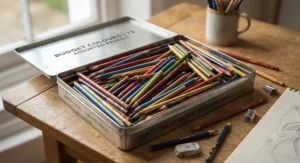
6. Black Widow Colouring Pencils — near-premium blending without the near-premium price
The standout feature is blend quality that consistently gets compared to brands costing three or four times as much. Black Widow’s 24-piece sets (sold as themed collections such as Scorpion, Cobra or the original Spider set) use a soft wax core with zero duplicated colours across the range.
What most buyers overlook is that “no duplicate colours” is a bigger deal than it sounds — cheaper sets routinely waste two or three slots on near-identical reds or blues, effectively shrinking your usable palette. Black Widow avoids that trap entirely. Based on the spec comparison with pricier artist-grade wax pencils, the firm-but-soft core here sits deliberately between typical budget hardness and premium softness — reviewers repeatedly describe it as landing somewhere between two well-known premium brands in feel, which for a sub-£15 pencil is a genuinely strong result. Aggregated sentiment across UK reviews is heavily weighted toward value-for-money praise, with smooth, non-bleeding pigment application named as a standout strength.
This set suits adult colourists and hobbyists who’ve outgrown true beginner pencils and want noticeably better blending, without yet being ready to commit to £50+ artist ranges.
Pros:
- ✅ Soft wax core blends closer to premium artist pencils
- ✅ No duplicate colours across the full 24-shade set
- ✅ Strong, consistent value-for-money praise in reviews
Cons:
- ❌ Sits at the top end of what counts as “cheap”
- ❌ Sold only as closed sets, with no open-stock refills
At approximately £13–£15, this is the pick for people who colour often enough to notice — and care about — the difference in blend quality.
7. Arteza Professional Colouring Pencils — the widest palette before “budget” becomes “mid-range”
The standout advantage is sheer range: 48 highly pigmented shades in a genuinely protective metal tin, aimed squarely at people who want near-professional results without near-professional pricing. Arteza’s soft, wax-based cores are built to resist crumbling, with each barrel colour-matched to its core for fast identification.
Here’s the honest analytical take: at 48 colours, you’re buying coverage as much as quality — fewer layers are needed to reach full pigment intensity, which saves time and reduces the “why does this still look pale” frustration common with harder student-grade cores. Reviewers independent of Arteza itself consistently rate the browns, greens and earth tones as particularly strong, while noting a handful of pinks and purples fall slightly short of the rest of the range — a small, honestly reported inconsistency rather than a fundamental flaw. This set is designed and marketed to compete with genuinely professional colour-pencil brands at a fraction of the cost, and independent reviews broadly support that positioning.
Who it’s for: serious hobbyists, colouring-book enthusiasts working on detailed adult designs, and anyone who’s tried a 24-pack and immediately wished they had more shades to reach for.
Pros:
- ✅ Wide 48-shade range covers far more detailed work
- ✅ Soft, highly pigmented cores need fewer colour layers
- ✅ Metal tin keeps the full set organised and travel-safe
Cons:
- ❌ Priciest set on this list, testing the “cheap” label
- ❌ A handful of shades run less vibrant than the rest
At roughly £17–£20, this is the ceiling of what “cheap coloured pencils” reasonably stretches to — but for the colour range and pigment on offer, it’s a genuinely fair trade.
Practical Usage Guide: Getting the Most From Budget Coloured Pencils
Buying decent cheap coloured pencils is only half the job — how you use and maintain them determines whether they last three weeks or three years. Start with sharpening technique: a cheap handheld sharpener with a dull blade is the single biggest cause of snapped budget cores, because soft leads especially (like Amazon Basics or Black Widow) need a sharp, single-hole blade rather than the multi-size sharpeners bundled with school stationery sets. Spend the extra couple of pounds on a proper metal sharpener and you’ll waste far fewer pencils in the first month alone.
Storage matters more than people expect, too. Budget pencils, particularly those in cardboard packaging like Staedtler Noris or Crayola, benefit hugely from being transferred into a proper pencil case or the original tin if one’s included — temperature swings and being crushed in a bag are common causes of hairline core cracks that only reveal themselves as frustrating mid-stroke breaks weeks later.
In the first 30 days, avoid two classic mistakes: pressing too hard to “force” more colour out of a pale-looking pencil (this just breaks the tip and wastes lead — layering lightly and building up colour works better with harder student-grade cores), and ignoring paper choice. Thin printer paper pills and tears under repeated layering, even with quality pencils; a slightly textured cartridge or colouring-book-specific paper makes a genuinely noticeable difference to how far a cheap set can be pushed before it looks patchy.
Finally, rotate your pencils rather than always reaching for the same five favourites. Uneven wear leaves some pencils blunt and others untouched, which throws off your usable colour range far faster than the set’s actual quality would suggest.
Real-World Scenarios: Which Cheap Coloured Pencils Suit You?
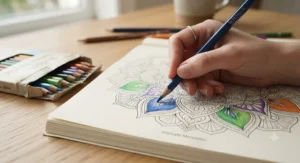
The stressed-out professional, colouring to unwind after work: budget, environment and frequency all point toward a soft, blendable set used a few evenings a week at the kitchen table. Black Widow or Amazon Basics both fit well here — smooth application without needing technique, and a manageable 24-shade range that doesn’t feel overwhelming after a long day. There’s genuine research behind this instinct, too: a peer-reviewed study on mindfulness-guided colouring measured real reductions in state anxiety among adults using structured colouring exercises, which helps explain why this hobby has stuck around rather than fading as a fad. This kind of low-pressure, gently absorbing task is precisely where a forgiving, easy-blending pencil earns its keep.
The GCSE art student on a tight budget: frequent use, heavy demands, and a need for a wide colour range without parents footing an artist-grade bill. Faber-Castell Classic Colour or Arteza’s 48-set make the most sense here — recognisable enough to satisfy coursework expectations, with enough range and pigment intensity to produce genuinely good work, without the £40–£80 price tags of Polychromos or Prismacolor sets a student might grow into later.
The parent buying for a curious eight-year-old: durability and forgiveness matter more than colour range or blend subtlety. Crayola or Staedtler Noris Colour are the sensible picks — pre-sharpened or break-resistant, low financial risk if half the set ends up under the sofa, and pigment that shows up well even with heavy-handed application.
Problem → Solution: Fixing Common Budget Pencil Frustrations
Problem: colours look pale no matter how hard you press. This is almost always a hard-core issue, common with true entry-level sets like Staedtler Noris or Crayola. Solution: layer lightly in multiple passes rather than pressing hard once — pressing harder just polishes the paper’s tooth flat and prevents further pigment from sticking, whereas gentle layering builds genuine depth.
Problem: tips keep snapping when sharpening. Usually caused by a blunt or oversized sharpener blade combined with a soft core, a known issue with sets like Amazon Basics or Black Widow. Solution: switch to a single-hole metal sharpener sized correctly for the pencil, and sharpen in short, gentle turns rather than one long push.
Problem: colours look flat and don’t blend. Wax-based budget pencils resist blending far more than soft artist-grade cores. Solution: burnish gently with a lighter shade or a blending pencil/colourless blender on top, working in small circular motions rather than trying to smear colours together directly.
Problem: not enough shades to achieve realistic shading. A common frustration with 24-piece sets used for detailed or realistic work. Solution: either upgrade to a wider-range set like the Arteza 48-tin, or learn colour-mixing techniques (layering complementary tones) that stretch a smaller palette much further than buyers expect.
Problem: pencils feel scratchy on the paper. Often a paper problem disguised as a pencil problem. Solution: switch from standard printer paper to a slightly textured cartridge paper or dedicated colouring-book stock — this alone resolves most scratchiness complaints with budget pencils.
How to Choose Cheap Coloured Pencils
Picking the right set doesn’t need to be complicated if you work through it in order.
- Decide your primary use first. School projects, adult colouring books and detailed sketching all favour different core hardness — soft for blending, harder for fine detail and control.
- Check the core material, not just the price. Wax-based cores (Black Widow, Arteza) blend more easily; harder student-grade cores (Staedtler, Crayola) resist breaking and suit heavy-handed use.
- Match pack size to actual need. A 24-piece set covers most casual and school use; only step up to 48 if you’re doing detailed shading or realistic colour mixing.
- Read aggregated review themes, not star ratings alone. A 4.5-star average tells you little — look for recurring specific comments about blending, breakage or colour vibrancy instead.
- Consider packaging as a durability signal. Tins genuinely protect pencils better than cardboard over the medium term, which matters if the set will be tossed in a bag regularly.
- Factor in who’s using them. Younger children benefit from forgiving, pre-sharpened sets; adults chasing blend quality should prioritise soft cores even at a slightly higher price.
- Don’t assume price equals quality within the budget tier. As this guide shows, a £5 Staedtler set and a £9 Faber-Castell set solve genuinely different problems — neither is objectively “better,” just better suited to different needs.
Are Cheap Coloured Pencils Worth It?
Short answer: for the vast majority of buyers, yes — with one honest caveat. Lightfastness — the resistance of a pigment to fading under UV exposure — is one of the key factors separating student-grade from professional-grade pencils, alongside pigment concentration and core durability. Budget sets generally aren’t tested or rated for long-term lightfastness the way premium artist ranges are, which matters if you’re creating artwork intended for display or sale over many years, but matters far less for colouring books, school projects, sketching practice, or anything not destined for a gallery wall.
Here’s what to weigh: if your art lives in a folder, a colouring book, or gets photographed and shared rather than framed and hung in direct sunlight for a decade, the lightfastness gap is close to irrelevant. Where cheap pencils genuinely fall short of premium sets is blend subtlety, colour range breadth, and how many layers you need to reach full pigment saturation — all real trade-offs, but ones most casual and even intermediate users won’t notice or mind. For anyone starting out, buying a £40+ set before knowing whether the hobby sticks is the far bigger financial risk than buying a well-chosen £10 one.
Budget Coloured Pencils for Beginners
Beginners have specific, practical needs that don’t always match what more experienced colourists prioritise, and it’s worth being upfront about that difference. New colourists benefit far more from forgiving cores, a manageable colour count and low financial risk than from a huge 120-shade range they won’t yet know how to use effectively.
For this reason, Staedtler Noris Colour and Crayola genuinely make more sense for total beginners than jumping straight to Arteza or Black Widow, despite those being “better” pencils on paper. A smaller, well-curated palette also teaches colour mixing and layering skills faster than an overwhelming range does — you’re forced to blend two blues to get the shade you need, rather than reaching for shade 47 of 72. Once technique develops (usually after a few months of regular use), stepping up to a soft-core set like Amazon Basics or Black Widow becomes a genuinely noticeable, worthwhile upgrade rather than a wasted purchase made too early.
Student Grade Coloured Pencils Explained
“Student grade” isn’t a marketing term, it’s a genuine, meaningful category. Student-grade coloured pencils sit at the more affordable end of the price and quality spectrum, generally using lower pigment concentration and harder cores than artist-grade equivalents, which affects lightfastness, durability and blending performance, per the Wikipedia entry on coloured pencils. In practice, that translates to: cheaper manufacturing costs, harder leads that survive rougher handling, and colour ranges that prioritise broad usability over precise, named pigments.
Faber-Castell Classic Colour and Staedtler Noris Colour are textbook examples — genuinely reputable brands producing a deliberately simplified, cost-reduced version of their premium technology. That’s not a downgrade in the negative sense; it’s a different product built for a different job. Schools, casual hobbyists and anyone still developing technique are precisely who student-grade ranges are designed for, and buying artist-grade pencils before you’ve outgrown student-grade ones is, frankly, money spent solving a problem you don’t have yet.
Cheap Coloured Pencils Under £10: What You Actually Get
| Price Band | What’s Typical | Example Set |
|---|---|---|
| Under £6 | Hard core, 24 shades, cardboard packaging | Staedtler Noris Colour |
| £6–£8 | Soft-to-medium core, tin or box packaging | Amazon Basics |
| £8–£10 | Branded pigment tech, thicker break-resistant lead | Faber-Castell Classic Colour |
The pattern here is fairly predictable: as price climbs even within this narrow under-£10 band, you’re mostly paying for core durability and brand-level pigment consistency rather than a dramatically wider colour range. The Staedtler Noris Colour set remains the strongest pure value pick under £6, while the Faber-Castell Classic Colour set at the top of this band is the clearest example of genuine brand technology trickling down to an affordable price point.
For anyone specifically shopping with a hard £10 ceiling, the honest advice is this: don’t expect artist-grade blending at this price, but do expect genuinely usable, classroom- and colouring-book-ready pencils that will outperform true dollar-store alternatives by a wide margin.
Affordable Alternatives to Faber-Castell
Faber-Castell’s name carries real weight in the art world, largely thanks to its premium Polychromos and Goldfaber ranges — but those sit well outside “cheap” territory. If you like the idea of that reputation without the associated spending, there are two honest routes.
The first is Faber-Castell’s own Classic Colour line, covered above, which genuinely is a scaled-down version of the same underlying pigment technology at a fraction of the price. The second route is choosing a different brand entirely that competes on the same battleground — smooth pigment, decent blend quality — without the name premium. Black Widow is the strongest example on this list: independent reviewers repeatedly compare its blend quality favourably to well-known premium brands, at roughly a third of the price those brands typically command.
What most buyers overlook when chasing a “premium alternative” is that brand name alone doesn’t determine performance at the budget tier — core softness, pigment load and colour curation matter far more, and several genuinely affordable brands (Black Widow and Arteza among them) have closed much of that performance gap in recent years.
Common Mistakes When Buying Cheap Coloured Pencils
The most frequent mistake is buying based purely on pack size — assuming 72 colours is automatically better value than 24. In reality, a curated 24-shade set with genuinely usable pigment beats a 72-shade set padded with near-duplicate tones almost every time, and several budget 72-packs pad their range this way to look impressive on the box.
The second common error is ignoring core type entirely. Buying a hard student-grade set for detailed adult colouring-book work, or a soft wax set for a child who presses hard and snaps tips constantly, mismatches the product to the actual use case — and it’s the single biggest driver of “these pencils are rubbish” reviews that are really just the wrong pencil for the wrong job.
Third, people frequently skip checking packaging durability, then complain when a cardboard box falls apart within weeks of being tossed in a school bag. If longevity matters, factor tin or case quality into the purchase decision from the start, not as an afterthought.
Finally, many buyers assume price scales perfectly with quality within the budget tier, which — as the comparison table earlier in this guide shows — simply isn’t true. A £6 Staedtler set can outperform a £9 rival for certain uses, and vice versa; matching the pencil to the job matters more than chasing the highest number on the price tag.
Benefits vs Traditional Alternatives
| Factor | Cheap Coloured Pencils | Traditional Crayons | Felt-Tip Pens |
|---|---|---|---|
| Blending ability | Moderate to good | Poor | None |
| Precision/detail | High | Low | Moderate |
| Longevity of tip | Good (with care) | Poor | Good until dry-out |
| Best For | Shading, layering, adult colouring books | Very young children | Bold, flat colour |
The comparison above makes the case for coloured pencils fairly clearly: they’re the only option in this table that genuinely supports layering and blending, which is precisely why adult colouring books almost universally recommend pencils over crayons or felt tips. Crayons remain the safer, simpler choice for toddlers who aren’t ready for precision work, while felt tips suit bold, flat illustration rather than the shaded, textured look most colouring-book pages are designed for. For anyone choosing between mediums rather than just between pencil brands, this table is really the deciding factor.
✨ Ready to pick your perfect set? Check current prices and grab the pencils that match your style before the good colour combinations sell out!😊
Long-Term Cost & Maintenance
Budget pencils genuinely can offer strong long-term value, provided expectations are realistic. A well-maintained £6 Staedtler Noris set, sharpened correctly and stored in a proper case, can realistically last a school year of regular use — working out to pennies per session, which comfortably beats the cost-per-use of many hobbies. Total cost of ownership, though, isn’t just the initial price; factor in sharpener wear (soft-core sets chew through cheap sharpeners faster) and eventual colour replacement, since most budget sets don’t offer open-stock refills the way premium artist ranges do.
Here’s the honest ROI comparison: buying a single £15 Black Widow set that lasts genuinely longer per pencil (thanks to the firmer-than-typical soft core) can work out cheaper over 18 months than repeatedly replacing a £5 set every few months because the cores kept snapping. Long-term cost isn’t purely about the sticker price — it’s price divided by realistic lifespan, and that calculation sometimes favours spending a little more upfront within the budget tier.
Safety, Regulations & Quality Standards
This matters more than most buyers realise, especially when buying for children. All coloured pencils sold as toys in the UK must comply with the Toys (Safety) Regulations 2011, which set mandatory safety standards covering everything from small-parts choking hazards to chemical safety limits on pigments. Products meeting these UK requirements can carry either the UKCA or CE marking, with the UK government having extended recognition of CE marking indefinitely alongside UKCA for the Great Britain market, according to official gov.uk guidance on UKCA marking.
For practical purposes, this means: check the packaging for a UKCA or CE mark before buying, especially for pencils intended for children under three, where small-parts and choking-hazard rules are strictest. All seven sets covered in this guide are sold through Amazon UK as compliant toy or stationery products, but it’s a habit worth building for any future budget stationery purchases — the mark is a genuine legal safety declaration, not just packaging decoration.
FAQ
❓ Are cheap coloured pencils any good for adult colouring books?
❓ What's the difference between student grade and artist grade coloured pencils?
❓ Can cheap coloured pencils be used on canvas or only paper?
❓ Do cheap coloured pencils fade over time?
❓ How many coloured pencils do beginners actually need?
Conclusion
Cheap coloured pencils have quietly come a long way from the snap-happy, waxy sets many of us remember from primary school. As this guide’s seven picks show, there’s a genuinely useful budget option for almost every situation — the Staedtler Noris Colour for pure reliability, Amazon Basics for surprising blend quality, Crayola for forgiving first attempts, Faber-Castell Classic Colour for brand heritage on a budget, Derwent Academy for skill-building with UK manufacturing behind it, Black Widow for near-premium blending, and Arteza for the widest colour range before “cheap” tips into “mid-range.”
The honest takeaway from all this research: match the pencil to the job, not the job to whatever pencil happens to be cheapest that day. A student needing coursework-ready colour range wants something different from a parent buying for a curious five-year-old, and both want something different from an adult chasing calm, blendable evenings with a colouring book. Get that match right, and a £5–£20 set will genuinely serve you well — no artist-grade spending required.
✨ Found the perfect set for you? Check current pricing on Amazon UK and start colouring today — your ideal pencils are just one click away!
Recommended for You
- 7 Best Coloured Pencil Sets for Beginners in 2026 (UK Guide)
- Oil Based vs Wax Based Coloured Pencils: 7 Proven Picks (2026)
- Oil Based Coloured Pencils: 7 Brilliant Picks for 2026
Disclaimer: This article contains affiliate links. As an Amazon Associate, I earn from qualifying purchases. If you purchase products through these links, we may earn a small commission at no additional cost to you.
✨ Found this helpful? Share it with your friends! 💬🤗
