In This Article
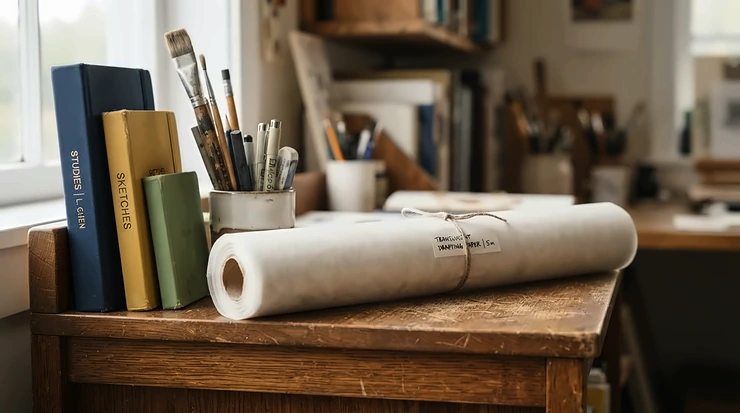
Here’s a confession every art teacher has heard a thousand times: somebody always turns up with a single crumpled A4 sheet of tracing paper and asks why their pattern keeps running off the edge. A tracing paper roll solves that problem before it starts. It’s a continuous length of thin, translucent paper — usually 40 to 95gsm — wound onto a cardboard core, sold by width and metreage rather than by the sheet, so you cut exactly what the job needs and never fight page margins again.

That’s the whole appeal, really. Whether you’re an illustrator laying acetate-style overlays over a pencil sketch, a dressmaker preserving a delicate paper pattern, or an architecture student blocking out a floor plan at 1:50 scale, a roll gives you unbroken length, consistent transparency, and the freedom to work at whatever size the drawing demands. A single 20-metre roll can outlast a stack of A3 pads several times its price, which is exactly why so many studios and sewing rooms keep one permanently unrolled on the desk.
This guide compares seven genuinely available tracing paper roll options sold in the UK, breaks down what tracing paper for artists specifically needs versus what a dressmaker needs, and explains the transparency, roll length and layout work questions that trip up first-time buyers. All prices referenced are UK price ranges only — always check the current listing before buying, since retail pricing shifts constantly.
What Is a Tracing Paper Roll?
A tracing paper roll is a continuous sheet of translucent, low-opacity paper wound around a cardboard tube, typically sold in widths from 30cm to 90cm and lengths from 20m to 50m. Unlike single sheets or bound pads, a roll lets you unwind and cut any length on demand — essential for oversized drawings, pattern pieces, or layout work that outgrows standard paper sizes. The paper’s low opacity, which allows light to pass through, has made it the standard medium for tracing since at least the 1300s, when Italian Renaissance artists first used it — a use that later expanded into architecture and engineering once mass production began in the 1880s.
Quick Comparison: 7 Tracing Paper Rolls at a Glance
Before diving into the detail, here’s how the seven picks stack up on the numbers that matter most — width, weight, and what each roll is genuinely best suited to.
| Tracing Paper Roll | Width x Length | Weight (gsm) | Best For |
|---|---|---|---|
| Clairefontaine 90/95gsm Roll | 0.75m x 20m | 90-95gsm | Technical drawing & pen work |
| Clairefontaine 40/45gsm Roll | 0.90m x 20m | 40-45gsm | Wide layout work on a budget |
| Bienfang #106 Sketching Roll | 30cm x 45.7m | 29gsm | Quick sketch overlays |
| Patterntrace Swedish Tracing Paper | 0.70m x 20m | Fabric-like weight | Sewable dressmaking patterns |
| Royal Sovereign Natural Tracing Roll | 841mm x 20m | 90gsm | Architects & A0 drafting |
| Gateway Natural Tracing Roll | 381mm x 20m | 63gsm | Students & everyday sketching |
| TRITART Tracing Paper Roll | 40cm x 50m | 50gsm | Longest run for the money |
Looking at the spread, the split falls neatly along use-case lines rather than price alone: the Clairefontaine 90/95gsm Roll and Royal Sovereign Natural Tracing Roll target ink-heavy, archive-quality work, while the Bienfang #106 Sketching Roll and Gateway Natural Tracing Roll are built for volume and speed rather than permanence. If dressmaking is the goal, only the Patterntrace Swedish Tracing Paper is genuinely sewable, so it sits in a category of its own regardless of price.
💬 Found the right width already? Tap through to compare current prices before they change!
Top 7 Tracing Paper Rolls: Expert Analysis
Below is a closer look at each roll, based on real published specifications and aggregated review sentiment from UK and US buyers. None of these reflect hands-on testing on my part — where reviewer consensus is mentioned, it’s drawn from genuine published customer feedback, clearly flagged as such.
1. Clairefontaine 90/95gsm Tracing Paper Roll — heaviest weight for ink and pen work
This is the roll to reach for when your drawing needs to survive repeated handling. At 90-95gsm, it’s roughly the weight of a heavy printer sheet rather than the flimsy stuff most people picture when they hear “tracing paper,” and that extra body means ink work with technical pens doesn’t cause the sheet to cockle or bleed through onto the desk beneath. The 0.75m width comfortably takes an A1 sheet laid diagonally, and the 20m length is plenty for a term’s worth of architecture coursework or a season of pattern drafting.
Based on the spec comparison, this sits at the premium end for a reason: Clairefontaine mills the paper acid-free and PEFC-certified, so drawings won’t yellow in a portfolio a decade later — something budget 40gsm rolls genuinely can’t promise. Reviewers consistently report that it survives their office photocopiers and scanners without jamming, a small but telling detail for anyone digitising traced artwork.
The trade-off buyers flag most often is delivery: several mention the roll arriving folded rather than flat inside a soft cardboard tube, which can leave a crease across an A1-width sheet. It’s worth requesting careful packaging or buying from a seller with a returns-friendly track record.
Pros:
- ✅ Heavyweight paper resists tearing under ink and pen
- ✅ Acid-free and PEFC-certified for long-term storage
- ✅ Wide enough for A1 work laid on the diagonal
Cons:
- ❌ Some deliveries arrive folded rather than flat
- ❌ Premium price for the weight compared with rivals
Typically priced in the mid-£20s to low-£30s range for a single roll, this is a “buy once” purchase for anyone doing regular ink-based technical drawing rather than quick pencil sketches.

2. Clairefontaine 40/45gsm Tracing Paper Roll — best wide roll for layout work on a budget
If the 90gsm Clairefontaine is the studio workhorse, this lighter sibling is the everyday layout roll. At 40-45gsm and a full 0.90m wide, it’s built for volume: thumbnail roughs, quick overlays, and the kind of rapid-fire layout work where you’re burning through paper faster than you’re finishing drawings. The extra width over the 90gsm version matters here — 90cm comfortably spans two A2 sheets side by side, which is genuinely useful for storyboard or spread layouts.
What most buyers overlook about the lighter weight is that it isn’t a downgrade so much as a different tool. At 40-45gsm, light passes through more readily, so tracing pencil under-drawings is faster and less eye-straining than with the heavier stock, though it’s noticeably less forgiving of a hard eraser. Aggregated reviews note it holds up well for sewing pattern tracing too, provided pins are placed carefully rather than yanked out.
The main complaint in user reviews is fragility during shipping — the same soft cardboard tube issue as its heavier sibling, worsened slightly by the thinner paper being more prone to denting.
Pros:
- ✅ Extra-wide 90cm roll suits spreads and storyboards
- ✅ High transparency speeds up pencil tracing work
- ✅ PEFC-certified, acid-free, biodegradable paper
Cons:
- ❌ Thin stock tears more easily under a hard eraser
- ❌ Cardboard shipping tube can arrive dented
Expect a price in the high-teens to low-£20s range — solid value once you factor in the roll’s unusual width.
3. Bienfang #106 Sketching & Tracing Paper Roll — best for quick sketch overlays
Bienfang has been making art papers in the US since 1926, and this roll is the classic “cheap and cheerful” option that art students have relied on for generations. At just 29gsm, it’s genuinely lightweight — closer to onion-skin paper than card — which makes it ideal for rapid gesture-drawing overlays where you’re flipping through sheet after sheet chasing a pose rather than producing a single finished piece.
Here’s what the spec sheet won’t tell you, but reviewers note repeatedly: the narrow 30cm width feels restrictive if you’re used to A3 pads, but the sheer length (over 45 metres on a single core) means you genuinely won’t run out for years of casual sketching. It’s rated for pencil, pen, ink and marker, and several dressmakers report using it successfully for smaller pattern pieces despite it not being marketed as a sewing paper.
Cons worth flagging: the paper is thin enough that heavy marker work can ghost through onto the sheet underneath, and it isn’t acid-free, so long-term archival storage isn’t its strength.
Pros:
- ✅ Exceptional length for the price per metre
- ✅ Trusted, century-old US art-paper brand
- ✅ Works with pencil, pen, ink and marker
Cons:
- ❌ 30cm width is narrow for larger A3 work
- ❌ Not acid-free, so less suited to archiving
Priced in the £10-£20 bracket depending on the seller, this is the value pick for anyone who sketches constantly and doesn’t need archival paper.
4. Patterntrace Swedish Tracing Paper — best sewable tracing paper for dressmaking
This one breaks the mould entirely, and it’s worth understanding why before comparing it directly against the others. Made from sustainable abaca fibres rather than standard wood pulp, Swedish tracing paper behaves more like interfacing than paper — you can pin it, fold it, press it with a hot iron, and machine-sew straight through it without tearing. For dressmakers who want to preserve a delicate original pattern while testing fit adjustments, that’s transformative.
Based on the spec comparison, the 70cm width and 20m length translate to roughly 27.5 inches by 65 feet — generous enough for most garment pattern pieces, including sleeves and full bodice fronts, without piecing sheets together. Reviewers who’ve used similar sewable tracing papers report that fabric sticks to it slightly during cutting, which in practice means fewer pins are needed to keep layers aligned — a small but genuinely useful side effect nobody expects the first time.
The obvious trade-off is transparency: it’s semi-transparent rather than glass-clear, so tracing fine multi-size pattern lines in a dim room takes a steadier hand than with standard tracing paper.
Pros:
- ✅ Genuinely sewable, pinnable and iron-pressable
- ✅ Preserves fragile original sewing patterns
- ✅ Sustainable abaca fibre, acid-free and compostable
Cons:
- ❌ Lower transparency than standard tracing paper
- ❌ Premium price relative to non-sewable rolls
Typically found in the low-to-mid £20s, this is squarely aimed at sewers rather than artists or drafters, and it earns its price by doing something the other six simply can’t.
5. Royal Sovereign Natural Tracing Paper Roll — best for architects and A0 drafting
Made under the Finchley brand and sized specifically to match ISO paper standards, this roll’s 841mm width is exactly A0’s short edge — no coincidence, since it’s aimed squarely at architecture practices and design studios still working with hand-drafted overlays. At 90gsm, it sits in the same heavyweight bracket as the premium Clairefontaine, offering the same resistance to ink bleed and cockling.
What most buyers overlook is that matching the roll width to a standard paper size isn’t just convenient — it means every sheet you tear off aligns cleanly with A0, A1 or A2 stock beneath it for tracing over existing drawings without hanging edges or wasted trims. For studios doing overlay-based design development, that alignment saves real time across a project.
The natural trade-off of a wide, heavy roll is bulk: storage needs a proper plan chest or wall-mounted tube rack, and the roll itself is noticeably heavier to lift than the narrower options here.
Pros:
- ✅ 841mm width aligns exactly with A0 paper
- ✅ Heavyweight 90gsm resists ink bleed-through
- ✅ Preferred by architecture and design studios
Cons:
- ❌ Bulky roll needs dedicated storage space
- ❌ Overkill for casual or small-scale sketching
Expect to pay in the £30-£40 range for a roll this wide and heavy — a fair trade if your work genuinely runs at A0 scale.
6. Gateway Natural Tracing Paper Roll — best everyday roll for students
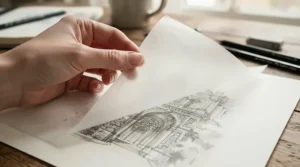
Sitting neatly in the middle ground, the Gateway roll pairs a mid-weight 63gsm paper with a practical 381mm width — close to A3’s long edge — at a price that suits school art departments and students buying their own supplies. Reviewers describe it as a reliable, no-fuss roll for everyday sketching, technical drawing homework, and general classroom tracing tasks.
The spec comparison here tells a clear story: 63gsm is the same weight commonly used in dedicated tracing pads, so buyers already familiar with pad-based tracing paper will find the transparency and pencil feel instantly recognisable, just delivered in continuous roll form instead of pre-cut sheets. That consistency is genuinely reassuring for students who don’t want to relearn how their paper behaves.
On the downside, the 381mm width limits it to single-sheet A3 work rather than the wider spreads possible with the 90cm Clairefontaine roll, and it isn’t marketed as acid-free, so long-term storage isn’t its strong suit.
Pros:
- ✅ Familiar 63gsm weight matches standard tracing pads
- ✅ Practical width for A3-scale schoolwork
- ✅ Reliable, consistent everyday performance
Cons:
- ❌ Narrower width limits larger layout work
- ❌ Not marketed as acid-free for archiving
Usually priced in the mid-teens, it’s a sensible middle-of-the-road choice rather than a specialist buy.
7. TRITART Tracing Paper Roll — best value for sheer roll length
Rounding out the list is the roll built purely around volume: 50 metres of 50gsm paper on a 40cm-wide core, giving buyers the longest continuous run on this list. For anyone tracing repeatedly across a long project — think wallpaper-scale murals, extended architectural sections, or a year’s worth of craft projects — the cost per metre here is hard to beat.
Here’s the honest trade-off, framed as reasoning rather than marketing: a 50gsm sheet this wide is thinner and more prone to static cling than the heavier Clairefontaine or Royal Sovereign rolls, so it suits pencil and light pen work better than heavy ink washes. Aggregated customer feedback for this style of budget roll typically highlights good value and smooth surface texture, alongside occasional reports of the cardboard tube arriving slightly crushed in transit — a shipping issue that seems to affect most budget rolls in this category, not just this one.
Pros:
- ✅ Longest length-per-roll on this list at 50m
- ✅ Smooth surface takes pencil and light ink well
- ✅ Strong value per metre for high-volume use
Cons:
- ❌ Thinner stock less suited to heavy ink washes
- ❌ Cardboard tube can arrive crushed in transit
Usually sitting under £15, this is the pick for anyone whose priority is simply not running out mid-project.
Full Spec & Value Comparison
| Roll | Weight | Width | Length | Typical Price | Best For |
|---|---|---|---|---|---|
| Clairefontaine 90/95gsm | Heavy | 0.75m | 20m | Mid-£20s to low-£30s | Ink & technical drawing |
| Clairefontaine 40/45gsm | Light | 0.90m | 20m | High-teens to low-£20s | Wide layout work |
| Bienfang #106 | Very light | 0.30m | 45.7m | Around £10-£20 | Quick sketch overlays |
| Patterntrace Swedish | Fabric-like | 0.70m | 20m | Low-to-mid £20s | Sewable dressmaking |
| Royal Sovereign | Heavy | 0.841m | 20m | £30-£40 range | Architecture, A0 |
| Gateway Natural | Medium | 0.381m | 20m | Mid-teens | Student everyday use |
| TRITART | Light-medium | 0.40m | 50m | Under £15 | Longest run for money |
Read side by side, the pattern is obvious: weight and width drive price far more than length does, since a wide, heavy roll uses considerably more raw material per metre. If cost-per-use is your priority, the TRITART Tracing Paper Roll wins on sheer metreage, but the Clairefontaine 90/95gsm Roll and Royal Sovereign Natural Tracing Roll justify their higher price through archival quality that pays off over years, not weeks.
Tracing Paper for Artists: What Actually Matters
Artists buying tracing paper for the first time tend to focus on price and width, when the specification that actually determines whether a roll suits their medium is weight. Here’s what most buyers overlook: a 29-45gsm roll is fine for graphite and fine-liner overlay work, but it will cockle, wrinkle, or even tear under a wet or heavily loaded marker. If your practice leans on Copic-style alcohol markers or wet media transfers, stepping up to 63-95gsm is worth the extra cost, because thin paper simply can’t hold that much liquid without buckling.
The second consideration specific to tracing paper for artists is erasability. Reviewers across nearly every brand on this list mention that heavier stock — 90gsm and above — tolerates repeated erasing far better than the lightweight sketching rolls, which start to fuzz and thin after two or three corrections in the same spot. For artists who trace, adjust, and re-trace as part of their process, that durability difference compounds fast over a single working session.
Finally, don’t discount tone. Most rolls here are white or natural, but the Bienfang range also comes in canary yellow — a shade many illustrators prefer specifically because it cuts glare under studio lighting during long tracing sessions, something plain white paper doesn’t offer.
Understanding Transparency: How to Read the Specs
Transparency is the single most misunderstood spec on a tracing paper roll listing, largely because manufacturers describe it inconsistently — “high transparency,” “semi-transparent,” and percentage figures like “78% transparency” all appear on different listings without a shared standard behind them. What actually drives transparency is grammage, or weight per square metre, which in the UK and across most of the world is defined by ISO 536 and measured in grams per square metre, commonly shortened to gsm. As a general rule, the lower the gsm, the more light passes through — but that relationship isn’t linear, since the fibre composition and any coating also affect how see-through a sheet feels in practice.
| Weight Band | Typical Transparency | Best Suited To |
|---|---|---|
| 25-35gsm | Very high | Light pencil sketch overlays |
| 40-50gsm | High | General artist & layout tracing |
| 60-70gsm | Medium-high | Student & everyday drafting |
| 90-95gsm | Medium | Ink, pen, archival technical work |
The table makes the trade-off explicit: chasing maximum transparency almost always means sacrificing durability, and vice versa. For anyone tracing over a printed image on a lightbox, medium transparency at 60-70gsm is usually the sweet spot, since a lightbox’s backlight compensates for the paper being slightly denser than a 30gsm sheet held up to a window.
Roll Length Explained: How Much Do You Actually Need?
Roll length gets far less attention than width or weight, yet it’s the spec most likely to leave buyers either overpaying for paper they’ll never use or re-ordering within a month. The rolls in this guide range from 20m up to 50m, and the right choice depends entirely on how much continuous paper a single project or term of work actually consumes.
As a rough guide: a hobbyist sketching once or twice a week will comfortably get a year or more out of a 20m roll at A3-ish widths. A dressmaker tracing full garment patterns regularly might use 1-2 metres per project, meaning even a 20m Patterntrace roll covers a dozen projects before running low. Architecture and design students working on coursework, by contrast, can burn through paper fast during crit weeks, which is exactly when the 45-50m rolls like the Bienfang or TRITART options start to make more financial sense than repeatedly buying shorter lengths.
One practical tip worth flagging here: roll length also affects storage life. A longer roll sitting half-used for a year is more prone to the outer layers picking up dust or slight discolouration than a shorter roll used up within a few months, so buying exactly what you’ll realistically use within twelve months is usually smarter than maximising length for its own sake.
Tracing Paper Roll vs Sheets and Pads
| Factor | Tracing Paper Roll | Sheets / Pads |
|---|---|---|
| Maximum drawing size | Unlimited (cut to length) | Fixed by sheet size |
| Cost per square metre | Generally lower | Generally higher |
| Storage | Needs a tube or upright space | Stacks flat easily |
| Portability | Bulkier to carry | Easier to slip in a bag |
| Waste | Cut exactly what’s needed | Often leaves unused sheet margin |
The comparison above makes the core trade-off clear: a tracing paper roll wins decisively on cost-per-square-metre and maximum size, since you’re never constrained by a fixed sheet edge, but a pad wins on portability and simplicity for anyone who only occasionally needs a single A4 trace. For regular, larger-scale, or repeat-use work — dressmaking, architecture, layout work — the roll format pays for itself within a handful of uses; for the odd one-off classroom project, a small pad of pre-cut sheets is genuinely the more sensible buy.
How to Choose a Tracing Paper Roll
- Identify your medium first. Pencil and fine-liner work suits lighter 30-50gsm paper; ink, marker or heavy pencil pressure needs 63gsm or above to avoid tearing and ghosting.
- Match width to your largest regular drawing. Buying a roll narrower than your typical project forces awkward piecing together — size up rather than down if you’re unsure.
- Check the length against realistic annual use. A shorter roll used up within a year outperforms a longer one that sits half-finished gathering dust.
- Confirm sewability if you’re a dressmaker. Standard tracing paper tears under a sewing needle; only genuinely sewable papers like Swedish tracing paper hold a stitch line.
- Look for acid-free certification for archival work. If drawings need to last decades, acid-free, PEFC-certified stock is worth the premium over standard paper.
- Factor in storage before buying wide. A 90cm or 84cm roll needs a proper tube rack or plan chest — don’t buy wider than your storage space realistically allows.
- Read aggregated reviews for shipping reliability. Several brands here share the same complaint about crushed cardboard tubes in transit, so check recent feedback before committing to a seller.
Common Mistakes When Buying Tracing Paper Rolls
The single most common mistake is buying purely on price per metre without checking gsm, which leaves buyers disappointed when a bargain roll tears under a technical pen it was never designed for. A close second is underestimating width — many first-time buyers order a narrow roll suited to A4 work, only to discover their actual project runs at A2 or A1 scale and requires awkward taping of two sheets together.
Dressmakers in particular sometimes assume any tracing paper roll can be sewn through, when in reality only specialist products like Swedish tracing paper are engineered to hold a stitch without tearing along the perforation line. And finally, buyers frequently overlook storage requirements entirely, ordering an 84cm-wide architectural roll for a flat with nowhere to store it upright — a mistake that turns a useful purchase into a permanently bent, harder-to-use one within weeks.
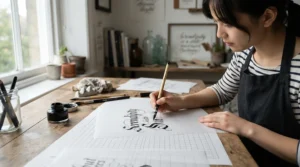
Setting Up and Storing Your Tracing Paper Roll
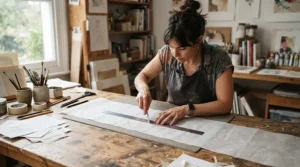
Getting the most out of a roll starts before you even make the first cut. On unboxing, unroll the first metre or two and let it lie flat under a couple of heavy books overnight — this counteracts the curl most rolls develop in transit and makes the paper far easier to work with immediately. When cutting lengths, always use a metal ruler and a sharp blade rather than scissors; scissors tend to drag on lightweight 30-40gsm paper and leave a ragged rather than clean edge.
For storage, an upright tube rack or a simply repurposed umbrella stand keeps the roll from developing a permanent kink, which flat storage in a drawer almost always causes over time. If you’re working with a heavier archival roll like the Clairefontaine 90/95gsm or Royal Sovereign options, store it away from direct sunlight even though the paper is acid-free — UV exposure still yellows paper edges faster than indoor storage does. A common first-30-days mistake is leaving the roll unwrapped after use; slipping the cut end back through the core or securing it with a rubber band prevents the outer layers from curling and creasing before your next session.
Real-World Scenarios: Who Should Buy Which Roll
Consider three fairly typical buyers. First, a textiles student working from a shared flat with limited storage, tracing garment patterns two or three times a month on a tight budget — for her, the Patterntrace Swedish Tracing Paper is worth the higher price specifically because it protects her original patterns through repeated fittings, and the 70cm width easily handles most bodice and sleeve pieces without piecing.
Second, an architecture undergraduate working through crit-week deadlines, producing multiple large-format section drawings a week on a student budget — here the Royal Sovereign Natural Tracing Roll‘s A0-matched width saves real time when overlaying existing drawings, even though it costs more upfront than a narrower roll, because the alignment advantage compounds across dozens of drawings a term.
Third, a hobbyist illustrator who sketches most evenings but rarely produces large finished pieces, working mostly in fineliner and graphite — for this kind of frequent-but-modest use, the Bienfang #106 Sketching Roll‘s combination of low cost and generous length makes far more sense than paying for archival weight paper that will simply sit in a drawer for years before it’s used up.
Problem → Solution: Fixing Common Tracing Paper Frustrations
Problem: The paper keeps curling off the desk mid-drawing. Solution: weight the corners with removable washi tape rather than heavy objects, and store the roll upright rather than flat between sessions to reduce the curl building up in the first place.
Problem: Ink bleeds through onto the surface below. Solution: step up to a heavier roll — 90gsm options like the Clairefontaine or Royal Sovereign picks resist bleed-through far better than 30-45gsm sketching paper, which simply isn’t designed for saturated ink work.
Problem: The roll tears when pinned for sewing. Solution: standard tracing paper isn’t built for this — switch to a genuinely sewable option like Swedish tracing paper, which is engineered specifically to hold pins and stitches without tearing along the line.
Problem: Static causes the paper to cling and crease. Solution: lighter 25-40gsm rolls are more prone to static, especially in centrally heated rooms during winter; a brief pass with an anti-static cloth or working in a slightly more humid room reduces the effect noticeably.
Problem: The cardboard tube arrives crushed. Solution: this is a genuinely common complaint across multiple brands here — buy from sellers with clear returns policies, and where possible choose listings that mention reinforced or rigid tube packaging in the product description.
Tracing Paper Roll for Layout Work in Design Studios
Layout work — the fast, iterative process of sketching multiple compositional options before committing to a final design — has its own specific demands that don’t always match what artists or dressmakers need. Speed matters more than archival permanence here, which is exactly why lighter 29-45gsm rolls dominate in studios doing rapid thumbnail and storyboard work; heavier paper simply slows down the pace of flipping between overlay sheets.
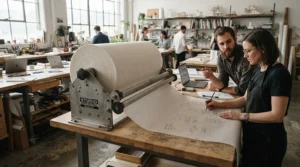
Width matters differently too. Design studios doing layout work for spreads, packaging mock-ups, or multi-panel storyboards benefit disproportionately from the wider rolls on this list, particularly the 90cm Clairefontaine option, because it lets a designer lay out a full double-page spread on a single continuous sheet rather than taping two narrower sheets together and risking a visible seam under studio lighting. For teams working collaboratively, a wide, light, fast-cutting roll kept centrally on a shared desk tends to get used far more consistently than individual pads, simply because nobody has to interrupt their flow to fetch more paper.
Long-Term Cost & Maintenance: Is a Bigger Roll Worth It?
Run the numbers on cost-per-metre and the value case for buying wider or longer becomes obvious fairly quickly. A 20m roll and a 50m roll from broadly comparable weight bands rarely cost 2.5 times as much, meaning the longer roll almost always works out cheaper per metre — provided you’ll genuinely use it within a reasonable timeframe before the paper starts to degrade in storage.
The maintenance side is minimal by design: tracing paper doesn’t need conditioning, sharpening, or replacement parts the way other art or craft tools do. Its “maintenance” is really just storage discipline — keeping it dry, away from direct sunlight, and ideally upright rather than flat. The total cost of ownership, in other words, is almost entirely the purchase price plus whatever storage solution you use, which makes tracing paper one of the lowest-maintenance recurring purchases in most creative studios.
Safety, Sustainability & Compliance Guide
Most tracing paper sold in the UK today is manufactured from wood pulp or, in the case of the Patterntrace roll, sustainable abaca fibre, and several brands in this guide carry PEFC certification confirming the wood comes from responsibly managed forests. None of the products here raise particular safety concerns for home or studio use — there’s no coating or chemical treatment that requires special handling beyond standard art-room ventilation when using solvent-based inks or markers alongside the paper.
On disposal, plain tracing paper is generally recyclable through standard UK kerbside collection, though contamination from heavy ink, tape residue, or lamination can affect this — local council guidance on this varies. Paper makes up around a fifth of the contents of the average household bin in many UK areas, so where a roll genuinely reaches end of life rather than getting reused for scrap sketching, recycling it rather than binning it is worth the extra minute. For anyone curious about the fuller history of how tracing paper became standard practice for architects and designers, the V&A’s collection of architectural drawings spanning the 1770s through the 1990s offers a genuinely fascinating look at how the material shaped design work long before digital tools existed.
Frequently Asked Questions
❓ What gsm is best for tracing paper roll for artists?
❓ Can you sew through tracing paper roll?
❓ How long does a tracing paper roll last in storage?
❓ What width tracing paper roll do I need for A1 drawings?
❓ Is tracing paper roll better than a pad for layout work?
Conclusion
Picking the right tracing paper roll really comes down to matching three specs to your actual habits: weight for your medium, width for your largest regular project, and length for how much you’ll realistically get through before storage starts to work against you. Artists chasing crisp ink lines and archival permanence should lean toward the heavier Clairefontaine and Royal Sovereign options; dressmakers preserving delicate patterns have really only one genuine answer in Swedish tracing paper; and anyone doing high-volume sketching or layout work will get more mileage — literally — from the longer, lighter rolls like the Bienfang or TRITART picks.
None of these seven are the “wrong” choice so much as they’re built for slightly different desks. The real mistake, as this guide has tried to show, is buying on price alone without checking whether the gsm and width actually suit what you’ll be doing with it next Tuesday afternoon. Get those two details right, and a single roll can genuinely serve a project, a term, or a full year of studio work without a second thought.
Recommended for You
- Cartridge Paper For Drawing: 7 Best UK Picks For 2026
- Sketchbooks Under £15: 7 Best Picks That Don’t Feel Cheap (2026)
- Spiral Bound Sketchbook vs Hardback: 7 Best Picks Compared (2026)
Disclaimer: This article contains affiliate links. As an Amazon Associate, I earn from qualifying purchases. If you purchase products through these links, we may earn a small commission at no additional cost to you.
✨ Found this helpful? Share it with your friends! 💬🤗
