In This Article
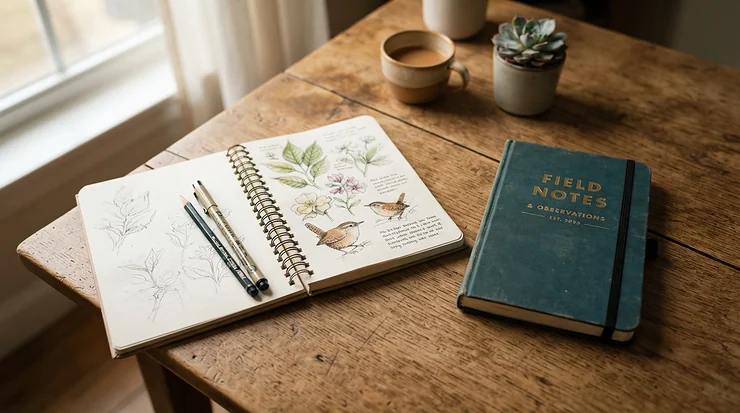
The spiral bound sketchbook vs hardback debate is really a question of how you want your paper held together. A spiral bound sketchbook threads a metal or plastic coil through punched holes, so pages fold right back and can be separated. A hardback stitches or glues its pages inside a rigid cover, trading flexibility for protection and a long shelf life.
Simple enough on paper. In practice, the binding decides how you’ll actually use the book. Will it lie open on a café table? Can a rescued drawing be lifted out for framing? Will the spine cast a shadow across your scanner glass? Coil binding is one of the most common finishing styles for documents, which explains why it’s everywhere in art shops. But ubiquity isn’t the same as suitability.
I’ve built this guide around seven real, widely available books: three spirals and four hardbacks. I’ve judged them on the things buyers genuinely argue about: flat-lay binding, tear-out pages, scanning artwork, and paper that doesn’t buckle the moment a wet brush appears. If you’re shopping for sketchbooks for beginners, you’ll find a clear starting point. If you’ve already filled a dozen books, the paper and binding detail should help you upgrade sensibly.
One honest note before we begin. I haven’t tested these books myself. Everything below comes from maker specifications, retailer listings and publicly visible review scores, and I’ll flag where something couldn’t be verified. Prices appear as ranges only, because they move constantly. Check the current price on Amazon UK before you buy.
Quick Comparison: Spiral Bound Sketchbook vs Hardback at a Glance
| Feature | Spiral bound | Hardback | Best For |
|---|---|---|---|
| Lies open on a table | Fully flat; folds back on itself | Sewn books lie flat once broken in; glued ones may not | Spiral, e.g. Artway Studio Spiral A4 |
| Removing pages | Easy; some are perforated | Awkward; removing sheets can weaken sewn sections | Spiral for tear-out pages |
| Durability over years | Coil can bend or snag | Sturdier, protects edges and corners | Seawhite Black Cloth Hardback A4 |
| Scanning artwork | Remove a page for a clean single-sheet scan | Spreads scan best when the spine is well broken in | Stillman & Birn Beta A4 |
| Portability | Coil adds bulk and can snag bags | Slimmer profile; elastic closures common | Leuchtturm1917 Master A4+ |
| Beginner fit | Forgiving; low emotional stakes | Can feel “too precious” to spoil | Daler-Rowney Graduate Spiral A4 |
Looking at the comparison above, spirals win on everyday practicality. They give you reliable flat-lay binding and pages you can remove without drama, which is why they dominate classrooms. Hardbacks win on longevity and that grown-up, keep-it-forever feel, though only the sewn ones really compete on lying flat. The real divide is temperament. If you sketch messily and often, a spiral removes the fear of the blank page. If you’re building a bound body of work, a hardback rewards the commitment.
💬 Just one click — help others make better buying decisions too!😊
Top 7 Picks in the Spiral Bound Sketchbook vs Hardback Contest: Expert Analysis
Three spirals and four hardbacks, all analysed from published specifications and publicly visible ratings rather than hands-on use. Where reviews couldn’t be verified, I say so rather than guess.
1. Artway Studio Spiral A4 Portrait — best budget spiral for daily sketching
The standout here is paper weight. Artway Studio Spiral A4 Portrait offers 170gsm cartridge in a price bracket where 100–120gsm is common.
The book holds 96 sides (48 sheets) behind a hardback cover, with the coil running down the spine. In practice, 170gsm resists ghosting from fineliners and won’t cockle at the first splash from a water brush. The rigid back cover also doubles as a portable drawing board when you’re perched on a wall or a train seat.
Based on the spec comparison, this is a sensible first spiral for sketchbooks for beginners: enough pages to fill without pressure, and paper sturdy enough to invite experiments. What the spec sheet won’t tell you is how the coil feels. As with any spiral, the wire ridge can press into your forearm on right-hand pages.
On aggregated sentiment, the Amazon UK listing showed a 4.7 out of 5 average from more than 11,000 ratings at the time of research. That points to broad satisfaction with paper and value. Skim recent reviews for batch-to-batch variation before committing.
Pros:
- ✅ Heavy 170gsm paper at a budget price
- ✅ Hardback cover doubles as a drawing surface
- ✅ 48 sheets gives generous room to practise
Cons:
- ❌ Coil ridge can dig into your forearm
- ❌ Cartridge surface too light for heavy washes
Price and value: under £15 at the time of research; prices may vary. For the money, it’s hard to beat.

2. Daler-Rowney Graduate Spiral A4 — best trusted-brand spiral for students
A familiar art-school name on a no-nonsense spiral. The portrait A4 Daler-Rowney Graduate Spiral A4 contains 45 sheets of 160gsm, lightly textured, bright white acid-free cartridge behind a rigid cover.
That light texture is the clever bit. It gives pencil and charcoal a little tooth to grip without making fineliner lines scratchy, and the acid-free stock shouldn’t yellow into tea-stained parchment. Daler-Rowney positions the range for dry media, and that’s honest positioning. This isn’t paper for drenching.
Here’s what to weigh: because the spiral lets pages turn cleanly or be separated, it suits students who want tear-out pages for portfolio submissions. The manufacturer’s spiral-bound A3 version is described as allowing pages to be torn away without damage. Check whether your A4 edition is perforated before assuming so.
On reviews, Amazon UK showed 4.4 out of 5 from 85 ratings at the time of research. The listing’s breakdown scored sturdiness and value noticeably lower than the headline figure, and it showed as unavailable, so stock fluctuates.
Pros:
- ✅ Lightly textured paper suits pencil and charcoal
- ✅ Acid-free stock resists yellowing over time
- ✅ Recognised brand with wide size range
Cons:
- ❌ Sturdiness scored lower in listing breakdown
- ❌ Availability can be patchy
Price and value: roughly £10–£20; solid, if not spectacular, for students.
3. Daler-Rowney Ebony Spiral A4 — best smooth-paper spiral for pen work
Smoothness is the selling point. Daler-Rowney Ebony Spiral A4 offers crisp 160gsm natural white cartridge, with listings showing around 50–54 sheets depending on the edition.
The maker says the surface handles all drawing techniques plus light watercolour, collage and mixed media. In practice, that smooth face favours fine detail: pen, ink and hard pencils glide rather than snag. It’s a more refined surface than the Graduate. Daler-Rowney also cites illustrator John Howe, known for Tolkien artwork, as a long-time Ebony user. That’s a testimonial rather than aggregated review data, so treat it as context.
Spiral hardbacks share one quirk. Blick’s buying guide notes that coils add bulk and can snag in a bag, and that better books crimp the wire ends inside the coil to avoid catching. Inspect the coil ends on delivery.
I couldn’t verify a robust pool of UK review text for this exact edition, so no sentiment summary is offered.
Pros:
- ✅ Smooth surface ideal for fine pen detail
- ✅ Takes light washes and collage
- ✅ FSC-certified paper from a heritage brand
Cons:
- ❌ Not for heavy watercolour saturation
- ❌ Coil adds bulk in a rucksack
Price and value: roughly £15–£25; fair for a mid-tier spiral.
4. Seawhite Black Cloth Hardback A4 — best British-made everyday hardback
British craftsmanship, sensibly priced. Seawhite Black Cloth Hardback A4 has 92 pages (46 sheets) of 140gsm all-media cartridge, acid-free and sized for extra wet strength.
“Sized for wet strength” matters more than it sounds. It means the surface resists soaking in, so light washes sit better and inks feather less. The sewn construction is the other draw. Sewn signatures are the classic bookbinding approach for durability, and it shows in a book that should survive years of rucksack life. The white edition’s covers are also 100gsm cartridge, handy for customising.
Seawhite has made art materials in Brighton since 1973, and this book is made in the UK with British paper. It’s the safe, dependable pick for someone who wants a hardback without premium pricing.
I couldn’t verify enough UK reviews to summarise honestly. Check the live rating on Amazon UK. As with most sewn hardbacks, expect a stiff spine until it’s been eased open a few times.
Pros:
- ✅ Sewn binding built for long-term use
- ✅ Wet-strength sizing helps light washes
- ✅ Made in the UK from British paper
Cons:
- ❌ Spine may resist lying flat initially
- ❌ 140gsm limits heavy wet techniques
Price and value: roughly £10–£15; among the best-value hardbacks here.
5. Hahnemühle D&S A4 — best high-page-count hardback for pencil
Generosity of pages sets it apart. Hahnemühle D&S A4 packs 80 sheets (160 pages) of 140gsm warm natural-white paper into a sewn hardback.
The surface is described as soft and toothy, which is ideal for graphite and coloured pencil because the grain grabs pigment and builds tone gradually. Sewn signatures let the book lie flat, so it’s workable for double-page drawings. A red ribbon marks your place. It’s made in Germany by a papermaker with roughly 400 years of history, and A4 comes in both portrait and landscape.
For urban sketchers and journal-keepers, 160 pages is a season’s worth of drawing in one binding. What most buyers overlook is landscape orientation. It suits panoramic street scenes far better than a portrait book does.
I couldn’t verify a meaningful review sample for the A4 edition, so I’m not summarising sentiment. The maker’s claims about the paper’s grip are just that: claims.
Pros:
- ✅ 160 pages for long-running sketch journals
- ✅ Toothy surface suits pencil work
- ✅ Sewn signatures aid lay-flat use
Cons:
- ❌ 140gsm too light for heavy washes
- ❌ Costs more than similar-weight UK rivals
Price and value: roughly £20–£30; justified by page count and paper feel.
6. Leuchtturm1917 Master A4+ — best premium hardback for organised artists
Design polish is the hook. Leuchtturm1917 Master A4+ offers 112 pages of 150gsm white acid-free paper in a thread-bound hardcover that opens flat.
The extras are genuinely useful: a gusseted back pocket for loose sketches, two ribbon markers, an elastic closure, and stickers for archiving. At 225 × 316 mm it’s a touch bigger than standard A4, which suits studio use but nudges against slim bags. Thick paper is meant to hold pencil, charcoal, chalk and ink without bleed-through, according to the maker.
One transparency point: a 2019 review recorded a heavier 180gsm sheet, whereas the current maker listing states 150gsm. Check the specification on the exact listing you’re buying.
Independent bloggers who’ve filled these books describe it as pleasant to work in, but I couldn’t verify a large UK review pool.
Pros:
- ✅ Thread-bound spine opens flat
- ✅ Pocket, ribbons and labels aid organisation
- ✅ 112 pages of acid-free 150gsm paper
Cons:
- ❌ Slightly oversized versus standard A4
- ❌ Premium pricing per sheet
Price and value: roughly £20–£30; you’re paying for craftsmanship and details.
7. Stillman & Birn Beta A4 — best hardback for wet media and flatbed scans
Weight is everything here. Stillman & Birn Beta A4 uses 270gsm cold-press white paper across 26 sheets, in a sewn hardbound format.
That’s roughly double the weight of most sketchbook paper. The paper has internal and surface sizing, so pigment stays on top and washes glow instead of sinking in. That makes it the only book here I’d suggest for layered watercolour or gouache. The maker says the hardbound spine is stiff when new and designed to be broken in, after which it lies completely flat, accommodating two-page layouts and flatbed scanning. For scanning artwork, that’s a direct, relevant claim.
The trade-off is sheet count. Twenty-six leaves go quickly if you’re prolific. Stillman & Birn also make wirebound versions, which the maker says allow easy page removal for archiving or sharing.
I couldn’t verify enough UK review data to summarise, so I’m relying on the maker’s specifications.
Pros:
- ✅ Extra-heavy 270gsm handles layered washes
- ✅ Spine eases flat for spreads and scans
- ✅ Sewn binding built for heavy use
Cons:
- ❌ Only 26 sheets per book
- ❌ Stiff spine until broken in
Price and value: roughly £20–£30; costly per sheet but excellent for wet work.
| Product | Binding | Paper | Pages | Approx. price range | Best For |
|---|---|---|---|---|---|
| Artway Studio Spiral A4 | Spiral hardback | 170gsm cartridge | 96 sides | Under £15 | Budget daily sketching |
| Daler-Rowney Graduate Spiral A4 | Spiral hardback | 160gsm, lightly textured | 45 sheets | £10–£20 | Students, dry media |
| Daler-Rowney Ebony Spiral A4 | Spiral hardback | 160gsm, smooth | 50–54 sheets | £15–£25 | Pen, ink, light washes |
| Seawhite Black Cloth Hardback A4 | Sewn hardback | 140gsm all-media | 92 pages | £10–£15 | Everyday all-rounder |
| Hahnemühle D&S A4 | Sewn hardback | 140gsm natural white | 80 sheets | £20–£30 | Pencil, long journals |
| Leuchtturm1917 Master A4+ | Thread-bound hardback | 150gsm | 112 pages | £20–£30 | Ink, organised artists |
| Stillman & Birn Beta A4 | Sewn hardback | 270gsm cold press | 26 sheets | £20–£30 | Wet media, flatbed scans |
The table shows a clear split: the spirals cluster at the budget end, while the hardbacks climb steeply in paper quality and price. Artway Studio Spiral A4 offers the most paper per pound, but if you work wet, Stillman & Birn Beta A4 justifies its premium through sheer weight. For all-round versatility, Seawhite Black Cloth Hardback A4 balances cost and construction best.
Sketchbooks for Beginners: Your First 30 Days, Sorted
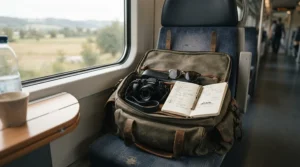
Starting out is less about talent than momentum, and the right sketchbook removes friction. If you’re choosing among sketchbooks for beginners, here’s a practical routine that Amazon listings never give you.
Week one: warm up with no stakes. Fill your first five pages with scribbles, cubes and coffee cups. A spiral such as Artway Studio Spiral A4 suits this stage, because tearing out a disaster costs nothing psychologically.
Week two: test your tools. Try pencil, fineliner and a water brush on a back page. Note where paper ghosts or buckles. This tells you whether 140gsm (Seawhite Black Cloth Hardback A4) is enough or whether you need heavier stock.
Weeks three and four: build a habit. Aim for one page daily, even five minutes. Date each page.
Maintenance tips:
- Put a sheet of scrap paper between wet pages to prevent transfer.
- For hardbacks, ease the spine open gradually, a few pages at a time, so flat-lay binding develops without cracking.
- For spirals, keep the coil away from bag zips.
Common first-month mistakes: buying too large (A3 becomes a chore), skipping the test page, and treating the book as precious. If a spiral bound sketchbook vs hardback choice paralyses you, start with a spiral and graduate to sewn binding once you’ve built the habit.
Real-World Scenarios: Which Book Suits Which Artist?
Scenario 1: The commuting art student. She sketches on the train for 40 minutes daily, needs tear-out pages for portfolio reviews, and has under £15 to spend. Artway Studio Spiral A4 or Daler-Rowney Graduate Spiral A4 fits. The coil lets her fold the book to one hand, and finished drawings come out cleanly for submission. The rigid cover works as a lap desk.
Scenario 2: The weekend urban sketcher. He draws cafés and market stalls every Saturday, uses pencil and pen, and wants something that survives a rucksack for years. Hahnemühle D&S A4 in landscape suits panoramic scenes, and its 160 pages cover months. He wants a keepsake, so sewn binding beats a coil.
Scenario 3: The hobby watercolourist. She paints in layered washes at the kitchen table, sells a few pieces online, and cares about scanning artwork accurately. Stillman & Birn Beta A4 matches her needs: 270gsm holds water, and once the spine eases in, spreads sit flat on a scanner. Her budget is £20–£30 per book, and she fills one every couple of months.
Scenario 4: The organised illustrator. He mixes ink, marker and collage, keeps reference scraps, and likes archiving. Leuchtturm1917 Master A4+ offers a pocket and labels, plus paper tuned for ink.
Notice the pattern. Habit and medium drive the choice more than brand does.
✨ Ready to Pick Your Perfect Binding!
🎨 Every artist works differently, and these seven books cover the full range. Click any highlighted product name to check current pricing and availability, then choose the binding that matches how you actually draw!
How to Choose Between a Spiral Bound Sketchbook vs Hardback
Choosing well takes six questions, asked in order.
- Decide your primary medium. Dry media work in 140–160gsm. Layered wet work needs 200gsm-plus, which pushes you towards heavier books such as Stillman & Birn Beta A4.
- Ask whether you’ll remove pages. If yes, choose spiral. Hardbacks rarely have perforations, and removing sheets can loosen sewn sections.
- Consider flat-lay binding needs. Do you draw across the gutter or scan double pages? Choose a spiral or a sewn hardback that opens flat.
- Weigh portability. Spirals add coil bulk; slimmer hardbacks like Leuchtturm1917 Master A4+ sit more neatly in bags.
- Check your budget per sheet. Divide price by sheet count. Artway Studio Spiral A4 and Seawhite Black Cloth Hardback A4 are strongest here.
- Match binding to purpose. Practice book? Spiral. Permanent record? Hardback.
If you’re still torn on spiral bound sketchbook vs hardback, buy one of each in the budget tier and let your habits decide.
Flat-Lay Binding Explained: Which Books Really Open Flat?
Flat-lay binding is the most overpromised phrase in sketchbook marketing, so let’s separate fact from hype.
Spirals win outright. Because the coil lets pages pivot, the book lies flat and even folds back on itself. Blick’s guide notes this lets you work right up to the spine and hold the book in one hand.
Sewn hardbacks vary. Thread-bound spines like Leuchtturm1917 Master A4+ are marketed as opening flat, and Hahnemühle D&S A4 relies on sewn signatures for the same effect. Stillman & Birn Beta A4 is more candid: its maker says the spine is stiff when new and only lies completely flat after being broken in.
Glued hardbacks are the risk. Art-material retailers note that many hardbound books don’t open fully flat, which makes them awkward for larger drawings.
Here’s the practical trick: break in a hardback deliberately. Open it at the centre, press the spine gently, then repeat at intervals through the book. Never crack it hard. A well-broken-in sewn book gives flat-lay binding almost as good as a coil, without the wire ridge digging into your wrist.
Tear-Out Pages: When a Spiral Earns Its Keep
Tear-out pages are where spirals are hardest to beat. Pull a sheet free from a coil and you leave the rest untouched. Do the same in a sewn hardback and you may weaken the section it’s stitched into.
Perforation is the detail that separates clean tears from ragged ones. Some spiral books are perforated, some aren’t, and listings don’t always say. Daler-Rowney Graduate Spiral A4 is positioned for classroom use where sheets get submitted, but verify the edition. If a book isn’t perforated, use a steel ruler and craft knife rather than ripping. Ragged edges look sloppy in portfolios.
Art retailers also note that hardbound sketchbooks are less likely to be perforated, and are better thought of as archival records. That’s a sensible framing: hardbacks are for keeping, spirals for using and sharing.
If you want tear-out pages with heavier paper, Stillman & Birn’s wirebound range is worth a look; the maker says it allows easy removal of pages for archiving or sharing. For everyday sketching, Artway Studio Spiral A4 gives you removable sheets at a very low cost, so a failed drawing never feels expensive.
Scanning Artwork: Getting Clean Digital Copies from Either Binding
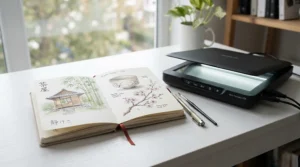
Scanning artwork exposes the binding’s biggest weakness. A hardback’s curved spine lifts the page off the glass, creating shadow and blur near the gutter. A spiral lets you remove the sheet and place it perfectly flat.
For single pages: spiral wins. Remove the sheet, scan at a sensible resolution, and you avoid gutter distortion entirely. Many artists work at around 300–600dpi, with the higher end preferable if you intend to enlarge prints.
For double-page spreads: a well-broken-in sewn hardback like Stillman & Birn Beta A4, which the maker says accommodates flatbed scanning, is your best bet. Leuchtturm1917 Master A4+ and Hahnemühle D&S A4 are also worth considering for their flat-opening construction.
Take a lesson from professionals too. The National Archives’ digitisation guidance treats flatbed scanners as generally suitable, but requires conservator approval for fragile material and cautions against risky handling. Your sketchbook isn’t a fragile archive, but the principle holds: never force a spine flat against the glass. Press gently, and scan pages one at a time if the book resists.
If scanning artwork is central to your work, choose a spiral bound sketchbook vs hardback based on whether you’re scanning spreads or single sheets.
Spiral Bound Sketchbook vs Hardback vs Other Formats: The Alternatives
Spirals and hardbacks aren’t the only options. Here’s how they stack up against the alternatives.
| Format | Main strength | Main weakness | Best For |
|---|---|---|---|
| Spiral bound | Lies flat; pages turn or come out cleanly | Coil bulk; can snag bags | Everyday practice, e.g. Artway Studio Spiral A4 |
| Sewn hardback | Durable, archival feel | May resist lying flat at first | Keepsake journals, e.g. Hahnemühle D&S A4 |
| Perfect-bound (square spine) | Sturdy, looks good on a shelf | Restricts working into the spine | Display and storage |
| Tape-bound | Light, inexpensive | Not rugged; fewer pages | Quick studies |
Blick’s guidance describes perfect-bound books as long-lasting but bulky and a little clumsy to hold open, while tape-bound books lose out on durability. Retailer guidance echoes that: tape-bound books have fewer pages and lighter covers, and aren’t built for longevity.
The analysis above shows why the spiral bound sketchbook vs hardback choice dominates: they’re the two formats that best balance function and durability. If you want the lay-flat convenience of a spiral with hardback longevity, a sewn book like Leuchtturm1917 Master A4+ is the closest compromise.
Features That Actually Matter (And Those That Don’t)
Marketing loves buzzwords. Here’s what deserves your attention.
Matters:
- Paper weight (gsm). 140–160gsm for dry media; 200gsm-plus for serious wet work.
- Acid-free stock. It prevents yellowing over the years.
- Binding type. It determines flat-lay binding, tear-out pages and scanning behaviour.
- Sheet count versus price. Divide to find the true cost.
Doesn’t matter (much):
- Ribbons and elastic bands. They’re lovely on Leuchtturm1917 Master A4+, but they won’t improve your drawing.
- Cover colour. Purely aesthetic.
- “Professional” labels. Check the gsm and sizing instead.
Sometimes matters:
- Paper texture. Toothy suits pencil (Hahnemühle D&S A4); smooth suits pen (Daler-Rowney Ebony Spiral A4).
- Size. A4 offers room without becoming unwieldy.
Read specifications rather than slogans. A sketchbook with plain packaging and 170gsm paper will often outperform a glamorous one at 100gsm.
Long-Term Cost & Durability: Spiral Bound Sketchbook vs Hardback Value
Cost-per-sheet is the honest way to compare. Using the approximate ranges above, Artway Studio Spiral A4 works out at under roughly 31p a sheet at the ceiling of its bracket. Hahnemühle D&S A4 lands at roughly 25–38p a sheet for 80 sheets. Stillman & Birn Beta A4 costs considerably more per sheet, reflecting its 270gsm weight and only 26 leaves.
Durability tells a different story. Art retailers generally rate hardbound books as toughest, with better survival odds than spiral or tape-bound alternatives. Spirals are a little less hardy, since the coil can bend and covers are often thinner at the front. One art teacher’s classroom tip is to reinforce the binding with fishing line for extra life, though that’s anecdotal advice.
The sewn structure of a hardback protects pages over decades, which is why archival journals lean that way. If your sketchbooks are stepping stones, spirals give better value. If they’re a legacy, hardbacks pay back the premium. In a spiral bound sketchbook vs hardback comparison, cost and durability point in opposite directions, so decide which matters more.
Frequently Asked Questions
❓ Which is better for scanning artwork, spiral or hardback?
❓ Can you remove pages from a hardback sketchbook safely?
❓ What gsm should sketchbooks for beginners have?
❓ Do spiral sketchbooks last as long as hardbacks?
❓ Are hardback sketchbooks worth the extra money?
Conclusion: Which Binding Wins?
So who wins the spiral bound sketchbook vs hardback showdown? Neither, and both. It depends on how you draw.
Choose a spiral if you want dependable flat-lay binding, tear-out pages and a low-stakes practice book. Artway Studio Spiral A4 is the value champion, Daler-Rowney Graduate Spiral A4 is the student standby, and Daler-Rowney Ebony Spiral A4 suits pen work. If you’re just starting, sketchbooks for beginners rarely get better than a budget spiral.
Choose a hardback if you’re building a body of work that deserves to last. Seawhite Black Cloth Hardback A4 is the sensible everyday pick, Hahnemühle D&S A4 rewards pencil artists with 160 pages, Leuchtturm1917 Master A4+ adds organisational polish, and Stillman & Birn Beta A4 is the wet-media specialist that copes best with scanning artwork.
Whichever you pick, the best sketchbook is the one you’ll actually fill. Prices and stock change often, so check current listings on Amazon UK.
✨ Don’t Miss These Exclusive Deals!
🔍 Take your sketching to the next level with these carefully selected books. Click on any highlighted product to check current pricing and availability. Pick the binding that suits your style and start filling pages with confidence!
Recommended for You
- Hardback Sketchbook: 7 Best Picks for Watercolour & Ink (2026)
- Travel Sketchbooks for Artists: 7 Brilliant Picks (2026)
- Best A4 Sketchbooks: 7 Top Picks for UK Artists (2026)
Disclaimer: This article contains affiliate links. As an Amazon Associate, I earn from qualifying purchases. If you purchase products through these links, we may earn a small commission at no additional cost to you.
✨ Found this helpful? Share it with your friends! 💬🤗
