In This Article
Sketchbooks under £15 are bound books of drawing paper priced below fifteen pounds in the UK, usually A6 to A4, with paper weights from around 100gsm to 220gsm. The good ones balance paper weight, binding and page count so that everyday practice feels affordable rather than precious.
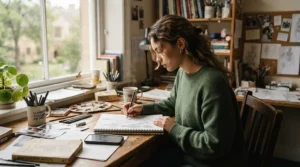
Here’s the thing nobody mentions while you’re loitering in the art aisle with a wobbly bank balance: price and paper quality are only loosely related. A £40 sketchbook can be a gorgeous object that makes you too nervous to draw in it. A well-chosen book from the sub-£15 bracket can become the most battered, most-loved thing on your desk. The trick is knowing which numbers on the cover matter. The big one is grammage, the weight of paper in grams per square metre, better known as gsm.
This guide compares seven real options and interprets them for three kinds of buyer. First, the student budget shopper who needs a book that survives a rucksack. Second, the everyday sketching devotee who fills a page a day. Third, the curious beginner who wants paper quality on a budget without wading through jargon. Where I couldn’t verify a detail, such as a live price or a decent review pool, I’ve said so rather than guess.
Prices move constantly, so treat every range below as a guide and check the live listing against your £15 ceiling. Right, on to the lineup.
Quick Comparison: Sketchbooks Under £15 at a Glance
Here’s the whole field on one screen before we dig in. Price ranges are indicative only and were gathered at the time of research.
| Product | Paper | Format | Best For | Indicative price range |
|---|---|---|---|---|
| Seawhite of Brighton A4 Portrait Hardback Sketchbook | 140gsm cartridge | A4, 92 pages | Daily all-rounder | £8–£14 |
| Daler-Rowney Simply A4 Hardback Sketchbook | 100gsm, medium grain | A4, 54 sheets | Pencil and fineliner volume | £8–£14 |
| Daler-Rowney Graduate Stapled Softcover Sketchbook | 140gsm (check listing) | A4, 20 sheets | Cheap experiments | Under £8 |
| Canson Artist Series Sketch Book | 96gsm, acid-free | Hardback, several sizes | Pencil and charcoal | £10–£15 (size dependent) |
| Seawhite Octopus Concertina Sketchbook | 220gsm | A5 concertina | Panoramas and light washes | Around £10 |
| Leuchtturm1917 A6 Sketchbook | 180gsm | A6 hardcover | Pocket sketching | Around £12 |
| Khadi Hardback Sketchbook | 210gsm | 13 × 16cm, 40 pages | Textured, keepsake work | Around £15 |
Read across and a pattern emerges. The heaviest papers (Khadi Hardback Sketchbook at 210gsm, Seawhite Octopus Concertina Sketchbook at 220gsm) come with fewer usable pages. The page-rich books (Seawhite of Brighton A4 Portrait Hardback Sketchbook and Daler-Rowney Simply A4 Hardback Sketchbook) use lighter stock.
That’s the central trade-off with sketchbooks under £15: thickness or quantity, rarely both. If you draw daily, quantity wins. If you fancy a wash of colour, thickness does.
💬 Just one click — help others make better buying decisions too!😊
Top 7 Sketchbooks Under £15: Expert Analysis
Each pick below gets the same treatment: what stands out, what the specs mean in practice, who it suits, and what real-world feedback exists. Where feedback comes from editorial testers or older retailer reviews rather than a large customer pool, I’ve labelled it that way.
1. Seawhite of Brighton A4 Portrait Hardback Sketchbook — best all-round daily workhorse
The standout is sheer usefulness: a full A4 canvas in a cloth-covered hardback that doesn’t scream “precious”. It’s the sensible jumper of sketchbooks: never the star, always there when you need it.
The listing pairs 140gsm all-media cartridge paper with 92 pages, which is 46 sheets if you’re estimating longevity. At 140gsm the paper sits well above standard printer weight, so pencil, fineliner and light marker work won’t ghost through the way they do on flimsy stock. Add a properly wet brush and you’ll see buckling, so keep watercolour to gentle dabs rather than drenching.
Based on the spec comparison, this suits anyone wanting one A4 companion for lectures, train journeys and kitchen-table studies, which makes it a natural student budget pick. On durability, one reviewer of Seawhite’s related travel journal found the construction solid if less refined than pricier hardbacks. That’s a fair expectation here too. I couldn’t verify a large review pool for this exact A4 format, so weigh that accordingly.
Pros:
- ✅ Full A4 surface with 92 pages
- ✅ 140gsm paper tolerates mixed dry media
- ✅ Hardback cover survives daily bag life
Cons:
- ❌ Buckles under heavy watercolour washes
- ❌ Cover finish is functional, not fancy
Indicative range £8–£14 depending on seller; I couldn’t confirm a live price, so check the current price. Verdict: superb value among sketchbooks under £15 when you want space and staying power.
2. Daler-Rowney Simply A4 Hardback Sketchbook — most pages for your pound
The standout is generosity. Fifty-four soft white sheets in a hardback (108 pages) removes the pressure to make every page count, and that’s psychologically worth more than any paper spec.
The paper is 100gsm with a medium grain. Translation: roughly the weight of decent office paper, but with a tooth that grips graphite and charcoal far better than a printer tray ever would. Fineliners and ballpoints behave themselves. Alcohol markers will show through, and anything wetter than a damp brush will cockle. This is a dry-media book, and refreshingly honest about it.
What most buyers overlook is the value maths. On my indicative range you’re paying roughly 15p to 25p a sheet, which makes this one of the cheapest ways to bank practice hours. That matters for everyday sketching, where volume beats preciousness every time. The range is pitched at entry-level artists and hobbyists, and the cost-per-sheet reasoning backs that up. Verifiable UK review data for the A4 size was thin during research, so I’m leaning on spec analysis rather than crowd sentiment.
Pros:
- ✅ Generous 54-sheet count for the money
- ✅ Medium grain grips pencil and charcoal
- ✅ Hardback keeps pages flat in a bag
Cons:
- ❌ Too light for wet media
- ❌ Markers can show through the page
Indicative range £8–£14; check current price. Verdict: the best volume-per-pound option for everyday sketching.
3. Daler-Rowney Graduate Stapled Softcover Sketchbook — the low-stakes experimenting book
The standout is that it’s cheap enough to ruin, and that’s a genuine feature. A slim stapled softcover of 20 sheets is an invitation to make a mess. The Amazon listing gives 140gsm, though some retailer copy says 160gsm, so check the listing you’re buying.
Either figure is a step up from the Simply A4 hardback above. The smooth cartridge paper suits pencil, pen and lighter mixed-media play. The softcover flexes, so you’ll want a hard surface underneath, but it folds back easily for one-handed sketching on the go. Think of it as the warm-up book: one for refined work, this one for failures.
On sentiment, older retailer reviews (dating from around 2017) are the only feedback I found. One art-journalling user said it withstood sprays and paints well, and another praised the textured paper in college-issued copies. That’s a small, ageing sample, so treat it as indicative rather than definitive.
Pros:
- ✅ Heavier paper than most page-rich rivals
- ✅ Light and flexible for carrying
- ✅ Cheap enough to draw without fear
Cons:
- ❌ Only 20 sheets per book
- ❌ Soft cover gives little protection
Indicative range under £8 (unconfirmed live). Verdict: the smartest “buy two” candidate in this student budget bracket.
4. Canson Artist Series Sketch Book — best for pencil and charcoal
The standout is the stitched hardback binding that lets the book lie flat, normally a spiral-bound privilege. That means you can work across the gutter on double-page spreads without losing the middle to a curve.
The paper is 96gsm and acid-free. Acid-free matters if you keep old sketches, because it resists the yellowing that afflicts cheap notebook stock over the years. Gathered’s editors singled it out for pencil and charcoal work, and 96gsm with a moderate tooth supports that verdict. It also means this is firmly a dry-media book.
Sizes vary, and this is where the £15 line bites. Smaller formats are likelier to land under it; larger ones may creep over, so check the exact size before you buy. Sentiment here is editorial praise for its professional feel rather than a large customer sample. The hardback adds weight, so it’s a desk-and-satchel book rather than a pocket one.
Pros:
- ✅ Stitched binding lies flat when open
- ✅ Acid-free paper resists yellowing over time
- ✅ Available in several sizes
Cons:
- ❌ Hardback adds noticeable weight
- ❌ 96gsm limits it to dry media
Indicative range £10–£15 for smaller sizes; larger formats may exceed the cap. Verdict: a quietly classy pick for pencil devotees.
5. Seawhite Octopus Concertina Sketchbook — best for playful, unfolding layouts
The standout is the fold-out format. The pages zig-zag open like a concertina, so you can sketch a continuous panorama, storyboard a sequence, or stand the whole thing up like a tiny gallery.
The paper is a hefty 220gsm in A5. That’s the heaviest in this lineup, and it handles light watercolour washes better than nearly every other book here. It’s also compact enough for a coat pocket. Gathered’s editors flagged its creativity credentials but noted a limit: only eight extending arms overall. So the usable surface is modest. Treat it as a specialist, not a daily driver.
Who should buy? Comic makers, urban sketchers who love a long skyline, and anyone bored by rectangles. Who shouldn’t? Anyone needing quick lecture-margin doodles on the same page as notes. Feedback I could verify was editorial rather than customer-driven, so I can’t offer aggregated review sentiment here.
Pros:
- ✅ Heavyweight 220gsm handles light washes
- ✅ Unfolds for panoramas and storyboards
- ✅ Compact A5 fits a coat pocket
Cons:
- ❌ Only eight arms of drawing space
- ❌ Awkward for quick, everyday notes
Around £10 in recent retailer listings; check current price. Verdict: great value for creative experiments, weaker as a sole sketchbook.
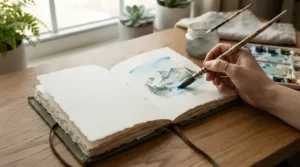
6. Leuchtturm1917 A6 Sketchbook — best pocket-sized quality feel
The standout is a proper hardcover and 180gsm paper in a book that slips into a jacket pocket. Few pocket sketchbooks feel this substantial.
A6 is postcard-sized, so it forces small, quick studies. For everyday sketching that’s actually a gift, because a tiny page has no blank-page dread. Nobody agonises over a postcard. The 180gsm stock is generous at this size: fineliner, pencil and a light wash all behave. Gathered’s editors liked the range of cover colours and the protective hardcover, while noting it’s too narrow for detailed work, which is entirely fair.
On the value side, the cost per page is higher than the A4 options, so this is a “quality feel” purchase rather than a volume play. I couldn’t verify a large customer review sample for this sketchbook specifically, so the feedback here is editorial.
Pros:
- ✅ Sturdy hardcover protects pages in pockets
- ✅ 180gsm paper is generous at this size
- ✅ Wide choice of cover colours
Cons:
- ❌ Too narrow for detailed work
- ❌ Higher cost per page than A4 books
Around £12 in an editorial retailer listing; check current price. Verdict: the best pocket companion within sketchbooks under £15.
7. Khadi Hardback Sketchbook — best for texture and character
The standout is personality. A deckle edge and section-stitched binding give it a handmade feel that makes even a bad sketch look intentional.
The paper is 210gsm in a 13 × 16cm format with 40 pages. Gathered’s editors say it copes with watercolours, which fits the weight. This is where paper quality on a budget peaks in this lineup: heavy, characterful stock at a price that still squeaks under the ceiling. The catch is the page count. Forty pages disappears quickly if you sketch daily, so it works best as a treat book for small, finished studies rather than an everyday workhorse.
One warning: at around £15 this sits right at the limit, and a small price shift could tip it over. Check the live listing. I found no verifiable aggregated review data for this format, so the feedback here is editorial.
Pros:
- ✅ 210gsm paper copes with watercolour
- ✅ Deckle edge and stitching feel special
- ✅ Compact size suits small finished studies
Cons:
- ❌ Only 40 pages
- ❌ Sits right at the £15 ceiling
Around £15 in a retailer listing; check current price. Verdict: a lovely indulgence, best bought deliberately rather than casually.
Here are the seven side by side with the specs that matter most.
| Product | Size | Paper weight | Binding | Best For |
|---|---|---|---|---|
| Seawhite of Brighton A4 Portrait Hardback Sketchbook | A4 | 140gsm | Cloth hardback | Daily mixed dry media |
| Daler-Rowney Simply A4 Hardback Sketchbook | A4 | 100gsm | Hardback | High-volume practice |
| Daler-Rowney Graduate Stapled Softcover Sketchbook | A4 | 140gsm (check listing) | Stapled softcover | Throwaway experiments |
| Canson Artist Series Sketch Book | Several | 96gsm | Stitched hardback | Pencil and charcoal |
| Seawhite Octopus Concertina Sketchbook | A5 | 220gsm | Concertina | Panoramas, light washes |
| Leuchtturm1917 A6 Sketchbook | A6 | 180gsm | Hardcover | Pocket studies |
| Khadi Hardback Sketchbook | 13 × 16cm | 210gsm | Section-stitched | Textured finished pieces |
The A4 trio covers volume and versatility, while the small formats concentrate quality into fewer pages. If your budget allows only one book, the Seawhite of Brighton A4 Portrait Hardback Sketchbook is the safest all-rounder. If you can stretch to two, pair a page-rich book with a characterful one such as the Khadi Hardback Sketchbook.
How to Choose Sketchbooks Under £15
Choose by medium first, then paper weight, then format, then binding, then sheet count, and finally the live price. Work through these six steps and the shortlist mostly picks itself.
- Start with your medium. Pencil, charcoal and fineliner are happy on lighter paper, while wet media generally need around 200gsm or more. Buying the wrong weight is the single most common regret.
- Read the gsm. As Gathered’s buyer’s guide points out, 80–100gsm is basically office-paper territory and watercolour usually wants around 300gsm. Most sketchbooks under £15 land in between, so decide which end you lean towards.
- Feel the tooth. Rougher paper holds pigment and pencil grain; smoother paper suits fine linework. Neither is “better”, just different.
- Pick a size you’ll actually carry. A4 gives room; A5 and A6 go everywhere. The best sketchbook is the one that’s with you.
- Match the binding to your habits. Spiral lies flat, stitched hardbacks can too, and stapled softcovers are light but floppy.
- Count sheets, not pages, then check the live price. Ninety-two pages is 46 sheets, and that changes the value maths.

Paper Quality on a Budget: What Matters and What Doesn’t
Paper quality on a budget isn’t about finding secret bargains. It’s about ignoring shiny extras and paying for the things that touch your pencil.
What matters: weight, tooth and acid-free stock. Weight decides how much abuse a page can take before it buckles or ghosts. Tooth controls how graphite, charcoal and ink behave. Acid-free paper resists yellowing, which is relevant if you want to keep a year of sketches. The Canson Artist Series Sketch Book is the clearest example here, with its acid-free 96gsm sheets aimed squarely at dry media.
What barely matters: elastic closures, ribbon bookmarks, branded covers and fancy textures. They’re pleasant, but they don’t change how a line looks on the page.
A neat trick is to test the back page first. Scribble your favourite fineliner, a pencil gradient and a wet-brush stripe. You’ll learn more from that thirty-second experiment than from any spec sheet. It’s also the easiest way to judge whether a heavier option such as the Seawhite Octopus Concertina Sketchbook justifies the fewer pages.
Common Mistakes When Buying Sketchbooks Under £15
- Buying for looks, not medium. A pretty cover means nothing if your paint pools and buckles.
- Confusing pages with sheets. A 92-page book has 46 sheets. Compare on sheets.
- Ignoring third-party listings. One UK listing I found for a popular American Strathmore 400 Series Wire Bound Sketch Pad showed dispatch in six to seven days from a third-party seller. Delivery time and the final price can drift.
- Choosing too large. A book that doesn’t fit your bag stays at home.
- Being too precious. Buying a book you’re afraid to fill defeats the purpose of sketchbooks under £15. Their whole superpower is low stakes.
Sketchbooks Under £15 vs Cheap Alternatives
Are there cheaper ways to draw? Absolutely. Are they better? Rarely. Here’s how the traditional alternatives compare.
| Option | Paper suitability | Durability | Best For |
|---|---|---|---|
| Sketchbooks under £15 | Made for drawing media | Bound, protected | Everyday practice (e.g. Daler-Rowney Simply A4 Hardback Sketchbook) |
| Standard lined notebook | Thin, no tooth | Cover only | Notes, not art |
| Loose printer paper | Very thin, no binding | Poor | Throwaway doodles |
| Premium sketchbooks (£25+) | Excellent, often heavier | Excellent | Finished pieces and wet media |
Cheap notebooks and printer paper are false economies. They ghost, buckle, and scatter. Sketchbooks under £15 give you cohesive binding, better tooth and something you can flip through to see progress, which is half the fun. Premium books do offer better paper, but for practice the extra £15 rarely repays itself. Buy the cheaper book, fill it, then upgrade when you know what you need.
Student Budget: Making Every Pound Stretch
A student budget rewards clever buying more than bargain hunting. Set yourself a ceiling and split it sensibly.
Falmouth University’s money-saving tips recommend prioritising essentials you’ll use often, always asking about student discounts (carry your ID), sharing supplies with coursemates and checking second-hand options. All of that applies to sketchbooks.
In practice, here’s a smart student budget approach:
- Buy a page-rich main book such as the Seawhite of Brighton A4 Portrait Hardback Sketchbook for lectures and studio work.
- Add a cheap “chaos” book like the Daler-Rowney Graduate Stapled Softcover Sketchbook for warm-ups and disasters.
- Save the treat (say, the Khadi Hardback Sketchbook) for finished pieces once term pressure lifts.
Check discount terms before buying, as they vary by retailer and change. Share a pack with a friend if you can, and use the back page test to avoid disappointing paper.
Everyday Sketching: Choosing Paper for a Daily Habit
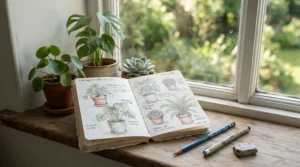
Everyday sketching is a numbers game. The more pages you fill, the faster you improve, so the ideal book is cheap, light and slightly forgiving.
Urban Sketching World notes that urban sketcher Liz Steel favours a lighter 150gsm softcover as a daily sketchbook, although it isn’t meant for wet media. It’s a useful reminder: a daily book doesn’t need the heaviest paper, just reliable paper you’re happy to abuse.
For the daily grind, the Daler-Rowney Simply A4 Hardback Sketchbook is hard to beat on volume. The Leuchtturm1917 A6 Sketchbook makes small, low-pressure sketches easy on a commute. The Seawhite of Brighton A4 Portrait Hardback Sketchbook balances both if you want a single book.
A few habit tips help. Date your pages. Set a timer for five minutes. Draw boring things: mugs, shoes, the view from the bus. The paper is cheap, so give yourself permission to be bad.
Long-Term Cost and Maintenance
Cost per sheet is your real value metric. Take the Daler-Rowney Simply A4 Hardback Sketchbook at roughly 15p to 25p a sheet on my indicative range. A slimmer book like the Khadi Hardback Sketchbook costs several times more per page. Neither is wrong, but you should know what you’re paying for.
Maintenance is simple:
- Store flat and dry, away from direct sunlight. Daler-Rowney’s own guidance recommends exactly this.
- Use fixative for charcoal and soft pencil, or slip tracing paper between pages.
- Photograph or scan finished pages before the book fills up, so you have a backup.
- Press bulging pages under a heavy book after light washes.
Treat your books kindly but not reverently. Sketchbooks under £15 are meant to be used up.
Your First 30 Days With a Budget Sketchbook
A new sketchbook can freeze you. This month-long plan avoids that.
Week 1: Break it in. Sacrifice the first page. Scribble, test pens, spill coffee if you must. Then use the back page to map how your favourite tools behave, so you know what your paper can handle.
Week 2: Build the habit. Draw something small every day, ideally at the same time. A6 books such as the Leuchtturm1917 A6 Sketchbook are perfect because there’s no blank expanse to intimidate you.
Week 3: Push the paper. Try shading, hatching and light washes, and see where it breaks. If the paper buckles, note the limit rather than blaming yourself. This is how you learn what paper quality on a budget actually feels like.
Week 4: Review. Flip back through the pages. Which media worked? Which ones ghosted? Use that to choose your next book.
Common first-month mistakes: saving pages for “good” work, using wet media on light paper, and forgetting to date entries.
Real-World Scenarios: Three Buyers, Three Picks
If you’re a first-year art student with a tight student budget (say £30 for the term’s sketching), buy a page-rich A4 like the Seawhite of Brighton A4 Portrait Hardback Sketchbook plus a Daler-Rowney Graduate Stapled Softcover Sketchbook for experiments. You sketch several times a week in studios and lecture halls, so durability and volume beat delicate paper.
If you commute 25 minutes each way by train, the Leuchtturm1917 A6 Sketchbook slips into a coat pocket, and the 180gsm paper handles fineliner beautifully. Small pages match short journeys. Aim for one tiny study per trip. You’ll fill the book in weeks and improve fast.
If you paint on Sundays and want washes that don’t puddle, the Seawhite Octopus Concertina Sketchbook and the Khadi Hardback Sketchbook are your best bets. Both offer heavier paper, though fewer pages. Budget one for each mood: playful panoramas or careful keepsake studies.
Quick Decision Framework
Use this “if this, then that” checklist to finish your shortlist:
- If you sketch daily with pencil or pen, choose the Daler-Rowney Simply A4 Hardback Sketchbook, because volume matters most.
- If you want one book for everything dry, choose the Seawhite of Brighton A4 Portrait Hardback Sketchbook for its balance of size and weight.
- If you need it flat for spreads, choose the Canson Artist Series Sketch Book, because the stitched binding opens fully.
- If you draw on the move, choose the Leuchtturm1917 A6 Sketchbook, because it fits a pocket.
- If you want light colour work, choose the Seawhite Octopus Concertina Sketchbook or Khadi Hardback Sketchbook, because 200gsm-plus paper handles it.
- If you fear ruining a good book, choose the Daler-Rowney Graduate Stapled Softcover Sketchbook, because it’s cheap enough to abuse.
FAQ
❓ Can sketchbooks under £15 handle watercolour?
❓ How many sheets do I need for everyday sketching?
❓ Is spiral or hardback better on a student budget?
❓ Will fineliners bleed through cheap sketchbook paper?
❓ Is A5 or A4 better value in sketchbooks under £15?
Conclusion
Sketchbooks under £15 aren’t a compromise. Used well, they’re the smartest way to build a drawing habit, because low stakes make experimentation easy. The Seawhite of Brighton A4 Portrait Hardback Sketchbook is the safest all-rounder, the Daler-Rowney Simply A4 Hardback Sketchbook is unbeatable for volume, and the Daler-Rowney Graduate Stapled Softcover Sketchbook is your permission slip to make a mess.
If you’re after something more specific, the Canson Artist Series Sketch Book rewards pencil work, the Leuchtturm1917 A6 Sketchbook rewards a pocket, and the Seawhite Octopus Concertina Sketchbook and Khadi Hardback Sketchbook offer heavier paper for light colour. Whatever your student budget or sketching routine, the best move is the simplest one: pick a book, open it, and draw something today.
Recommended for You
- Spiral Bound Sketchbook vs Hardback: 7 Best Picks Compared (2026)
- Hardback Sketchbook: 7 Best Picks for Watercolour & Ink (2026)
- Travel Sketchbooks for Artists: 7 Brilliant Picks (2026)
Disclaimer: This article contains affiliate links. As an Amazon Associate, I earn from qualifying purchases. If you purchase products through these links, we may earn a small commission at no additional cost to you.
✨ Found this helpful? Share it with your friends! 💬🤗
