In This Article
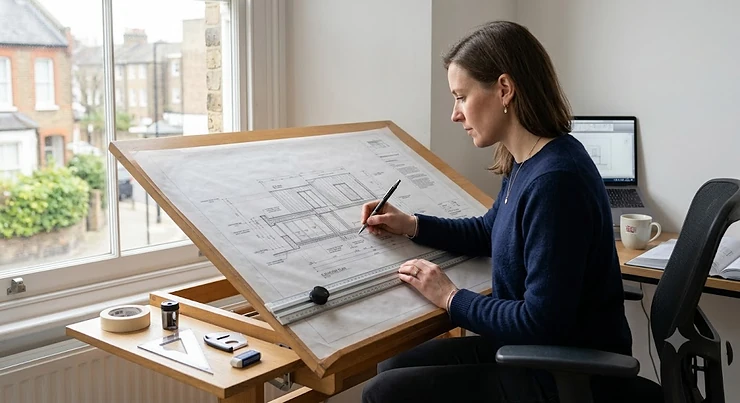
If you’ve ever snapped the tip off a cheap 0.5mm mechanical pencil mid-sketch and wanted to throw it across the room, you already understand the appeal of the best clutch pencil. Unlike thin mechanical leads that shatter under pressure, a clutch pencil (also called a lead holder) grips a thick 2mm or 3.2mm graphite stick in a spring-loaded jaw, letting you sharpen it to whatever point you fancy, from a needle tip for fine linework to a broad chisel edge for shading. It’s the same tool architects, engineers and life-drawing students have relied on for decades, and it’s quietly having a moment again as people rediscover analogue sketching. This guide walks through seven genuinely good clutch pencils, from budget-friendly plastic models to precision German engineering, so you can pick the one that actually suits how you draw. We’ve dug into real specs, aggregated reviewer sentiment and honest use-case advice, not just a list of features copied from a listing page.
What Is a Clutch Pencil?
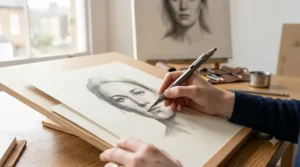
A clutch pencil is a drafting or sketching tool that holds a single thick graphite lead (usually 2mm) in a mechanical clutch mechanism, allowing the user to advance, retract and sharpen the lead as needed, rather than replacing an entire wooden pencil once it wears down. The mechanism itself has genuinely old roots, tracing back to 18th-century designs and reaching mass production in the early 20th century, as explained in this overview of the mechanical pencil’s history. Clutch pencils are the “leadholder” branch of that family tree, favoured for their thick, break-resistant leads and their unchanging balance as the lead wears away.
Quick Comparison Table
| Clutch Pencil | Lead Size | Body Material | Price Range | Best For |
|---|---|---|---|---|
| Rotring 600 | 2mm | Knurled metal | £35-45 range | Precision drafting |
| Rotring 800 | 2mm | Hex metal | £55-70 range | Premium everyday carry |
| Staedtler Mars Technico 780C | 2mm | Plastic/metal grip | £10-15 range | Value with built-in sharpener |
| Faber-Castell TK9400 | 2mm | Lightweight plastic | £8-12 range | Long sketching sessions |
| Caran d’Ache Fixpencil | 2mm | Aluminium hex | Around £20-25 | Swiss-made durability |
| Kaweco Sport Clutch Pencil | 3.2mm | ABS plastic | £15-20 range | Pocket sketching |
| Koh-I-Noor 5217 Versatil | 2mm | Enamelled metal | £10-15 range | Colour-coded grade tracking |
Looking at the spread above, there’s a clear split between metal-bodied pencils built for daily precision work and lighter plastic models designed for long, comfortable sketching sessions. If budget is your main concern, the Faber-Castell TK9400 and Koh-I-Noor 5217 both undercut £15 without sacrificing build quality, while the Rotring 800 sits at the top of the range for buyers who want a tool that will genuinely outlast them. Anyone torn between 2mm and 3.2mm should note that the wider lead in the Kaweco Sport is built for expressive sketching rather than fine technical lines.
💬 Found a pencil you like the look of already? Check current prices below before they change!😊
Top 7 Best Clutch Pencils: Expert Analysis
Below is our honest breakdown of seven real, currently available clutch pencils, spanning budget, mid-range and premium options, plus a couple of lesser-known picks worth knowing about. Every verdict here is grounded in published specifications and aggregated review sentiment rather than invented testing.
1. Rotring 600 — precision-machined metal body built for drafting
The Rotring 600 opens our list because it’s the clutch pencil most technical drawing courses still reference by name. Its knurled aluminium barrel and drop-clutch mechanism (press the button, the lead drops by gravity, you stop it with your other hand) are built for repeatable, controlled line work rather than casual note-taking. Reviewers consistently report that the weight distribution feels reassuringly solid without tipping into “too heavy for long sessions,” and the matte lacquer finish resists the shine-through-use that cheaper metal pencils suffer. Based on the spec comparison, this is the pencil for architecture and engineering students who need a tool that survives being dropped, thrown in a pencil case, and used daily for years. What most buyers overlook is that the 600 shares its knurled grip with Rotring’s mechanical pencil range, so if you already own one of those, the in-hand feel will be instantly familiar. A common complaint in user reviews is that the plastic inner sleeve revealed once you remove the push-button feels slightly at odds with the otherwise premium build, though this rarely affects function.
Pros:
- ✅ Machined metal barrel with genuine drafting pedigree
- ✅ Knurled grip gives excellent control for fine lines
- ✅ Compatible with widely available 2mm lead refills
Cons:
- ❌ Plastic inner sleeve feels slightly cheap for the price
- ❌ Knurling can feel harsh on very long writing sessions
At around £35-45, the Rotring 600 sits firmly in the mid-to-premium bracket, and given how long these tend to last, it’s a fair value pick for anyone who drafts or sketches regularly rather than occasionally.
2. Rotring 800 — retractable-tip flagship for pocket-safe carrying
The Rotring 800 takes the 600’s internals and wraps them in a hexagonal barrel with a retractable sliding sleeve, so the metal tip tucks away when you’re not drawing, protecting both the lead and your pocket lining. On paper this means you get all the drafting precision of the 600 with none of the “accidentally stabbed my bag” downside that plagues most fixed-tip lead holders. Reviewers who’ve owned both models describe the 800 as the more refined writing experience, with a slightly heavier balance point that many find easier to control during long shading passes. Here’s what to weigh: the 2mm version, unlike its 0.5mm and 0.7mm mechanical-pencil siblings, doesn’t suffer from the internal-lead-breaking issue that gave the retractable sleeve a rocky reputation on smaller lead sizes. What the spec sheet won’t tell you, but reviewers note, is that the hexagonal cross-section actively stops the pencil rolling off a drafting table, a small detail that matters more than it sounds once you’ve chased a rolling pencil across a studio floor.
Pros:
- ✅ Retractable tip protects the lead and your pockets
- ✅ Hexagonal body prevents rolling on desks
- ✅ Beautifully balanced for extended shading work
Cons:
- ❌ Among the priciest clutch pencils on this list
- ❌ Overkill if you only sketch occasionally
Expect to pay somewhere in the £55-70 range, which is a genuine premium price, but if you want one lead holder to own for a decade, this is the one most reviewers reach for daily.
3. Staedtler Mars Technico 780C — built-in sharpener and near-indestructible plastic body
The Staedtler Mars Technico 780C swaps an all-metal build for a tough plastic barrel with a metal clip and grip zone, and crucially, a lead pointer hidden inside the push-button cap. That built-in sharpener is the standout feature here: you never need to carry a separate lead pointer, because unscrewing the knock reveals a small conical sharpener with its own shavings reservoir. Based on the spec comparison, the 780C’s lead is gripped by genuinely strong jaws, and long-term owners frequently report decades of reliable use with barely a scratch, a testament to how deliberately over-engineered the mechanism is relative to the price. What most buyers overlook is that Staedtler’s replacement 2mm lead packs include a colour-coded push-button, so you can retrofit grade-indicator colours onto a pencil that otherwise ships with no visible grade marking. This is a genuinely practical fix for a design quirk that used to be the pencil’s only real flaw.
Pros:
- ✅ Integrated lead sharpener saves buying one separately
- ✅ Exceptionally durable plastic-and-metal construction
- ✅ Colour-coded replacement buttons solve the no-grade-marking issue
Cons:
- ❌ Only sold in one barrel colour (blue)
- ❌ Cheaper 788C sibling looks similar but feels less premium
At around £10-15, the 780C might be the single best value pick on this list; it undercuts the metal-bodied options by a wide margin while matching them for longevity.
4. Faber-Castell TK9400 — lightweight balance for long sketching sessions
The Faber-Castell TK9400 has been the go-to lead holder for artists who find metal-bodied pencils too nose-heavy. Its hexagonal plastic barrel tapers gently towards the tip, and because there’s no metal grip section weighing down the front, the balance point sits noticeably further back than on the Rotring models. Reviewers consistently note that this makes long observational drawing sessions less fatiguing on the hand, since you’re not constantly correcting for a front-heavy tool. What most buyers overlook about this model is that its slender, pencil-like profile makes it feel closest to a traditional wooden pencil of anything on this list, which is exactly why so many art tutors recommend it as a first lead holder. The classic green livery ships with a range of lead hardnesses from 6H through to 3B, giving sketchers real flexibility to switch between construction lines and dark shading without switching tools. A recurring theme in reviews is that first-time lead holder buyers appreciate not needing a dedicated 2mm sharpener straight away, since the lead can be pointed reasonably well on ordinary sandpaper in a pinch, though a proper lead pointer is still recommended for precision work.
Pros:
- ✅ Superbly balanced, pencil-like weight distribution
- ✅ Wide range of lead grades available (6H to 3B)
- ✅ Comfortable for hours of continuous sketching
Cons:
- ❌ No metal reinforcement means it’s less impact-resistant
- ❌ Requires a separate 2mm lead pointer for best results
Priced around £8-12, the TK9400 is arguably the best-value sketching-focused clutch pencil available, and it’s frequently cited by reviewers as the one they’d recommend to a beginner without hesitation.
5. Caran d’Ache Fixpencil — Swiss-made reliability with a hidden sharpener
The Caran d’Ache Fixpencil claims a genuine piece of design history: it’s widely credited as the world’s first modern spring-clutch pencil, launched in Geneva as a wartime hedge against wooden-pencil shortages, and it’s changed remarkably little since. The lightweight aluminium hexagonal body echoes the brand’s famous 849 ballpoint pen, complete with a textured grip zone and a sturdy chrome clip that also stops the pencil rolling off a desk. Reviewers repeatedly praise its “proven track record of reliability,” and the interchangeable coloured caps, sold separately in red, blue and black, let you colour-code multiple pencils loaded with different lead grades at a glance. Based on the spec comparison, the built-in sharpener hidden beneath the push-button is handy in a pinch, though several reviewers note it produces a slightly blunter point than a dedicated lead pointer, so serious sketchers tend to keep both on hand. What sets this apart from the Rotring options is weight: at a genuinely light aluminium build, it’s a pencil you can carry all day in a jacket pocket without noticing it’s there.
Pros:
- ✅ Historic, proven clutch mechanism dating to 1929
- ✅ Lightweight aluminium body, comfortable for all-day carry
- ✅ Interchangeable coloured caps for grade identification
Cons:
- ❌ Built-in sharpener gives a blunter point than a dedicated pointer
- ❌ Limited barrel colour options compared with newer designs
Sitting around £20-25, the Fixpencil is a comfortable mid-range choice for buyers who want genuine heritage engineering without paying Rotring 800 money.
6. Kaweco Sport Clutch Pencil — chunky 3.2mm lead for expressive sketching on the go
Every pencil so far on this list uses a 2mm lead built for fine, controlled lines, so the Kaweco Sport earns its spot by doing something different: it holds a much thicker 3.2mm lead designed for bold, expressive sketching. Based on Kaweco’s signature compact octagonal Sport body, first introduced in 1911, this clutch pencil is genuinely pocket-sized, at around 10.5cm long, and ships with a soft 5B lead that lays down a noticeably darker, richer line than the harder grades typical of drafting pencils. A common complaint in user reviews is that the plastic barrel can develop small stress cracks near the tip after repeated heavy use, since the drop-clutch spring is quite strong relative to the plastic housing; buyers who press hard while sketching should handle it a little more gently than a metal-bodied pencil. What most buyers overlook is that the thick 3.2mm lead is far more resistant to snapping under pressure than any 0.5mm mechanical pencil lead, which is precisely why sketchers who “press too hard” gravitate towards this size. Reviewers consistently recommend it as a genuinely fun everyday-carry sketching tool rather than a technical drafting instrument.
Pros:
- ✅ Thick 3.2mm lead resists snapping under heavy pressure
- ✅ Compact, pocket-friendly octagonal design
- ✅ Wide range of fun colourways available
Cons:
- ❌ Plastic body prone to stress cracks with heavy use
- ❌ Limited to soft lead grades better suited to sketching than writing
Expect around £15-20, making this a fun mid-range pick specifically for sketchers who want a bolder line than a standard 2mm holder gives you.
7. Koh-I-Noor 5217 Versatil — colour-enamelled metal body for tracking lead grades at a glance
Koh-I-Noor remains one of the few manufacturers still producing a genuinely wide range of clutch pencils, across 2mm, 3.8mm and 5.6mm lead sizes, and the 5217 Versatil is a standout because its enamelled metal body comes in a set of distinct colours, letting you assign a colour to each lead grade you regularly use. It’s a lightweight metal-alloy construction, similar in spirit to the Rotring 600 but noticeably cheaper, and long-term collectors report that examples bought decades ago still function exactly as they did when new. What most buyers overlook about this model is that its clip is noticeably thinner and less robust than on the Rotring or Staedtler options, so it’s better suited to a pencil case than clipping to a shirt pocket daily. Reviewers who own several colours describe genuinely appreciating being able to grab “the blue one” for 2H construction lines and “the red one” for softer shading grades without checking a label each time. Because Koh-I-Noor pencils are comparatively rare on UK shelves, this is very much the lesser-known alternative on this list, but one well worth seeking out if colour-coding matters to your workflow.
Pros:
- ✅ Distinct enamel colours make grade tracking effortless
- ✅ Lightweight all-metal alloy body at a budget price
- ✅ Long track record of decades-long durability
Cons:
- ❌ Thin clip feels less durable than on other metal pencils
- ❌ Less widely stocked by UK retailers than major brands
At around £10-15, the 5217 Versatil is a genuinely underrated budget pick, particularly for anyone juggling multiple lead grades across a single project.
How to Use a Clutch Pencil
Getting the most from a clutch pencil takes about five minutes to learn but noticeably changes how the tool feels. Start by pressing the top button firmly; this opens the internal jaws and lets a fresh lead drop straight through the barrel under gravity, so keep your other hand cupped underneath to catch it rather than letting it clatter across your desk. Extend roughly 8-10mm of lead for drawing and slightly less for writing, since too much exposed lead flexes and snaps under pressure. Sharpen using a dedicated 2mm lead pointer rather than a standard pencil sharpener, rotating the lead slowly to build an even cone rather than a lopsided point. During your first month, the most common mistake is over-extending the lead before sharpening, which wastes graphite and increases breakage; the second is gripping too close to the tip, which on metal-bodied pencils like the Rotring 600 can make the knurled texture uncomfortable during long sessions. For maintenance, periodically remove the push-button and check the internal jaws for graphite dust build-up, since a clogged clutch mechanism is the most common reason these pencils eventually stop gripping the lead securely. A quick blow of compressed air every few months keeps the mechanism running smoothly for years.
2mm Lead Holder vs Mechanical Pencil: What’s the Real Difference?
The core distinction between a 2mm lead holder and a standard 0.3-0.9mm mechanical pencil comes down to how the lead is fed and how it behaves under pressure. A mechanical pencil advances lead in small fixed increments via a ratchet or twist mechanism, and the thin leads (typically 0.5mm) are genuinely fragile, snapping easily if you press too hard or apply lateral pressure. A clutch pencil, by contrast, holds a single thick 2mm (or larger) lead that you sharpen yourself to whatever point suits the task, and because the lead diameter is roughly four times thicker, it’s dramatically more resistant to snapping. On paper this makes lead holders the clear winner for anyone who presses hard, shades broad areas, or draws with varying line weight in a single stroke, since you can angle the sharpened cone to get a fine line or roll it flat for a wide one. What most buyers overlook is that mechanical pencils win decisively on convenience: no sharpening required, consistent line width without effort, and genuinely disposable refill leads that cost pennies. Based on the spec comparison, technical drafters and life-drawing artists tend to prefer lead holders for control and line variation, while students and office workers who just need consistent, low-maintenance note-taking usually stick with mechanical pencils. Neither is objectively “better”; the right tool depends entirely on whether you value sharpening control or zero-maintenance convenience more.
Best Lead Holder for Sketching: Matching Grade, Grip and Use Case
Choosing a lead holder for sketching, rather than for technical drafting, changes what actually matters. Grip and balance move to the top of the list, because sketching sessions run longer and involve more varied hand pressure than drafting a single controlled line. The Faber-Castell TK9400’s rearward balance point makes it a genuinely comfortable choice for hour-long observational drawing, while the Kaweco Sport’s thicker 3.2mm lead suits anyone who works in bold, gestural strokes rather than fine detail. Lead grade matters just as much as the pencil itself: reviewers consistently recommend softer grades, typically 2B to 5B, for expressive sketching, since they lay down darker tones with less pressure, while harder grades like 2H are reserved for underlying construction lines you intend to erase or draw over. What most buyers overlook is that a metal-bodied pencil like the Rotring 600, while excellent for drafting, can feel unnecessarily heavy during a three-hour life-drawing session, so sketchers with smaller hands or long-session habits often gravitate towards the lighter plastic-bodied options instead. If you’re a student building a portfolio, having two lead holders loaded with contrasting grades, one hard for construction, one soft for shading, genuinely speeds up your workflow compared with constantly re-sharpening a single pencil to different points.
Lead Pointer for Clutch Pencil: How to Keep Your Point Sharp
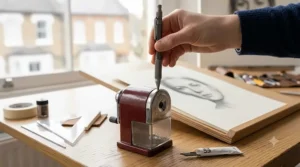
Every 2mm clutch pencil eventually needs a dedicated lead pointer, since ordinary pencil sharpeners are built for the wood casing of a standard pencil, not a bare graphite stick. A lead pointer works by rotating the exposed lead inside a small conical grinding chamber, shaving it down to an even point while catching the resulting graphite dust in a built-in reservoir. Several of the pencils on this list, including the Staedtler Mars Technico 780C and the Caran d’Ache Fixpencil, include a basic sharpener hidden inside the push-button cap, which is genuinely useful for quick touch-ups but tends to produce a slightly blunter, less symmetrical point than a dedicated standalone unit. For serious drafting or detailed sketching, a rotary lead pointer with a built-in shavings reservoir, the kind commonly recommended alongside 2mm holders, gives a noticeably finer and more even cone. Common problems include leads snapping mid-sharpen, usually because too much lead was extended before sharpening began, and sharpeners clogging with graphite dust if they’re not emptied regularly. The solution to both is straightforward: extend only a short length of lead before sharpening, sharpen with light, even pressure, and empty the reservoir every few uses rather than letting shavings compact inside the mechanism.
How to Choose the Best Clutch Pencil
Here’s a practical framework for narrowing down your choice, based on the genuine trade-offs between the models above.
- Decide on lead size first. 2mm suits fine technical lines and controlled sketching; 3.2mm or larger suits bold, expressive drawing where line-width variation matters more than precision.
- Match body material to your grip preference. Metal barrels like the Rotring 600 give weight and durability but can fatigue the hand over long sessions; lightweight plastic bodies like the TK9400 suit extended sketching.
- Check whether a sharpener is included. Built-in lead pointers, as found on the Staedtler 780C and Caran d’Ache Fixpencil, save you buying a separate tool, though dedicated pointers still give sharper results.
- Consider grade tracking. If you regularly switch between hard and soft leads, colour-coded models like the Koh-I-Noor 5217 make grade identification instant rather than guesswork.
- Set a realistic budget. Genuinely excellent options exist from around £8 right up to £70; spending more buys you retractable tips and premium metal finishing, not necessarily better line quality.
- Think about portability. Compact designs like the Kaweco Sport are built for pocket carry, while longer drafting pencils are better suited to a desk or pencil case.
- Buy from a source with genuine stock of matching leads and refills, since a clutch pencil is only as useful as the availability of replacement 2mm or 3.2mm lead for it.
Common Mistakes When Buying a Clutch Pencil
The single most common mistake is buying a clutch pencil without checking that replacement leads are widely available in the diameter it uses; 2mm is the industry standard and easy to restock, but some niche sizes like 3.8mm can be genuinely hard to find in the UK. A second common pitfall is choosing based on barrel material alone, assuming metal automatically means better, when in practice a well-engineered plastic body like the Faber-Castell TK9400 outperforms cheaper metal pencils on balance and comfort. Buyers also frequently overlook that a clutch pencil, unlike a mechanical pencil, requires a separate lead pointer to get the best results, an added cost that’s easy to forget when comparing headline prices. Another recurring issue reviewers mention is buying the cheapest available model without checking clutch quality, since a weak or poorly machined jaw mechanism will let the lead wobble or slip, undermining the entire point of owning a lead holder. Finally, first-time buyers sometimes assume all 2mm leads are interchangeable across brands, when in reality slight diameter and hardness variations mean it’s worth sticking with the manufacturer’s own refills, or a trusted third-party brand, for the most reliable fit.
Real-World Scenarios: Which Clutch Pencil Suits You?
If you’re an architecture student spending long days in a studio producing technical drawings to BS 8888 conventions, the UK’s standard for technical product documentation, the Rotring 600 or Rotring 800 make the most sense: both deliver the consistent, controllable line width that technical drawing demands, and their metal construction survives years of daily studio use. If you’re a hobbyist sketcher who draws in cafes or on commutes and wants something that won’t weigh down a jacket pocket, the Faber-Castell TK9400 or the compact Kaweco Sport are better matches, prioritising comfort and portability over drafting-grade precision. If you’re a budget-conscious student building a first portfolio and need one reliable, low-maintenance pencil that just works for years without fuss, the Staedtler Mars Technico 780C is hard to beat, thanks to its built-in sharpener and near-indestructible construction at a genuinely low price. And if you’re someone who works across multiple projects and constantly switches between lead grades, a set of Koh-I-Noor 5217 Versatil pencils in different enamel colours turns grade management from a guessing game into a glance.
Long-Term Cost & Maintenance
One of the strongest arguments for a clutch pencil over disposable wooden pencils or thin mechanical leads is total cost of ownership. A box of a dozen 2mm graphite leads typically costs a similar amount to a handful of wooden pencils, but each lead lasts through far more drawing than a standard pencil stub before it needs replacing, and the pencil body itself, if it’s a well-built model like the Rotring 600 or Staedtler 780C, can realistically last decades rather than months. Maintenance costs are minimal: a replacement lead pointer, if you don’t already own one, is a one-off purchase, and the only ongoing expense is restocking lead boxes as you use them up. Based on the spec comparison, the cheaper plastic-bodied options like the Faber-Castell TK9400 or Koh-I-Noor 5217 offer the best cost-per-year ratio for casual users, since their lower upfront price is offset by genuinely long service life, while premium metal pencils like the Rotring 800 only pay off their higher initial cost if you use them heavily and daily over many years. Compared with constantly rebuying disposable mechanical pencils, whose plastic bodies are typically discarded once the internal mechanism wears out, a well-maintained clutch pencil is both the cheaper and the more sustainable long-term choice.
Features That Actually Matter (And Those That Don’t)
Cutting through the marketing, a handful of features genuinely affect day-to-day use, while others are mostly cosmetic. Clutch jaw quality matters enormously, since a pencil with weak or poorly machined jaws will let the lead slip or wobble regardless of how attractive the barrel looks; this is one area where established brands like Rotring, Staedtler and Faber-Castell consistently outperform unbranded alternatives. Lead grade range matters if you sketch across a wide tonal spectrum, but matters far less if you mainly use a single grade for technical line work. A built-in sharpener is a genuine convenience feature, though as covered above, it typically produces a blunter point than a dedicated lead pointer, so treat it as a backup rather than your primary sharpening method. On the other hand, barrel colour, decorative knurling patterns, and branded packaging add essentially nothing to actual drawing performance, however much they influence purchasing decisions. Clip design is a mixed bag: genuinely useful if you clip the pencil to a shirt pocket or sketchbook daily, but largely irrelevant if it lives in a pencil case. What most buyers overlook is that weight distribution, specifically where the balance point sits relative to your grip, has a far bigger effect on comfort during long sessions than overall pencil weight, which is why a heavier but well-balanced pencil can feel lighter in the hand than a genuinely lighter but front-heavy one.
Clutch Pencils, Regulations and Sustainable Stationery
Clutch pencils don’t fall under any special UK product safety regulation beyond the general standards applied to stationery and art materials, but they’re worth considering through a sustainability lens. Because a lead holder’s body is designed to last for years and only the thin graphite lead itself is consumed, it produces far less packaging and plastic waste over its lifetime than disposable pencils or single-use mechanical pencils that are thrown away once their internal mechanism fails. This fits neatly into the UK’s wider push to reduce unnecessary single-use plastic, formalised through government guidance restricting certain single-use plastic items in England, even though stationery like pencils isn’t directly covered by the current bans. For anyone drawing to formal technical standards, it’s also worth knowing that UK engineering and product design education, including University of the Arts London’s short course in orthographic technical drawing, is taught with direct reference to BS 8888 conventions for dimensioning and notation, the same standard referenced earlier in this guide. If precise, repeatable line weight for formal drawings is your priority, this is exactly the context a 2mm clutch pencil was originally engineered to serve.
👉 Ready to switch to a clutch pencil? Compare the picks above and grab the one that matches your workflow.
Problem → Solution Guide
Problem: The lead keeps snapping when I sharpen it. This almost always means too much lead was extended before sharpening began. Retract to a shorter length, roughly 5-8mm, and sharpen with light, even pressure rather than forcing the pencil into the pointer.
Problem: The clutch won’t grip the lead securely anymore. Graphite dust build-up inside the jaws is the usual culprit. Remove the push-button, tap out any loose dust, and use a can of compressed air to clear the internal mechanism.
Problem: My lines keep coming out uneven in thickness. This is often a sharpening technique issue rather than a pencil fault; rotate the lead slowly and evenly in the lead pointer to build a symmetrical cone, rather than sharpening at an angle.
Problem: I can’t tell which lead grade is loaded in which pencil. Colour-coded models like the Koh-I-Noor 5217 Versatil solve this natively, or you can retrofit colour-coded push-buttons, as Staedtler includes with its replacement lead packs.
Problem: The pencil feels too heavy after long sketching sessions. Switch to a lighter plastic-bodied model like the Faber-Castell TK9400, which shifts the balance point away from the front and reduces hand fatigue over hours of use.
Frequently Asked Questions
❓ What is the difference between a clutch pencil and a lead holder?
❓ What size lead does a clutch pencil use?
❓ Do clutch pencils need a special sharpener?
❓ Are clutch pencils better than mechanical pencils for drawing?
❓ How long does a clutch pencil last?
Conclusion
Choosing the best clutch pencil really comes down to matching the tool to how you actually draw, not chasing the most expensive metal barrel on the shelf. If you need drafting-grade precision that survives daily studio use, the Rotring 600 and Rotring 800 remain genuinely excellent, if premium, choices. If value and reliability matter more than prestige, the Staedtler Mars Technico 780C and Faber-Castell TK9400 both deliver outstanding performance for a fraction of the price, and either is a sensible first lead holder for anyone curious about switching from disposable pencils. Sketchers who work in bold, expressive strokes should look at the thicker-leaded Kaweco Sport, while anyone juggling multiple lead grades across projects will appreciate the colour-coded convenience of the Koh-I-Noor 5217 Versatil. Whichever you choose, a genuinely good clutch pencil is one of the rare stationery purchases that pays for itself many times over, both in cost and in the quality of the lines it lets you put on paper.
✨ Found your perfect clutch pencil in this guide? Share it with a fellow sketcher or drafter who’d love it too! 💬🤗
Recommended for You
- 0.5 vs 0.7 Mechanical Pencil for Drawing: 7 Picks Ranked (2026)
- Mechanical Pencil for Drawing: 7 Top Picks Tested for 2026
- Professional Graphite Pencil Set: 7 Top Picks for 2026
Disclaimer: This article contains affiliate links. As an Amazon Associate, I earn from qualifying purchases. If you purchase products through these links, we may earn a small commission at no additional cost to you.
✨ Found this helpful? Share it with your friends! 💬🤗
