In This Article
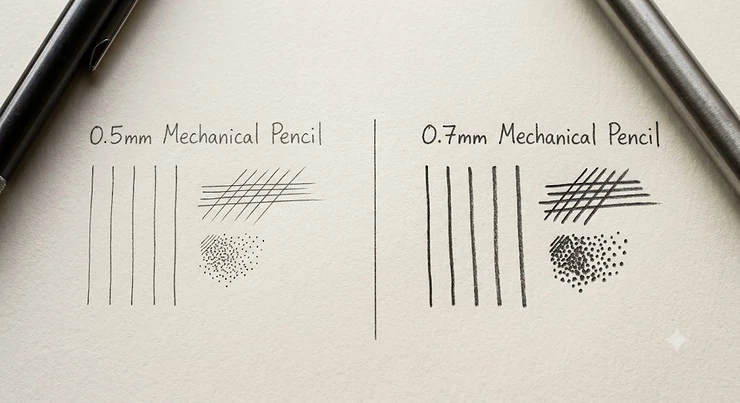
Stand in the pencil aisle long enough and you’ll notice something odd: nobody ever fights over 0.9mm. It’s always the 0.5 versus 0.7 crowd, squaring off like two rival football supporters who both think they’ve got the better squad. 0.5 vs 0.7 mechanical pencil for drawing is one of those questions that sounds trivial until you’ve snapped your third lead mid-sketch, or watched your careful linework turn into a smudgy wedge halfway down the page. A 0.5mm mechanical pencil is a fine-line writing and drawing tool that produces crisp, thin marks and takes a wide range of lead grades, while a 0.7mm version is thicker, more break-resistant, and better suited to looser, faster mark-making. Neither is objectively “better” — they’re built for different hands, different papers and different drawing habits.
This guide digs into real products you can actually buy on amazon.co.uk, not marketing copy dressed up as advice. We’ve pulled together genuine specifications, aggregated review sentiment, and honest comparative reasoning across seven mechanical pencils spanning budget classics to properly engineered drafting tools. You’ll get a straight comparison of lead sizes, a breakdown of what “HB” and “2B” actually mean for your linework, and a decision framework for matching a pencil to how you actually draw — whether that’s tight architectural elevations or loose gestural figure studies.
We’ll also tackle the practical stuff nobody tells you until you’ve already bought the wrong pencil: how lead grade interacts with lead diameter, why a heavier pencil can paradoxically give you more line variation, and which mistakes cost people money and frustration. By the end, you’ll know exactly which lead size — and which specific pencil — suits your drawing style, without having to learn the hard way.
Quick Comparison: 0.5mm vs 0.7mm Mechanical Pencils at a Glance
| Feature | 0.5mm Mechanical Pencil | 0.7mm Mechanical Pencil | Best For |
|---|---|---|---|
| Line width | Fine, consistent | Bolder, thicker | 0.5mm: detail work; 0.7mm: quick sketching |
| Breakage resistance | Lower — snaps under heavy pressure | Higher — tolerates looser strokes | 0.7mm for heavy-handed drawers |
| Lead grade range | Widest choice (from 4H to 4B and beyond) | Slightly narrower but still broad | 0.5mm for tonal range work |
| Typical use case | Technical drawing, hatching, small detail | Gestural sketching, shading, quick studies | Depends on drawing pace |
| Sharpening required | Never | Never | Tie |
Looking at the table above, the honest takeaway is that 0.5mm rewards a lighter, more controlled hand with genuinely fine detail, while 0.7mm trades a little precision for durability and drawing speed. Reviewers and working artists alike tend to describe 0.7mm as the “forgiving” option for looser sketching, while 0.5mm stays the go-to for anyone doing architectural or highly detailed linework. If you’re not sure which camp you’re in yet, the safest starting point — according to several professional drafting guides — is 0.5mm, since it handles both fine detail and moderate shading reasonably well, whereas 0.7mm struggles to produce truly crisp fine lines.
💬 Already know your lead size? Jump straight to the pencil that matches it below.
Top 7 Mechanical Pencils for Drawing: Expert Analysis
1. rOtring 600 — the drafting-grade gold standard for fine lines
The rOtring 600 has built its reputation on one thing: an all-metal body that turns lead diameter into a non-issue because everything else about the pencil is so precisely engineered. Available in 0.35mm, 0.5mm and 0.7mm, it uses a fixed 4mm lead sleeve and a hexagonal brass barrel that won’t roll off a drafting table. In practice, that fixed sleeve means less lead wobble than you’ll get from cheaper telescoping designs — the difference shows up as noticeably steadier hatching lines when you’re cross-hatching shadows at speed. Based on the spec comparison with plastic-bodied competitors, the weight (around 33g) is doing real work here: it lets the pencil’s own mass provide down-pressure, so you don’t have to grip as hard, which matters over a three-hour sketching session. This is the pencil professional architects and illustrators reach for when a client is watching, and reviewers consistently describe the knurled grip as either “perfectly aggressive” or “a bit much after two hours” — it really does depend on how sweaty your palms get. What most buyers overlook is that the fixed sleeve, while great for ruler work, means the tip stays exposed when you’re not writing, so a drop onto a hard floor is a genuine risk noted repeatedly in aggregated review sentiment.
Pros:
- ✅ Full-metal body gives fatigue-reducing weight and balance
- ✅ Fixed 4mm sleeve excels for ruler and stencil-guided lines
- ✅ Available in 0.35mm, 0.5mm and 0.7mm for any detail level
Cons:
- ❌ Exposed tip is vulnerable to damage if dropped
- ❌ Knurled grip can feel abrasive on very long sessions
Prices for the rOtring 600 typically sit in the £20-£30 range at the time of research, and given the lifetime of use most owners report, it represents strong long-term value despite the higher upfront cost than plastic alternatives.
2. Pentel GraphGear 1000 — best all-rounder for value and durability
If the rOtring 600 is the reference tool, the Pentel GraphGear 1000 is the pencil most artists actually settle on day to day, and it’s available in 0.3mm, 0.5mm, 0.7mm and 0.9mm with colour-coded grips for quick identification. Its dual-action retractable tip is the headline feature: press the clip and the sleeve pulls fully back into the brushed-steel barrel, meaning zero risk of a bent tip in a bag or pencil case. Here’s what to weigh: the brushed steel body is noticeably lighter than the rOtring 600, which some artists prefer for looser underdrawing where a heavy pencil fights against a relaxed hand. Aggregated review sentiment across UK and international listings repeatedly praises the retractable mechanism’s durability and the rubber grip “pips” for comfort, though a recurring complaint involves lead-reloading — several reviewers describe the internal chamber not always feeding a fresh lead through automatically, requiring a bit of gentle persuasion. The built-in lead hardness indicator is a small but genuinely useful touch for anyone who swaps between H and B grades on the same page. This is the mechanical pencil that regularly gets compared favourably against the rOtring 600 in owner reviews, largely on the basis of it being noticeably cheaper while covering almost the same ground.
Pros:
- ✅ Retractable tip protects against pocket and bag damage
- ✅ Built-in lead grade indicator for fast switching
- ✅ Lighter than full-metal rivals — better for long underdrawing sessions
Cons:
- ❌ Lead reload chamber can be fiddly, per repeated review reports
- ❌ Rubber grip pips wear smoother with years of heavy use
Expect a price in the £12-£20 range, which puts it firmly in the “buy once, keep for a decade” category rather than a disposable classroom pencil.
3. rOtring 800 — retractable tip for pocket-safe precision
The rOtring 800 takes the 600’s brass mechanism and hexagonal metal body and adds a twist-to-retract sleeve, solving the exposed-tip problem that dogs its sibling. Available in 0.5mm and 0.7mm in black or silver, the twist mechanism fully hides the lead sleeve when you’re done drawing, which is genuinely reassuring if this pencil lives in a jacket pocket alongside keys and loose change. What most buyers overlook about this model is that the retraction action itself becomes part of the appeal — reviewers repeatedly mention the satisfying click-and-twist as a small tactile pleasure that borders on fidget-toy territory. On paper this means you’re paying a premium (often noticeably more than the 600) for a mechanism, not for extra drawing performance, and some aggregated reviews explicitly flag that value-for-money verdict as mixed, with more than one owner noting the 600 or GraphGear 1000 draws just as well for meaningfully less. Where the 800 does win outright is portability: if you’re a student sketching on the move between lectures, a pocket-safe tip beats a slightly cheaper pencil that pokes a hole in your bag lining.
Pros:
- ✅ Twist-retract sleeve fully protects the tip when not in use
- ✅ Same precise brass mechanism as the acclaimed 600
- ✅ Hexagonal barrel resists rolling off tilted drawing boards
Cons:
- ❌ Noticeably pricier than the 600 for the same core drawing performance
- ❌ Some owners report the retracted tip developing slight play over time
The rOtring 800 usually retails in the £35-£50 range, making it the priciest pencil on this list — worth it mainly if pocket safety genuinely matters to your routine.
4. Staedtler Mars 925 — the low-centre-of-gravity classic
Staedtler’s 925 series has been a fixture on professional desks for decades, and the design logic is refreshingly specific: a low centre of gravity, achieved by concentrating weight near the tip, so the pencil’s own mass supplies down-pressure without you clenching your fingers. Available across 0.3mm, 0.5mm, 0.7mm, 0.9mm and 2.0mm, with ISO colour-coding on the barrel and pushbutton, it uses a heavy-duty brass clutch that reviewers describe as producing a solid, wobble-free click with no lead play. Reviewers consistently note the diamond-cut knurled grip as aggressive enough to lock fingertips in place during rapid work, which is exactly the point for technical drafting where precision at speed matters. The spec sheet won’t tell you this, but user reports suggest the aluminium body, while sturdy, isn’t quite as bombproof as the rOtring’s brass-and-steel construction — a handful of owners mention theirs cracking after a drop onto a hard floor, a fair trade for a lighter feel in extended sketching sessions. For artists who want German engineering without quite reaching rOtring pricing, the 925 sits in a genuinely sensible middle ground.
Pros:
- ✅ Low centre of gravity reduces hand fatigue on long sessions
- ✅ Brass clutch mechanism gives a firm, wobble-free click
- ✅ Available across five lead sizes including 2.0mm for shading
Cons:
- ❌ Aluminium body is less impact-resistant than full-brass rivals
- ❌ Aggressive knurled grip isn’t to everyone’s taste
Prices generally fall in the £15-£25 range depending on lead size and retailer, positioning it as excellent value against the pricier rOtring 800.
5. Uni Kuru Toga — self-rotating lead for consistent line weight
The Kuru Toga solves a problem most artists don’t realise they have until they see it explained: standard mechanical pencil lead wears into a slanted, chisel-shaped tip as you draw, and depending on how you’re holding the pencil at any given moment, that uneven tip produces inconsistent line widths. Uni’s internal “engine” rotates the 0.5mm lead a fraction of a turn every time it lifts off the page, keeping the tip conical and the line width genuinely uniform — this is a mechanical solution to a problem, not a marketing claim, and it’s backed by a wide base of aggregated review sentiment describing noticeably fewer lead breakages as a direct result of the more even wear pattern. Reviewers consistently note that after switching from a standard pencil, going back feels like a downgrade, with several specifically mentioning that a well-known drafting pencil blunted “quicker and easier” by comparison. Here’s what to weigh: the barrel is mostly plastic with an aluminium lower section, so it doesn’t have the same reassuring heft as the metal-bodied options on this list, and a design flaw reported by multiple owners involves the plastic barrel cracking at a specific weak point near the base after extended use.
Pros:
- ✅ Auto-rotating lead keeps line width consistent throughout a session
- ✅ Genuinely reduces lead breakage versus standard mechanisms
- ✅ Inexpensive for the engineering packed inside
Cons:
- ❌ Mostly plastic construction feels less premium than metal rivals
- ❌ Some owners report the barrel cracking at a weak point over time
At around £3-£12 depending on the specific model (standard, Roulette, or Advance), it’s one of the most affordable genuine innovations in this list.
6. Faber-Castell TK-Fine — budget-friendly multi-size wallet set
Faber-Castell’s TK-Fine range takes a different approach entirely: rather than committing to one lead size, the wallet-of-three set bundles 0.35mm, 0.5mm and 0.7mm pencils together, letting you test all three diameters before settling on a favourite. Each pencil has a fully retractable lead sleeve, a rigid lead guide for ruler-based drawing, and a colour-coded pushbutton indicating line width. Reviewers consistently praise the built-in eraser and cleaning needle as small conveniences that save you buying separate accessories, and the plastic body — while obviously less premium than the metal options above — keeps the whole set genuinely affordable. What most buyers overlook is that this is arguably the best starting point for anyone still asking themselves the 0.5 vs 0.7 mechanical pencil for drawing question, since you get to run a direct side-by-side comparison on your own paper rather than guessing from a spec sheet. A recurring complaint in aggregated reviews concerns the thinnest 0.35mm pencil specifically, with several owners noting persistent lead-feed issues on that variant, while the 0.5mm and 0.7mm pencils in the same set are described as performing reliably.
Pros:
- ✅ Three lead sizes in one set for direct side-by-side testing
- ✅ Fully retractable sleeve protects the tip
- ✅ Built-in eraser and cleaning needle add genuine convenience
Cons:
- ❌ 0.35mm variant has repeated lead-feed complaints
- ❌ Plastic build lacks the heft of metal-bodied rivals
The wallet of three typically costs in the £15-£21 range at the time of research, which works out cheaper per pencil than buying most single metal-bodied models.
7. Pentel P205 — the no-frills drafting pencil that never dies
The Pentel P205 is the pencil that generations of engineering and architecture students were handed on their first day, largely because it was what the campus stationery shop stocked, and it has stuck around because it simply refuses to break. Supplied with Super Hi-Polymer HB refill leads at 0.5mm (the 0.7mm sibling is the P207), it has a straightforward click-advance mechanism, a comfortable ridged grip, and — per Pentel’s own warranty terms — genuinely long-term backing if the mechanism ever fails. Based on the spec comparison with pricier options on this list, the P205 gives up almost nothing in core drawing performance; it delivers the same “accuracy, precision and constant line width” as its costlier competitors, just without the brushed-steel finish or retractable sleeve. Long-time owners in aggregated reviews describe decades of continuous use from a single pencil, with some specifically noting they’ve owned the same P205 since the 1970s and it’s still functioning. The spec sheet won’t tell you this, but the trade-off is aesthetic and tactile rather than functional: it’s a plainer, lighter pencil that won’t turn heads on a desk, but for anyone who just wants reliable fine lines without spending on a premium finish, it’s difficult to beat.
Pros:
- ✅ Exceptionally durable mechanism with decades-long owner reports
- ✅ Delivers precision comparable to pricier metal-bodied pencils
- ✅ Backed by Pentel’s warranty for genuine long-term reassurance
Cons:
- ❌ Plain plastic finish lacks the premium feel of metal rivals
- ❌ Lighter weight means less natural down-pressure than heavier pencils
At roughly £3-£7, the P205 is the clearest budget pick on this list, and arguably the best value entry point if you’re still deciding whether drafting-style pencils suit your workflow at all.
Mechanical Pencil Lead Grades Explained
Understanding lead grades matters just as much as lead diameter, and it’s one of the most commonly misunderstood parts of buying a drawing pencil. The system runs on a scale from roughly 4H (hardest, lightest mark) through HB (the everyday middle ground) to 4B (softest, darkest mark), a scale Wikipedia’s overview of the mechanical pencil traces back to lead-holder pencils first documented in the 16th century, long before the mechanised clutch mechanisms we use today. The “H” stands for hardness — more clay or polymer binder relative to graphite — producing fine, light lines that resist smudging, which is exactly why technical drafting traditionally favours 2H to 4H grades. “B” grades flip that ratio toward more graphite, producing softer, darker marks that smudge more easily but blend beautifully for shading and tonal work.
Here’s the part that trips people up: lead grade and lead diameter are independent variables, not a package deal. You can load a 2B grade into a 0.5mm pencil for dark, fine detail work, or an H grade into a 0.7mm pencil for lighter, bolder outlining. Reviewers consistently note that Japanese-manufactured leads (Uni, Pentel) tend to read as slightly softer and darker than German-made equivalents (Staedtler, Faber-Castell) at the same nominal grade, since there’s no strict international standard governing exactly how dark an “HB” mark must be. What this means practically is that switching brands within the same stated grade can genuinely change your line’s darkness, so it’s worth testing before committing to a full set of refills.
✨ Not sure which grade suits your style? Check current lead refill options for the pencil above.
HB vs 2B Mechanical Lead: Which Should You Load?
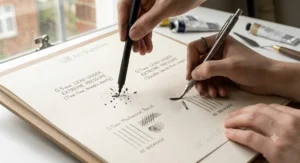
HB sits almost exactly in the middle of the hardness scale, and it’s the grade most mechanical pencils ship with by default — a sensible, unremarkable choice that handles everyday sketching, lettering, and light shading without complaint. 2B, two steps softer, produces a noticeably darker line for the same hand pressure, along with easier blending for shadow work and a softer, more expressive feel under the hand. Based on the spec comparison between the two, the practical trade-off is durability: softer 2B leads wear down faster and, in the thinner 0.3mm and 0.5mm diameters, are somewhat more prone to snapping under heavy pressure than the firmer HB core.
What most buyers overlook is how paper texture interacts with this choice. On smoother cartridge paper, HB often reads as slightly too light for confident line work, pushing many artists toward 2B by default; on rougher, toothier paper, HB frequently produces plenty of darkness on its own because the textured surface abrades more graphite onto the page with each stroke. If you do mostly technical underdrawing that later gets inked over, HB or even H makes sense, since you want lines light enough to erase cleanly without ghosting. If you’re producing a finished graphite drawing meant to stand on its own, 2B (or softer) gives you the tonal range and rich blacks that a harder lead simply can’t reach. Many artists keep both loaded in separate pencils rather than picking one — a habit reflected in Creative Bloq’s buying guide, which recommends stocking multiple lead grades precisely because writing, drafting and expressive shading each pull in a different direction.
Choosing the Right Lead Size for Sketching
Picking the right lead size for sketching comes down to a short list of practical questions rather than brand loyalty, and working through them in order tends to save considerably more money than guessing:
- Identify your dominant subject matter. Architectural and technical subjects favour 0.5mm or finer; loose figure studies and gestural sketching tolerate — and often benefit from — 0.7mm’s extra durability.
- Assess your hand pressure honestly. Heavy-handed drawers snap thin leads more often; if you’ve broken several 0.3-0.5mm leads already, 0.7mm removes that friction entirely.
- Consider your paper’s tooth. Rougher, heavily textured paper wears down fine leads faster, making 0.7mm a more economical choice for that surface.
- Factor in session length. Long sketching sessions benefit from a pencil whose weight and grip reduce fatigue more than the lead diameter itself matters.
- Think about erasing and correction. Finer 0.5mm lines erase more cleanly for underdrawing you plan to redraw over; 0.7mm marks are bolder and harder to fully lift.
- Test before committing to refills. A wallet set like the Faber-Castell TK-Fine above lets you compare diameters directly rather than theorising.
- Match lead grade to lead size last. Once diameter is settled, choose HB for general use, 2B-4B for expressive shading, and 2H-4H for tight technical lines.
Reviewers and professional artists alike tend to converge on the same conclusion once they’ve worked through this checklist: 0.5mm is the more versatile all-rounder for most drawing applications, while 0.7mm earns its keep specifically for speed and durability rather than raw precision.
Which Mechanical Pencil Is Best for Artists
Artists searching specifically for the best mechanical pencil tend to fall into three rough camps, and the honest answer changes depending on which one you’re in. Illustrators doing tight linework, comic inking guides, or architectural concept sketches consistently gravitate toward 0.3mm or 0.5mm pencils in a metal-bodied model like the rOtring 600 or Pentel GraphGear 1000, since the fixed lead sleeve and reduced wobble genuinely matter when a ruler-straight line needs to stay ruler-straight. Sketchbook artists doing rapid gesture drawing, life drawing, or loose concept exploration tend to prefer 0.7mm or even a 2mm clutch pencil, prioritising speed and durability over fine detail, and often reporting via aggregated reviews that they simply break fewer leads mid-session as a result.
The third camp — students and hobbyists still working out their own preferences — is arguably best served by the Uni Kuru Toga or the Faber-Castell TK-Fine wallet set, since both let you experiment without committing serious money to a single format. What most buyers overlook here is that “best for artists” genuinely isn’t a single answer; a portrait artist building deep tonal shadow with 4B lead has almost nothing in common, tool-wise, with a technical illustrator drafting perspective lines in 2H. Reading a few genuine aggregated reviews for your specific subject matter — architecture, comics, life drawing, product design — will tell you more than any single “best overall” recommendation.
Drafting Pencil for Fine Lines: When Precision Beats Speed
A dedicated drafting pencil for fine lines earns that description through a specific combination of features rarely all present in a single cheap pencil: a fixed (not retractable) lead sleeve for zero wobble against a ruler, a narrow lead diameter (0.3mm-0.5mm), and a harder lead grade that resists smudging under a straightedge. The rOtring 600 and Staedtler 925 on our list both fit this description precisely, and it’s worth understanding why that fixed sleeve matters so much: retractable designs, however well engineered, introduce a tiny amount of mechanical play at the point where the sleeve meets the barrel, and that play translates into a barely perceptible wobble that shows up as slightly fuzzy edges on long ruled lines.
Compared with a general-purpose mechanical pencil, a true drafting pencil trades some everyday convenience — heavier weight, less shock resistance if dropped — for that dead-straight precision. On paper this means a drafting pencil is overkill for casual note-taking or loose sketching, where the extra weight and rigidity offer no benefit and simply add bulk to a pencil case. But for anyone producing technical elevations, mechanical drawings, or fine architectural linework where a ruler is involved in nearly every stroke, that fixed-sleeve rigidity is the single feature worth paying a premium for, more so than brand name or finish.
Pencil Weight and Line Variation: What Nobody Tells You
Here’s a genuinely counterintuitive point that rarely makes it into marketing copy: pencil weight and line variation are more closely linked than lead diameter alone would suggest. A heavier, well-balanced pencil like the rOtring 600 lets its own mass supply consistent down-pressure, which paradoxically produces more even line weight — not less — because your hand doesn’t have to consciously regulate pressure stroke to stroke. A lighter pencil, by contrast, puts the entire burden of pressure control on your grip, and tired or inconsistent hands tend to produce noticeably more variable line width as a session wears on.
What most buyers overlook about this trade-off is that “more line variation” isn’t automatically bad — for expressive sketching, a lighter pencil that responds sensitively to pressure changes can be exactly what an artist wants, since it makes deliberate line-weight variation (thick for foreground, thin for background) easier to achieve on purpose. The problem arises only when that variation is unintentional: a fatigued hand losing pressure control halfway through a technical drawing. Reviewers consistently note that artists doing precise technical work gravitate toward heavier pencils specifically to remove this variable from the equation, while artists doing expressive figure or landscape sketching often prefer a lighter, more responsive pencil precisely because it amplifies natural hand movement rather than dampening it.
✨ Don’t Miss These Exclusive Picks!
🔍 Whichever lead size wins your vote, these seven pencils cover every budget and drawing style. Click through to check current prices and availability before they change.
Practical Usage Guide: Setting Up and Maintaining Your Mechanical Pencil
Getting a new mechanical pencil into good working order takes about two minutes and prevents most of the early frustrations that lead to bad first impressions. Start by loading two or three leads rather than a single stick — most chambers are designed to hold a small reserve, and running on a single lead means an awkward mid-drawing reload the moment it wears down. Click the advance button gently and in small increments; over-extending the lead in one aggressive click is the single most common cause of snapped tips in the first week of ownership, since too much lead protrudes unsupported beyond the sleeve.
For the first thirty days, get into the habit of rotating the pencil slightly between strokes if it doesn’t have an auto-rotating mechanism like the Kuru Toga — this evens out tip wear manually and delays the chisel-shaped wedge that causes inconsistent lines. Keep a small lead pointer or fine sandpaper block nearby if you’re using anything above 0.9mm, since thicker leads do occasionally need reshaping to a point. Maintenance beyond that is minimal: periodically clean out graphite dust from the tip mechanism with a soft brush, replace the eraser when it hardens (a genuinely common complaint in reviews of budget models), and store the pencil tip-down or capped to protect against bent sleeves. A properly maintained metal-bodied pencil like the rOtring 600 or Staedtler 925 will comfortably outlast a decade of regular use; the mechanism, not the body, is almost always the first thing to fail, and both brands offer replacement parts precisely because of this.
Real-World Scenarios: Matching Pencils to Drawing Styles
Consider three genuinely different drawing situations and how lead size and pencil choice shift accordingly. A first-year architecture student working through technical elevations under time pressure, on a modest budget, is best served by the Pentel P205 or Faber-Castell TK-Fine — reliable, cheap enough to lose without heartbreak, and precise enough for ruled technical lines at 0.5mm. A working illustrator producing detailed pen-and-ink underdrawings for a graphic novel, drawing for several hours daily, benefits far more from the rOtring 600 or Pentel GraphGear 1000, where the reduced hand fatigue and consistent fine line genuinely pay off over a demanding weekly output.
A hobbyist doing loose weekend life-drawing sessions, prioritising speed and forgiveness over technical precision, is generally better matched to a 0.7mm pencil like the Staedtler 925 or rOtring 800, since the thicker lead tolerates the quick, confident strokes typical of timed poses without snapping mid-gesture. None of these are rigid rules — plenty of architecture students eventually graduate to premium drafting pencils, and plenty of illustrators sketch loosely in 0.7mm before tightening up their linework in ink — but matching your current drawing pace, budget, and subject matter to a pencil this way removes most of the guesswork from the 0.5 vs 0.7 mechanical pencil for drawing decision.
Common Mistakes When Buying a Mechanical Pencil for Drawing
The single most common mistake, based on recurring themes across aggregated reviews, is buying purely on brand reputation without considering lead diameter at all — someone reads that the rOtring 600 is “the best,” buys a 0.3mm version, and then struggles because their heavy hand needed 0.7mm durability all along. A close second is neglecting lead grade entirely, sticking with whatever HB lead shipped in the box for years without realising that switching to 2B could solve a persistent “my drawings look too light” frustration in seconds.
A third recurring error involves over-extending the lead by clicking too many times before drawing, which — as covered in the usage guide above — is the leading cause of snapped tips reported by first-time mechanical pencil owners. A fourth mistake is assuming a retractable-tip pencil is automatically “better” than a fixed-sleeve one; retractable mechanisms genuinely do protect against pocket damage, but they introduce marginally more mechanical play, which matters if you’re doing precision ruler work. Finally, many buyers skip testing lead grades from different manufacturers side by side, not realising — as covered earlier — that a Japanese HB and a German HB can produce genuinely different darkness on the page.
Long-Term Cost & Maintenance: Lead Refills and Value Over Time
One of the strongest arguments for mechanical pencils generally, and this comparison’s dedication to lead size specifically, is total cost of ownership over years rather than the upfront price of the pencil itself. A tube of refill leads typically costs a few pounds and lasts many months of regular drawing, since each individual lead stick writes considerably longer than an equivalent stretch of a traditional wooden pencil before needing replacement. Over five years of regular use, the pencil body itself — assuming a genuinely durable model like the Pentel GraphGear 1000 or Staedtler 925 — remains the same investment, while lead and eraser refills make up the bulk of ongoing cost.
Cheaper pencils can occasionally cost more in the long run if the mechanism itself fails and needs replacing every year or two, whereas a metal-bodied pencil built to last a decade effectively amortises its higher upfront cost across many more years of service. It’s also worth noting, per the gov.uk design and technology curriculum guidance, that UK schools are expected to equip pupils with tools capable of accurate, repeated technical drawing work — a reminder that durability and consistent line quality aren’t just artist preferences, they’re genuinely built into how design education is meant to function from an early stage.
Benefits vs Traditional Alternatives
| Comparison Point | Mechanical Pencil (0.5/0.7mm) | Traditional Wooden Pencil | Best For |
|---|---|---|---|
| Sharpening required | Never | Regular sharpening needed | Mechanical: convenience |
| Line consistency | Constant width throughout use | Widens as pencil is sharpened | Mechanical: technical work |
| Lead variety | Wide range of grades and diameters | Fixed grade per pencil | Mechanical: flexibility |
| Cost over time | Refill leads are inexpensive | New pencils needed regularly | Roughly comparable |
| Traditional feel | More rigid, engineered grip | Warmer, more tactile in hand | Wooden: expressive sketching |
Looking at this comparison, mechanical pencils win decisively on consistency and convenience for anyone doing repeated technical work, while traditional wooden pencils retain a devoted following among artists who value the tactile, slightly unpredictable quality of a freshly sharpened point. Neither choice is wrong — many professional illustrators keep both in their kit, reaching for a mechanical pencil during precise underdrawing and a soft wooden pencil for final expressive shading passes.
FAQ
❓ What's the difference between a 0.5 and 0.7 mechanical pencil?
❓ Which mechanical pencil lead is best for shading?
❓ Do professional artists use mechanical pencils?
❓ Is a thicker lead better for beginners?
❓ How often do you need to replace mechanical pencil lead?
Conclusion
The 0.5 vs 0.7 mechanical pencil for drawing debate isn’t really a debate at all once you match it to how you actually work. Fine, controlled linework and technical drafting favour 0.5mm and its wider range of lead grades; faster, looser sketching and heavier-handed drawing favour 0.7mm’s extra durability. Lead grade matters just as much as diameter — HB covers general use, softer grades like 2B unlock genuine tonal depth, and harder grades protect crisp technical lines from smudging.
Across the seven pencils covered here, there’s a genuine option at every budget: the Pentel P205 proves a no-frills classic can outlast decades of use, the Uni Kuru Toga solves lead-wear problems most artists don’t even know they have, and the rOtring 600 remains the reference point for anyone who wants drafting-grade precision without compromise. Whichever you choose, the honest advice holds regardless of price tag: match the lead size and grade to your actual drawing habits, not to whichever pencil looks the most impressive on a desk.
✨ Found your perfect match?
Check current prices and grab the pencil that suits your style! 💬🤗
Recommended for You
- Mechanical Pencil for Drawing: 7 Top Picks Tested for 2026
- Professional Graphite Pencil Set: 7 Top Picks for 2026
- Best Pencil Set for Beginners UK: 7 Top Picks for 2026
Disclaimer: This article contains affiliate links. As an Amazon Associate, I earn from qualifying purchases. If you purchase products through these links, we may earn a small commission at no additional cost to you.
✨ Found this helpful? Share it with your friends! 💬🤗
