In This Article
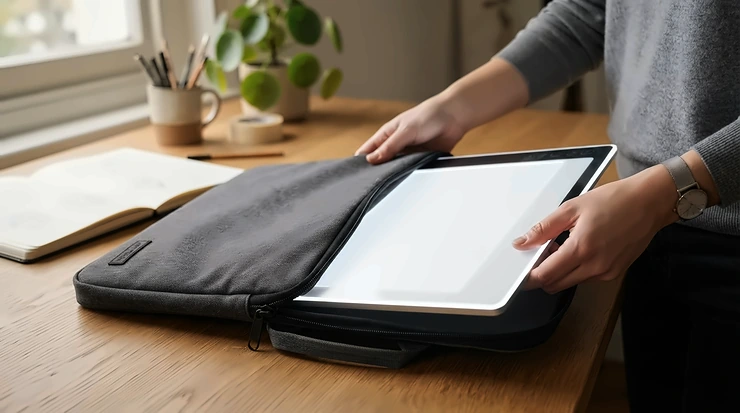
It’s 11pm. Your pencil roughs look lovely, and your inking pen is about to wreck them. Every illustrator knows that wobble. A light box for tracing art is the cheap, slightly nerdy fix: a glowing slab that lets you lay down a confident final line over a messy rough without rubbing out a single pencil mark.
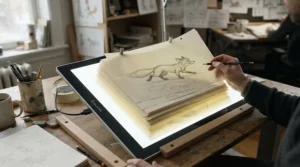
The idea isn’t new. Light tables have long been a staple of the graphics trade, especially for comics and animated cartoons. The old fluorescent boxes have since given way to LED panels about as thin as a tablet. Today an LED tracing pad for artists slips into a rucksack, runs off a power bank and costs less than a decent night out. Need more room? Desk-sized A2 panels exist too.
The catch is that the market is a sea of near-identical black rectangles, each shouting “6000 lux!” at you. So I’ve compared seven real models using manufacturer specs, independent UK and international roundups, and the genuine themes in aggregated buyer feedback. This isn’t hands-on testing. It’s analysis, and it tells you what each number means for your paper and your budget.
Whether you want an A4 light box for illustration on the sofa or a bigger panel for your comic art tools, you’ll find a match here. Price bands are indicative and were gathered at the time of research, so always check current price before you buy.
Quick Comparison: Light Box for Tracing Art at a Glance
| Product | Size | Brightness (as advertised) | Power | Best For |
|---|---|---|---|---|
| LitEnergy A4 LED Copy Board | A4 | Around 3,000–4,000 lux | USB | LitEnergy A4: first-time buyers and students |
| Huion L4S | A4 (about 310 x 210mm working area) | Up to 1,500 lux | USB | Huion L4S: sketchbook-weight paper, tight spaces |
| HSK A4 LED Artist Tracing Light Box | A4 | Up to 6,000 lux | USB (strong source advised) | HSK A4: thicker paper on a budget |
| Native Lighting A4 Lightbox | A4 (27 x 36cm) | About 4,900 lux | USB, 1.8m cable | Native Lighting A4: buyers wanting a longer warranty |
| Huion LB4 Wireless Tracing Light Box | A4 | Around 1,500 lux | Built-in battery plus USB | Huion LB4: travel and sofa sessions |
| HSK A2 LED Artist Light Box | A2 | Around 4,500 lux | Mains-style cord (about 6ft) | HSK A2: comic pages and big illustrations |
| Daylight Wafer LED Light Box | A4/A3/A2 options | Brightness figure not clearly published | Check listing | Daylight Wafer: heavy daily use and thick stock |
Looking at the table, the LitEnergy A4 LED Copy Board and the HSK A4 LED Artist Tracing Light Box deliver the most brightness per pound, which matters if you trace through heavier paper. The Huion LB4 Wireless Tracing Light Box gives up brightness and size for freedom from the cable, so it only suits you if portability is your priority. Everything in the A4 class will cope with sketchbook work. Size and power source separate the rest.
💬 Just one click — help others make better buying decisions too!😊
Top 7 Picks: A Light Box for Tracing Art for Every Budget
1. LitEnergy A4 LED Copy Board — budget crowd favourite
The headline here is popularity. Recent roundups describe the LitEnergy A4 LED Copy Board as the top-selling artist light pad on Amazon, with over 27,000 reviews and a rating around 4.5 stars at the time they were written.
On paper it’s an A4 panel (roughly 36 x 27cm) with dimmable output of around 3,000–4,000 lux, fed by a 56-inch USB lead. In practice, UK reviewers at Gathered report it shines through paper up to about 300gsm. That covers sketchbook, cartridge and Bristol board, and some lighter watercolour stock. USB power also means a laptop or power bank will run it.
Based on the spec comparison, the LitEnergy A4 LED Copy Board suits beginners, students and anyone who traces occasionally. Gathered’s advice is sensible: if you’ll be tracing most days, a pricier pad will usually feel better built.
Reviewers consistently praise value and smooth dimming. Common gripes include no wall adapter in the box and brightness that can fall short on very thick stock.
Pros:
- ✅ Strong brightness for the price
- ✅ Smooth, adjustable dimming
- ✅ Runs from laptop or power bank
Cons:
- ❌ No mains adapter included
- ❌ Struggles with very thick paper
Price: broadly under £30 at the time of research, so check current price. For a first light box for tracing art, the value verdict is hard to argue with.
2. Huion L4S — slim, flicker-free, remembers your setting
The party trick of the Huion L4S is its memory: switch it off and it restarts at your last brightness, with no re-dialling every session.
The panel is just 5.1mm thick and weighs about 0.61kg, with an acrylic surface and an A4-sized working area of roughly 310 x 210mm. It tops out at about 1,500 lux with stepless dimming. That ceiling is modest, so expect comfortable results on sketchbook and copy paper but a struggle with heavy watercolour sheets. The slim profile does make it brilliant on a cramped desk.
This is an A4 light box for illustration that suits sketchbook artists and comic creators moving pencils onto lighter board or cartridge paper. Testers describe it as plug-and-play, and buyer feedback highlights even, flicker-free light and a smooth dimmer. The recurring complaints are USB-only power, so you’ll need your own plug adaptor, and brightness that trails pricier rivals. Warranty terms are quoted as one or two years depending on the retailer, so check the listing.
Pros:
- ✅ Ultra-thin and very light to carry
- ✅ Stepless dimming that remembers settings
- ✅ Even, flicker-free glow
Cons:
- ❌ Lower maximum brightness than rivals
- ❌ USB-only, with no wall plug supplied
Price: roughly £25–£45 at the time of research. Good value if your paper is thin.
3. HSK A4 LED Artist Tracing Light Box — 6,000 lux with a lock button
Brightness is the story. The HSK A4 LED Artist Tracing Light Box advertises up to 6,000 lux, and roundups say it cuts through roughly 200gsm paper without drama.
The lock button is the clever extra. Once you’ve set your brightness, you can freeze it so a stray elbow doesn’t dim the panel mid-line. That small feature is the kind of thing a spec sheet undersells.
Here’s what to weigh, though. Maximum brightness is rarely what you want for thin paper, because glare tires your eyes. One buyer of the larger B4 sibling noted that it drew around 1.5 amps at full whack, far more than a basic USB 2.0 port supplies, so use a decent charger. Another found the cool, bluish light fatiguing and returned theirs.
The HSK A4 LED Artist Tracing Light Box is best for artists who regularly trace onto heavier stock and want headroom for under £35.
Pros:
- ✅ Very high maximum brightness for the money
- ✅ Lock button prevents accidental changes
- ✅ Handles thicker paper than most budget pads
Cons:
- ❌ Cool blue-white light bothers some users
- ❌ Needs a strong USB power source
Price: indicative band under £35, and prices vary by seller. A smart budget upgrade if you hit the limits of cheaper pads.
4. Native Lighting A4 Lightbox — longer warranty and a built-in ruler
The standout feature is the two-year warranty, which is unusual at this size. It signals confidence in a product people often treat as disposable.
The Native Lighting A4 Lightbox measures 27 x 36cm, is about 1cm thick and weighs 0.92kg. It offers three brightness levels, about 4,900 lux (320 lumens), a ruler along one edge and a 1.8m USB cable. The extra weight and thickness mean it sits firmly on a desk instead of skating about.
Gathered’s tester found the light bright enough to shine through thicker paper. They also noted the usual need for a little tape to hold the sheet in place. Their view was that it’s a solid investment if you trace often but may feel pricey for occasional use. They also suggested the A3 size if you need more working room.
On balance, the Native Lighting A4 Lightbox suits illustrators who want a dependable, ruler-equipped pad and care about warranty cover.
Pros:
- ✅ Bright enough for thicker paper
- ✅ Built-in ruler along the edge
- ✅ Two-year warranty
Cons:
- ❌ Pricey for occasional tracing
- ❌ Three fixed brightness steps only
Price: Gathered quoted an RRP in the low £60s, so check current price. Fair value if you’ll use it weekly.
5. Huion LB4 Wireless Tracing Light Box — cordless freedom
The standout here is the built-in battery. PopSci’s review reports a charge time of about an hour and roughly 3.5 hours of use. That’s enough for a train journey, a library visit or an evening on the sofa without tethering yourself to a socket.
The Huion LB4 Wireless Tracing Light Box is A4-sized (about 40 x 27cm) and outputs around 1,500 lux with smooth dimming. It can also run from USB. That modest brightness is the trade-off: you’re paying for portability, not power, so thick stock will be tough going.
Published reviews converge on the same verdict. The freedom is genuine, the dimming is pleasant, but the brightness is lowish and the price sits higher than many larger A2 panels. For anyone working mostly at a desk, that money buys more light elsewhere. For anyone sketching on the move, it’s one of few sensible battery options.
Pros:
- ✅ Cordless with roughly 3.5 hours of use
- ✅ Quick one-hour charge
- ✅ Smooth, seamless dimming
Cons:
- ❌ Modest 1,500 lux brightness
- ❌ Costly for an A4 panel
Price: typically in the £60–£90 band at the time of research. Worth it only if portability is the point.
6. HSK A2 LED Artist Light Box — a desk-sized canvas
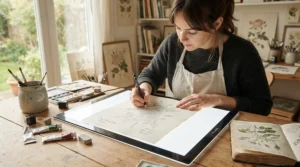
Space is the selling point. The HSK A2 LED Artist Light Box gives you an A2 surface of about 64 x 47cm, large enough for comic pages, big illustrations or several references side by side.
PopSci rates it around 4,500 lux with a 20-watt dimmer and a six-foot cord. It has rulers on two edges (metric only, which is no hardship in the UK) and an aluminium frame with no light bleed at the sides. At A2 size, it can double as a drawing desk on your lap.
Reviewers’ recurring concerns are practical rather than fatal. The metal frame can get warm, and replacement cords have reportedly been hard to find, so treat the lead kindly. This brightness comfortably handles ordinary art paper, though it’s not marketed as a thick-board tracer.
The HSK A2 LED Artist Light Box is best for comic artists, large-format illustrators and anyone tired of tracing in two passes.
Pros:
- ✅ Generous A2 working area
- ✅ Rulers on two edges
- ✅ Bright, even light without edge bleed
Cons:
- ❌ Frame can run warm
- ❌ Replacement cords reportedly scarce
Price: indicative £50–£80. Excellent value per square centimetre.
7. Daylight Wafer LED Light Box — premium, cool-running, thick-paper capable
The distinguishing trait is cool operation. UK editors at Gathered describe the Daylight Wafer LED Light Box as very thin and dimmable, with very little heat, and as powerful enough for paper up to roughly 400gsm.
It’s available in several sizes, with A3 recommended for larger projects. One roundup credits UV-free LEDs, which matters if you trace fragile or archival material. I couldn’t find a clearly published lux figure in the sources I reviewed, so check the listing before buying.
What the spec sheet won’t tell you, but the research suggests, is that this is the “buy once” choice. If you trace daily, low heat means comfortable sessions and fewer worries about surface warping. The flip side is price. Gathered notes it sits among the more expensive options, so for occasional users it’s overkill.
The Daylight Wafer LED Light Box suits professional illustrators, tattoo-stencil artists and textile designers working across heavy stock.
Pros:
- ✅ Runs cool during long sessions
- ✅ Handles paper up to about 400gsm
- ✅ Slim, sturdy and available in larger sizes
Cons:
- ❌ Premium price
- ❌ Lux rating not clearly published
Price: premium bracket, often north of £100 for larger sizes at the time of research, so check current price. Pays off with heavy daily use.
| Product | Size | Advertised Lux | Standout Spec | Indicative Price | Review Signal | Best For |
|---|---|---|---|---|---|---|
| LitEnergy A4 LED Copy Board | A4 | ~3,000–4,000 | 56in USB lead | Under £30 | Hugely popular; praised value | LitEnergy A4: beginners |
| Huion L4S | A4 | Up to 1,500 | 5.1mm thin, memory dimmer | £25–£45 | Even, flicker-free | Huion L4S: portability |
| HSK A4 LED Artist Tracing Light Box | A4 | Up to 6,000 | Lock button | Under £35 | Bright; some find light harsh | HSK A4: thicker paper |
| Native Lighting A4 Lightbox | A4 | ~4,900 | Ruler, 2-year warranty | Low £60s RRP | Solid, but pricey | Native Lighting A4: reliability |
| Huion LB4 Wireless Tracing Light Box | A4 | ~1,500 | ~3.5hr battery | £60–£90 | Freedom; low brightness | Huion LB4: travel |
| HSK A2 LED Artist Light Box | A2 | ~4,500 | 6ft cord, rulers | £50–£80 | Bright; frame warms | HSK A2: large work |
| Daylight Wafer LED Light Box | A4/A3/A2 | Not published | Low heat, 400gsm | £100+ | Powerful; expensive | Daylight Wafer: daily pros |
Reading across the table, the HSK A2 LED Artist Light Box offers the most surface area per pound, while the Daylight Wafer LED Light Box buys comfort and thick-paper capability at a premium. Budget buyers should note that the Huion L4S and Huion LB4 Wireless Tracing Light Box both top out near 1,500 lux, so pair them with thinner paper. If you only buy once, the sweet spot for most illustrators sits between the HSK A4 LED Artist Tracing Light Box and the Native Lighting A4 Lightbox.
✨ Don’t Miss These Top Picks!
🔍 Ready to upgrade your drawing desk? Click on any highlighted product name to check current pricing and availability. These tools will help you create cleaner, more confident line art that you’ll be proud to share!
What Is a Light Box for Tracing Art?
A light box for tracing art is a flat, thin, backlit panel, usually LED-powered and dimmable, that shines even light up through your paper so an underlying drawing becomes visible. You lay a reference beneath a fresh sheet and trace over it, transferring sketches or templates cleanly without graphite transfer paper.
Two terms confuse newcomers. “Light box” and “light pad” are now used interchangeably, because LED technology means even a pad less than a centimetre thick can illuminate a surface that once needed a bulky fluorescent cabinet. An LED tracing pad for artists is simply the modern, portable form of the traditional light table.
Then there’s lux, the unit that dominates every product listing. Lux measures how much light lands on a surface, which here is the sheet you’re tracing. Higher lux means more light reaching your paper, which helps with thick stock but isn’t automatically better. On thin paper, too much brightness just creates glare and tired eyes.
How to Choose a Light Box for Tracing Art
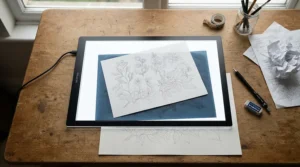
Picking the right panel is mostly about matching four things: paper, space, power and budget. Work through these steps in order.
- Match size to your paper. A4 suits sketchbooks and small illustrations, A3 suits most comic boards, and A2 gives you desk-sized freedom. Buy for the largest sheet you realistically trace.
- Check brightness against paper weight. Thin cartridge is easy, while 300gsm watercolour paper demands the upper end of the brightness range. Don’t pay for 6,000 lux if you only trace onto copier paper.
- Prefer smooth dimming. Stepless dimming beats three fixed levels, and a memory function saves fiddling. UK editors at Gathered also warn that cheaper pads can flicker, which is distracting during long sessions.
- Sort out power. USB models need a decent charger, mains-style models need a socket nearby, and battery pads cost more. Check the amperage if you plan to use a laptop port.
- Inspect build and heat. Aluminium frames look sturdy but can run warm, while acrylic surfaces feel premium. Look for no light bleed at the edges.
- Read the warranty and cable details. A two-year warranty is reassuring, and a replaceable cord is a bonus.
- Be honest about frequency. Occasional tracers should spend little. Daily users should invest in cooler, brighter, longer-lasting hardware.
LED Tracing Pad for Artists: Features That Actually Matter (And Those That Don’t)
Marketing loves big numbers, but only a few specs change your drawing day.
Features that matter: flicker-free, even diffusion; smooth dimming; a power source you can actually use; and a stable, flat base. A steady glow is more important than a headline lux figure. Gathered’s review of the Artograph LightPad specifically praised its steady, non-flickering light, which is a clue about what separates pro-grade kit from bargain bins.
Features that don’t (much): extreme lux ratings. Some large panels, such as the WELZK A2, advertise 10,000+ lux. That’s impressive for fabric and heavy board, but unnecessary for most paper. Bundled tracing-paper packs and coloured frames are charming extras rather than reasons to buy. Built-in rulers are handy, though they’re no substitute for a real steel rule.
In the middle sits colour temperature. Cool, blue-white light looks bright but tires some eyes. One buyer abandoned an HSK A4 LED Artist Tracing Light Box sibling for that reason. If you’re sensitive, choose adjustable dimming and don’t run any panel at full output in a dark room.
A4 Light Box for Illustration: Is A4 Enough?
For most illustrators the answer is yes, and it’s a cheaper, lighter yes than you’d expect. An A4 light box for illustration comfortably handles character sheets, spot illustrations, greeting-card designs and lettering guidelines. It slides into a bag and sits happily on a small desk.
The limit is the sheet you want to trace. A4 paper is 297 x 210mm, and many A4 pads offer a slightly larger working area. The Huion L4S measures roughly 310 x 210mm. That’s just enough, but anything bigger than a single sketchbook page needs a plan: trace in two passes using registration marks at the corners. If you routinely work bigger, step up to A3 and avoid the annoyance.
Think about where you work as well. Commuters, students and café sketchers benefit from the light weight of the Huion L4S or the cordless Huion LB4 Wireless Tracing Light Box. Studio-based artists with a fixed desk gain more from the extra brightness of the HSK A4 LED Artist Tracing Light Box or the sturdier Native Lighting A4 Lightbox. In short, A4 is a fine starting point, but check your largest regular sheet before committing.
Light Box for Tracing Art vs Traditional Alternatives
You can trace without a light box, so is dedicated hardware worth it? Here’s how the methods compare.
| Method | Cost | Thick Paper | Portability | Precision | Best For |
|---|---|---|---|---|---|
| Sunny window | Free | Poor | Daytime only | Moderate | Quick one-off transfers |
| Tablet or phone screen | Already owned | Poor | Good | Good for thin paper | Digital-to-paper transfers |
| Graphite transfer paper | Low | Good | Good | Variable, can smudge | Simple outline transfers |
| Light box for tracing art | Low to premium | Good | Good to excellent | Excellent | Frequent, accurate work |
A window works if you’re patient and the sun cooperates, but the arm-ache from holding paper upright is real. Tablet screens are convenient but run hot and drain battery. Transfer paper is permanent in the sense that the carbon marks never quite vanish. A light box for tracing art wins on consistency, because it works day or night, keeps your original line untouched and lets you adjust brightness to the paper.
As the table shows, the dedicated light box costs more than a window but pays back in accuracy and comfort. The only real argument against it is if you trace just once a year. For anyone producing regular line art, the maths tips firmly towards a panel.
Tracing Technique: A Practical Usage Guide for Your Light Box
Good tracing technique is part setup, part habit. Follow this sequence and your lines will look intentional instead of copied.
- Start dim. Set the lowest brightness that shows your reference clearly. Less glare means less fatigue and crisper judgement of line weight.
- Secure everything. Tape both sheets at the corners with low-tack artist’s tape. Paper creep is the number one cause of wobbly traces.
- Mask the unused glow. Lay a sheet of dark card around your drawing area. Cutting stray light improves contrast and cuts eye strain.
- Trace in confident strokes. Rotate the page so your hand pulls naturally. Hesitant, sketchy lines look worse than slightly imperfect decisive ones.
- Use the right tool for the surface. A sharp HB pencil or fineliner glides on smooth board, while heavier paper wants a firmer touch.
- Take breaks. A glowing surface is tiring. HSE’s guidance on display screen work isn’t written for light pads, but its advice that short, frequent breaks beat longer, rarer ones transfers neatly to long tracing sessions.
Common first-month mistakes include cranking brightness to maximum, forgetting to lock the settings on a model like the HSK A4 LED Artist Tracing Light Box, and pressing so hard on cheap acrylic that fingerprints appear. A quick microfibre wipe between sessions keeps the surface clear.
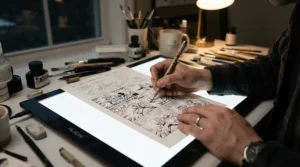
Illustration Workflow: From Rough Sketch to Final Inks
An efficient illustration workflow uses the light box at one specific moment: the hand-off between loose pencils and committed lines. Here is the pipeline most illustrators follow: thumbnails, rough layout, tightened pencils, light box transfer to final paper, inks, then colour.
What does that look like in real life? Consider three imagined scenarios.
The student commuter. Budget is tight, space is limited, and sessions are short. A Huion L4S or LitEnergy A4 LED Copy Board with a power bank turns a train seat into a studio. Frequency: several times a week.
The freelance illustrator. Daily use, heavier paper and clients waiting. The HSK A4 LED Artist Tracing Light Box or Native Lighting A4 Lightbox gives headroom, and the warranty on the latter reduces risk. Frequency: daily, at a fixed desk.
The weekend sketcher. Occasional use on the sofa. The Huion LB4 Wireless Tracing Light Box avoids the cable tangle, and 3.5 hours of battery covers an evening. Frequency: once or twice a week.
One ethical note: trace your own roughs, public-domain references or properly licensed images. Tracing another artist’s finished work and passing it off as your own is both poor form and potentially a copyright problem. Digital sketches printed in faint tones, then traced on a light box, are a popular way to move Procreate roughs onto real paper.
Comic Art Tools: Where a Light Box Fits in the Page Pipeline
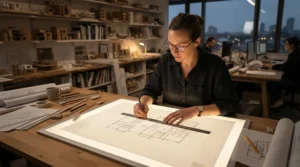
Among the comic art tools on a professional desk, the light box is the quiet workhorse. It lets you finish pencils on cheap paper, then transfer only the lines you want onto final board, with no erasing of heavy pencils on your expensive sheet.
Wikipedia’s overview notes that light tables are used mainly in graphics trades to trace designs, particularly for comics and animated cartoons. That tradition lives on. Many comic artists work on boards around 11 x 17 inches, close to A3. So the HSK A2 LED Artist Light Box gives you comfortable room, while an A4 pad forces two passes per page.
Pair your panel with a steel ruler, Bristol board, fineliners or brush pens, and a few lettering guides. The HSK A2 LED Artist Light Box has built-in metric rulers on two edges, which speeds up panel borders. If you draw on thicker boards, the Daylight Wafer LED Light Box is rated for heavier stock.
A practical tip: keep a printed template of your panel layout on the light box, tape the final page over it, and ink directly. That removes the non-photo blue step entirely. For lettering, a faint guideline sheet underneath works the same way.
Long-Term Cost & Maintenance of a Light Box for Tracing Art
A light box for tracing art is a cheap tool to own. A pad costing £30 and used twice a week for a year (roughly 100 sessions) works out at about 30p per session. Spend more on a premium unit and the per-use cost drops further if you trace daily.
| Tier | Products | Indicative Band | What You Get | Best For |
|---|---|---|---|---|
| Budget | LitEnergy A4 LED Copy Board, Huion L4S, HSK A4 LED Artist Tracing Light Box | Under £45 | Thin, USB-powered, decent brightness | Beginners and students |
| Mid-range | Native Lighting A4 Lightbox, HSK A2 LED Artist Light Box | £50–£80 | Warranty, rulers, larger area | Regular illustrators |
| Premium | Huion LB4 Wireless Tracing Light Box, Daylight Wafer LED Light Box | £60–£100+ | Battery power or cool-running build | Travellers and daily professionals |
Looking at the table, the budget tier delivers most of what a casual artist needs, so spend more only for a specific reason: size, portability or daily endurance. The Daylight Wafer LED Light Box is the buy-once option, while the HSK A2 LED Artist Light Box gives the best area for the money.
Maintenance is minimal. Wipe the surface with a soft microfibre cloth and avoid abrasive cleaners. Coil cables loosely, since PopSci’s review of the HSK A2 LED Artist Light Box flagged hard-to-find replacement cords. Store the pad flat, and keep the protective film on if one is supplied.
Safety, Regulations and Eye Comfort for Your Light Box for Tracing Art
Light boxes are low-risk gadgets, but a few sensible checks matter. First, check the plug and charger. Mains-connected electrical equipment sold in Great Britain should carry a UKCA or CE mark, and GOV.UK explains how the UKCA marking works. Look for the mark on the adapter, packaging or instructions, and avoid unbranded chargers with no markings.
Second, think about power. USB-powered pads like the LitEnergy A4 LED Copy Board are low voltage and easy to run from a power bank, but a high-brightness model such as the HSK A4 LED Artist Tracing Light Box can demand more current than a basic port provides. Use a proper wall charger, and replace any frayed cable straight away.
Third, mind your eyes. Run the panel at the lowest comfortable setting, work in a room with some ambient light and take regular breaks. If the surface feels warm, as some aluminium-framed models like the HSK A2 LED Artist Light Box can, give it a rest. If headaches persist, see an optometrist, because a persistent problem is not a light box problem.
Finally, supervise children. Colourful kids’ pads exist, but treat any powered device with the same care you would any electrical item.
Frequently Asked Questions
❓ What is the best light box for tracing art for beginners?
❓ Can a light box for tracing art shine through watercolour paper?
❓ Is an A4 light box for illustration big enough for comic pages?
❓ Do I need mains power or is USB enough for an LED tracing pad for artists?
❓ How much should I spend on a light box for tracing art?
Conclusion
A light box for tracing art is one of the few tools that improves both speed and confidence at a small price. The right choice comes down to paper, space and power, not the loudest lux claim.
If you want the safest starting point, the LitEnergy A4 LED Copy Board or Huion L4S covers the basics for very little. If you trace thicker paper or work most days, the HSK A4 LED Artist Tracing Light Box and Native Lighting A4 Lightbox are the stronger long-term bets. Comic artists and large-format illustrators will get the most from the HSK A2 LED Artist Light Box, while travellers should look at the Huion LB4 Wireless Tracing Light Box. And if you trace every day on heavy stock, the Daylight Wafer LED Light Box is the premium, cool-running answer.
Whatever you choose, remember the basics: tape your paper down, start dim, take breaks and trace only what you have the right to use. Do that and your tracing technique, illustration workflow and favourite comic art tools will all feel noticeably smoother.
Recommended for You
- Tortillon Vs Blending Stump: 7 Best Picks & Ultimate Guide (2026)
- Blending Brush For Graphite Drawing: 7 Flawless Picks (2026)
- Blending Supplies For Artists: 7 Best Budget Picks (2026)
Disclaimer: This article contains affiliate links. As an Amazon Associate, I earn from qualifying purchases. If you purchase products through these links, we may earn a small commission at no additional cost to you.
✨ Found this helpful? Share it with your friends! 💬🤗
