
In This Article
A drawing paper pad under £10 is a bound stack of loose sheets, usually A4, priced for everyday practice and built for dry media such as graphite, coloured pencil, charcoal and pen. Most sit between 100gsm and 170gsm, well above printer paper.
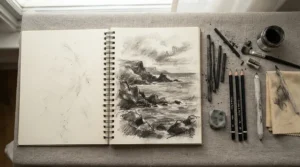
That one number, gsm, is the quiet hero of this whole category. It stands for grams per square metre. As the Wikipedia entry on grammage explains, typical office paper is around 80gsm, so an A4 sheet weighs about five grams. Step up to 140gsm and you’ve nearly doubled the heft, and the paper stops behaving like a printout that wandered into an art class.
Here’s the catch when you’re hunting for a drawing paper pad under £10: the shelf is crowded with pads that look identical in a thumbnail and behave completely differently on the desk. One has 20 leaves, another has 72. One is smooth enough to skate a technical pen across, another has enough tooth to grip a 4B pencil. The price tag barely tells you which is which.
So this guide does the dull work. I compared real amazon.co.uk listings, manufacturer specs and the review themes buyers keep repeating, then turned it into plain-English advice for British hobbyists, students and parents. I haven’t personally tested these pads, and you won’t find invented anecdotes here. What you will find is analysis you can check against each listing. Expect seven picks, four comparison tables, three practical guides and a straight answer on where your tenner goes furthest. Prices appear as ranges only, because Amazon’s numbers move daily.
Quick Comparison: Seven Pads at a Glance
| Pad | Approx. price range | Best For |
|---|---|---|
| Seawhite A4 All-Media Cartridge Pad | around £4-£9 | All-rounders and mixed dry media |
| Daler-Rowney Simply Drawing Pad | around £5-£9 | Beginners learning pencil and pen |
| Daler-Rowney Simply Sketch Pad | around £4-£8 | High-volume daily practice |
| Faber-Castell Art & Graphic Sketch Pad | around £9-£12 | Coloured pencil and layered graphite |
| Zieler Medium Weight Cartridge Pad | around £4-£8 | Smooth-surface pen and technical work |
| Artist’s Sketch Pad Twinwire A4 | around £4-£8 | Lay-flat sketching on the move |
| EasyNote A4 Artists Sketch Pad | around £5-£10 | Heavier 170gsm paper on a budget |
Price bands are indicative estimates drawn from UK retailer listings at the time of research. Confirm the live price before you buy.
Looking at the table, the Seawhite A4 All-Media Cartridge Pad is the safest default because it pairs 50 sheets with a mid-weight 140gsm stock. If you draw nearly every day, the Daler-Rowney Simply Sketch Pad trades paper weight for sheet count. The Faber-Castell Art & Graphic Sketch Pad sits at the very top of this budget, so treat it as a stretch pick rather than a guaranteed sub-£10 buy.
💬 Just one click — help others make better buying decisions too!😊
Top 7 Drawing Paper Pad Under £10 Picks: Expert Analysis
Each pick below gets the same treatment: what the specs mean in practice, who it suits, what buyers keep saying, and whether the price range justifies it.
1. Seawhite A4 All-Media Cartridge Pad — best all-rounder for mixed dry media
Seawhite of Brighton’s pad earns its reputation by refusing to specialise. The A4 version packs 50 sheets of 140gsm, acid-free paper, sized for extra wet strength, glued and tape-bound on the short edge and backed with stiff 2mm greyboard. In practice, 140gsm is roughly double office paper, so graphite, fineliners and light coloured-pencil layering won’t ghost through to the next sheet. The greyboard back means you can draw on your knee at a bus stop without the page flexing.
The “wet strength” wording tempts people into painting, but UK retailers who stock it advise keeping to dry work and light washes. Based on the spec comparison, this is the pad to pick if you can’t decide, because 50 sheets at this weight is a hard combination to beat inside the bracket. I couldn’t pull Amazon’s review breakdown for this listing. Buyer feedback I found on other UK-facing retailers is consistently positive about quality for the money.
Pros:
- ✅ 50 sheets of 140gsm acid-free paper
- ✅ Made in the UK with stiff greyboard back
- ✅ Handles pencil, pen, charcoal and light washes
Cons:
- ❌ Heavy watercolour will still buckle the sheets
- ❌ Glued short edge doesn’t lie flat when open
Expect around £4-£9 depending on seller. That’s strong value for 50 sheets of mid-weight stock.
2. Daler-Rowney Simply Drawing Pad — best gentle starter for beginners
Daler-Rowney’s Simply range exists to lower the stakes for newcomers, and this pad shows the philosophy in action. You get 50 sheets of 120gsm, acid-free, lightly textured paper, glue-bound along the top in portrait orientation. That light texture, or “tooth”, grips graphite and coloured pencil pigment, which helps beginners build tone without smudging everything into a grey fog.
The weight is the honest limit. A long-standing Parka Blogs review found it suits pen and ink, pencils, coloured pencils and light pastel, while even modest ink washes warp it slightly. So treat it as a dry-media pad and it behaves nicely. Ask it to be a watercolour block and it politely falls apart. For a first-time buyer, the top glue binding is also a small perk: sheets tear away cleanly for framing or gifting.
What the spec sheet won’t shout is that 120gsm sits a notch below the 140gsm pads here. If you press hard with soft pencils and erase a lot, you’ll notice.
Pros:
- ✅ Lightly textured surface grips pencil well
- ✅ 50 acid-free sheets from a trusted art brand
- ✅ Top glue binding gives clean tear-off sheets
Cons:
- ❌ 120gsm marks heavy erasing more easily
- ❌ Even light ink washes can warp the paper
Roughly £5-£9 should cover it. That’s fair value for a beginner-friendly stack.
3. Daler-Rowney Simply Sketch Pad — most sheets for daily practice
If the goal is mileage rather than masterpieces, this is the pad that thinks like a gym membership. Older Amazon listings describe 72 lightly textured sheets at 95gsm, whereas Daler-Rowney’s own current page lists 60 sheets of 100gsm natural white paper. That mismatch is worth checking on the live listing before you order.
Either way, the logic is identical: more pages, thinner stock. At 95-100gsm, this paper is happiest with thumbnails, gesture drawings, quick studies and warm-ups where you’ll happily flip the page. Parka Blogs’ comparison with its heavier sibling reached a similar conclusion, suggesting the cheaper sketch version for casual work. I’d add one caution from buyer feedback: a reviewer on Amazon’s US storefront complained that the glued top let sheets come away too easily. That’s a single data point, but it’s worth glancing at recent UK reviews.
Pros:
- ✅ Most sheets per pound of any pad here
- ✅ Lightly textured surface suits dry media
- ✅ Ideal for warm-ups and quick studies
Cons:
- ❌ Thinner paper shows through with heavy pressure
- ❌ Some buyers report weak glue binding
Around £4-£8 is the likely band. It’s cracking value if volume matters more than polish.
4. Faber-Castell Art & Graphic Sketch Pad — best for layered coloured pencil
This one is the aspirational entry. The A4 pad offers 40 gum-bonded sheets of acid-free 160gsm paper, marketed for graphite, coloured and watercolour pencils, charcoal and Pitt pens. That’s a serious weight for a budget pad: 160gsm tolerates repeated layering and a kneadable eraser far better than 100-120gsm stock, so it suits people who rework drawings rather than abandon them.
Here’s the catch: one UK art retailer lists it from around £10.80, so Amazon pricing may hover right on the edge of this article’s budget. Faber-Castell’s own quality reputation carries weight, and reviewers on the Amazon listing lean positive about the brand, though one suggested the product image doesn’t perfectly match the pad received. Check the photo against the description before ordering.
Pros:
- ✅ Heavier 160gsm paper handles layering
- ✅ Acid-free stock from a respected brand
- ✅ Suits pencil, charcoal and Pitt pens
Cons:
- ❌ Price sits at or above the £10 line
- ❌ Only 40 sheets, so cost per sheet climbs
Expect roughly £9-£12 depending on seller. It’s good value only if it lands under your budget.
5. Zieler Medium Weight Cartridge Pad — best smooth surface for pens
The Zieler Medium Weight Cartridge Pad is the odd one out because its surface is smooth rather than toothy. It’s a British-made A4 pad of 30 sheets at 140gsm, pitched for painting, sketching and technical drawing. Smooth cartridge means fineliners, technical pens and fine graphite lines glide without snagging, which is exactly what illustrators, planners and comic-inkers want. Pencil users may find less bite for building deep darks, though.
The 30-sheet count is the trade-off. You’re paying for consistency of surface rather than volume, so it’s more of a “final drawings” pad than a scribble pad. I couldn’t verify a reliable set of buyer reviews for this listing, so I’d lean on the spec sheet and check recent feedback on the page itself. Third-party sellers also vary, so confirm dispatch details.
Pros:
- ✅ Smooth 140gsm surface suits pens
- ✅ British-made stock for technical drawing
- ✅ Medium weight resists ghosting from fine liners
Cons:
- ❌ Only 30 sheets per pad
- ❌ Less tooth for heavy pencil shading
Likely around £4-£8. Reasonable value if smoothness is your priority.
6. Artist’s Sketch Pad Twinwire A4 — best lay-flat option for field sketching
Twin-wire binding changes the experience more than most people expect. This A4 pad has 20 leaves of 140gsm white cartridge paper, wire-bound so it can fold back on itself. That means one hand holds the pad against a fence post while the other draws, with no glued spine digging into your wrist.
The listing markets the paper for watercolours, oils, gouache and lithography, which is ambitious for 140gsm. One reviewer bought it for oil practice and found it too thin, while another used it happily with charcoal and pencil for a daughter’s drawing. Buyers in general say it’s good value, which fits its role as a simple, honest cartridge pad rather than a mixed-media all-rounder. Stick to dry media and it behaves.
Twenty leaves won’t last a keen sketcher long, so think of this as a pocket-money top-up pad, not your main stock.
Pros:
- ✅ Twin-wire binding folds flat for one-handed use
- ✅ 140gsm cartridge suits pencil and charcoal
- ✅ Buyers report good value for money
Cons:
- ❌ Only 20 leaves per pad
- ❌ Too thin for oil or heavy paint
Expect roughly £4-£8. Good value as a lay-flat companion pad.
7. EasyNote A4 Artists Sketch Pad — heaviest paper at the price
The EasyNote A4 Artists Sketch Pad is listed as a 170gsm cartridge pad, the heaviest weight in this line-up. Heavier stock feels more like proper drawing paper: it resists cockling if you add a light wash, it survives more erasing, and it makes a finished piece feel more considered than a scribble on 100gsm.
I couldn’t retrieve a confirmed sheet count, binding type or a reliable sample of buyer reviews for this listing, so treat those as things to verify on the page before you click. That matters more than it sounds. At 170gsm, a low sheet count would push cost per sheet up quickly. If the listing shows 30 or 40 sheets, this becomes a “best work” pad, and you’d pair it with a cheaper stack for practice.
Pros:
- ✅ 170gsm is the heaviest weight here
- ✅ Suits erasing and light layered pencil work
- ✅ Amazon listing supports free returns
Cons:
- ❌ Sheet count and binding need confirming
- ❌ Few verifiable buyer reviews found
Likely around £5-£10. Worth it if the sheet count checks out.
Here’s how the seven compare on the specs that actually change your drawing.
| Pad | Weight | Sheets | Binding | Surface | Review theme |
|---|---|---|---|---|---|
| Seawhite A4 All-Media Cartridge Pad | 140gsm | 50 | Glued and taped, greyboard back | Slight tooth | Positive on value |
| Daler-Rowney Simply Drawing Pad | 120gsm | 50 | Glued top | Lightly textured | Beginner-friendly; light washes warp |
| Daler-Rowney Simply Sketch Pad | 95-100gsm | 60-72 | Glued top | Lightly textured | Plenty of sheets; some glue complaints |
| Faber-Castell Art & Graphic Sketch Pad | 160gsm | 40 | Gummed top | Not stated | Trusted brand |
| Zieler Medium Weight Cartridge Pad | 140gsm | 30 | Not confirmed | Smooth | Limited reviews verified |
| Artist’s Sketch Pad Twinwire A4 | 140gsm | 20 | Twin wire | Not stated | Good value; too thin for oils |
| EasyNote A4 Artists Sketch Pad | 170gsm | Not confirmed | Not confirmed | Not stated | Limited reviews verified |
The pattern is clear: weight and sheet count pull in opposite directions. The Faber-Castell Art & Graphic Sketch Pad and EasyNote A4 Artists Sketch Pad give you more paper heft but fewer sheets to play with, while the Daler-Rowney Simply Sketch Pad flips that trade. The Seawhite A4 All-Media Cartridge Pad is the only one that keeps both numbers respectable. Anyone drawing mostly with pens should look hard at the Zieler Medium Weight Cartridge Pad for its smoother surface.
How to Choose a Drawing Paper Pad Under £10
Choosing well comes down to matching six things to how you actually draw. Work through them in order.
- Start with your medium. Dry media (pencil, charcoal, fineliner) forgive thin paper, whereas markers, inks and washes demand heavier stock.
- Check the gsm. Jackson’s Art explains how paper weight is measured and notes that cartridge paper of 100-200gsm is easy to transport, while 200-300gsm is sturdier under heavier media. For pencils, 120-160gsm is the sweet spot.
- Count the sheets. Divide the price range by the sheet count to get a rough cost per sheet, then decide whether you’re practising or producing finished work.
- Match the surface. Smooth paper suits pens and fine lines, while lightly textured paper grips graphite and coloured pencil.
- Consider the binding. Glued pads tear away cleanly, whereas twin-wire pads lie flat but can leave perforated edges on tear-out.
- Confirm acid-free status. Acid-free paper resists yellowing, which matters if you plan to keep or frame work.
Notice what isn’t on the list: brand prestige. In this bracket, spec fit beats logo every time.
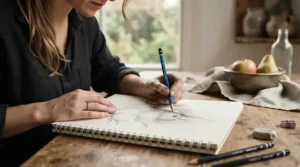
Features That Actually Matter (And Those That Don’t)
Marketing copy in this category loves adjectives, so let’s filter.
What matters: gsm, sheet count, surface and honest media suitability. A pad that says “for pencil, charcoal and pen” is telling you something useful. So is a listing that admits light washes only.
What matters a little: binding and backing board. A stiff backing, like the greyboard on the Seawhite A4 All-Media Cartridge Pad, makes drawing on your lap far more pleasant. Twin-wire binding on the Artist’s Sketch Pad Twinwire A4 helps if you sketch on location.
What barely matters: bundle add-ons and glossy cover art. Several Faber-Castell listings bundle a pencil tin with the pad, which sounds generous, but the bundle price will usually break a strict £10 limit.
And beware of the “all media” label. Multi-media wording on a 140gsm pad doesn’t turn it into watercolour paper. As one Amazon reviewer of the Artist’s Sketch Pad Twinwire A4 discovered, oils and thin cartridge don’t mix. Creative Bloq’s guide to sketchbooks uses paper quality, weight, texture and permanence as its main yardsticks, and that’s a sensible short list to copy.
Cartridge Paper Pad for Pencil Sketching: What Actually Works
A cartridge paper pad for pencil sketching should do three things: hold graphite, tolerate an eraser and stay flat. Everything else is decoration.
Cartridge paper typically starts around 100gsm and climbs upwards, a definite step above the 70-80gsm of standard printer paper. For pencil work, 140gsm is the comfortable middle ground. It resists dents from harder leads (2H-HB), takes soft leads (4B-6B) without shredding, and survives moderate erasing.
Surface matters as much as weight. A lightly textured sheet, like those on the Daler-Rowney Simply Drawing Pad, grabs graphite and lets you build tone gradually. A smooth sheet, like the Zieler Medium Weight Cartridge Pad, gives crisp lines but tends to reward hard pencils and fine detail rather than dark, velvety shading.
If you plan to blend with a tortillon or your finger, a heavier sheet helps. Both the Faber-Castell Art & Graphic Sketch Pad (160gsm) and EasyNote A4 Artists Sketch Pad (170gsm) give more surface to work into before the paper pills. For general practice, though, the Seawhite A4 All-Media Cartridge Pad covers the widest range of pencil habits at its mid-weight.
One practical reminder: pencil and charcoal smudge in a closed pad. Slip a spare sheet of tracing paper or a clean page between drawings if you carry it around.
General-Purpose Paper vs Specialist Paper
Not every project needs specialist stock. General-purpose paper, meaning ordinary cartridge or sketch paper aimed at everyday dry media, is the sensible default for most people under a £10 ceiling. Specialist papers (watercolour, pastel, toned, mixed media) cost more per sheet because they solve narrower problems.
Here’s how the main options compare.
| Option | Typical weight | Strength | Weakness | Best For |
|---|---|---|---|---|
| Printer paper | 70-80gsm | Cheap and everywhere | Thin, no tooth, poor with erasing | Rough doodles |
| Stitched or hardback sketchbook | 100-200gsm | Portable, protected pages | Fixed pages, often costs more | Travel and journaling |
| Drawing paper pad | 95-170gsm | Loose sheets, good value | Less rugged than a hardback | Seawhite A4 All-Media Cartridge Pad for all-rounders |
| Specialist watercolour or mixed media | 200gsm and up | Handles wet media | Usually above £10 | Painters, not pencil users |
The pad wins on flexibility. You can tear out a finished sheet for framing, keep the rest for practice, and never fuss over a spine. The Daler-Rowney Simply Sketch Pad and Daler-Rowney Simply Drawing Pad illustrate that beautifully: same brand, same binding, different weight, so you pick by need. If you want a rugged all-in-one, a hardback sketchbook wins, but expect to pay more for the cover.
For most budgets, general-purpose paper in a pad format wins by a mile. Save specialist stock for the day a project truly demands it.
Value Pad Economics: Cost per Sheet and Long-Term Cost
A value pad isn’t the cheapest pad, it’s the one with the lowest cost per sheet you’ll actually use. That distinction matters because a bargain with unusable paper is worth nothing.
| Pad | Sheets | Approx. price range | Approx. cost per sheet | Verdict |
|---|---|---|---|---|
| Daler-Rowney Simply Sketch Pad | 60-72 | around £4-£8 | roughly 6p-13p | Best volume value |
| Seawhite A4 All-Media Cartridge Pad | 50 | around £4-£9 | roughly 8p-18p | Best balanced value |
| Daler-Rowney Simply Drawing Pad | 50 | around £5-£9 | roughly 10p-18p | Solid beginner value |
| Zieler Medium Weight Cartridge Pad | 30 | around £4-£8 | roughly 13p-27p | Pay for surface |
| Faber-Castell Art & Graphic Sketch Pad | 40 | around £9-£12 | roughly 23p-30p | Premium of this bracket |
| Artist’s Sketch Pad Twinwire A4 | 20 | around £4-£8 | roughly 20p-40p | Pay for lay-flat binding |
These figures are approximate and built from indicative bands, so use them for comparison rather than accounting. The message is that the Daler-Rowney Simply Sketch Pad and Seawhite A4 All-Media Cartridge Pad deliver the most paper per pound. The Artist’s Sketch Pad Twinwire A4 costs the most per sheet, though its binding earns that in field use.
Long-term cost is where a value pad quietly saves you money. Cheaper 95-100gsm stock is fine for the first 30 attempts at a pose, while heavier paper is worth spending on the final version. Buying one large-volume pad and one heavier pad is often cheaper than buying two mid-priced pads that do neither job especially well.
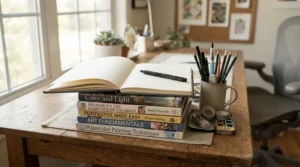
Student Supplies: Building a Kit Around a Drawing Paper Pad Under £10
For anyone assembling student supplies on a tight budget, a drawing paper pad under £10 is the smartest single purchase in the whole art bag. It’s cheap, replaceable and useful for everything from life drawing to lecture-note diagrams.
Most coursework is A4, so an A4 pad slots straight into a folder or rucksack. The paper standard is described on Wikipedia’s A4 paper page, and it’s the size every listing above uses. That makes scanning, photocopying and submitting work far simpler than with odd sizes.
A sensible student kit might look like this:
- One main pad, such as the Seawhite A4 All-Media Cartridge Pad, for finished studies.
- One high-volume pad, such as the Daler-Rowney Simply Sketch Pad, for thumbnails and warm-ups.
- A small set of graphite pencils (2H to 6B), a kneadable eraser and a sharpener.
- A folder or clipboard to protect sheets in transit.
If you need to tear out work for submission, glued pads such as the Daler-Rowney Simply Drawing Pad are neat. If you sketch outdoors on field trips, the Artist’s Sketch Pad Twinwire A4 lets you fold the cover back and work one-handed.
Parents buying for teenagers should note that heavier paper survives handling better. Anything at or above 140gsm holds up to daily rucksack life far more gracefully than the flimsy stuff.
Practical Usage Guide: Your First 30 Days With a New Pad
Buying the pad is the easy bit. Getting the best from it takes a few small habits that Amazon listings never mention.
Week one: test before you commit. Draw a small swatch grid on the back of the last sheet, covering 2H, HB, 4B, a fineliner and any coloured pencils you own. This tells you how your particular paper handles each tool, and it costs you one sheet.
Week two: protect what you draw. Pencil and charcoal transfer onto the facing page when the pad is closed. Slip in a sheet of tracing paper or plain printer paper between finished drawings, and spray fixative on charcoal work if you have it.
Week three: manage the glue. On glued pads, tear sheets away slowly and support the pad’s edge, or use a ruler and craft knife for a clean cut. Twin-wire pads such as the Artist’s Sketch Pad Twinwire A4 tear cleanly at the perforation, but check the edge before you frame anything.
Week four: rotate your stock. Use thinner paper, like the Daler-Rowney Simply Sketch Pad, for warm-ups, then move to something heavier for the keeper. Common mistakes in the first 30 days include pressing too hard on thin stock, adding heavy washes to dry-media paper, and storing pads flat under heavy objects that leave dents.
Real-World Scenarios: Which Pad for Which Person
Specs only matter when they meet a real person, so here are three profiles with reasoning based on the specs and review themes above.
Scenario one: the college student on £10. Drawing daily, mostly pencil, with an occasional pen study. Budget is the whole £10. The best fit is the Seawhite A4 All-Media Cartridge Pad as the main pad, because 50 sheets at 140gsm covers both practice and finished work. If money is tighter, the Daler-Rowney Simply Sketch Pad buys extra volume.
Scenario two: the parent buying for a nine-year-old. Coloured pencils, felt-tips and enthusiastic pressing. The Daler-Rowney Simply Drawing Pad is a sensible pick because its 120gsm paper handles crayon-style colouring without tearing, and the 50-sheet count means nobody panics when a sheet gets binned. Keep felt-tips modest, as heavy ink will bleed on any of these pads.
Scenario three: the weekend park sketcher. Sketching on a bench, one-handed, in variable weather. The Artist’s Sketch Pad Twinwire A4 suits because the wire binding folds flat. Pair it with a rubber band and a small clip to keep the pages from flapping.
A fourth scenario deserves a mention: the finisher who wants a heavier surface. That’s where the EasyNote A4 Artists Sketch Pad or Faber-Castell Art & Graphic Sketch Pad earn a spot, provided the price lands under your ceiling.
Problem → Solution Guide
Even a well-chosen drawing paper pad under £10 throws up niggles. Here are the common ones and the fixes.
Problem: paper warps when I add washes. Cause: 95-140gsm stock isn’t built for water. Solution: keep washes light and dry-brushed, or tape the sheet to a board first. If you paint often, step up to proper watercolour paper.
Problem: sheets tear away from the glued top. Cause: weak adhesive, which one reviewer flagged on a pad from the Daler-Rowney Simply Sketch Pad listing. Solution: don’t fold the pad back on itself, and store it flat. If it persists, return it.
Problem: pencil feels slippery. Cause: a smooth surface such as the Zieler Medium Weight Cartridge Pad. Solution: switch to softer leads (B to 4B) or pair it with pens.
Problem: drawings smudge in the pad. Cause: graphite and charcoal transfer. Solution: interleave with tracing paper and fix finished work.
Problem: the pad isn’t lying flat. Cause: glued spines resist folding. Solution: use a clipboard, or switch to the Artist’s Sketch Pad Twinwire A4.
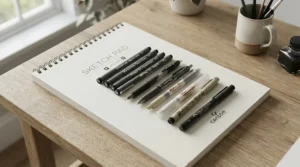
Frequently Asked Questions
❓ Is 140gsm cartridge paper thick enough for pencil drawing?
❓ Can I use watercolour on a cheap sketch pad?
❓ Are glued pads better than wire-bound ones?
❓ Does acid-free paper really matter for a value pad?
❓ How many sheets should I expect from general-purpose paper pads?
Conclusion
The best drawing paper pad under £10 depends on how you draw, but the evidence points to a short list. For most people, the Seawhite A4 All-Media Cartridge Pad offers the best blend of weight, sheet count and versatility. If you draw daily and want volume, the Daler-Rowney Simply Sketch Pad delivers the lowest cost per sheet, while the Daler-Rowney Simply Drawing Pad gives beginners a forgiving 120gsm surface.
If you layer coloured pencil, the Faber-Castell Art & Graphic Sketch Pad brings 160gsm of proper drawing stock, provided the price lands under your ceiling. Pen users should consider the smooth Zieler Medium Weight Cartridge Pad, and location sketchers will appreciate the lay-flat Artist’s Sketch Pad Twinwire A4. The EasyNote A4 Artists Sketch Pad is worth a look for its 170gsm weight once you’ve confirmed sheet count.
Before you buy, check the live listing for weight, sheet count, binding and recent reviews, because listings change and sellers vary. Match the paper to your medium, not the other way round. A cartridge paper pad for pencil sketching doesn’t need to be fancy, it needs to be the right weight and yours to fill.
Recommended for You
- Bleedproof Paper For Markers: 7 Best Picks For UK Artists (2026)
- Bristol Board For Ink Drawing: 7 Best Picks For UK Artists (2026)
- Tracing Paper Roll: 7 Best UK Picks For Artists & Sewers (2026)
Disclaimer: This article contains affiliate links. As an Amazon Associate, I earn from qualifying purchases. If you purchase products through these links, we may earn a small commission at no additional cost to you.
✨ Found this helpful? Share it with your friends! 💬🤗
