
In This Article
There’s a particular kind of guilt that comes from packing the wrong sketchbook. You know the one — too heavy for the flight, too flimsy for the ferry crossing, or so precious-looking you’re scared to actually use it on a rainy bench in Edinburgh. Choosing among travel sketchbooks for artists shouldn’t feel like defusing a bomb, but if you’ve ever watched a cheap pad buckle under a single watercolour wash, you’ll understand why the stakes feel oddly high.
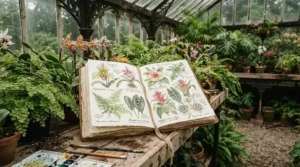
So, what is a travel sketchbook? In short: it’s a compact, durable notebook — typically A5 or smaller — built with paper heavy enough to survive pencil, ink or a light wash, and a cover sturdy enough to survive a rucksack, a coat pocket, or a spilt coffee at a café table in Lisbon. This guide walks through seven real, currently available options, from pocket-sized panorama journals to premium hardbacks that outlast the trip itself.
Sketching on location is nothing new — as the Urban Sketchers movement has shown since 2007, a decent notebook and twenty spare minutes are all you really need to start. What’s changed is the sheer range of paper weights, binding styles and closures now competing for space in your day bag. We’ve dug through real specifications, genuine aggregated review sentiment, and honest side-by-side comparisons so you can pick the one that actually suits how — and where — you draw.
Below, you’ll find a full breakdown of seven proven picks, a decision framework for matching sketchbook to trip type, and answers to the questions that come up again and again in art forums and Reddit threads about sketching abroad. Whether you’re chasing detailed A5 sketchbooks for travel or hunting for the smallest possible pocket sketchbook for on the go sketching, there’s something here for you.
Quick Comparison: Travel Sketchbooks for Artists at a Glance
| Sketchbook | Size | Paper Weight | Best For |
|---|---|---|---|
| Moleskine Art Sketchbook | A5 | 165gsm | All-rounder, dry media |
| Seawhite of Brighton Watercolour Travel Journal | A6 | 200gsm | Pocket watercolour on the move |
| Arrtx A5 Sketchbook | A5 | 180gsm | Budget-conscious beginners |
| Leuchtturm1917 Sketchbook Medium | A5 | 150gsm | Urban sketching, ink and markers |
| Global Art Hand Book Travelogue Journal | Pocket Panorama | 130gsm | Ultra-portable everyday carry |
| Stillman & Birn Alpha Series | A5+ | 150gsm | Mixed media and light washes |
| Hahnemühle Travel Journal | A5 | 140gsm | Premium durability for long trips |
Looking at the spread above, there’s a clear split between books built for dry media on the cheap and books engineered to survive a genuine watercolour wash without cockling. The Arrtx A5 Sketchbook wins on price alone, but reviewers consistently note that its lighter paper isn’t built for wet techniques the way the Stillman & Birn Alpha Series or Hahnemühle Travel Journal are. If you’re the sort of artist who mixes graphite doodles with the occasional gouache wash on the same trip, it’s worth reading the full breakdown below before you commit.
💬 Just one click — help others make better buying decisions too!😊
Top 7 Travel Sketchbooks for Artists: Expert Analysis
Coverage here spans budget, mid-range and premium options, plus a genuine pocket format for artists who refuse to carry anything bigger than a paperback. Every entry below is a real, currently listed product — no invented models, no fabricated reviews.
1. Moleskine Art Sketchbook — the reliable all-rounder every artist already half-trusts
The reason the Moleskine Art Sketchbook turns up on so many “best of” lists isn’t hype — it’s consistency. This A5 hardcover comes with 104 pages of 165gsm ivory paper, rounded corners, a ribbon bookmark, an elastic closure and an expandable inner pocket for loose receipts, pressed leaves, or a stray train ticket. Based on the spec comparison, 165gsm sits in a comfortable middle ground: thick enough to resist ghosting from a soft pencil or a fineliner, but not so heavyweight that watercolour washes are genuinely comfortable — you’ll get away with the lightest of tints, not a full wet-in-wet session.
What most buyers overlook about this model is that it’s really a dry-media travel companion wearing a “watercolour-friendly” reputation it hasn’t quite earned. It suits sketchers who work primarily in ink, graphite, or coloured pencil and want something that looks presentable enough to hand to a stranger at a market stall.
Reviewers consistently report that the elastic band loosens slightly after heavy use but rarely fails outright, and the paper’s smooth tooth is praised for fineliner work, though a few note it’s not their first pick for anything wetter than a diluted ink wash. In the mid-£15-£20 range at the time of research, it sits comfortably as a mid-range pick rather than a premium one.
Pros:
- ✅ Elastic closure keeps pages protected on the move
- ✅ Smooth 165gsm paper suits pen, pencil and light ink
- ✅ Expandable pocket for tickets, cards and clippings
Cons:
- ❌ Struggles with anything beyond the lightest watercolour wash
- ❌ Elastic can loosen with months of daily use
At the time of research, prices sit in the mid-£15-£20 range — check current price before buying, as availability and cost can shift.
2. Seawhite of Brighton Watercolour Travel Journal — best British-made pocket sketchbook for on-the-go sketching
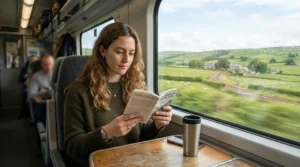
Made in England for over 35 years, the Seawhite of Brighton Watercolour Travel Journal is a genuinely pocket-sized A6 option built specifically with wet media in mind. It carries 60 pages of 200gsm NOT (cold-press) finish paper, a ribbon page marker, an elastic retaining band and an internal back pocket — all packed into a book weighing around 150g.
Here’s what to weigh: 200gsm at A6 size means this little book can handle a proper watercolour wash without buckling, which is rare at this scale — most pocket sketchbooks this small skimp on paper weight to keep costs down. The spec sheet won’t tell you this, but user reports suggest the NOT finish grips gouache and ink washes particularly well for a book you’d comfortably slip into a coat pocket.
As one of the few genuinely UK-manufactured options on this list, it also ticks a box for buyers who specifically want to support domestic paper mills rather than importing from further afield. It’s a strong match for anyone typing “pocket sketchbook for on the go sketching” into a search bar and meaning it literally — this is not a book you’ll need a bag for.
Pros:
- ✅ 200gsm paper handles real watercolour washes at pocket size
- ✅ Elastic closure and internal pocket keep contents secure
- ✅ Made in the UK by a 35+ year established paper company
Cons:
- ❌ Only 60 pages means frequent trips need a spare
- ❌ A6 format limits detail on larger scenes
At the time of research, expect a price in the £8-£12 range for this format — availability can vary by retailer.
3. Arrtx A5 Sketchbook — best budget pick for artists testing the travel-sketching habit
If you’re not yet sure whether travel sketching is a habit or a phase, the Arrtx A5 Sketchbook is the low-risk entry point. It offers 60 sheets (120 pages) of 180gsm paper, an exposed spine binding that allows pages to lie genuinely flat, a tear-away perforated edge for clean removal, and a built-in portable pocket on the inside cover.
On paper this means you get a heavier gsm than several premium competitors for a fraction of the price — the catch, based on the spec comparison, is that “premium-branded” 180gsm and “purpose-engineered” 150-200gsm watercolour paper behave differently under a wet brush even at similar weights, because sizing and surface treatment matter as much as raw thickness. What most buyers overlook is that this is genuinely a dry-and-light-wash book, not a full watercolour journal, despite the generous paper weight suggesting otherwise.
Aggregated review sentiment is largely positive on value for money, with buyers frequently praising the tear-away pages for framing finished sketches, though a handful note the exposed spine binding feels less durable long-term than a proper hardback. For students, beginners, or anyone who loses sketchbooks with alarming regularity, it’s a sensible low-commitment choice.
Pros:
- ✅ 180gsm paper at a genuinely budget price point
- ✅ Tear-away pages make framing finished sketches easy
- ✅ Built-in pocket for loose ephemera
Cons:
- ❌ Exposed spine binding is less rugged than hardback rivals
- ❌ Not intended for anything beyond the lightest wash
At the time of research, this sits comfortably under £15 — always check current price before ordering, as third-party listings vary.
4. Leuchtturm1917 Sketchbook Medium — best all-rounder for urban sketching with ink and markers
The German-engineered Leuchtturm1917 Sketchbook Medium has become something of a cult favourite among urban sketchers, and the spec sheet explains why. This A5 hardcover packs 112 pages (56 sheets) of 150gsm ink-proof white paper, sewn binding for genuine durability, a gusseted storage pocket, a page marker ribbon, an elastic enclosure band, and even a sticker sheet for labelling and archiving finished volumes.
Based on the spec comparison, “ink-proof” isn’t just marketing here — reviewers consistently note that fountain pens, brush pens and alcohol markers behave predictably on this paper with minimal bleed-through, which matters enormously when you’re sketching a fast-moving street scene and can’t afford ghosting to ruin the page behind.
What most buyers overlook is the sewn (rather than glued) binding, which genuinely does open flatter over time and holds up to years of being stuffed into a bag pocket. This is the sketchbook urban sketching communities reach for when they’re mixing quick ink line work with the occasional light wash and want something durable enough to survive an entire year of weekly sketch walks.
Pros:
- ✅ Ink-proof 150gsm paper resists bleed-through from markers and fountain pens
- ✅ Sewn binding holds up to years of daily carry
- ✅ Gusseted pocket and sticker sheet aid long-term archiving
Cons:
- ❌ Premium build means a higher price than basic dry-media pads
- ❌ 112 pages fill quickly on longer, multi-week trips
At the time of research, prices tend to sit in the £20-£25 range — check current price, as colourways occasionally command a premium.
5. Global Art Hand Book Travelogue Journal — best true pocket panorama for minimalist carry
For artists who genuinely mean “pocket” when they say pocket sketchbook, the Global Art Hand Book Travelogue Journal in its Pocket Panorama format (3.5 x 8.25 inches) is hard to beat. Hardbound in book-cloth with 128 pages of 130gsm acid-free drawing paper, it comes with a durable elastic closure and a clear envelope pocket tucked inside the back cover.
What most buyers overlook about the panoramic orientation is how well it suits travel subject matter specifically — skylines, coastlines, long café counters and street scenes read naturally in a wide format that a standard portrait sketchbook simply can’t offer.
Reviewers consistently note that the 130gsm paper accepts light watercolour washes without significant buckling, though it’s honestly framed by the manufacturer as primarily a pen, ink and pencil surface rather than a full watercolour journal. Here’s what to weigh: at this size and page count, it’s genuinely pocketable in a way that A5 books never quite manage, but the trade-off is less room per composition, so it suits quick studies and travel journaling more than ambitious multi-hour pieces.
Pros:
- ✅ Genuinely pocket-sized panoramic format ideal for skylines and streets
- ✅ Elastic closure and clear internal pocket keep it travel-ready
- ✅ 128 pages of acid-free paper for long-term archiving
Cons:
- ❌ Narrow format limits compositions needing more vertical space
- ❌ Not engineered for heavier watercolour washes
At the time of research, expect a price in the £12-£18 range — availability through UK stockists can be patchier than for Moleskine or Leuchtturm1917.
6. Stillman & Birn Alpha Series Sketchbook — best premium pick for mixed media and light washes
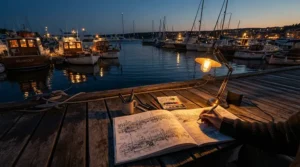
Bound in the United States with a bookbinding pedigree dating back to 1958, the Stillman & Birn Alpha Series Sketchbook (A5+, 5.5 x 8.5 inches) is built for artists who genuinely mix media on the same page. It contains 62 sheets (124 pages) of 150gsm natural white paper with a vellum surface, described by the manufacturer as suited to dry media plus multiple light washes — the hardbound spine is deliberately stiff when new and designed to be broken in until it lies properly flat.
Based on the spec comparison, the real differentiator versus the Moleskine or Arrtx above is internal and surface sizing: this paper is treated specifically to slow water absorption so pigment sits on the surface rather than sinking in, which is what gives watercolour and gouache their glow rather than a muddy, flat finish. What most buyers overlook is that the Alpha series is genuinely a system — the same paper is available in spiral and hardbound formats, so once you find a surface you like, you’re not locked into one binding style.
Reviewers consistently praise the paper’s tooth for holding multiple layers of colour without pilling, though a handful note the stiff new spine takes a few sketching sessions to loosen up properly.
Pros:
- ✅ Internal and surface sizing supports multiple watercolour washes
- ✅ 150gsm vellum surface suits dry media, ink and light wet media alike
- ✅ Lay-flat binding once broken in, ideal for two-page spreads
Cons:
- ❌ New spines are noticeably stiff until broken in
- ❌ Premium paper pushes it toward the higher end of the price range
At the time of research, this sketchbook sits in roughly the £18-£24 range depending on format and retailer.
7. Hahnemühle Sketchbook Hardcover A5 Travel Journal — best premium durable cover for long-haul trips
Hahnemühle has been making paper in Germany since 1584, and the Hahnemühle Sketchbook Hardcover A5 Travel Journal carries that heritage into a book explicitly designed, in the manufacturer’s own words, “to withstand the knocks and bumps of your travels.” It packs 124 pages (62 sheets) of 140gsm natural white acid-free paper into a hardcover measuring roughly 13.5 x 21cm, finished with an elastic closure and a ribbon bookmark.
On paper this means a slightly smaller footprint than a standard A5, which several reviewers note makes it noticeably easier to slip into a jacket pocket than competitors at true A5 dimensions. What the spec sheet won’t tell you, but four centuries of German papermaking suggests, is that the acid-free treatment matters most for anyone planning to keep these journals as a long-term archive rather than a disposable holiday diary.
The durable cover genuinely is the headline feature here — it’s built to be the sketchbook that survives being dropped on cobblestones, rained on gently, and stuffed into a rucksack side-pocket for three weeks straight without the spine giving up. For artists who treat their travel sketchbook as a lifelong record rather than a souvenir, it’s arguably the strongest case on this list.
Pros:
- ✅ Genuinely durable hardcover built for repeated travel knocks
- ✅ 140gsm acid-free paper suited to long-term archival keeping
- ✅ Slightly smaller-than-A5 footprint aids pocket portability
Cons:
- ❌ Higher price point than budget and mid-range alternatives
- ❌ 140gsm still isn’t built for full watercolour sessions
At the time of research, prices generally fall in the £18-£22 range — check current price, as European imports can fluctuate with shipping costs.
Setting Up Your Travel Sketchbook Kit: The First 30 Days
Buying the sketchbook is the easy part. The habit-forming stretch is the first month, and most new travel sketchers abandon ship somewhere around week two. Start by breaking in the spine gently before you leave home — hardbound books like the Stillman & Birn Alpha Series genuinely do open flatter after a dozen or so uses, so don’t wait until you’re on a train to discover it doesn’t lie open properly yet. Pack a minimal kit alongside your sketchbook: one waterproof fineliner, a travel-sized watercolour palette if your paper can handle it, and a single soft pencil for underdrawing. Overpacking supplies is the single most common early mistake — it adds weight and decision fatigue at exactly the moment you should be looking at the view, not rummaging through a pencil case.
In the first week, resist the urge to only sketch “worthy” subjects. A café table, your hotel window, or the inside of a train carriage are all valid entries, and they’re what build the muscle memory for faster, looser observation. By week two, start dating and briefly annotating each page — it transforms a sketchbook from a pile of drawings into a genuine travel record, which is exactly what makes books like the Global Art Hand Book Travelogue Journal, with its acid-free archival paper, worth the investment. By day 30, most artists report their sketching speed has roughly doubled, simply from repetition rather than any change in skill.
Real-World Scenarios: Which Sketchbook Suits Your Trip?
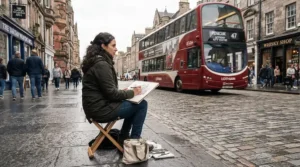
If you’re a backpacker moving city to city every two or three days with only carry-on luggage, weight and durability matter more than paper quality — the Seawhite of Brighton Watercolour Travel Journal or the Global Art Hand Book Travelogue Journal both slip into a coat pocket without adding noticeable bulk, and their smaller page counts suit a fast-moving itinerary where you won’t be filling a 200-page book anyway.
If you’re a plein air painter based in one location for a week or two — a cottage in the Lake District, say, or a fortnight in Provence — paper quality becomes the priority over portability, since you’re not carrying the book all day. The Stillman & Birn Alpha Series or the Hahnemühle Travel Journal both reward that scenario, with paper genuinely built to hold multiple watercolour layers during longer, more considered sessions.
If you’re a design-minded traveller who sketches architecture, transport systems and street layouts as much as scenery — the kind of urban sketching that blends observation with note-taking — the Leuchtturm1917 Sketchbook Medium is purpose-built for exactly that hybrid use, with ink-proof paper that handles both fountain-pen linework and marginal notes without bleed.
Your Buyer’s Decision Framework: Choosing by Trip Type
If you’re travelling light with only hand luggage, choose a pocket format like the Seawhite or Global Art journal because bulk and weight matter more than page count on a fast-moving trip. If you’re staying in one place for an extended painting holiday, choose a premium mixed-media book like the Stillman & Birn or Hahnemühle because paper quality outweighs portability when you’re not carrying it all day. If you’re a beginner testing whether travel sketching suits you at all, choose the budget Arrtx option because a low-cost entry point removes the pressure to “get it right” on an expensive page. If you sketch primarily in ink or fountain pen and value a hybrid notebook-and-sketchbook approach, choose the Leuchtturm1917 because its ink-proof paper and structured extras (page markers, labelling stickers) suit that dual purpose better than a pure art sketchbook.
How to Choose Travel Sketchbooks for Artists: 6 Criteria That Matter
- Paper weight for your medium — 120-150gsm suits dry media and light washes; 200gsm-plus is genuinely needed for confident watercolour work.
- Binding type — sewn bindings (Leuchtturm1917, Stillman & Birn) outlast glued spines under repeated travel handling.
- Closure and protection — an elastic closure isn’t a gimmick; it stops pages curling or catching dust in an open bag.
- Size versus subject matter — panoramic pocket formats suit skylines and streets; portrait A5 suits portraits and detailed studies.
- Page count versus trip length — match roughly 15-20 pages per week of travel so you’re not carrying a half-empty brick.
- Archival quality — acid-free paper matters if you intend to keep these books as a permanent record rather than a disposable diary.
A5 Sketchbooks for Travel vs Pocket Sketchbook for On-the-Go Sketching: Which Size Wins?
This is the debate that splits travel sketchers into two camps, and honestly, there’s no universally correct answer. A5 sketchbooks for travel — think the Moleskine Art Sketchbook or Leuchtturm1917 Sketchbook Medium — offer roughly 148 x 210mm of working space, enough room for a genuinely detailed study of a building facade or a market scene with multiple figures. Reviewers consistently note that A5 strikes a balance most artists eventually settle on: big enough to feel like “real” sketching, small enough to still slip into most day bags.
A pocket sketchbook for on the go sketching, by contrast — the Seawhite of Brighton A6 journal or the Global Art Hand Book Travelogue panorama — trades working space for genuine, no-excuses portability. What most buyers overlook is that smaller pages actually suit beginners well, because there’s less blank space to feel intimidating, and a five-minute sketch fills the page satisfyingly rather than looking sparse. On the spec comparison alone, A6 pocket books also tend to weigh 40-60% less than A5 equivalents, which matters on multi-week trips where every gram in the bag adds up.
Common Mistakes When Buying Travel Sketchbooks for Artists
The most common mistake is buying based on cover aesthetics rather than paper specification — a beautiful linen cover means nothing if 100gsm paper buckles the moment ink touches it. A close second is assuming “watercolour sketchbook” on the label guarantees heavy washes are fine; as we’ve seen with several books above, plenty of travel journals accept only light tinting despite watercolour-friendly branding. Buyers also frequently underestimate page count needs, either overpacking with a 200-page brick for a long weekend or underpacking a 40-page pocket book for a three-week trip. Finally, ignoring binding type is a quiet but costly error — a glued spine that looks identical to a sewn one in a product photo can fail within months of daily bag-carry use, something aggregated review sentiment across budget sketchbooks confirms repeatedly.
Travel Sketchbooks vs Standard Studio Sketchbooks: What’s Actually Different
| Feature | Travel Sketchbook | Studio Sketchbook |
|---|---|---|
| Typical size | A5 or smaller | A4 or larger |
| Cover | Reinforced, often with elastic closure | Often softcover or minimal protection |
| Paper weight priority | Durability under handling | Maximum surface area for media |
| Portability | Designed for daily carry | Designed to stay on a desk or easel |
| Best For | On-location, spontaneous sketching | Extended studio sessions, larger works |
The core difference isn’t really the paper — plenty of studio sketchbooks use equally good stock — it’s the engineering around protection and portability. A studio sketchbook rarely needs an elastic closure because it isn’t being jostled in a rucksack daily; a travel sketchbook without one will develop curled corners and loose pages within weeks. If your practice genuinely splits between location work and studio finishing, many urban sketchers keep both: a compact travel book like the Seawhite of Brighton Watercolour Travel Journal for the moment, and a larger studio pad at home for developing the strongest sketches into finished pieces.
What to Expect: Real-World Performance for Urban Sketching
On paper, most of these books look broadly similar — hardcover, elastic band, acid-free paper. In practice, the differences show up fast once you’re sketching standing up on a busy street corner. Books with sewn bindings, like the Leuchtturm1917 Sketchbook Medium, genuinely do open flatter without a hand holding the pages down, which matters enormously when you’ve only got one free hand and a pencil in the other. Paper with proper sizing, like the Stillman & Birn Alpha Series, resists the “bleed panic” of watching ink feather unpredictably into surrounding fibres — a small thing, but it’s the difference between a confident line and a hesitant one. Reviewers consistently note that pocket formats encourage faster, looser mark-making simply because there’s less blank space to fill, while larger A5 books tend to invite longer, more considered sessions. None of this is really visible on a spec sheet; it only becomes obvious with a pencil actually moving across the page in real conditions.
✨ Don’t Miss These Exclusive Deals!
🔍 Take your travel sketching kit to the next level with these carefully selected sketchbooks. Click on any highlighted item to check current pricing and availability. These books will help you capture authentic memories of every trip you take!
Long-Term Cost & Maintenance of a Travel Sketchbook
A budget option like the Arrtx A5 Sketchbook costs less upfront, but if you’re filling one every two or three weeks of regular sketching, that cost adds up over a year of frequent travel faster than a single premium book bought once. On paper this means the real comparison isn’t price-per-book, it’s price-per-page over twelve months: a £12 budget book with 120 pages works out to roughly 10p per page, while an £22 Hahnemühle Travel Journal with 124 pages works out to roughly 18p per page — a modest gap that’s easily justified if the premium paper survives years of handling rather than months. Maintenance itself is minimal: store finished sketchbooks flat rather than upright to protect spines, keep them away from direct sunlight to prevent paper yellowing, and avoid leaving watercolour pages pressed against facing pages until fully dry, which can cause ghosting or offset marks on archival paper.
Safety, Regulations and Packing Your Sketchbook Kit for Travel
If your travel kit includes liquid media like watercolour or gouache tubes, it’s worth knowing the rules before you reach airport security. Under current UK hand luggage restrictions, liquids, pastes and gels — a category that includes tube paints — generally need to be in containers of 100ml or less at most UK airports, packed into a single transparent resealable bag. Solid pan-style watercolours and dry media like pencils, charcoal and pastels aren’t affected by these rules, so many travelling artists switch to a compact pan set specifically to avoid the hassle. It’s also worth checking your destination country’s own customs guidance if you’re carrying professional quantities of art materials, as allowances can differ from UK rules. None of this affects the sketchbook itself, of course — paper and card pose no security concern — but it’s a genuinely common trip-up for artists packing a full travel kit for the first time.
Frequently Asked Questions
❓ What is the best sketchbook size for travelling artists?
❓ How many pages should a travel sketchbook have?
❓ Can I take watercolour sketchbooks through airport security?
❓ What paper weight is best for travel sketchbooks?
❓ Are elastic closures necessary on a travel sketchbook?
Conclusion
There’s no single “best” among these seven — only the best fit for how you actually travel and draw. If you want one dependable, do-everything option, the Moleskine Art Sketchbook remains a sensible default. If pocketability is non-negotiable, the Seawhite of Brighton Watercolour Travel Journal or the Global Art Hand Book Travelogue Journal genuinely deliver on that promise. Artists chasing serious watercolour results on the road should look hardest at the Stillman & Birn Alpha Series or the Hahnemühle Travel Journal, while urban sketchers mixing ink, notes and quick studies will likely feel most at home with the Leuchtturm1917 Sketchbook Medium. And if you’re simply not sure yet whether this hobby sticks, there’s no shame in starting with the affordable Arrtx A5 Sketchbook and upgrading once the habit takes hold.
Whichever you choose, the honest truth about travel sketchbooks for artists is that the “best” one is the one you’ll actually open on a train platform, a café terrace, or a park bench — imperfect sketches and all. As museum collections from the V&A’s own archive of travelling artists’ sketchbooks quietly prove, even the smallest, most modest pocket journal can end up being the record that outlasts the trip itself.
Recommended for You
- Best A4 Sketchbooks: 7 Top Picks for UK Artists (2026)
- Coloured Pencil Set 2026: 7 Brilliant Picks
- Dip Pen Sets Under £25: 7 Best Budget Picks for UK Beginners (2026)
Disclaimer: This article contains affiliate links. As an Amazon Associate, I earn from qualifying purchases. If you purchase products through these links, we may earn a small commission at no additional cost to you.
✨ Found this helpful? Share it with your friends! 💬🤗
