In This Article
Picking the best A4 sketchbooks sounds like it should be simple — until you’re stood in an art shop staring at a wall of near-identical black covers, wondering why one costs £4 and another costs £30. It’s not a random tax on your wallet. It’s paper weight, binding, sizing, and the sheer number of sheets crammed between the covers, and every one of those variables changes how a pencil, a stick of charcoal, or a wet wash of ink behaves on the page. A4 (210 x 297mm) sits in a genuinely useful middle ground: roomy enough for proper studies, portable enough to sling in a bag, and it’s the standard size defined by the international ISO 216 paper format that most European sketchbook ranges are built around.
This guide walks through seven real, currently available sketchbooks — from budget wire-bound pads to premium hardbacks — with honest analysis of what the specs actually mean in practice, not just a rehash of the box copy. We’ll cover sketchbooks for charcoal drawing specifically, because charcoal is brutally unforgiving of the wrong paper, unpack what paper weight (gsm) genuinely tells you about durability, and look at when large format sketching makes more sense than sticking with A4. Whether you’re building a serious studio practice or just want somewhere reliable to doodle on the commute, there’s a book below that fits.
Quick Comparison: Best A4 Sketchbooks at a Glance
| Sketchbook | Paper Weight | Best For |
|---|---|---|
| Seawhite Drawing Board | 160gsm | Mixed wet and dry media |
| Daler-Rowney Ebony Hardback | 160gsm | Charcoal and graphite |
| Winsor & Newton Spiral Hardback | 170gsm | All-round mid-range studio use |
| Canson XL Sketch Pad | 90gsm | High-volume daily studio practice |
| Daler-Rowney Ebony Black Paper | 180gsm | Tonal work and highlight drawing |
| Moleskine Art Plus | 165gsm | Premium, travel-ready sketching |
| Artway Studio Spiral | 170gsm | Budget-friendly UK-made alternative |
Looking at the spread, there’s a clear split between lighter, high-volume pads like the Canson XL Sketch Pad, which trade thickness for sheer page count, and heavier hardbacks like the Daler-Rowney Ebony Black Paper book, which sacrifice quantity for a surface that can survive aggressive layering. If your main concern is durability under charcoal or ink washes, weight above 160gsm is where you want to be looking; if you’re filling pages daily as part of a practice routine, a lighter, bulkier pad often serves you better than a slim premium hardback.
💬 Just one click — help others make better buying decisions too!😊
Top 7 A4 Sketchbooks: Expert Analysis
1. Seawhite Drawing Board — best all-rounder for wet and dry media
The standout here is versatility: this is one of the few A4 sketchbooks that genuinely handles both a graphite study and a light watercolour wash without one medium compromising the other. Inside you get 50 sheets of 160gsm all-media cartridge paper, sized to resist buckling under water-based media, wire-bound into a rigid hardback cover that opens completely flat. Made in the UK, it’s acid and chlorine-free, which matters more than most buyers realise — untreated paper yellows and becomes brittle within a few years, quietly degrading work you might want to keep.
Based on the spec comparison with other wire-bound options in this list, the Seawhite Drawing Board sits in an unusually flexible middle ground: not specialised enough for dedicated charcoal work like the Ebony range, but sturdy enough that it won’t buckle the moment you introduce a wash. It suits students and hobbyists who don’t want to carry two separate books for dry and wet media. Reviewers consistently note the flat-opening spiral binding as a practical advantage for scanning or photographing finished pages, and several long-term owners mention the covers holding up well to daily bag use.
Pros:
- ✅ Handles both dry media and light watercolour without buckling
- ✅ Wire binding opens completely flat for easy scanning
- ✅ Acid-free, UK-made paper that won’t yellow with age
Cons:
- ❌ 160gsm is too light for heavy, repeated watercolour washes
- ❌ Wire-bound spine is less durable long-term than sewn bindings
Priced in the £8-£12 range depending on retailer, it represents solid value for anyone who wants one sketchbook that won’t let them down regardless of which pencil case they grab on the way out the door.

2. Daler-Rowney Ebony Hardback — best dedicated charcoal and graphite paper
What most buyers overlook about this model is that it’s specifically engineered with a toothed surface, not just heavier paper — tooth is what actually grips charcoal and graphite particles rather than letting them slide or smear. The 160gsm cartridge paper is acid-free, made from 100% woodpulp, and comes in a genuinely tough hardback casing designed to survive being thrown in a bag rather than babied on a desk. Fifty-four sheets give you a reasonable page count without the book becoming unwieldy.
Reviewers consistently report that the toothed texture holds multiple layers of charcoal cleanly, letting you build up dark tones and then lift highlights with a putty rubber without the paper surface breaking down — something smoother 90-110gsm papers struggle with after two or three passes. Daler-Rowney positions this range for professional and serious student use, and on paper that tracks: the combination of weight and texture is genuinely built around dry media rather than being a generic all-purpose pad with charcoal tacked on as an afterthought. It’s a strong pick for anyone whose sketchbooks for charcoal drawing work make up the bulk of their practice.
Pros:
- ✅ Toothed surface specifically grips charcoal and graphite well
- ✅ Tough hardback cover survives daily bag and studio use
- ✅ Acid-free paper suitable for long-term archival work
Cons:
- ❌ Smooth-paper fans may find the tooth too aggressive for fine ink linework
- ❌ Not sized for serious wet media use
In the £6-£10 range, this is genuinely one of the best-value dedicated drawing sketchbooks on the UK market, and the standout choice if charcoal is your primary medium.
3. Winsor & Newton Spiral Hardback — best mid-range all-media workhorse
The 170gsm acid-free paper is the headline feature, and it earns the attention: at that weight, the sheet can absorb light watercolour washes and hold ink without the ghosting or cockling you’d expect from anything under 150gsm. Fifty sheets are perforated for clean removal, housed in a hardback cover with a faux-leather effect that feels more premium than the price suggests, and the spiral binding lets the book fold back on itself for working on the go.
Here’s what to weigh: independent hands-on reviews of this exact sketchbook note that watercolour washes are absorbed well and don’t bleed through to the next page, taking two to three light washes cleanly before the paper starts to struggle — genuinely useful information you won’t find on the product listing itself. The same reviews flag that marker ink does bleed slightly to the reverse side, and that the pages don’t lie fully flat, which matters if you’re planning to scan finished work. For pencil, fountain pen, and brush pen sketching, though, the surface performs consistently, and the perforated edge is a thoughtful touch for anyone who wants to pull out finished pieces for a portfolio.
Pros:
- ✅ 170gsm paper handles light watercolour without bleed-through
- ✅ Perforated pages tear out cleanly for portfolios
- ✅ Trusted, widely available art-supply brand
Cons:
- ❌ Alcohol-based markers bleed through to the next page
- ❌ Pages don’t open completely flat for scanning
Typically found in the £8-£13 range, it’s a dependable mid-range pick that punches above its price for anyone splitting their time between pencil, pen, and the occasional wash.
4. Canson XL Sketch Pad — best high-volume pad for daily studio practice
The standout feature is sheer volume: 120 sheets of 90gsm ivory paper per pad means you’re not rationing pages, which changes how freely you actually sketch. Canson specifically engineered this XL Sketch range for art students who burn through large quantities of paper doing quick studies rather than single finished pieces, and the fine-grain, acid-free surface is built to be forgiving of graphite, charcoal, coloured pencil, and pen without demanding precious treatment.
Based on the spec comparison with heavier hardbacks in this list, the trade-off is obvious and, frankly, the point: at 90gsm this paper is noticeably thinner than the 160-180gsm books above, meaning it won’t stand up to serious wet media or heavy charcoal blending across dozens of layers. But that’s not what it’s designed for. Reviewers consistently describe the paper as feeling thicker than its gsm number suggests thanks to a bulky finish, with a surface that’s smudge-resistant and erases cleanly — genuinely useful for anyone doing repeated gesture drawing or life-study sessions where speed matters more than archival finish. Micro-perforated sheets tear away cleanly, which matters when you’re producing dozens of quick studies you want to sort through afterwards.
Pros:
- ✅ 120 sheets per pad means genuinely unrestricted daily sketching
- ✅ Surface erases cleanly and resists smudging under graphite
- ✅ Excellent value per sheet compared with hardback alternatives
Cons:
- ❌ 90gsm paper isn’t suited to wet media or heavy charcoal layering
- ❌ Spiral-bound softcover is less durable than a hardback casing
At around £6-£10 for 120 sheets, the cost-per-sheet math makes this the clear pick for anyone whose studio practice involves filling pages daily rather than producing occasional finished work.
5. Daler-Rowney Ebony Black Paper — best for tonal and highlight drawing
The obvious standout is the paper colour itself: working on black rather than white flips the entire approach to tonal drawing, forcing you to build form with white and light-coloured media rather than shading down from white paper. At 180gsm, this is the heaviest sheet in our line-up, made from 100% alpha cellulose for a smooth, dense surface that resists the fibre breakdown you’d get on a lighter black paper under repeated white chalk or pastel pencil work.
What the spec sheet won’t tell you, but the surrounding product context makes clear, is that this format is specifically aimed at professional and serious student use for dry techniques and pen-and-ink work — it isn’t trying to be an all-purpose sketchbook, and buyers expecting it to behave like standard cartridge paper will be disappointed. On paper, this means it’s a deliberately narrow tool: exceptional for chiaroscuro studies, figure drawing built from light rather than shadow, and portfolio pieces that need genuine visual punch, but not the book you reach for when you just want to jot down a quick pencil idea.
Pros:
- ✅ 180gsm black paper suited to tonal, chiaroscuro-style drawing
- ✅ Smooth surface handles repeated white chalk and pastel pencil
- ✅ Recommended specifically for professional and serious student use
Cons:
- ❌ Not practical for everyday pencil sketching or note-taking
- ❌ Fewer sheets per book than the standard Ebony range
Expect to pay in the £7-£11 range, which is reasonable given how specialised the paper is — just be clear-eyed that this is a second sketchbook for a specific technique, not a replacement for your main one.
6. Moleskine Art Plus — best premium travel-ready hardback
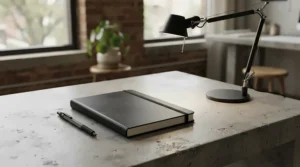
The standout advantage is build quality: thread-bound construction, a hard cover with rounded corners, an elastic closure, and a ribbon bookmark give this the feel of a proper object rather than a disposable pad — the kind of sketchbook you don’t mind being seen with on a train. Inside sits 165gsm acid-free drawing paper across 96 pages, chlorine-free and FSC-certified, positioned by Moleskine as suitable for drawing, sketching, and light tempera work.
Here’s what to weigh before paying the premium: independent paper testing of this exact stock found some feathering with fine fountain-pen nibs and noticeable bleed-through with alcohol-based markers, so it isn’t a mixed-media workhorse in the way its price tag might suggest — you’re largely paying for the object and the binding rather than exceptional paper performance. What most buyers overlook is that the elastic closure and inner pocket genuinely earn their keep for sketchers who work outdoors or on public transport, protecting open pages from knocks in a bag in a way spiral pads simply can’t match. It’s the sketchbook that photographs well and survives being carried everywhere, even if the paper itself isn’t the star of the show.
Pros:
- ✅ Genuinely durable thread-bound hardback build
- ✅ Elastic closure and pocket protect work while travelling
- ✅ FSC-certified, acid-free paper for long-term keeping
Cons:
- ❌ Markers bleed through more than lighter-priced alternatives
- ❌ Premium pricing reflects the object more than the paper performance
Sitting in the mid-£20s to mid-£30s range, this is a considered purchase rather than an impulse buy — justified if portability and presentation matter as much to you as the page itself.
7. Artway Studio Spiral — best budget-friendly UK-made alternative
The standout here is straightforward value: a UK-manufactured hardback spiral sketchbook with 96 sides of 170gsm acid-free cartridge paper, aimed squarely at art students and professionals who want dependable paper without premium-brand pricing. The black hardback cover keeps the book protected, and the spiral binding gives the same flat-opening flexibility as the pricier options on this list.
Based on the spec comparison, 170gsm puts this on par with the Winsor & Newton spiral book above in terms of raw paper weight, and Artway’s own positioning describes it as suited to pencil, ink, and light watercolour washes — broadly the same use case, at a more accessible price point. What most buyers overlook about lesser-known UK brands like this is that the manufacturing standards are often identical to the bigger names, since a relatively small number of UK paper mills supply much of the art trade; you’re frequently paying for brand recognition rather than a meaningfully different sheet. For students building a studio practice on a tight budget, this is a genuinely sensible place to start before upgrading to specialised paper for specific media.
Pros:
- ✅ 170gsm UK-made paper rivals bigger-name spiral hardbacks
- ✅ Sturdy black hardback cover at an accessible price
- ✅ Suitable across pencil, ink, and light watercolour
Cons:
- ❌ Less widely stocked than major international brands
- ❌ Smaller review pool makes long-term durability harder to verify
Prices vary by retailer, so check current price before buying, but this consistently lands as one of the better-value hardback options for anyone starting out.
Paper Weight (GSM) Explained: What the Numbers Actually Mean
Paper weight (gsm) stands for grams per square metre — a one-metre square of the paper, placed on a scale, gives you the number printed on the pack, as defined by the international grammage standard used across the paper industry. It’s a measure of mass, not directly of thickness, though the two usually move together within a given paper type. For sketchbooks, this number is the single most useful spec on the box, because it predicts how a page will behave under pressure, layering, and moisture long before you’ve made a single mark.
As a rough guide: anything under 100gsm (like the Canson XL Sketch Pad’s 90gsm sheets) is thin enough to buckle under water-based media and will show ghosting from graphite on the reverse side, but it’s ideal for high-volume dry-media practice where cost-per-sheet matters more than archival weight. The 150-180gsm range — where most of the hardbacks in this guide sit — is the sweet spot for general studio use, handling charcoal, pencil, ink, and the occasional light wash without complaint. Anything above 220gsm starts moving into dedicated watercolour-book territory, which is overkill and often a waste of money if wet media isn’t your main focus. Reviewers consistently note that heavier paper isn’t automatically “better” — it’s better for specific jobs, and buying the heaviest book on the shelf when you mostly do quick graphite studies just means carrying extra weight and paying more per page for nothing.
Sketchbooks for Charcoal Drawing: What to Look For
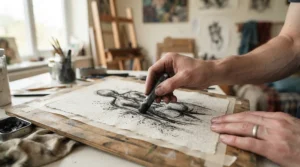
Charcoal is genuinely the most demanding common medium for paper to handle, which is why sketchbooks for charcoal drawing need to be assessed differently from an all-purpose pad. The core issue is tooth — the microscopic texture of the paper surface that grips pigment particles. Too smooth, and charcoal slides around without depositing cleanly or building rich darks; too rough, and it chews through your charcoal stick and makes fine detail almost impossible.
What most buyers overlook is that weight and tooth aren’t the same thing, and you need both working together. A heavy but smooth paper will still struggle with charcoal, while a toothed paper that’s too light will buckle and pill under an eraser or blending stump after just a few sessions. The Daler-Rowney Ebony Hardback and its black-paper sibling both solve this correctly, pairing 160-180gsm weight with a genuinely toothed, woodpulp-based surface designed around graphite and charcoal specifically rather than as an afterthought. Based on the spec comparison across this guide, acid-free paper matters more for charcoal work than almost any other medium too, since charcoal drawings are frequently kept as finished pieces rather than working studies, and yellowing paper undermines that over a matter of years rather than decades.
One safety note worth flagging honestly: charcoal produces fine dust, and while it’s generally treated as a nuisance dust rather than a serious hazard, working in a ventilated space and avoiding blowing dust off your page (which just puts it back into the air you’re breathing) is sensible studio practice — the UK’s Health and Safety Executive guidance on controlling hazardous substances covers the general principles, even though most home studio use falls well outside formal COSHH requirements.
A4 vs Large Format Sketching: When to Size Up
A4 covers most sketching needs comfortably, but large format sketching — typically A3 or bigger — earns its place for specific work: full-figure life drawing, landscape studies where you need room to work loosely, or any practice where cramped margins genuinely limit your mark-making. Several of the brands in this guide, including Daler-Rowney and Seawhite, offer the exact same paper stock in A3 sketchbooks, so switching size doesn’t necessarily mean switching quality or medium suitability.
Here’s the honest trade-off: large format sketching sacrifices portability for working space. An A3 hardback won’t fit in most bags, is heavier to carry on location, and costs meaningfully more per book given the paper surface area involved. What most buyers overlook is that you don’t need to choose exclusively — many working artists keep an A4 sketchbook for daily practice, travel, and quick studies, then move to a larger format specifically for set studio sessions where scale matters. If your current sketches consistently feel cramped, or you’re regularly taping pages together to get more room, that’s a genuine signal to size up rather than pushing more detail into a smaller page. If most of your work is observational studies, thumbnails, or on-the-go sketching, A4 remains the more practical everyday choice.
Building a Studio Practice With Your A4 Sketchbook
A sketchbook only earns its price if it actually gets used, and building consistent studio practice around one is less about talent and more about removing friction. Start by keeping the book somewhere visible rather than stored away — a sketchbook on a shelf gets ignored, one left open on a desk gets filled. In the first thirty days, the most common mistake is treating every page as precious; this leads to hesitation, blank pages, and eventually an abandoned book. Give yourself explicit permission to use pages badly.
A simple maintenance routine helps too: date each session, even briefly, so you can track progress over weeks rather than judging any single page in isolation. For dry-media books like the Ebony range, keep a spare sheet of paper between recently worked pages to stop charcoal transferring and smudging onto the opposite side — a five-second habit that saves considerable frustration later. If you’re using a wire-bound book, resist forcing it closed against a full page of wet media; let washes dry flat before closing the cover to avoid pages sticking together. Optimisation tricks worth adopting include numbering pages for easy reference, keeping a one-line index on the inside cover, and rotating between two sketchbooks — one disposable and low-pressure, one reserved for work you’re happy to revisit — so the fear of “wasting” a good page never stalls the habit.
How to Choose the Best A4 Sketchbook: 7 Expert Criteria
Choosing between the best A4 sketchbooks comes down to matching paper properties to what you’ll actually draw, rather than picking whichever cover looks nicest on the shelf.
- Identify your primary medium first. Charcoal and pastel need tooth and weight; ink and fine pen need smoothness; watercolour needs sizing and heavier gsm.
- Check the gsm against your media, not just the price. Under 100gsm suits dry-media volume work; 150gsm-plus suits mixed media and light washes.
- Decide between spiral, wire, and sewn bindings. Spiral and wire open flat and resist damage from over-filling; sewn bindings feel more premium but can bulge if overstuffed.
- Consider page count against how often you’ll fill it. A high-volume practice benefits from more, thinner sheets; considered, finished work benefits from fewer, heavier ones.
- Look for acid-free, FSC-certified paper if you intend to keep the work. This single spec predicts whether pages yellow and become brittle within a few years.
- Factor in portability versus your working environment. A hardback with a closure suits travel and bags; an open pad suits a fixed studio desk.
- Match your budget to frequency of use, not brand prestige. A premium hardback that sits unused delivers worse value than a budget pad that gets filled weekly.
Common Mistakes When Buying A4 Sketchbooks
The most frequent mistake is buying on gsm number alone without checking what the paper is actually textured or treated for — two sketchbooks at the same weight can behave completely differently depending on tooth, sizing, and whether they’re built for wet or dry media. Reviewers consistently flag disappointment when a lightweight, smooth 90gsm pad is bought expecting it to handle watercolour, or when a heavily toothed charcoal-specific paper is used for fine technical pen work and the nib catches on every stroke.
A second common error is prioritising page count over paper quality for work intended to last. More sheets per pound sounds like better value, but if the paper isn’t acid-free, drawings you actually care about will discolour over time regardless of how many blank pages remain. On the flip side, some buyers over-invest in premium hardbacks for casual, high-volume doodling, where a cheaper pad would get filled just as happily and free up budget for specialised paper elsewhere. Finally, don’t overlook binding type: a beautiful sewn hardback that won’t open flat is a genuine drawback for anyone who scans or photographs finished pages for a portfolio or social media, so check this before committing rather than after.
A4 Sketchbooks vs Loose Paper Pads: Written Comparison
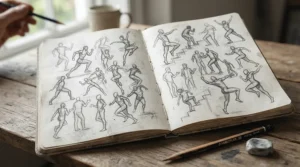
The debate between a bound A4 sketchbook and a loose-leaf paper pad isn’t just about preference — it changes how you work. A bound sketchbook creates a continuous record, which is genuinely valuable for tracking development over time and is exactly what art tutors and examining boards look for in a GCSE or A-Level portfolio, where the BBC’s art and design study resources emphasise showing progression rather than isolated finished pieces. A loose pad, by contrast, gives you the freedom to discard failed attempts entirely and curate only your strongest sheets for a final presentation.
Practically speaking, a bound book also protects pages better in transit and enforces a kind of accountability — every attempt stays visible, which some artists find motivating and others find intimidating. Loose paper pads, meanwhile, tend to offer more paper for your money since manufacturing costs skip the binding process, and they let you mix paper types freely within a single project. On paper, this means the choice isn’t about which is objectively better, but about whether you value a continuous, honest record of your process or the flexibility to present only your best work.
What to Expect: Real-World Performance Across Media
Specs only tell part of the story, so here’s how these papers translate into actual drawing sessions. With graphite pencil, every book in this guide performs adequately, but the toothed papers — the Ebony range and the Artway spiral — give noticeably richer, darker values with less pressure, while smoother stocks like the Moleskine and Canson XL feel faster for line work but flatten tonal range slightly. With charcoal, the difference becomes stark: on the dedicated Ebony papers you can build several layers and lift highlights cleanly, while on lighter, smoother stock the surface saturates quickly and starts to pill under a putty rubber.
Ink behaves differently again. Fine fountain-pen nibs can feather slightly on more absorbent papers, including the Moleskine stock, while fineliners and brush pens generally perform consistently across the board — though alcohol-based markers bleed through to the next page on every book under about 170gsm, so plan your page use accordingly if you’re a heavy marker user. For light watercolour washes, only the 160gsm-plus sizedbooks — the Seawhite and Winsor & Newton — hold up without noticeable cockling, and even then, two or three washes is a realistic ceiling before the paper starts to protest. Matching expectations to these real behaviours, rather than assuming any A4 sketchbook handles any medium equally well, avoids most of the disappointment buyers report in reviews.
Real-World Scenarios: Who Should Buy Which Sketchbook
If you’re a foundation-year art student on a tight budget, filling pages daily across life drawing, observational studies, and experimentation, the Canson XL Sketch Pad or Artway Studio Spiral make the most sense — high page count or reliable mid-weight paper at a price that doesn’t punish you for practising volume. If your focus is specifically portrait and figure work in charcoal, building a serious body of tonal studies you intend to keep, the Daler-Rowney Ebony Hardback and its black-paper counterpart are the obvious pairing, giving you both standard and reversed-tone approaches from the same trusted paper range.
For a hobbyist who travels frequently and wants one adaptable book that handles a quick pencil sketch on a train and a light watercolour wash on a weekend away, the Seawhite Drawing Board or Winsor & Newton Spiral Hardback cover that flexibility without requiring two separate books. And if you’re a working illustrator or professional who values how a sketchbook looks and feels as much as the paper inside — something you’ll happily pull out in a client meeting or carry as a personal object — the Moleskine Art Plus justifies its premium through build quality and presentation rather than raw paper performance. Matching the book to the environment you’ll actually use it in, more than the medium alone, tends to predict how much use it genuinely gets.
Buyer’s Decision Framework: If This, Choose That
Use this simple framework when the options above start to blur together. If charcoal or graphite is your primary medium, choose a toothed, 160gsm-plus paper because it grips pigment and survives layering — the Ebony range. If you’re working across multiple wet and dry media without a strong preference, choose a sized, 160-170gsm all-media paper because it won’t let any one medium down badly — the Seawhite or Winsor & Newton. If you’re producing high volumes of quick studies and cost-per-page matters most, choose a lighter, high-sheet-count pad because thinness isn’t a problem when durability isn’t the goal — the Canson XL.
If portability and presentation matter as much as the paper, choose a closure-bound premium hardback because protection and object-quality justify the price — the Moleskine. If you’re a student or beginner working out what you even prefer yet, choose the most affordable toothed, mid-weight paper available because low stakes encourage more honest experimentation — the Artway or the standard Ebony Hardback. And if your sketches consistently feel cramped inside an A4 page, that’s your signal to look at large format sketching in A3 rather than forcing more detail into less space.
Long-Term Cost & Maintenance: Getting the Most from Your Sketchbook
Thinking in cost-per-sheet rather than cost-per-book changes which sketchbook actually represents value. The Canson XL Sketch Pad, at around £6-£10 for 120 sheets, works out to a few pence per page — genuinely hard to beat for volume practice. A premium hardback like the Moleskine Art Plus, at several times that price for 96 pages, costs meaningfully more per sheet, and that premium is paying for binding, cover materials, and closure hardware rather than superior paper performance, based on the independent paper testing referenced earlier in this guide.
Maintenance-wise, the cheapest way to extend any sketchbook’s working life is basic handling discipline: store books flat or upright rather than stacked flat under weight, which can crease pages over time; keep dry-media books away from damp environments, since even acid-free paper absorbs humidity and can cockle; and avoid overstuffing a spiral or wire-bound book with loose inserts, which stresses the binding. For anyone building a body of work intended to last years rather than months, acid-free and FSC-certified paper is worth the modest premium over uncertified stock — the total cost of ownership includes not just the purchase price but whether the work inside is still legible and undiscoloured a decade later.
Frequently Asked Questions
❓ What's the best paper weight for an A4 sketchbook?
❓ Are A4 sketchbooks good for charcoal drawing?
❓ How many sheets should an A4 sketchbook have?
❓ Is spiral or hardback better for an A4 sketchbook?
❓ Do I need acid-free paper for an A4 sketchbook?
Conclusion
There’s no single best A4 sketchbook — only the right one for what you’re actually drawing and how often you’ll pick it up. If charcoal is your focus, the toothed, acid-free paper in the Daler-Rowney Ebony Hardback is difficult to beat for the price, while anyone splitting time across wet and dry media gets more mileage from the versatile sizing in the Seawhite Drawing Board or Winsor & Newton Spiral Hardback. Students filling pages daily are usually better served by the sheer volume of the Canson XL Sketch Pad than by a premium hardback that quietly discourages use through sheer preciousness.
What matters most, across every option in this guide, is buying paper that matches your medium rather than your budget alone — a beautiful sketchbook that fights your pencil every session gets abandoned, while a modest one that behaves predictably gets filled. Whichever you choose from this list, the best sketchbook is ultimately the one that ends up genuinely covered in your own work rather than sitting pristine on a shelf.
✨ Don’t Miss These Exclusive Deals!
🔍 Take your sketching practice to the next level with these carefully selected sketchbooks. Click on any highlighted item to check current pricing and availability. These tools will help you build a genuine studio habit your future self will thank you for!
Recommended for You
- Coloured Pencil Set 2026: 7 Brilliant Picks
- Dip Pen Sets Under £25: 7 Best Budget Picks for UK Beginners (2026)
- Waterproof Drawing Ink: 7 Best UK Picks That Won’t Bleed (2026)
Disclaimer: This article contains affiliate links. As an Amazon Associate, I earn from qualifying purchases. If you purchase products through these links, we may earn a small commission at no additional cost to you.
✨ Found this helpful? Share it with your friends! 💬🤗
