In This Article
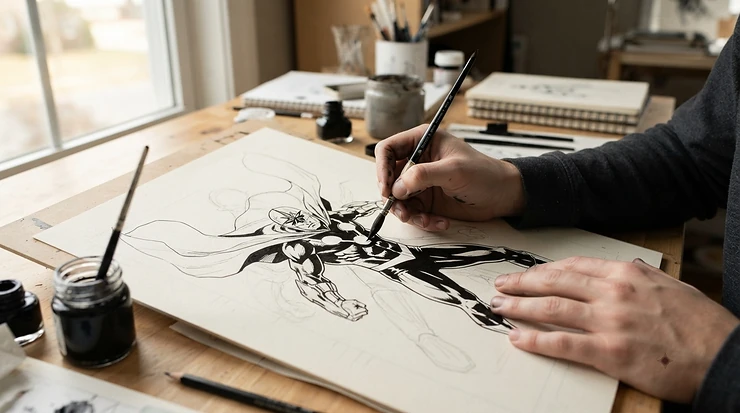
There’s a particular kind of heartbreak reserved for artists who spend an hour on a linework piece, reach for a watercolour wash to finish it off, and watch the lines dissolve into a grey smear right before their eyes. It happens more than anyone admits. The culprit is almost never bad technique — it’s the bottle. Plenty of inks sold as “drawing ink” are actually dye-based and only water-resistant, which is a very different promise to waterproof drawing ink, and the difference only becomes obvious at the worst possible moment.
This guide exists to stop that from happening again. We’ve dug into the real specifications, the aggregated review sentiment, and the chemistry behind what actually makes an ink waterproof (rather than just marketed that way), across seven genuine products you can buy in the UK right now. Waterproof drawing ink is any ink — typically shellac-, acrylic- or pigment-bound — that forms a permanent, water-insoluble film once dry, meaning it can be washed over, layered, or rained on without lifting. Whether you’re dip-penning comic panels, laying watercolour washes over ink linework, or hunting for something with genuine archival permanence for gallery-bound pieces, there’s a specific bottle below that fits your workflow, not just a generic recommendation.
We’ll also get into the two secondary characters in this story that most buying guides skip entirely: pigment ink versus dye ink (they behave completely differently once wet), and the wash technique itself, which is where waterproof ink either earns its keep or lets you down. According to the Wikipedia entry on India ink, the format has been used continuously for drawing and outlining for thousands of years — precisely because carbon particles in colloidal suspension form a waterproof layer with no binder required at all. Everything since has just been refinements on that original trick.
Quick Comparison Table
Before the full breakdown, here’s the fast version for anyone short on time.
| Product | Type | Best For | Price Range |
|---|---|---|---|
| Winsor & Newton Black Indian Drawing Ink | Shellac-based India ink | All-round dip pen and brush use | £5-£9 |
| Dr. Ph. Martin’s Black Star Waterproof India Ink | Shellac-free pigment ink | Fine linework and technical pens | £13-£19 |
| Daler-Rowney FW Acrylic Artist Ink | Acrylic pigment ink | Mixed media and lightfastness | £5-£8 |
| Higgins Black Magic Waterproof India Ink | Classic shellac India ink | Budget dip pen practice | £6-£10 |
| Pebeo Graphic India Ink | Viscous shellac ink | Classroom and large-batch wash work | under £16 |
| Liquidraw Waterproof Colour Drawing Ink Set | Pigmented colour set | Colour wash and mixed-media illustration | £15-£22 |
| Speedball Super Black India Ink | Dense carbon-pigment ink | Technical pens and screen printing crossover | £7-£11 |
A quick read of that table tells its own story: there’s no single “best” waterproof drawing ink, only the best one for what you’re actually doing with it. Winsor & Newton Black Indian Drawing Ink and Higgins Black Magic Waterproof India Ink sit at the accessible end and cover the vast majority of everyday dip pen and brush work. Step up to Dr. Ph. Martin’s Black Star Waterproof India Ink if fine, unclogged technical pen lines matter more than price, and consider Daler-Rowney FW Acrylic Artist Ink the moment lightfastness and colour range become part of the brief.
💬 Just one click — help others make better buying decisions too!😊
Top 7 Waterproof Drawing Inks: Expert Analysis
Every product below was chosen because it’s a genuine, currently available item, not an invented placeholder — and every entry gives you the honest trade-offs, not a rewritten spec sheet.
1. Winsor & Newton Black Indian Drawing Ink — the archival exception in a mostly non-waterproof range
Here’s a detail most buyers miss entirely: Winsor & Newton’s coloured Drawing Inks are actually water-resistant, not waterproof, and will reactivate under a wet wash. Black Indian Drawing Ink is the deliberate exception, built on a shellac binder specifically so it survives paint washes once dry. That single formulation difference is the whole reason this bottle, rather than any of its 25 stablemates, belongs on this list.
At 30ml with a dropper cap, it’s viscous enough to hold a crisp line from a dip pen but flows cleanly through a fine nib once slightly warmed. Reviewers consistently report a deep, faintly blue-black finish with a light sheen, and note it needs a quick shake before use since the shellac can settle.
Based on the spec comparison with W&N’s own colour range, this is the pick for anyone layering watercolour over ink linework, and it’s forgiving enough for students while still holding up in professional studios. A common complaint in user reviews is that dried residue can gum up nib slits if left too long between cleans, so a rinse after each session matters more here than with dye-based inks.
Pros:
- ✅ Genuinely waterproof once fully dry, unlike coloured W&N inks
- ✅ Deep, consistent black with a professional satin sheen
- ✅ Trusted, widely stocked British brand with easy refills
Cons:
- ❌ Can clog fine nibs if not cleaned between sessions
- ❌ Not lightfast to the same standard as pigment-based rivals
Priced in the £5-£9 range for the 30ml bottle, it’s one of the cheapest genuinely waterproof options here, and the value case is straightforward for anyone who inks regularly.
2. Dr. Ph. Martin’s Black Star Waterproof India Ink — shellac-free flow for technical pens
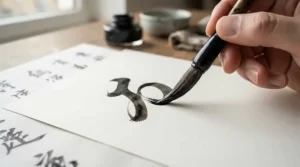
What most buyers overlook about this one is the “shellac-free” claim on the label, which sounds like a minor formulation footnote but actually solves a real problem: shellac is exactly what clogs fine technical pen nibs over time. Dr. Ph. Martin’s Black Star swaps that binder out while keeping the ink genuinely waterproof and lightfast, packaged in a 1oz glass dropper bottle.
The spec sheet won’t tell you this, but user reports suggest it behaves almost like a diluted watercolour when thinned, letting it lay flat washes as well as crisp technical lines — a rare combination. Aggregated reviewer sentiment points to smooth, skip-free flow through 0.1mm-0.3mm technical nibs, which is exactly the segment cheaper India inks tend to fail.
This is the pick for illustrators and architects running expensive isograph-style pens who can’t risk a clog mid-project, and for anyone building an archive-quality portfolio piece where fading isn’t an option.
Pros:
- ✅ Shellac-free formula reduces nib and reservoir clogging
- ✅ Genuinely lightfast alongside being waterproof
- ✅ Smooth enough for both fine linework and wash dilution
Cons:
- ❌ Noticeably pricier than shellac-based India inks
- ❌ Smaller 1oz bottle empties faster with regular studio use
Expect to pay in the £13-£19 range, and on a cost-per-use basis for anyone running a technical pen collection, avoiding even one clogged nib replacement makes the premium worth it.
3. Daler-Rowney FW Acrylic Artist Ink — pigment-based permanence made in England
The 3-4 star lightfastness rating printed on Daler-Rowney’s own colour chart is the detail that separates this ink from most of the dye-based competition, and it’s worth explaining what that number actually means in practice: it’s a laboratory-tested resistance to fading under prolonged light exposure, not a marketing adjective.
Because FW Ink is acrylic-pigment based rather than dye-based, it dries to a water-resistant film that can be diluted down to watercolour-thin washes without losing that permanence, then layered repeatedly without earlier layers lifting. Reviewers consistently note the intermixability across the full 29.5ml and 180ml range, and several point out it works cleanly through airbrushes and paint markers as well as traditional dip pens.
Based on the spec comparison, this is the strongest all-rounder here for mixed-media artists who want reliable colour rather than just black, and it suits anyone building work meant to survive decades on a wall rather than a sketchbook page.
Pros:
- ✅ High lightfastness rating (3-4 star) unusual at this price point
- ✅ Fully intermixable across a wide, genuine colour range
- ✅ Manufactured in England with consistent batch quality
Cons:
- ❌ Requires surface testing before use, as adhesion varies by material
- ❌ Thinner consistency needs more layers for full opacity
At £5-£8 per 29.5ml bottle, it undercuts most “archival” branded inks while actually delivering the lightfastness data to back the claim.
4. Higgins Black Magic Waterproof India Ink — the dependable classroom classic
There’s a reason this bottle keeps showing up in art school supply lists decades after it was formulated: it’s a straightforward, no-surprises shellac India ink that performs exactly as described at a genuinely low cost per millilitre. Micro-pulverised carbon pigments suspended in a shellac solution give it the same fundamental waterproof mechanism as the pricier bottles on this list, just without the refinements aimed at technical pens.
What that means practically is a dense, matte-finish black that’s superb through a dip pen or brush but a poor match for fine-nib technical pens, where it’s more prone to clogging than shellac-free alternatives. Aggregated user feedback describes it as reliable and consistent bottle-to-bottle, with the main recurring gripe being the need to shake it thoroughly before each session as pigment settles at the base.
For students, hobbyists, and anyone doing brush-based ink wash work rather than fine technical linework, this remains one of the smartest budget calls in the category.
Pros:
- ✅ Genuinely low cost per millilitre for a true waterproof ink
- ✅ Dense, opaque matte black ideal for brush and dip pen work
- ✅ Non-toxic formulation suitable for supervised classroom use
Cons:
- ❌ Prone to nib clogging in fine technical pens
- ❌ Settles quickly and needs a firm shake before each use
Sitting around £6-£10, it’s hard to beat as a first bottle for anyone still working out whether ink drawing is a habit or a phase.
5. Pebeo Graphic India Ink — the large-format wash workhorse
The standout feature here is simply volume-to-price: Pebeo’s Graphic India Ink comes in a large bottle built to survive a full term of classroom or studio use, which changes the value equation compared with anything sold in 30ml increments. It’s noticeably more viscous than most rivals on this list, meaning the formula carries more binder relative to pigment — that translates in practice to an intensely dark, satiny black straight from the bottle that can still be diluted with water for wash work without losing coverage.
Reviewers consistently flag the strong odour during use as the main drawback, so working near an open window is worth the habit, but the trade-off is a fully waterproof, semi-gloss finish once cured. Based on the spec comparison with smaller bottles, this is the clear pick for anyone doing repeated large-area wash technique work, illustration classes, or simply anyone who burns through ink faster than the typical hobbyist.
Pros:
- ✅ Large bottle size gives excellent value per millilitre
- ✅ Intensely dark, satiny finish that dilutes well for washes
- ✅ Fully waterproof once cured, even under repeated wash layers
Cons:
- ❌ Strong solvent-like odour reported during application
- ❌ Longer drying time than shellac-based alternatives
At under £16 for a bottle that dwarfs most competitors in volume, the cost-per-use math strongly favours anyone working at scale.
6. Liquidraw Waterproof Colour Drawing Ink Set — colour range without sacrificing permanence
Most waterproof options on this list are black, so it’s worth calling out the one genuine colour set: a ten-bottle assortment of pigmented, waterproof inks aimed squarely at dip pen, brush, and mixed-media illustration work. The dropper-style caps are a small but genuinely useful detail, since precise dispensing matters more with colour mixing than with a single black bottle where a splash barely registers.
What the spec sheet won’t tell you, but user reports suggest, is that the waterproof claim holds up well once fully cured, meaning finished lettering or illustration work resists smudging even under light watercolour washes layered on top.
This is the pick for anyone doing coloured calligraphy, greetings cards, or mixed-media pieces who doesn’t want to buy ten separate single-colour bottles from premium brands at three times the cost. It won’t match Daler-Rowney’s lightfastness data sheet for gallery permanence, but for craft, hobbyist, and semi-professional colour work it punches well above its price point.
Pros:
- ✅ Ten genuine colours in one set at accessible pricing
- ✅ Waterproof once cured, resisting light wash smudging
- ✅ Dropper caps allow precise, mess-free dispensing
Cons:
- ❌ Lightfastness data less rigorously published than premium brands
- ❌ Some colours reported thinner in coverage than the black
Expect to pay in the £15-£22 range for the full ten-bottle set, which works out considerably cheaper per colour than buying single premium bottles.
7. Speedball Super Black India Ink — dense, opaque and built for reproduction work
Speedball’s formula leans into density over everything else, and that’s the standout feature worth understanding: this is one of the most opaque blacks in the category, originally developed with reproduction and technical drawing in mind, where flat, camera-ready black matters more than subtle wash gradation. That density comes from a heavier pigment load, which in practice means fewer passes are needed to achieve full coverage compared with thinner shellac inks, though it also means more careful nib maintenance is required.
Reviewers consistently describe it as reliable for technical pens rated for India ink use, and note the finish dries to a true matte rather than the slight sheen typical of shellac-heavy competitors. Based on the spec comparison, this is the pick for anyone whose work gets scanned or photographed for reproduction, where a flat, non-reflective black scans more cleanly than a glossier alternative, and it holds up equally well for traditional brush and dip pen linework.
Pros:
- ✅ Extremely dense, opaque black ideal for scanning and reproduction
- ✅ True matte finish with no distracting sheen under studio lighting
- ✅ Compatible with a wide range of technical and dip pens
Cons:
- ❌ Heavier pigment load demands more frequent pen cleaning
- ❌ Less suited to delicate, highly diluted wash technique
Priced around £7-£11, it’s a strong mid-budget pick specifically for artists whose final output is a scan or photograph rather than the physical page itself.
Getting Started: A Practical Usage Guide for Waterproof Drawing Ink
Buying the right bottle is only half the job — waterproof ink behaves differently from fountain pen ink and punishes bad habits faster than forgiving washable formulas do. Before your first session, always shake the bottle gently rather than vigorously, since aggressive shaking introduces air bubbles that show up as tiny gaps in fine lines. Load a dip pen by dipping just past the reservoir, not the full nib, and wipe the underside on the bottle rim to stop blobbing on your first stroke. If you’re loading a technical or refillable pen, do it over a paper towel and flush the reservoir with a drop of ammonia-free pen cleaner every few sessions, since shellac-based inks in particular build up residue in narrow channels faster than dye inks ever do.
The most common first-30-days mistake is leaving ink to dry in a nib or reservoir between uses. Because the entire point of waterproof drawing ink is that it resists water once cured, a dried nib becomes genuinely difficult to reclaim rather than a quick rinse away, unlike washable inks. Get into the habit of a 30-second rinse in lukewarm water immediately after each session, even for a five-minute sketch. For wash work specifically, let each ink layer dry fully — usually 10-15 minutes depending on humidity — before laying a wash over it; rushing this step is the single biggest cause of muddy, lifted linework that beginners blame on the ink rather than their own timing.
Real-World Scenarios: Matching the Ink to the Artist
If you’re an illustration student on a tight budget, sketching daily and mostly working in black and white, Higgins Black Magic Waterproof India Ink or Winsor & Newton Black Indian Drawing Ink cover nearly everything you’ll need without denting a student loan, and either bottle will comfortably outlast a full term of coursework.
If you’re a working illustrator running expensive technical pens for client-facing linework, the clog-resistance of Dr. Ph. Martin’s Black Star Waterproof India Ink or Speedball Super Black India Ink pays for itself the first time it prevents a ruined nib mid-deadline — the maintenance saved outweighs the higher upfront cost within a handful of projects.
If you’re a mixed-media or greetings-card maker layering colour, lettering, and light watercolour washes, Liquidraw Waterproof Colour Drawing Ink Set gives you the palette range to experiment without the cost of ten premium single bottles, while Daler-Rowney FW Acrylic Artist Ink is worth adding once you know which specific hues you reach for most and want archival-grade permanence on finished pieces.
How to Choose Waterproof Drawing Ink
- Confirm it’s genuinely waterproof, not just water-resistant. Many “drawing inks,” including most coloured Winsor & Newton shades, are water-resistant and will bleed under a wash — check the specific product page, not just the brand name.
- Match the binder to your tool. Shellac-based inks suit dip pens and brushes beautifully but clog fine technical nibs faster; shellac-free formulas like Dr. Ph. Martin’s Black Star are built specifically for that use case.
- Decide how much lightfastness actually matters. A sketchbook study doesn’t need archival permanence, but a piece destined for framing or sale does — check for a published lightfastness rating rather than assuming “waterproof” implies “won’t fade.”
- Consider viscosity for your technique. Thicker, more viscous inks like Pebeo’s hold crisp lines better; thinner formulas dilute more predictably for wash technique.
- Factor in bottle size against how often you work. Large-format bottles cut cost per millilitre dramatically for frequent users but sit unused (and can separate) for occasional hobbyists.
- Check colour range needs early. Buying a coloured set once, like the Liquidraw range, is usually cheaper than accumulating single premium bottles piecemeal.
- Read aggregated review sentiment for nib compatibility, since this is the detail manufacturers’ own spec sheets rarely mention but working artists complain about most.
✨ Don’t Miss These Exclusive Deals!
🔍 Take your ink drawing setup to the next level with these carefully selected products. Click on any highlighted item to check current pricing and availability. These tools will help you create crisp, permanent artwork you’ll actually want to keep!
Waterproof Drawing Ink vs Non-Waterproof Drawing Ink
The distinction sounds pedantic until it ruins a piece, so it’s worth spelling out properly. Non-waterproof (dye-based) drawing inks, like most of Winsor & Newton’s standard colour range, are formulated for brilliance and transparency — the dyes stay water-reactivatable even once dry, which is precisely why they can be blended and lifted for delicate effects, but also why a watercolour wash laid over them turns lines into smudges. Waterproof drawing inks, whether shellac-, acrylic-, or pigment-bound, cure into a water-insoluble film, sacrificing some of that dye vibrancy for permanence.
In practice, this means dye-based inks suit calligraphy and lettering where the ink is the final layer and nothing wet touches it afterwards, while waterproof inks are essential the moment washes, rain-prone display conditions, or archival storage enter the picture. Daler-Rowney FW Acrylic Artist Ink and Dr. Ph. Martin’s Black Star Waterproof India Ink sit at the permanence-focused end of this spectrum, while a dye-based Winsor & Newton colour would be the better pick for pure fountain-pen calligraphy work. Neither category is objectively superior — they’re solving different problems, and buying the wrong one for your technique is the single most common beginner mistake in this category.
India Ink for Dip Pens: What Actually Matters
Dip pens are unforgiving instruments compared with fountain pens, and india ink for dip pens needs to prioritise flow and line consistency over almost everything else. Because a dip pen has no internal reservoir mechanism protecting it from clogging, viscosity is the property that matters most: too thin and the line skips on rough paper; too thick and it drags or blobs at stroke starts. Winsor & Newton Black Indian Drawing Ink and Higgins Black Magic Waterproof India Ink are both formulated with dip pens as a primary use case, and their shellac content — the same property that makes them waterproof — also gives them the slight body that holds a clean line without excessive bleed into the paper fibres.
The trade-off working artists report is that shellac residue builds up on nibs faster than with dye-based dip pen inks, so a rinse after each session isn’t optional maintenance advice, it’s the difference between a nib lasting years or seizing within weeks. For anyone new to dip pens specifically, starting with a genuinely waterproof india ink rather than a dye-based drawing ink also means early practice pieces survive accidental splashes or later watercolour experiments, which matters more for beginners still building confidence than it might sound.
Pigment Ink Explained: Why It Behaves Differently to Dye
Pigment ink and dye ink are frequently used interchangeably in casual conversation, but they’re chemically distinct, and that distinction drives almost every practical difference on this list. Pigment particles are solid, insoluble colourants suspended in a carrier, whereas dyes are fully dissolved into the liquid at a molecular level. According to Winsor & Newton’s own technical guidance on ink permanence, their Calligraphy Inks are pigment-based specifically because that structure delivers lightfastness that dye formulations can’t match, even though — counterintuitively — those particular pigment inks aren’t waterproof at all, since lightfastness and water resistance are governed by entirely separate parts of the formulation.
What this means for buyers is that “pigment ink” is not automatically shorthand for “waterproof ink,” and the two properties need checking independently on every bottle. Dr. Ph. Martin’s Black Star and Daler-Rowney FW Acrylic Artist Ink manage to deliver both properties together, which is precisely why they command a premium over shellac-based India inks that are waterproof but not classified as lightfast. If a project needs to survive both a wet wash today and direct sunlight for the next decade, checking for both claims explicitly — not just one — is the step most buyers skip.
Mastering the Wash Technique with Waterproof Ink
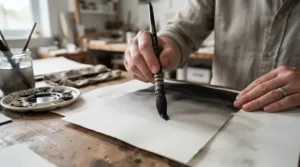
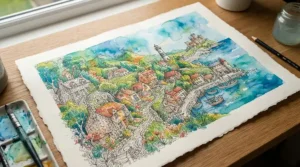
The wash technique is where waterproof drawing ink either proves its worth or exposes a false claim, so it’s worth a dedicated walkthrough. Start with fully dry linework — rushing this single step causes more ruined pieces than any ink quality issue. Load a soft, absorbent brush with water diluted ink at roughly a 1:4 to 1:8 ink-to-water ratio for a light wash, testing on a scrap of the same paper stock first, since absorbency varies significantly between hot-press, cold-press, and cartridge papers.
Apply the wash in a single confident pass rather than scrubbing back and forth, which can lift even genuinely waterproof ink if the surface hasn’t fully cured (allow at least 15-20 minutes drying time for shellac inks in normal room humidity). Build depth with multiple thin layers rather than one heavy one, letting each dry between passes — this is where Pebeo Graphic India Ink’s dilutability and Daler-Rowney FW Acrylic Artist Ink’s intermixability genuinely earn their higher viscosity and pigment load respectively. A common problem readers report is a faint grey “bloom” appearing around linework after washing; this almost always indicates the ink wasn’t genuinely waterproof (a dye-based ink mistaken for one) rather than a technique failure, which loops directly back to double-checking the bottle’s actual formulation before blaming your brushwork.
Archival Permanence: Separating Marketing from Measurement
“Archival” is one of the most overused words in art materials marketing, and it’s worth being precise about what it should actually mean. Genuine archival permanence involves three separately tested properties: lightfastness (resistance to fading under UV and visible light), pH neutrality of the paper-ink combination, and physical stability of the binder over decades rather than years. A university-level grounding in why this matters comes from conservation science itself — postgraduate paper conservation training, such as the module structure published by Northumbria University, treats the interaction between historic media and paper substrates as a discipline in its own right, precisely because so many “permanent” 20th-century inks have since proven fugitive under real-world display conditions.
For working artists rather than conservators, the practical takeaway is simpler: look for a published lightfastness rating (Daler-Rowney’s star system is a good, transparent example) rather than trusting the word “archival” alone on packaging. Dr. Ph. Martin’s Black Star Waterproof India Ink and Daler-Rowney FW Acrylic Artist Ink both publish genuine lightfastness data, while shellac India inks like Higgins Black Magic are waterproof and durable in normal handling but haven’t been marketed or tested to the same lightfastness standard — a distinction worth knowing before selling or framing finished work.
Common Mistakes When Buying Waterproof Drawing Ink
The most frequent error is assuming “India ink” automatically means waterproof; several modern India ink products are reformulated to be water-soluble for easier cleanup, so the label alone isn’t proof. A second common mistake is buying based on black intensity alone in photographs, when viscosity and nib compatibility matter far more for day-to-day usability than a marginally darker black. Buyers also regularly underestimate how much ventilation matters with solvent-heavier formulas; general guidance from the Health and Safety Executive on handling solvent-based inks — while aimed at industrial settings — reflects the same underlying principle that applies at a hobbyist desk: good airflow reduces exposure to strong-smelling formulations like Pebeo’s. Finally, many first-time buyers skip a paper compatibility test entirely, discovering too late that a genuinely waterproof ink still bleeds badly on absorbent, uncoated paper regardless of the bottle’s own quality.
Long-Term Cost & Maintenance
Cost per millilitre tells a very different story to shelf price alone. Pebeo Graphic India Ink’s large bottle format works out to some of the lowest cost-per-use figures here despite a higher upfront price, making it the strongest long-term value pick for anyone working through ink regularly rather than occasionally. Smaller premium bottles like Dr. Ph. Martin’s Black Star cost more per millilitre but reduce a different kind of long-term cost: nib and pen replacement from clogging, which for anyone running a technical pen collection worth £50-£150 per pen is a meaningful hidden expense avoided.
Maintenance costs matter just as much as the ink itself. Shellac-based inks require more frequent pen cleaning solution purchases and, in worst cases, occasional nib replacement if left to dry repeatedly — a genuinely false economy for anyone buying the cheapest bottle and then replacing a £15 technical pen nib every few months. Building a simple maintenance habit (rinse after every session, deep clean monthly) costs nothing beyond a few minutes and extends the working life of both the tools and the ink itself considerably.
Waterproof Drawing Ink for Beginners vs Professionals
Beginners generally benefit most from forgiving, low-cost shellac inks like Higgins Black Magic or Winsor & Newton Black Indian Drawing Ink, where the cost of a mistake — a clogged cheap dip pen nib, a spilled bottle — is genuinely low, and the learning curve on wash technique can happen without financial anxiety. Professionals, by contrast, tend to gravitate toward formulations solving a specific, identified problem: Dr. Ph. Martin’s Black Star for technical pen reliability on client deadlines, or Daler-Rowney FW Acrylic Artist Ink for gallery-bound lightfastness requirements that a client or curator may explicitly ask about.
The middle ground — semi-serious hobbyists and illustration students — is arguably best served by Speedball Super Black India Ink or the Liquidraw colour set, both of which offer a genuine step up in either density or range without crossing into premium pricing. Matching ink to skill level isn’t about spending more as you improve; it’s about spending on the specific property (nib compatibility, colour range, or lightfastness) that your actual projects have started to demand.
Frequently Asked Questions
❓ Is India ink the same as waterproof drawing ink?
❓ Can you use waterproof drawing ink in a fountain pen?
❓ How do you stop waterproof ink from clogging a nib?
❓ Does waterproof drawing ink fade over time?
❓ What's the best waterproof ink for watercolour washes over ink linework?
Conclusion
Waterproof drawing ink earns its keep the moment a project needs to survive more than a dry page — a watercolour wash, humid storage, or simply years on a wall without fading. Across the seven bottles here, the pattern holds regardless of budget: Winsor & Newton Black Indian Drawing Ink and Higgins Black Magic Waterproof India Ink cover reliable, everyday dip pen and brush work without overspending, Dr. Ph. Martin’s Black Star Waterproof India Ink solves the specific clogging problem that plagues technical pens, and Daler-Rowney FW Acrylic Artist Ink brings genuine, published lightfastness into reach at a surprisingly accessible price. Pebeo Graphic India Ink rewards anyone working through volume, Liquidraw’s colour set opens up work beyond black-and-white, and Speedball Super Black India Ink earns its place for anyone whose finished work lives as a scan rather than a physical page.
The real lesson across all seven is that “waterproof” and “archival” are separate, checkable claims, not marketing synonyms — and knowing the difference before you buy saves both a ruined piece of work and, over a few years of practice, a genuinely surprising amount of money in replaced nibs and reworked pages. Pick based on your actual tool and technique rather than the darkest black in the photograph, and the right bottle will quietly disappear into your process instead of becoming the reason a piece didn’t survive the wash.
✨ Don’t Miss These Exclusive Deals!
🔍 Take a look at today’s prices on the picks above before they change — your sketchbook (and your nibs) will thank you.
Recommended for You
- Drawing Ink for Dip Pens: 7 Best Picks for UK Illustrators (2026)
- Dip Pen Nib Collection: 7 Best Nibs for UK Calligraphy (2026)
- Dip Pen Sets for Beginners: 7 Best Starter Kits UK (2026)
Disclaimer: This article contains affiliate links. As an Amazon Associate, I earn from qualifying purchases. If you purchase products through these links, we may earn a small commission at no additional cost to you.
✨ Found this helpful? Share it with your friends! 💬🤗
