In This Article
Drawing ink for dip pens is a fluid, pigment or dye-based ink formulated to flow cleanly off a metal nib and dry into a crisp, controllable line, ranging from dense waterproof blacks to transparent washes of colour. If you’ve ever watched an illustrator drag a nib across bristol board and produce a line that goes from hairline-thin to bold in one stroke, you’ve watched ink do the one thing a biro simply can’t: respond to pressure, angle and speed all at once.
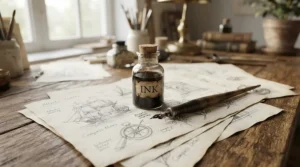
Here’s the thing nobody tells you when you’re starting out — the pen is almost never the problem. It’s the ink. A lovely vintage Brause nib will skip, blot and clog just as readily with the wrong bottle of ink as a cheap one will, and a mediocre nib can be made to sing with the right ink behind it. That’s the gap this guide is built to close. We’ve dug into the specs, the aggregated review sentiment, and the practical chemistry (shellac versus acrylic versus dye, in plain English) behind seven real, currently available options, so you can pick with your eyes open rather than guessing from a product photo.
According to Wikipedia’s overview of India ink, the classic black drawing ink is prized precisely because its carbon pigment forms a waterproof film once dry — a property that still shapes which bottle you should reach for depending on whether your finished piece will ever meet a watercolour wash. We’ll come back to that distinction again and again, because it’s the single biggest factor in whether your ink drawing survives contact with anything wet.
Below you’ll find a quick-reference comparison, a full breakdown of seven genuinely good bottles across budget, mid-range and premium price points, and then the deeper stuff — viscosity, drying behaviour, board choice, buying mistakes, and a decision framework so you’re not left guessing at the till (or, more likely, the checkout page).
Quick Comparison Table
| Ink | Type | Waterproof | Best For |
|---|---|---|---|
| Winsor & Newton Drawing Ink (Black Indian) | Shellac-based | Yes | Classic comic-style inking |
| Daler-Rowney FW Acrylic Ink | Acrylic | Yes | Mixed-media and airbrush crossover |
| Dr. Ph. Martin’s Bombay India Ink | Pigment dropper | Yes | Vivid, saturated colour work |
| Speedball Super Black India Ink | Carbon pigment | Yes | High-volume budget blacks |
| Liquidraw Waterproof Drawing Ink Set | Pigment set | Yes | Beginners building a palette |
| Ecoline Liquid Watercolour Ink | Dye-based | No | Washes and loose illustration |
| Rotring Isograph Bottled Ink | Pigment | Yes | Technical precision linework |
Looking at the spread above, the split between Winsor & Newton Drawing Ink, Daler-Rowney FW Acrylic Ink and Speedball Super Black India Ink covers most of what a black-and-white illustrator will ever need, while Dr. Ph. Martin’s Bombay India Ink and Ecoline Liquid Watercolour Ink open the door to colour work. Note that Ecoline Liquid Watercolour Ink is the only genuinely non-waterproof option here — brilliant for atmospheric washes, but not what you want under a coffee-stained sketchbook. If your work needs to survive contact with water or alcohol markers, everything else on this list has you covered.
A quick tap on the links below could save someone else hours of trial and error — thanks for spreading the word! 💬
Top 7 Drawing Inks for Dip Pens: Expert Analysis
1. Winsor & Newton Drawing Ink (Black Indian) — the benchmark shellac black
If there’s a “default” drawing ink in the UK, this is probably it. Winsor & Newton has been making inks since the 1830s, and its Black Indian ink is the one most art teachers reach for first. It’s a shellac-based ink, which means the pigment is suspended in a resin that hardens as it dries — that’s what gives you the slightly glossy, genuinely waterproof finish once it’s cured, typically within a few minutes on absorbent paper.
What most buyers overlook about this ink is that the shellac binder is a double-edged sword: it’s what makes the line so durable and glossy, but it’s also why the bottle needs a proper shake before use and why a nib left to dry with ink still on it can gum up fast. Based on the spec comparison with other shellac inks on this list, this one sits in the middle for viscosity — thinner than some premium comic inks, thicker than most dye-based washes, which makes it forgiving for beginners learning nib pressure. It’s aimed squarely at illustrators, comic inkers, and calligraphers who want one reliable black that behaves the same way every time.
Reviewers consistently note that the ink lays down a genuinely deep, non-streaky black and that colour variants in the same range (silver, gold, and the tinted drawing inks) are considerably more transparent than the black — worth knowing if you’re expecting metallic coverage to rival paint. If you cannot verify identical performance across every colour in the line, treat the black and the metallics as functionally different products, because they are.
Pros:
- ✅ Genuinely waterproof once fully cured on the page
- ✅ Consistent, streak-free coverage on most papers
- ✅ Widely stocked, so replacement bottles are easy to find
Cons:
- ❌ Shellac base means more frequent nib cleaning
- ❌ Coloured variants are noticeably thinner than the black
Small bottles typically sit in the £6-£8 range for 14ml, rising toward the £15-£20 range for boxed colour sets — check current price and availability before buying, as stock and pack sizes shift regularly. For a dependable, no-surprises black that plays well with almost every nib on the market, this remains a genuinely solid value pick.
2. Daler-Rowney FW Acrylic Ink — best for mixed-media crossover
Daler-Rowney has been making art materials in England since 1783, and its FW range takes a different chemical route to permanence: acrylic rather than shellac. The pigment is suspended in an acrylic polymer, which cures into a flexible, lightfast, fully waterproof film once dry — and because it’s acrylic rather than resin, it tends to be more forgiving of repeated dilution without losing its bond to the paper.
Here’s what the spec sheet won’t spell out clearly: acrylic ink dries faster on the nib than shellac ink does, which is a genuine trade-off. On the plus side, once a wash of Daler-Rowney FW Acrylic Ink has dried on your illustration board, you can layer watercolour, gouache or even more ink over the top without it lifting — brilliant for mixed-media illustrators. On the downside, that same fast-curing acrylic can dry inside a nib’s reservoir in the time it takes to answer a text, so this isn’t the ink to leave sitting on your desk between strokes. With 45 colours in the range, it’s also the most versatile bottle on this list for anyone building out a full palette rather than sticking to black and white.
Aggregated review sentiment across the wider FW range consistently praises the colour saturation and lightfastness, with the recurring caution being exactly the clogging risk described above — several long-term users recommend keeping a damp cloth or water pot within reach specifically for this ink.
Pros:
- ✅ Fully waterproof and lightfast once cured
- ✅ 45-colour range gives real palette-building flexibility
- ✅ Layers cleanly under other wet media
Cons:
- ❌ Dries in the nib faster than shellac-based inks
- ❌ Not the cheapest way to build a full set of colours
Individual 29.5ml bottles generally fall around £6-£9, with the larger 180ml bottles landing in the £20-£25 range for those working at volume. If you’re the kind of illustrator who finishes a pen drawing with a watercolour wash, this is arguably the smartest single purchase on this entire list.
3. Dr. Ph. Martin’s Bombay India Ink — best for saturated colour illustration
Dr. Ph. Martin’s has been formulating specialist inks and liquid watercolours since 1934, and the Bombay India range is where the brand’s pigment expertise shows most clearly. These are highly pigmented inks in dropper-stopper glass bottles — Bombay Black and Bombay White are opaque with strong covering power, while the rest of the 24-colour range is transparent and startlingly vivid.
What most illustrators don’t realise until they’ve used a few bottles is that “waterproof when dry” and “lightfast” aren’t automatically the same claim, and this is one of the few ranges where the manufacturer states both properties apply across the board. Based on the spec comparison with dye-based washes like Ecoline, the difference in permanence is significant: once Dr. Ph. Martin’s Bombay India Ink has cured, subsequent washes of water-based colour won’t disturb the linework beneath it, which is exactly what you want when inking first and colouring second.
UK review volume for the Bombay range is thinner than for mainstream Winsor & Newton or Speedball products, so we’d flag that individual customer accounts should be weighed with a little more caution here than for the bigger-selling brands. That said, the recurring theme among the illustrators who do post reviews is genuine enthusiasm for the colour intensity and the dropper convenience, alongside occasional notes that the glass bottle neck can make direct nib-dipping slightly fiddly — many owners decant into a smaller dish instead.
Pros:
- ✅ Exceptionally saturated, true colour once diluted or neat
- ✅ Waterproof and lightfast when fully cured
- ✅ Dropper bottle gives precise, mess-free application
Cons:
- ❌ Narrow bottle neck makes direct dip-pen dipping awkward
- ❌ Smaller UK review base than mainstream competitors
Expect to pay roughly £8-£12 per 30ml bottle, with the boxed 12-colour sets landing considerably higher — check current pricing, as import costs on US-formulated inks can shift. For colour-driven illustration work where flat black simply won’t cut it, this is the standout premium pick on this list.
4. Speedball Super Black India Ink — best budget workhorse
Speedball has been making fine art materials since 1899, and its Super Black India Ink is the closest thing to an industry standard for artists who get through a lot of ink. It’s a 100% carbon-black pigment formula with no dyes, free-flowing and non-clogging by design, and — like the Winsor & Newton option — it contains a shellac-type binder that locks the pigment to the page once dry.
What the spec sheet doesn’t say outright is how much this ink rewards buying in bulk. The same formula is sold from a 2oz (59ml) bottle right up to a 32oz (roughly 950ml) jug, and the cost-per-millilitre drops sharply as you size up. Based on the spec comparison with premium shellac inks, the pigment density here is genuinely comparable — this isn’t a “budget equals worse” situation so much as “budget equals bigger bottle, less branding.” For students, workshop tutors, or anyone filling technical pens and brushes daily, that scale matters more than a fancier label.
Reviewers consistently describe the black as opaque and reliably dark, with the ink applying cleanly by pen, brush or airbrush. The most repeated caution, echoed across multiple long-term users, is that because it does contain a binder, nibs and brushes left uncleaned overnight can gum up — exactly the same trade-off as the Winsor & Newton bottle above, just at a lower price point.
Pros:
- ✅ Excellent pigment density for the price per millilitre
- ✅ Scales from small bottles to bulk jugs without formula change
- ✅ Works equally well with pen, brush and airbrush
Cons:
- ❌ Contains a binder, so needs the same nib-cleaning discipline
- ❌ Packaging is functional rather than premium-feeling
A 2oz bottle typically runs around £6-£8, dropping toward the mid-single-figures per equivalent volume once you move to the pint or quart sizes. If your main criterion is “reliable black ink, lots of it, minimum fuss,” this is very hard to beat on value.
5. Liquidraw Waterproof Drawing Ink Set — best set for beginners
Liquidraw’s set of ten 35ml bottles is aimed squarely at people who don’t yet know which colours they’ll actually use, and would rather find out cheaply than commit to single bottles of everything. Each bottle comes with its own dropper and a screw-on lid rather than the glass stopper you’ll find on premium ranges, which — while less elegant — is considerably more forgiving if you’re prone to knocking bottles over on a crowded desk.
Here’s what most beginner buying guides skip over: a starter set like this isn’t about matching the pigment purity of a premium single-colour ink, it’s about giving you ten data points on what waterproof coloured ink actually behaves like before you spend £10 on one bottle of something you might not enjoy using. Based on the spec comparison with the Rotring-compatible ink from the same manufacturer (see below), Liquidraw’s formulas lean toward reliability over maximum vibrancy — a sensible trade-off for a learning set.
Aggregated review sentiment for Liquidraw’s compatible inks is notably consistent: multiple UK buyers report the ink working cleanly in both dip pens and technical pens without clogging, describing performance as comparable to pricier named brands at a fraction of the cost, with the main gripe being that the plastic bottle can be a little awkward to refill a fine nib from directly.
Pros:
- ✅ Ten colours for the price of two or three single bottles elsewhere
- ✅ Genuinely waterproof once dry, based on user reports
- ✅ Screw-on lids reduce spill risk compared with glass stoppers
Cons:
- ❌ Narrower colour depth than premium single-pigment inks
- ❌ Bottle shape makes fine-nib dipping a little fiddly
Full sets generally land around £18-£25, working out to roughly £2 per bottle — genuinely competitive for anyone building a first palette rather than replacing a favourite. This is the pick we’d point a total beginner toward before they’ve worked out what they actually like.
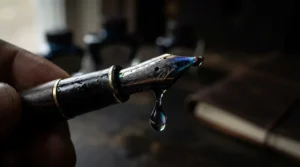
6. Ecoline Liquid Watercolour Ink — best for washes and loose illustration
Royal Talens’ Ecoline range is a slightly different creature to everything else on this list: it’s a dye-based, non-waterproof liquid watercolour rather than a pigmented drawing ink, and that’s precisely the point. Because it’s dye-based and rewettable, you can reactivate dried ink with a wet brush days or weeks later, blending and lifting colour in a way that permanent pigment inks simply won’t allow.
What most people miss when they first pick up Ecoline is that “not waterproof” is a feature here, not a flaw — it’s what makes the ink so good for loose, spontaneous illustration where you want linework and colour to bleed and blend into one another. Based on the spec comparison with the pigment-based inks above, Ecoline is considerably thinner in viscosity, flows more freely through a dip pen, and dries with almost no visible texture, but it will smear the moment it meets a damp brush or a rain-soaked page. Note too that as a dye rather than a pigment, it’s less lightfast over years of display — fine for sketchbooks and prints, less ideal for a piece hung in direct sunlight for a decade.
UK reviewers repeatedly describe the colour range as vivid and consistent bottle to bottle, with the most common gentle criticism being that several shades within the larger sets look very similar once diluted — several buyers specifically recommend testing swatches before assuming every bottle in a 20 or 30-colour set is meaningfully distinct.
Pros:
- ✅ Rewettable, so mistakes and blends stay fixable for longer
- ✅ Extremely free-flowing through fine dip-pen nibs
- ✅ Vivid, consistent colour across the range
Cons:
- ❌ Not waterproof or fully lightfast once dry
- ❌ Some shades within larger sets read as near-identical
Single 30ml bottles typically sit around £5-£7, with the curated five-colour sets running roughly £22-£28. For loose, expressive illustration work rather than archival permanence, this is genuinely one of the most enjoyable inks on the market to draw with.
7. Rotring Isograph Bottled Ink — best for technical precision work
Rotring built its reputation on technical drafting pens, and its Isograph ink reflects that heritage even though plenty of illustrators now use it in dip pens and ruling pens rather than the technical pens it was designed for. It’s a high pigment-density formula engineered for fine line boards, tracing paper and vellum, fast-drying and waterproof once cured, with excellent adhesion designed to stop lines feathering on smooth drafting film.
What the marketing copy doesn’t quite capture is how much of a difference that pigment density makes on illustration board specifically: because the particles are so fine and evenly dispersed, this ink produces exceptionally crisp edges even on lines under half a millimetre wide, which is the whole reason architects, engineers and precision illustrators reach for it over a general-purpose drawing ink. Based on the spec comparison with the technical-pen-compatible Liquidraw ink also on the market, Rotring’s own formula commands a real premium, and reviewers who’ve tried both generally agree the difference is noticeable but not dramatic for casual use.
Reviewers consistently praise the strong pigment and reliable flow once a pen or nib is properly maintained, with several long-term users specifically crediting good cleaning habits — rather than the ink itself — for avoiding the clogging that gives technical inks a bad reputation in general. That’s a useful, honest piece of aggregated sentiment: the ink performs well, but only if you treat your equipment with the same precision the ink was designed for.
Pros:
- ✅ Exceptional edge sharpness on fine, technical linework
- ✅ Fast-drying and fully waterproof once cured
- ✅ Trusted by architects and draughtspeople for decades
Cons:
- ❌ Premium price relative to general-purpose drawing inks
- ❌ Rewards meticulous pen maintenance more than any ink here
Bottles generally run around £7-£10 for 23ml, which sounds steep per millilitre until you factor in how far the fine pigment stretches on detailed technical or botanical illustration work. If precision is your priority over volume, this earns its premium.
Dip Pen Ink Set for Illustration: Building Your Palette
If you’re assembling a dip pen ink set for illustration from scratch rather than buying single bottles, resist the urge to buy every colour at once. Start with one reliable black — Winsor & Newton Drawing Ink or Speedball Super Black India Ink are both sensible anchors — plus one budget colour set like Liquidraw Waterproof Drawing Ink Set to learn how coloured ink behaves differently from black on your chosen paper.
A genuinely useful dip pen ink set for illustration also needs a few pieces of kit the bottles themselves won’t tell you about: a jar of clean water for rinsing nibs between colours, a soft cloth (paper towel sheds fibres that catch in the nib slit), and ideally a small palette or dish for decanting ink rather than dipping directly from narrow-necked bottles. Reviewers across several ink ranges specifically mention decanting as the fix for awkward bottle necks, so it’s worth building into your habits from day one rather than fighting the packaging every session.
Store your set upright, away from direct sunlight and away from extremes of temperature — a garage or car boot in winter can thicken pigment inks noticeably, while summer heat accelerates the evaporation that leaves shellac-based inks gluey at the neck. A well-maintained dip pen ink set for illustration, kept clean and properly stored, will comfortably outlast the enthusiasm of most beginners who abandon the hobby before their first bottle runs dry.
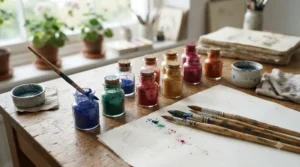
Understanding Ink Viscosity: What It Means for Your Line Work
Ink viscosity — essentially how thick or thin the ink is — is the single most underrated spec on any bottle, and it’s rarely stated as a number you can compare directly. As Wikipedia’s entry on the dip pen explains, these pens rely on capillary channels in the nib rather than an internal reservoir, which is precisely why the ink’s own thickness does so much of the work that a fountain pen’s mechanism would otherwise handle. What it actually determines is how much ink your nib picks up per dip, how far that ink travels before you need to reload, and how easily fine hairlines hold their shape without bleeding.
Thinner inks, like Ecoline Liquid Watercolour Ink, flow fast and cover more paper per dip, which is why they suit loose, gestural illustration where you’re working quickly across a page. Thicker, more viscous inks like Dr. Ph. Martin’s Bombay India Ink or Daler-Rowney FW Acrylic Ink sit on the nib longer, hold crisper line edges, and resist feathering into absorbent paper — but they also empty from the nib faster and demand more frequent dipping. Here’s what most spec sheets won’t tell you: viscosity also shifts with room temperature, so an ink that feels perfect in a warm studio can turn sluggish and skippy in an unheated garage in January.
If you’re regularly fighting skipping or blotting, the fix is often viscosity rather than technique — try thinning a too-thick ink with a drop of distilled water, or switch to a thinner formula like Ecoline if your current ink simply won’t flow evenly through your preferred fine nib.
Waterproof Drying: What to Expect and How to Control It
Waterproof drying is the property that decides whether your finished ink drawing can survive a watercolour wash, a coffee spill, or years on a shelf without the lines lifting or smearing. Of the seven inks reviewed here, only Ecoline Liquid Watercolour Ink is genuinely non-waterproof once dry; everything else — the shellac-based Winsor & Newton Drawing Ink and Speedball Super Black India Ink, the acrylic Daler-Rowney FW Acrylic Ink, and the pigment-based Dr. Ph. Martin’s and Rotring Isograph ranges — cures into a film that resists water once fully set.
The word “fully set” is doing real work in that sentence. Waterproof drying isn’t instant: most pigment and shellac inks need several minutes of open-air drying, and a light layer on absorbent paper cures faster than a heavy pool of ink on smooth illustration board. Reviewers of nearly every waterproof ink on this list, across every brand, repeat the same practical tip: test on a scrap of your actual paper before committing, because the same ink behaves differently on hot-press, cold-press and coated surfaces.
If you need waterproof drying for line-and-wash work — inking first, then adding watercolour or Ecoline over the top — give the ink a genuine ten to fifteen minutes before introducing any brush loaded with water, longer in cold or humid conditions. Rushing this step is the single most common reason illustrators report “waterproof” ink lifting when it clearly shouldn’t have.
Choosing the Right Illustration Board for Ink Work
The surface you draw on matters just as much as the ink itself, and illustration board deserves more attention than most buying guides give it. An illustration board is, at its simplest, a sheet of drawing or watercolour paper laminated onto a stiff cardboard backing, which gives you the smooth, controlled surface of good paper with the rigidity to handle wet media and repeated erasing without warping.
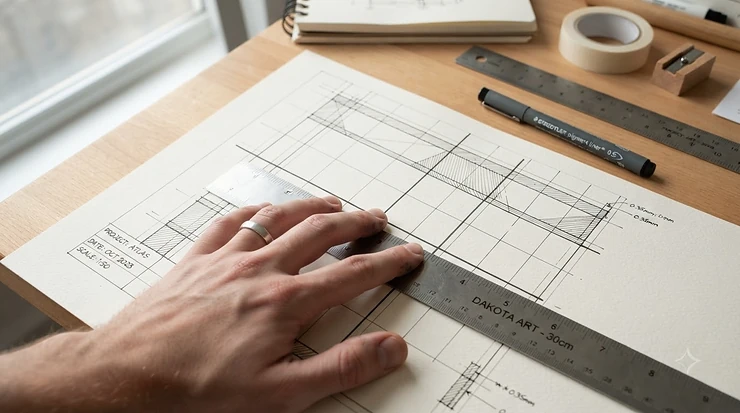
Smooth, “hot-press” illustration board suits fine, technical linework — the kind you’d produce with a Rotring Isograph Bottled Ink or a fine crow-quill nib — because there’s minimal tooth to catch the pen and disrupt a clean line. Textured, “cold-press” board suits looser illustration and wash work, giving washes of Ecoline Liquid Watercolour Ink or diluted Daler-Rowney FW Acrylic Ink somewhere to pool and granulate attractively rather than sitting flat.
A genuinely practical tip most beginners never hear: buy a full sheet and cut it down yourself rather than pre-cut pads, since illustration board is considerably cheaper per square inch in full-sheet form, and offcuts make perfect swatch-testing surfaces for exactly the kind of ink comparisons this guide has been walking through. Whichever board you choose, always test ink flow and drying time on an offcut first — board absorbency varies enough between manufacturers that a formula which behaves beautifully on one brand can bleed or skip on another.
How to Choose Drawing Ink for Dip Pens
Choosing the right drawing ink for dip pens comes down to seven practical questions, each with a clear knock-on effect on your results:
- Will the finished piece meet water or alcohol markers? If yes, prioritise a waterproof formula like Winsor & Newton Drawing Ink or Daler-Rowney FW Acrylic Ink over a dye-based ink like Ecoline.
- Are you working in black and white, or colour? Black-and-white inkers get more value from a large workhorse bottle like Speedball Super Black India Ink; colour illustrators should look at Dr. Ph. Martin’s Bombay India Ink or a starter set like Liquidraw.
- How fine is your nib? Very fine crow-quill nibs benefit from thinner, lower-viscosity inks that won’t clog the slit; broader nibs tolerate thicker, more pigmented formulas.
- Do you need lightfastness for display or sale work? Pigment-based inks generally outlast dye-based ones under UV exposure, which matters if your illustration will hang on a wall rather than live in a sketchbook.
- What’s your budget per session, not per bottle? A bulk bottle of Speedball Super Black India Ink costs more upfront but far less per drawing than repeatedly buying small premium bottles.
- How often will you actually use it? Ink left unused for months can separate or thicken; buy set sizes that match your realistic output, not your ambitions.
- What surface will you be drawing on? Match ink viscosity to your illustration board’s absorbency — smooth hot-press boards suit thinner inks, textured cold-press boards handle thicker ones more gracefully.
Working through these seven questions in order will steer most illustrators to the right bottle faster than reading a dozen individual reviews.
Common Mistakes When Buying Drawing Ink for Dip Pens
The single most common mistake is buying a big bottle of an unfamiliar ink before testing a small one — pigment inks vary enough between brands that a formula which suits your favourite nib perfectly can behave completely differently in the next bottle you try. Buy small the first time, always.
A close second is assuming “India ink” and “drawing ink” are interchangeable terms guaranteeing waterproof performance. As the earlier section on waterproof drying explained, that’s only true of some formulas — always check the specific bottle’s labelling rather than the general product category.
Beginners also frequently underestimate storage. Leaving a bottle in a hot car, a cold shed, or simply uncapped overnight accelerates thickening and separation in almost every ink on this list, and the resulting sludge at the bottom of an otherwise good bottle is often mistaken for a manufacturing fault rather than user storage.
Finally, plenty of buyers pick ink based on price alone and end up frustrated by clogging, only to discover the real issue was nib maintenance rather than the ink formula — as the aggregated reviews for both Rotring Isograph Bottled Ink and Liquidraw Waterproof Drawing Ink Set repeatedly demonstrate, cleaning discipline matters as much as the bottle you choose.
Drawing Ink vs Fountain Pen Ink: What’s the Real Difference
It’s a mistake plenty of newcomers make: reaching for a bottle of fountain pen ink because it’s already sitting on the desk, rather than buying a proper drawing ink. The two are formulated for entirely different jobs, and the difference matters more than it might seem.
| Property | Drawing Ink | Fountain Pen Ink |
|---|---|---|
| Pigment/dye load | High, often pigment-based | Low, almost always dye-based |
| Waterproof once dry | Often yes | Almost never |
| Safe in fountain pens | No — can clog feeds | Yes, designed for it |
| Best For | Dip pens, illustration boards | Fountain pens, everyday writing |
Fountain pen ink is deliberately thin and low-pigment, engineered to flow through the narrow capillary feed of a fountain pen without clogging it — put a pigment-heavy drawing ink like Dr. Ph. Martin’s Bombay India Ink into a fountain pen and you risk permanently blocking the feed. Conversely, using fountain pen ink in a dip pen for finished illustration work generally produces a pale, washed-out line that won’t survive contact with water, because it simply isn’t built to be waterproof or highly pigmented.
The practical upshot: dip pens are far more forgiving of thick, pigmented, waterproof formulas precisely because they have no delicate internal feed to protect, which is exactly why every ink reviewed in this guide is formulated for dip pen, brush or airbrush use rather than fountain pens.
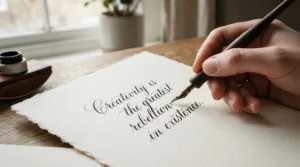
Real-World Scenario: Matching Ink to Your Practice
Picture three illustrators, each with a genuinely different need. First, a comic artist working in black and white, inking pages nightly and needing consistent blacks that scan cleanly for print — for them, a bulk bottle of Speedball Super Black India Ink paired with a reliable nib is the obvious economical choice, since the sheer volume of a page-a-night habit makes cost-per-millilitre the deciding factor.
Second, a botanical illustrator working on commission, producing archival pieces destined for gallery walls or printed field guides — lightfastness and colour accuracy matter more than economy here, making Dr. Ph. Martin’s Bombay India Ink the stronger fit despite the higher per-bottle cost, precisely because the work is meant to last decades rather than fill a sketchbook.
Third, a hobbyist experimenting with loose, expressive line-and-wash pieces at weekends, unconcerned with archival permanence and mostly interested in enjoying the process — Ecoline Liquid Watercolour Ink, perhaps alongside a starter black from the Liquidraw set, gives them room to play, blend and rework without the pressure (or cost) of committing to premium pigment inks. This kind of pen-and-ink practice has a long lineage; museum collections such as the V&A’s holdings of pen and ink drawings show just how far a bottle of ink and a steady hand can go, long before any of these modern formulas existed.
None of these three illustrators is using the “best” ink in some abstract sense — each is using the ink best matched to their budget, output volume, and end use, which is the entire point of working through the seven questions in the “How to Choose” section above.
Long-Term Cost & Maintenance: Nib Care and Ink Economics
Ink is rarely the expensive part of dip pen illustration — nibs wear out and need replacing far more often than a bottle runs dry, and the real long-term cost comparison is cost-per-drawing rather than cost-per-bottle.
| Ink | Approx. Price | Typical Bottle Size | Value Verdict |
|---|---|---|---|
| Speedball Super Black India Ink | £6-£8 | 59ml (2oz) | Best cost-per-ml at scale |
| Winsor & Newton Drawing Ink | £6-£8 | 14ml | Higher cost-per-ml, low waste |
| Liquidraw Waterproof Drawing Ink Set | £18-£25 | 10 x 35ml | Best value per colour |
| Dr. Ph. Martin’s Bombay India Ink | £8-£12 | 30ml | Premium cost, premium pigment |
Looking at the table, Speedball Super Black India Ink wins decisively on raw economics for anyone burning through black ink regularly, while Winsor & Newton Drawing Ink‘s small bottle size actually suits infrequent users better, since a huge jug of ink left half-used for a year is more likely to thicken and go to waste than a smaller bottle used up promptly. Total cost of ownership also has to include cleaning supplies — a bottle of isopropyl alcohol or dedicated pen cleaner, a handful of cheap replacement nibs, and rinse water cost pennies but meaningfully extend the working life of every ink on this list.
Maintenance is the other half of the cost equation that buying guides routinely skip. Rinse nibs immediately after each session, dry them fully before storage to prevent rust, and replace a nib the moment it starts snagging fibres rather than pushing on with a damaged tip — a fresh nib costs less than a pound and will save far more than that in wasted ink and ruined pages.
Features That Actually Matter (And Those That Don’t)
Cutting through the marketing language on ink packaging, a handful of features genuinely change your results, and a handful are mostly noise. Pigment versus dye base actually matters enormously, because it’s the difference between lightfast permanence and a formula that fades or reactivates with water — this is the single most important spec on any bottle, full stop.
Bottle design, on the other hand, is largely a convenience feature rather than a performance one. A dropper-stopper glass bottle looks premium and feels nicer to use, but it doesn’t make the ink inside perform any better than the same formula in a screw-top plastic bottle — as the Liquidraw reviews demonstrate, plenty of budget packaging delivers genuinely comparable results to pricier presentation.
Claimed “flow rate” or “non-clogging” marketing language matters less than actual viscosity and your own cleaning habits — as the aggregated reviews for Rotring Isograph Bottled Ink repeatedly show, an ink marketed as non-clogging will still clog a neglected nib, and a “clog-prone” ink will flow beautifully through a nib cleaned after every session. Colour range size is a genuine feature for illustrators building a full palette, but it’s largely irrelevant if you only ever draw in black.
Safety, Regulations & Storage Guide
Most drawing inks sold in the UK carry standard hazard labelling under the CLP (Classification, Labelling and Packaging) framework, which applies across the UK following the retained EU regulation. According to guidance on chemical product labelling, hazard pictograms on household and craft chemicals — including irritant or flammable warnings sometimes found on ink or pen-cleaning solvents — are there to flag genuine risks like skin or eye irritation, not to suggest the product is unusually dangerous for its intended use.
In practice, that means checking the label on any ink or cleaning fluid for irritant symbols, working in a ventilated space when using solvent-based pen cleaners, and keeping bottles away from young children regardless of how “safe” the marketing language sounds — shellac and acrylic-based inks in particular can cause eye irritation if splashed, which several manufacturers note directly on their bottles.
Storage matters for safety as much as performance: keep bottles upright, tightly capped, and out of direct sunlight, both to prevent spills and to slow the pigment separation that heat and light accelerate. If you’re shipping or posting finished ink bottles to someone else — a common question among hobbyists trading supplies — check current courier restrictions, since some carriers classify certain ink formulations as restricted goods for transport.
Buyer’s Decision Framework
If you only remember one rule from this entire guide, make it this: match the ink’s waterproof drying property to your finished piece’s fate, and match its viscosity to your nib, before you worry about brand or price.
- If your work will meet water or markers after inking, choose a waterproof formula — Winsor & Newton Drawing Ink, Daler-Rowney FW Acrylic Ink, Speedball Super Black India Ink, Dr. Ph. Martin’s Bombay India Ink, Liquidraw Waterproof Drawing Ink Set, or Rotring Isograph Bottled Ink.
- If your work will stay purely as ink, or you want the option to rework and blend later, choose Ecoline Liquid Watercolour Ink.
- If you’re inking daily at volume, prioritise cost-per-millilitre and choose Speedball Super Black India Ink.
- If you’re building a first colour palette on a budget, choose Liquidraw Waterproof Drawing Ink Set.
- If archival permanence for sale or display work is non-negotiable, choose Dr. Ph. Martin’s Bombay India Ink or Daler-Rowney FW Acrylic Ink.
- If your nibs are very fine and used for technical or botanical precision, choose Rotring Isograph Bottled Ink.
Run your own priorities through this simple checklist before checking prices — it will narrow seven good options down to one or two genuinely right for you far faster than reading reviews in isolation.
FAQ
❓ What is the best drawing ink for dip pens for beginners?
❓ Is drawing ink the same as India ink?
❓ Can you use drawing ink in a fountain pen?
❓ How long does dip pen ink take to dry waterproof?
❓ What illustration board works best with drawing ink?
Conclusion
Choosing drawing ink for dip pens ultimately comes down to matching a formula’s chemistry — pigment or dye, waterproof or not, thick or thin — to what you’re actually trying to make. The seven inks covered here span the full range a UK-based illustrator is likely to need: Winsor & Newton Drawing Ink and Speedball Super Black India Ink as dependable blacks, Daler-Rowney FW Acrylic Ink and Dr. Ph. Martin’s Bombay India Ink for saturated, lightfast colour, Liquidraw Waterproof Drawing Ink Set as an affordable way in, Ecoline Liquid Watercolour Ink for loose wash work, and Rotring Isograph Bottled Ink for anyone whose lines need to be razor-sharp.
None of these is universally “best” — the honest answer, as with most art materials, is that the right ink depends entirely on your paper, your nib, your budget and what happens to the drawing after the ink dries. Test small bottles before committing to large ones, look after your nibs, and let the actual demands of your work — rather than packaging or price alone — make the final call.
✨ Don’t miss finding the ink that finally clicks with your style!
🖋️ Take another look at the picks above, click through to check current pricing and availability, and get back to the page — your next drawing is waiting.
Recommended for You
- Dip Pen Nib Collection: 7 Best Nibs for UK Calligraphy (2026)
- Dip Pen Sets for Beginners: 7 Best Starter Kits UK (2026)
- Brush Pens Under £15: 7 Best Picks for UK Beginners (2026)
Disclaimer: This article contains affiliate links. As an Amazon Associate, I earn from qualifying purchases. If you purchase products through these links, we may earn a small commission at no additional cost to you.
✨ Found this helpful? Share it with your friends! 💬🤗
