In This Article
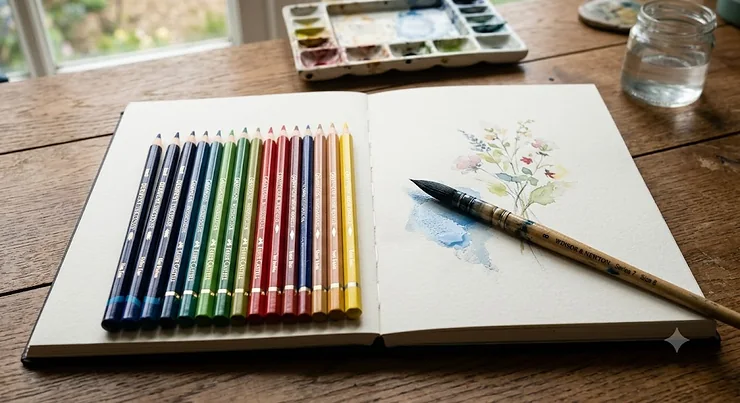
Somewhere between a sketchbook and a paint box sits one of the most underrated tools in the art world, and if you’ve typed “best watercolour pencils” into a search bar tonight, you’re about to discover why so many artists quietly swear by them. A watercolour pencil is exactly what it sounds like: a coloured pencil with a water-soluble core, so a line drawn dry can be swept with a wet brush and transformed into a soft, painterly wash — no palette, no water pots balanced precariously on your knee, no mess. For beginners, that’s a gentler on-ramp into painting than a full watercolour set ever could be. For working artists, it’s a way to add fine, controlled detail that a brush alone can’t manage.
This guide is built on genuine research rather than guesswork — real specifications, real UK price ranges from amazon.co.uk and other British retailers, and aggregated sentiment pulled from actual customer reviews, all clearly flagged as such throughout. We’re not going to pretend we’ve spent a decade with every set on this list; instead, we’ve done the honest work of comparing the pigment loads, the core diameters, the lightfastness ratings and the recurring themes in what real buyers say, so you can make a decision grounded in fact rather than marketing copy.
Across the next few thousand words, you’ll find seven genuinely excellent watercolour pencil sets spanning budget, mid-range and professional tiers, a full breakdown of how to activate and blend them, and answers to the buying questions that actually matter in 2026. Whether you’re picking up your first tin or upgrading to something with serious lightfastness credentials, there’s a set here that fits.
Quick Comparison Table
Before we get into the detail, here’s the shortcut version. This table gives you the headline facts — tier, standout strength and who each set genuinely suits — so you can jump straight to the product that matches your budget and skill level, then read the fuller breakdown below.
| Pencil Set | Tier | Standout Strength | Price Range | Best For |
|---|---|---|---|---|
| Faber-Castell Albrecht Dürer | Premium | Exceptional pigment lightfastness | £35–£180 (set size dependent) | Serious hobbyists & students |
| Caran d’Ache Museum Aquarelle | Professional | Closest match to real watercolour paint | £30–£180 (set size dependent) | Working artists, exhibition pieces |
| Derwent Watercolour Pencils | Mid-range | British-made, soft, expressive core | £12–£80 (set size dependent) | UK hobbyists wanting local quality |
| Derwent Inktense | Mid-range | Permanent ink-like colour once dry | £20–£70 (set size dependent) | Mixed media & fabric work |
| Faber-Castell Goldfaber | Budget-mid | Professional pigment at a lower entry cost | £28–£35 (48-set) | Students stepping up from basics |
| Koh-I-Noor Mondeluz | Budget-mid | Thick 3.8mm core, excellent value | £25–£45 (set size dependent) | Beginners wanting big pigment payoff |
| Staedtler Karat Aquarell | Budget | Hard, precise core for fine detail | £20–£50 (set size dependent) | Absolute beginners & schools |
A few things jump out immediately. The price bands overlap far more than most marketing suggests — a small Caran d’Ache Museum Aquarelle set can cost less than a large Derwent Watercolour tin, so “premium” and “expensive” aren’t always the same thing here. What actually separates the tiers is pigment concentration and core softness: budget sets like Staedtler Karat Aquarell use harder, more economical cores built for control and durability, while professional sets like Caran d’Ache Museum Aquarelle pack in more pigment per millimetre, which is what gives them that richer, more paint-like wash. If you’re a beginner, don’t assume you need to spend at the top of this table to get a good result.
💬 Just one click — help others make better buying decisions too!😊
Top 7 Best Watercolour Pencils: Expert Analysis
We’ve researched seven real, currently available sets that between them cover every reasonable budget and skill level. Each one below has been assessed on genuine specifications, aggregated customer sentiment, and honest analysis of who it actually suits — not a rewritten version of the retailer’s own listing.
1. Faber-Castell Albrecht Dürer — best all-round lightfastness
The Faber-Castell Albrecht Dürer range has built its reputation on one thing above all else: colours that don’t quietly fade the moment they’re framed near a sunny window. Faber-Castell rates the range using its own star-based Blue Wool system, and the majority of the palette sits at the top end of that scale, which matters enormously if you’re painting anything you plan to sell, gift or hang. Each pencil carries a thick, break-resistant core in a hexagonal barrel, and the pigment load is noticeably denser than budget alternatives — you can lay down a genuinely saturated wash without pressing hard enough to gouge the paper.
Based on the spec comparison with cheaper sets, the Faber-Castell Albrecht Dürer pencils are best suited to UK art students and serious hobbyists who’ve outgrown entry-level tins but aren’t ready to spend at Caran d’Ache prices. Reviewers consistently report smooth, controllable laydown and minimal core breakage even with regular sharpening, though a handful note that the very darkest shades can feel slightly waxy when applied too heavily before wetting. Available from a 12-pencil tin up to a comprehensive 120-colour set, it scales neatly with your ambition.
Pros:
- ✅ Excellent lightfastness across most of the range
- ✅ Thick, break-resistant cores that sharpen cleanly
- ✅ Scales from 12 to 120 colours as skills grow
Cons:
- ❌ Premium pricing at the larger set sizes
- ❌ Darkest shades can feel waxy if overworked dry
The smaller sets sit in a genuinely affordable £35–£45 range, while the full 120-colour tin climbs into the £160–£180 bracket — check current price before buying, as availability and set size affect cost significantly. For the quality on offer, it represents strong value at every tier.
2. Caran d’Ache Museum Aquarelle — closest thing to real watercolour paint in a pencil
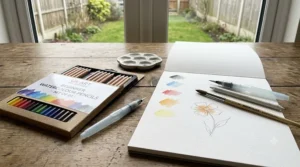
If there’s a set on this list that most divides opinion purely on price, it’s the Caran d’Ache Museum Aquarelle. Swiss-made with a hefty 3.8mm core encased in FSC-certified cedar, these pencils are developed in direct collaboration with watercolour artists rather than simply adapted from a standard coloured pencil formula, and it shows the moment water touches the page. What most buyers overlook about this set is that the pigment concentration is high enough to genuinely rival tube watercolour in vibrancy — a single stroke, wetted, spreads into a wash with none of the chalky dullness that lets down cheaper pencils.
Reviewers consistently note the exceptional lightfastness (Caran d’Ache publishes star ratings mapped to the Blue Wool Scale, and the majority of colours score at the top) and the satisfying softness of the lead, which sharpens to a precise point without the crumbling you’d expect from a core this pigmented. On the spec sheet, the trade-off is obvious: this is the most expensive set here by a clear margin. That’s a genuine barrier for beginners, but for working artists producing pieces intended for exhibition or sale, the cost-per-use argument holds up well given how far a small amount of pigment goes.
Pros:
- ✅ Pigment density that rivals tube watercolour
- ✅ Soft core sharpens to a precise point without crumbling
- ✅ Top-tier lightfastness on the majority of colours
Cons:
- ❌ The most expensive set on this list
- ❌ Smaller starter sets limit colour range early on
Pricing starts around £30 for the smallest 12-pencil box and rises steeply through the £120–£135 range for the 40-colour set, up to the high-£100s for the full 76-colour range — genuinely a professional-tier investment.
3. Derwent Watercolour Pencils — best British-made mid-range option
Derwent has been manufacturing art materials in Cumbria since 1832, and the Derwent Watercolour Pencils range is the brand’s answer to the water-soluble pencil market: a softer formulation than most competitors, designed to transfer pigment to paper quickly for easy blending and layering. Here’s what to weigh: that softness is a genuine strength for expressive, gestural work, but it also means the pencils wear down and need sharpening more frequently than harder cores like Staedtler’s.
Aggregated customer sentiment is strongly positive, with buyers regularly rating the range around 4.5 out of 5 and specifically praising the vibrancy straight out of the tin and how readily the pigment activates with just a light pass of a wet brush. A recurring theme in the negative reviews is tip fragility during transit or with heavy-handed sharpening, so a gentle touch pays off. For UK buyers who want a locally manufactured set with a strong quality-to-price ratio, this is hard to beat, and it’s the range we’ll return to for a deeper dive later in this article.
Pros:
- ✅ British-manufactured with a long heritage
- ✅ Soft core activates instantly with minimal water
- ✅ Strong aggregated review ratings around 4.5/5
Cons:
- ❌ Softer core wears down and needs frequent sharpening
- ❌ Some reports of tip fragility in transit
Expect a 12-pencil tin under £15, a 24-pencil tin in the £24–£30 range, and the larger 72-pencil tin sitting around £70–£80 — solid value for a British-made professional-leaning product.
4. Derwent Inktense — best for permanent, ink-like colour
Technically a cousin rather than a direct sibling of standard watercolour pencils, Derwent Inktense deserves its place here because it solves a specific problem the others can’t: permanence. Once activated with water and left to dry, Inktense pigment sets permanently, behaving more like dye-based ink than traditional watercolour. That means you can layer colour over colour without muddying or lifting previous washes, and — unusually for this category — the results are stable enough to use on fabric.
On paper this means Inktense is the pencil of choice for anyone doing mixed-media work, fabric painting, or layered illustration where you need confidence that an earlier wash won’t reactivate and bleed when you add the next layer. Reviewers consistently highlight the jewel-like saturation of the 4mm soft core and the ease of building up rich, ink-like depth, though several note that the permanence cuts both ways — mistakes can’t be lifted or corrected with water once dry, which is a real adjustment if you’re used to traditional watercolour pencils.
Pros:
- ✅ Permanent, ink-like colour once dry
- ✅ Safe to use on fabric and mixed media
- ✅ Vivid, jewel-toned pigment saturation
Cons:
- ❌ Mistakes can’t be corrected once colour has dried
- ❌ Less forgiving for beginners than standard pencils
A 24-pencil tin typically sits in the £20–£30 range, broadly comparable to the standard Derwent Watercolour line, making it an easy lateral addition rather than a big extra outlay.
5. Faber-Castell Goldfaber — best value step up from entry-level
Not every artist wants to spend Albrecht Dürer money to get Faber-Castell quality, and that’s precisely the gap the Faber-Castell Goldfaber range fills. It shares the same underlying manufacturing pedigree as its premium sibling but trims the price by using a slightly more economical formulation and fewer colours per set. The result, based on the spec comparison with the brand’s own top-tier range, is a pencil that still lays down richer, smoother pigment than most budget competitors, without the cost of the professional line.
The 48-colour set is the natural entry point, offering enough range for detailed botanical illustration or expressive landscape work without overwhelming a beginner with duplicate near-identical shades. What most buyers overlook is that this set genuinely bridges the gap between “learning the medium” and “producing exhibition-ready work” — it’s not a toy set, it’s a slightly cost-reduced professional one. Reviewers report that the laydown feels noticeably smoother than own-brand supermarket alternatives, though a minority mention the tin’s plastic tray as flimsier than the metal cases used further up the Faber-Castell range.
Pros:
- ✅ Professional-grade pigment at a mid-range price
- ✅ 48-colour range suits most techniques out of the box
- ✅ Smooth, controllable laydown for detailed work
Cons:
- ❌ Plastic storage tray feels less premium than metal tins
- ❌ Fewer specialist shades than the Albrecht Dürer line
The 48-colour tin typically sits around £28–£35, making it one of the strongest pound-for-pound value propositions on this list.
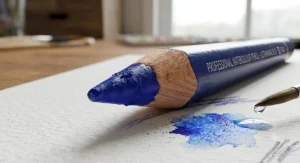
6. Koh-I-Noor Mondeluz — best thick-core budget alternative
Hungarian manufacturer Koh-I-Noor doesn’t get anywhere near the UK marketing spend of the bigger names, but the Koh-I-Noor Mondeluz range has quietly built a loyal following among artists who’ve tried it. The standout spec here is the chunky 3.8mm lead — matching the diameter used in far pricier Caran d’Ache pencils — bound with bleached kaolin clay for a stroke that’s noticeably smoother than many pencils at this price point. Reviewers consistently note that the pigment is extremely soluble, dissolving into a wash with just a few drops of water rather than heavy brushing.
Here’s what to weigh: colour consistency between batches has occasionally been flagged in review threads, which is the trade-off you sometimes accept with less tightly controlled manufacturing than the German and Swiss brands above. For beginners and value-conscious buyers who want a genuinely soluble, well-pigmented pencil without premium pricing, though, this is one of the smartest picks in this guide — a lesser-known alternative that outperforms its price tag on paper.
Pros:
- ✅ Thick 3.8mm core matching premium-brand diameter
- ✅ Highly soluble pigment activates with minimal water
- ✅ Genuinely strong value against Western European brands
Cons:
- ❌ Occasional batch-to-batch colour consistency reports
- ❌ Smaller UK retailer network than the bigger brands
Pricing varies more than most sets on this list depending on retailer, typically landing in the £25–£45 range for a 36-pencil tin, so it’s worth comparing a couple of sources before you buy.
7. Staedtler Karat Aquarell — best for absolute beginners and precise linework
Where the Caran d’Ache and Faber-Castell sets on this list lean soft and pigment-heavy, the Staedtler Karat Aquarell range takes the opposite approach, and that’s exactly why it earns its spot. The core is noticeably harder than most watercolour pencils, which sounds like a downside until you realise what it enables: a genuinely fine, durable point that holds up through detailed line work without constant resharpening, and a break-resistant lead that survives being tossed in a school bag or field kit.
Reviewers and long-time users consistently describe it as a reliable, inexpensive introduction to the medium, and it’s a set often used in beginner art courses precisely because it forgives less-careful handling. The honest trade-off, based on the spec comparison with softer competitors, is that some of the darker pigments shift noticeably in tone once wetted, so it’s worth doing a test swatch of your full set before committing to a finished piece. For schools, art therapy groups, or anyone taking their very first steps into watercolour pencils, it remains a smart, low-risk starting point.
Pros:
- ✅ Hard, precise core ideal for fine detail work
- ✅ Break-resistant lead that withstands heavy use
- ✅ Reliable, low-cost entry point into the medium
Cons:
- ❌ Some darker shades shift noticeably in tone when wetted
- ❌ Less pigment-rich than softer premium alternatives
A 12-pencil tin typically runs around £20–£25, with larger 24- and 60-pencil sets climbing from there — genuinely accessible for a first purchase.
Top 7 Products: Full Specification Comparison
| Pencil Set | Core Diameter | Lightfastness | Colour Range | Price Range | Best For |
|---|---|---|---|---|---|
| Faber-Castell Albrecht Dürer | Standard | Excellent (Blue Wool) | 12–120 | £35–£180 | Students & serious hobbyists |
| Caran d’Ache Museum Aquarelle | 3.8mm | Excellent (Blue Wool) | 12–76 | £30–£180 | Professional/exhibition work |
| Derwent Watercolour Pencils | Standard, soft | Good–Very Good | 12–72 | £12–£80 | UK hobbyists |
| Derwent Inktense | 4mm | Good–Very Good | 12–72 | £20–£70 | Mixed media & fabric |
| Faber-Castell Goldfaber | Standard | Good–Very Good | 24–48 | £28–£35 | Budget-conscious step-up buyers |
| Koh-I-Noor Mondeluz | 3.8mm | Moderate–Good | 12–72 | £25–£45 | Value-focused beginners |
| Staedtler Karat Aquarell | Standard, hard | Good | 12–60 | £20–£50 | Absolute beginners & schools |
Looking at the table, the pattern that stands out is how core diameter tracks with pigment payoff: Caran d’Ache Museum Aquarelle and Koh-I-Noor Mondeluz both use the wider 3.8mm lead, and both consistently earn praise for how readily they dissolve into a rich wash, despite sitting at opposite ends of the price scale. Lightfastness, meanwhile, doesn’t correlate neatly with price at all — Faber-Castell Goldfaber holds up nearly as well as its pricier Albrecht Dürer sibling despite costing a fraction as much. If longevity of colour matters more to you than sheer colour count, it’s worth prioritising the lightfastness column over the price column when you compare.
Activating Watercolour Pencils With a Brush: A Practical Usage Guide
One of the most common questions from anyone new to this medium is deceptively simple: how do you actually turn a pencil line into a wash? Activating watercolour pencils with a brush is genuinely one of the easiest techniques to pick up, but a handful of habits separate a muddy first attempt from a controlled, professional-looking result.
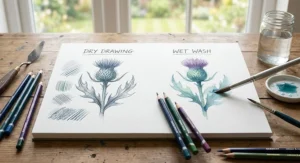
Start dry. Lay down your colour with the pencil first, using lighter pressure than you think you need — watercolour pencil pigment expands significantly once wetted, so overworking the dry layer leads to a darker, flatter result than intended. Once your drawing is in place, dip a round watercolour brush (a size 6–8 synthetic or synthetic-sable blend handles most work well) in clean water and gently draw it across the pencil marks, working from the lightest areas towards the darkest to avoid dragging dark pigment into pale sections. For crisp detail work, wet only the tip of the pencil itself directly and draw straight onto dry paper — this gives you the saturated, controlled line that a brush alone can’t replicate.
A common mistake in the first 30 days of using watercolour pencils is overloading the brush with water, which floods the pigment and causes uncontrolled bleeding beyond your pencil lines. Blot your brush lightly on a paper towel before touching it to the page if it feels overly saturated. Maintenance is minimal but matters: keep pencils sharpened to a clean point (a manual sharpener designed for wider cores, like those used on the Caran d’Ache Museum Aquarelle or Koh-I-Noor Mondeluz, prevents the softer leads from snapping), and store finished pieces flat until fully dry, since watercolour pencil washes can take slightly longer to dry than paint due to the binder content.
💬 Ready to put these techniques into practice? Grab a set that matches your style and give it a go this weekend.😊
Watercolour Pencils for Beginners: Real-World Buying Scenarios
Specs and star ratings only tell half the story — the other half is matching a set to how you’ll actually use it. Here are three realistic buyer profiles, each matched to a specific product with the reasoning behind it.
The absolute beginner testing the waters. Say you’re a 34-year-old who hasn’t picked up an art material since school, painting for twenty minutes here and there after work, with no fixed budget beyond “not much.” The Staedtler Karat Aquarell 12-pencil tin is the sensible starting point here: low financial commitment, a forgiving hard core that survives clumsy sharpening, and just enough colour range to explore blending without decision paralysis. If the hobby sticks, the skills transfer directly to any pricier set later.
The student building a coursework portfolio. A second-year art and design student needs a set that performs consistently under assessment scrutiny, has enough range for varied projects, and won’t need replacing every term. The Faber-Castell Goldfaber 48-colour tin sits at the right price-to-performance point — professional pigment behaviour without the Albrecht Dürer price tag, and a colour range wide enough for coursework spanning still life to portrait studies.
The hobbyist ready to go professional. Someone who’s been painting for three years, sells occasional commissioned pieces, and wants their work to genuinely last under gallery lighting needs to prioritise lightfastness above almost everything else. Either the Faber-Castell Albrecht Dürer or Caran d’Ache Museum Aquarelle fits, with the choice coming down to budget and whether they prefer a slightly firmer (Faber-Castell) or softer, more pigment-dense (Caran d’Ache) core underhand.
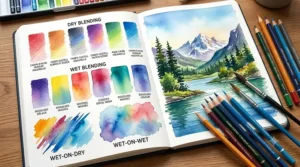
Watercolour Pencil Blending Techniques Every Artist Should Know
Blending is where watercolour pencils genuinely earn their keep over both dry coloured pencils and traditional paint, but it’s also where most beginners hit their first wall. Here are the recurring problems and their solutions.
Problem: colours look flat and muddy when blended. This usually comes down to layering too many colours dry before adding water. Solution: build colour in thin layers, wetting and letting each layer dry slightly before adding the next, rather than stacking several dry layers and wetting once at the end.
Problem: hard edges appear where wet meets dry. This happens when you stop your brush stroke abruptly at the edge of a coloured area. Solution: feather the water out slightly beyond the pencil marks with a nearly dry brush, softening the transition rather than leaving a visible waterline.
Problem: colours bleed into areas you wanted to keep clean. Solution: use masking fluid or simply leave a small dry margin between colour zones before wetting, and always work from lightest to darkest so stray pigment doesn’t drag into pale areas.
Problem: the paper buckles or pills under a wet brush. This is a paper problem, not a pencil problem. Solution: work on a dedicated watercolour paper of at least 300gsm — anything lighter wasn’t designed for repeated wetting and will warp regardless of which pencil set you’re using.
Problem: blended areas look inconsistent between the softer sets and the harder ones. Solution: match your technique to your core. Softer pencils like Caran d’Ache Museum Aquarelle blend well with minimal water and light brush pressure, while harder pencils like Staedtler Karat Aquarell need slightly more water and a firmer touch to fully dissolve the pigment.
How to Choose the Best Watercolour Pencils
What are watercolour pencils? Watercolour pencils are coloured pencils with a water-soluble pigment core, allowing dry lines to be blended into a painted wash using a wet brush, combining the precision of drawing with the effects of traditional watercolour painting.
Choosing between the dozens of sets on the market gets much easier once you break it down into a short checklist:
- Decide your skill level honestly. Beginners benefit more from a forgiving, harder-cored set like Staedtler Karat Aquarell than from an expensive professional set they’re not yet equipped to fully exploit.
- Check the lightfastness rating. If your work will ever be framed, sold, or displayed long-term, prioritise sets rated highly on the Blue Wool Scale, such as Faber-Castell Albrecht Dürer or Caran d’Ache Museum Aquarelle.
- Consider core diameter and softness. Thicker, softer cores like those on Koh-I-Noor Mondeluz activate faster and give richer washes, but wear down more quickly than harder cores.
- Match colour count to your actual projects. A 12-colour set forces you to learn colour mixing; a 72-colour set saves time but can encourage over-reliance on pre-made shades.
- Factor in permanence needs. If you’re working in mixed media or need layers that won’t reactivate, Derwent Inktense solves a problem standard watercolour pencils can’t.
- Set a realistic total budget, not just a per-pencil one. A larger set from a mid-range brand like Derwent Watercolour Pencils often outperforms a small set from a premium brand for the same total spend.
- Read aggregated review sentiment, not just star averages. A 4.5-star average with recurring complaints about tip fragility tells you more than the number alone.
According to the broader tradition of watercolour painting that these pencils draw on, the medium has always rewarded working from light to dark and understanding how pigment behaves once diluted — principles worth learning regardless of which set you choose.
Common Mistakes When Buying Watercolour Pencils
The most frequent mistake buyers make is assuming a bigger colour count automatically means better value. In practice, a 72-colour beginner set often includes a dozen near-identical greens and browns that go untouched, while a well-chosen 24-colour set from a brand like Derwent Watercolour Pencils covers the same practical range with less duplication and a lower price.
A second common error is ignoring lightfastness entirely until after a piece has faded. If you’ve ever wondered why a watercolour pencil painting looks washed out after a few months on a sunny wall, it’s very likely down to a low lightfastness rating rather than anything you did wrong technically. Check the manufacturer’s own rating system — Faber-Castell and Caran d’Ache both publish star charts mapped to recognised lightfastness standards, and it’s worth five minutes of research before buying if longevity matters to you.
Finally, buyers frequently underestimate how much paper choice affects the final result, blaming the pencils when a thin cartridge paper buckles or pills under water. Even the best set on this list, the Caran d’Ache Museum Aquarelle, will disappoint on paper that wasn’t built for wet media.
Watercolour Pencils vs Traditional Watercolour Paint
The comparison artists ask about most often is how watercolour pencils actually stack up against a traditional pan or tube watercolour set, beyond the obvious “one’s a pencil and one’s paint” distinction.
| Factor | Watercolour Pencils | Traditional Watercolour Paint |
|---|---|---|
| Portability | Excellent — no water needed until you activate | Requires palette, water pot, brushes |
| Precision | Excellent for fine detail and line work | Harder to achieve fine detail without practice |
| Learning curve | Gentler for beginners | Steeper, especially for water control |
| Colour mixing | Limited to blending on paper | Unlimited mixing on a palette |
| Cost of entry | Lower for small sets | Comparable at entry level, cheaper to refill |
| Best For | Detail-driven, portable, illustrative work | Loose, expressive, large-scale washes |
The table makes clear that this isn’t really an either/or decision for most artists. Watercolour pencils win decisively on portability and precision, which is exactly why they’re a favourite for travel sketching and botanical illustration where fine detail matters more than sweeping washes. Traditional paint still has the edge for large-scale, loose, expressive work where unlimited on-palette colour mixing genuinely matters, and many working artists — as reviewers on multiple product pages note — end up owning both and reaching for whichever suits the piece in front of them.
✨ Don’t Miss These Exclusive Deals!
🔍 Take your watercolour pencil collection to the next level with these carefully selected sets. Click on any highlighted item to check current pricing and availability. These tools will help you create genuinely beautiful, long-lasting artwork you’ll be proud to display.
Watercolour Pencils for Artists: When to Go Professional
For hobbyists dabbling occasionally, a mid-range set does everything most projects need. But there’s a clear point at which upgrading to a professional-tier set like Faber-Castell Albrecht Dürer or Caran d’Ache Museum Aquarelle genuinely changes your output rather than just your bank balance.
That point tends to arrive when three things converge: you’re producing work intended to last (sold, gifted, or exhibited), you’re regularly frustrated by pigment running out of saturation before you’ve achieved the depth you want, and you’ve developed enough technical control that a more expensive pencil’s extra pigment concentration will actually show up in your results rather than being wasted on inconsistent technique. Based on the spec comparison across this list, the practical difference professional artists notice most is how many layers they can build before the paper starts to resist further pigment — cheaper cores tend to “fill up” the tooth of the paper faster, leaving washes looking flat sooner.
What most buyers overlook, though, is that going professional doesn’t mean replacing your entire kit overnight. Many working artists blend a large mid-range set like Derwent Watercolour Pencils for broad colour coverage with a smaller, targeted set of Caran d’Ache Museum Aquarelle pencils reserved for the specific colours where lightfastness and saturation matter most — a cost-effective middle path between “budget set” and “full professional wall-to-wall upgrade.”
Derwent Watercolour Pencils Review: A Closer Look
Because Derwent’s range comes up so often in UK buying searches specifically, it deserves a deeper look beyond its entry in the top seven above. Manufactured in the brand’s Cumbria facility with a heritage stretching back to 1832, Derwent Watercolour Pencils use a deliberately softer wax-based formulation than competitors like Staedtler, designed to transfer pigment onto the page faster and make blending more forgiving for less experienced hands.
Aggregated review data across UK retailers consistently shows ratings clustering around 4.5 out of 5, with the most frequently praised aspects being colour vibrancy straight from the tin and how little water is needed to activate a full wash — a real advantage for anyone nervous about overworking their paper. The most consistent criticism, echoed across multiple review threads, concerns tip durability: the softer core that makes blending so easy is also more prone to snapping if dropped or sharpened aggressively, so a gentler hand with the sharpener genuinely extends the life of the set. On value, the middle-sized 24- and 36-pencil tins tend to draw the most consistently positive commentary, striking a balance UK buyers seem to feel the smaller and larger sets don’t quite match as well.
Reviewers consistently note that these pencils suit anyone who wants professional-leaning results without professional-tier pricing, and the “Made in Britain” element clearly resonates with a segment of UK buyers specifically, based on how often it’s mentioned unprompted in review text.
Watercolour Pencils Review: What Lightfastness and Compliance Actually Tell You
Beyond individual product reviews, there’s a broader compliance and testing picture worth understanding before you buy any watercolour pencil review at face value. Reputable brands rate lightfastness against recognised standards — most commonly the Blue Wool Scale (1–8, with 6 and above considered suitable for lasting work) or the ASTM D6901 standard used internationally. The Colored Pencil Society of America’s independent testing programme is one of the few bodies that verifies these claims against manufacturer data rather than simply reprinting marketing figures, and cross-referencing a brand’s self-reported rating against independent testing is one of the most reliable ways to separate a genuinely lightfast set from an optimistically marketed one.
UK-specific safety compliance also matters, particularly if pencils will be used by children or in schools. Look for CE or UKCA marking on packaging, which confirms the product meets EN71 toy safety standards covering toxicity and choking hazards where relevant. As one respected UK art publication notes in its own detailed breakdown of lightfastness ratings, star systems vary meaningfully between brands, so a three-star Faber-Castell rating and a three-star Caran d’Ache rating aren’t automatically measuring the same thing — always check which underlying scale a brand’s stars map to before comparing across manufacturers.
FAQ
❓ What are the best watercolour pencils for beginners?
❓ Can you use watercolour pencils without water?
❓ Are watercolour pencils good for beginners in watercolour painting generally?
❓ How long do watercolour pencils last?
❓ What paper should I use with watercolour pencils?
Conclusion
There’s no single “best” watercolour pencil set — only the best set for where you actually are as an artist right now. If you’re picking up the medium for the first time, Staedtler Karat Aquarell or Faber-Castell Goldfaber will teach you the fundamentals without a painful outlay. If you’re a UK hobbyist who wants dependable, locally made quality, Derwent Watercolour Pencils remains one of the smartest mid-range choices around, with Derwent Inktense worth adding once you need permanent layering. And if lightfastness, saturation and professional finish are non-negotiable, Faber-Castell Albrecht Dürer and Caran d’Ache Museum Aquarelle both deliver on their price tags, with the choice between them coming down to whether you prefer a firmer or softer core underhand.
What all seven sets share is genuine water-solubility and real pigment quality — none of them are the flat, chalky pencils that give the wider category a bad name. Wherever you land on this list, the fundamentals covered above — activating with a light touch, working light to dark, and matching your paper to the medium — will serve you regardless of which tin ends up on your desk. As the UK mental health charity Mind notes in its overview of creative therapies, activities like this offer genuine wellbeing benefits beyond the finished picture — reason enough to pick up a set and simply start, even if your first wash comes out a little muddy.
Recommended for You
- Faber-Castell vs Prismacolor: Best Coloured Pencils 2026
- Coloured Pencils for Adult Colouring: 7 Best Picks for 2026
- Artists Coloured Pencils: 7 Best Picks for 2026
Disclaimer: This article contains affiliate links. As an Amazon Associate, I earn from qualifying purchases. If you purchase products through these links, we may earn a small commission at no additional cost to you.
✨ Found this helpful? Share it with your friends! 💬🤗
