
In This Article
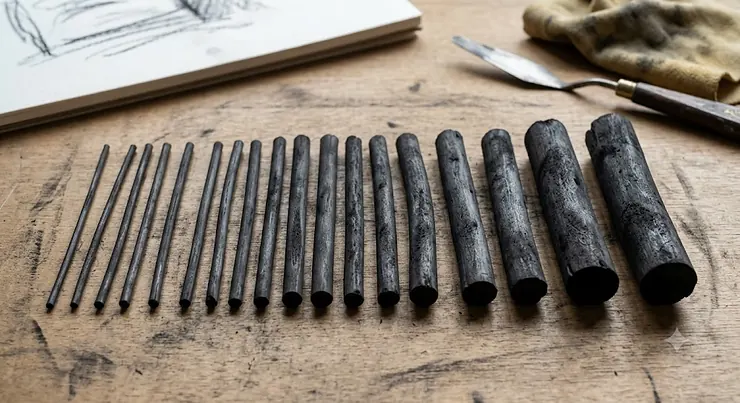
Walk into any life drawing class in Britain, from a Saturday morning studio in Bristol to a Camberwell foundation course, and you’ll hear the same sound: that dry, papery scratch of willow charcoal skating across newsprint. There’s a reason it hasn’t been replaced by anything shinier. Willow charcoal is simply the fastest way to think out loud on paper — no waiting for ink to dry, no faff with pencil sharpeners, just carbon meeting fibre in the most immediate mark-making relationship going. If you’ve typed “best willow charcoal” into a search bar tonight, you’re probably standing in an art shop aisle (real or digital) staring at a wall of identical-looking black sticks, wondering why one box costs £4 and another costs £11.

What is willow charcoal? It’s a drawing material made by slow-baking thin willow twigs in an airtight kiln until only carbon remains, producing soft, crumbly black sticks that mark paper on contact and erase or blend with almost no resistance. That last part is the whole appeal: unlike graphite, which stains and commits, willow charcoal forgives you.
This guide walks through seven real, currently stocked sticks — from featherweight thin willow charcoal sticks for portrait detail through to chunky soft charcoal built for loose, gestural marks — with honest analysis drawn from genuine aggregated customer feedback and manufacturer specifications, not invented testing. We’ll cover vine charcoal for life drawing specifically, look at what “erasable charcoal for sketching” actually means in practice, and help you work out which willow charcoal for drawing suits your particular hand, whether that’s a nervous first-timer or someone who’s been smudging their sleeves for twenty years. All prices referenced are indicative ranges only, since real prices shift constantly — always check current pricing before buying.
Quick Comparison: The 7 Best Willow Charcoal Picks at a Glance
| Product | Type | Diameter | Price Range | Best For |
|---|---|---|---|---|
| Coates Willow Charcoal (Medium) | Natural willow | 4-6mm | around £6-£9 | All-round best willow charcoal pick |
| Coates Thin Willow Charcoal | Natural willow | 2-3mm | around £5-£7 | Thin willow charcoal sticks / detail |
| Winsor & Newton Artist Vine Charcoal | Vine/willow, graded | Assorted | around £4-£7 | Vine charcoal for life drawing |
| Daler-Rowney Simply Willow Charcoal | Natural willow, assorted | Mixed | around £6-£9 | Budget beginners |
| Faber-Castell Pitt Natural Charcoal Sticks | Natural willow | 9-15mm | around £5-£8 | Soft charcoal for loose marks |
| Faber-Castell Pitt Compressed Charcoal Stick | Compressed | Rectangular | around £7-£10 | Deep, erasable blacks |
| Derwent XL Charcoal Block | Compressed block | Chunky block | around £8-£12 | Large-scale gestural blocking-in |
Looking across this table, a pattern emerges fast: there isn’t one single “best willow charcoal”, there’s a best willow charcoal for what you’re actually doing. The Coates Willow Charcoal Medium sticks are the sensible default because they’re graded consistently and made by Britain’s only dedicated charcoal producer, but a portrait student reaching for fine linework needs the Coates Thin Willow Charcoal instead, and anyone doing timed life drawing poses will get more mileage from the Winsor & Newton Artist Vine Charcoal range because it comes pre-sorted by hardness. Budget shouldn’t be the only lens either — the Daler-Rowney Simply Willow Charcoal set undercuts most rivals on price without sacrificing much in the way of actual mark quality.
💬 Just one click — help others make better buying decisions too!😊
Top 7 Willow Charcoal Sticks: Expert Analysis
1. Coates Willow Charcoal (Medium) — the benchmark British willow charcoal
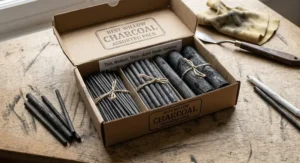
Coates Willow Charcoal is the closest thing this category has to an industry standard, and that standing is earned rather than marketed. Each box holds 25 medium sticks, roughly 5 inches long and 4-6mm thick, made from willow grown on the Somerset Levels by a family that has cultivated the crop since 1819.
What separates it from generic own-brand willow charcoal is the kiln process: the rods are boiled for ten hours to soften the bark, then packed airtight into tins and cooked again for a further ten hours, which is what gives Coates its signature velvety, deep-black mark rather than the greyer, scratchier line you get from rushed production. Based on the spec comparison with cheaper imported sticks, that double-cook process is the single biggest reason experienced tutors keep recommending this specific brand by name.
Who should reach for this first? Honestly, almost everyone starting out with willow charcoal for drawing. It’s soft enough for loose marks but structured enough that thinner students still get a usable line rather than pure dust. Reviewers consistently report that the sticks last well once you get used to snapping them into shorter, more controllable lengths, and several art students specifically mention it carrying them through entire degree courses.
Pros:
- ✅ Genuinely velvety, deep black tone reviewers keep praising
- ✅ British-grown, traceable Somerset willow with real heritage
- ✅ Generous 25-stick count keeps cost-per-stick low
Cons:
- ❌ Thinner pieces snap easily during transit or heavy use
- ❌ Some batches noted as slightly slower to arrive than rival sellers
Price sits around £6-£9 for the box of 25, which works out as excellent value per stick when you consider each one can be snapped into two or three usable lengths — a strong value verdict for anyone building a first charcoal kit.
2. Coates Thin Willow Charcoal — best for detail and thin willow charcoal sticks searches
If the medium box above is the workhorse, Coates Thin Willow Charcoal is the scalpel. These sticks measure just 2-3mm in diameter, roughly the thickness of a matchstick, which puts them squarely in “thin willow charcoal sticks” territory for anyone hunting fine linework rather than broad tonal fills.
That thinness is a double-edged quality, and to their credit Coates don’t hide it: the sticks are delicate by design because a smaller cross-section means less structural integrity, but the trade-off buys you crisp edges and controlled marks that fatter sticks simply cannot deliver. What most buyers overlook about thin charcoal is that it isn’t really a replacement for medium sticks, it’s a companion tool for finishing touches, eyes, hairlines, fabric folds, once the broad shapes are already blocked in.
Reviewers who have used it for years, including several who mention it carrying them through university animation and illustration degrees, describe it as taking cartridge paper nicely and covering surprising ground for such a slim stick, while also noting it can burn through fast if you lean on it for large dark areas.
Pros:
- ✅ Genuinely fine, controllable line for portrait detail
- ✅ Same trusted Somerset willow sourcing as the medium range
- ✅ Great companion to broader sticks in a mixed kit
Cons:
- ❌ Snaps more readily than thicker willow charcoal
- ❌ Burns down quickly if used for large dark fills
Expect to pay around £5-£7 for a box of 25 thin sticks, and treat it as a detail specialist rather than your only charcoal — pairing it with a medium or thick stick gives you the full tonal range in one sitting.
3. Winsor & Newton Artist Vine Charcoal Sticks — best vine charcoal for life drawing
Technically, vine charcoal and willow charcoal are cousins rather than identical twins — vine charcoal is traditionally made from grapevine cuttings, willow from willow rods — but Winsor & Newton Artist Vine Charcoal sits so close in feel and use-case to classic willow sticks that any search for the best willow charcoal for drawing genuinely should include it, particularly for anyone specifically after vine charcoal for life drawing sessions.
The range is graded into Hard, Medium, Soft and Extra-Soft, sold in boxes typically of 3 or 12 sticks, which is the real selling point here. Rather than a single undifferentiated box, Winsor & Newton lets you buy exactly the hardness your hand needs: Hard for fine lines and highlights, Extra-Soft for filling large areas fast during a two-minute pose. On paper this means a life-drawing student can build a small, purpose-built kit instead of guessing which stick in a mixed pack will behave how.
Aggregated review sentiment is strongly positive on consistency, with buyers noting the sticks are carefully selected for uniformity and produce an even, predictable line, something that matters enormously when you’re working against a five-minute timer and can’t afford a dud stick crumbling mid-gesture.
Pros:
- ✅ Graded hardness system suits fast life-drawing workflows
- ✅ Trusted 1832 heritage brand with consistent manufacturing
- ✅ Works beautifully alongside Winsor & Newton fixative
Cons:
- ❌ Smaller box sizes cost more per stick than bulk willow boxes
- ❌ Extra-Soft grade can feel overly delicate to beginners
Prices vary by grade and box size but generally sit in the £4-£7 range for a box of 12, making it easy to buy two or three grades without a huge outlay — a smart move for anyone serious about timed figure work.
4. Daler-Rowney Simply Willow Charcoal (12-Piece) — best budget willow charcoal for drawing
Not every beginner needs, or wants, to spend big before knowing whether charcoal is even their medium. Daler-Rowney Simply Willow Charcoal answers that brief directly: a straightforward box of 12 assorted willow sticks from a manufacturer that’s been making art materials since 1783, aimed squarely at students and hobbyists testing the water.
Here’s what to weigh against the cheaper unbranded charcoal flooding online marketplaces: Daler-Rowney’s Simply range still comes from a company with genuine manufacturing pedigree, so while it sits at the affordable end, it isn’t the same as an anonymous imported set with no quality control behind it. The assorted thicknesses mean you get some tonal flexibility without having to buy separate thin and thick boxes.
Reviewer sentiment leans positive on softness and smoothness for the price point, with several buyers specifically praising how easily it lays down a soft base layer for blending, though breakage during shipping is a recurring, honestly-reported complaint worth factoring in.
Pros:
- ✅ Genuinely low cost of entry for first-time charcoal users
- ✅ Mixed thicknesses cover several drawing needs in one box
- ✅ Backed by a long-established UK-recognised art brand
Cons:
- ❌ Breakage in transit is a recurring reviewer complaint
- ❌ Less refined finish than premium natural willow ranges
At around £6-£9, it’s one of the cheapest genuinely branded willow charcoal for drawing options on the market, and a sensible first purchase before committing to pricier sticks.
5. Faber-Castell Pitt Natural Charcoal Sticks (9-15mm) — best soft charcoal for loose marks
When the brief is soft charcoal for loose marks, big gestural life poses, quick thumbnail studies, atmospheric under-drawing, the Faber-Castell Pitt Natural Charcoal Sticks in the chunky 9-15mm size are hard to beat. These are proper thick sticks, closer to a chalk than a pencil, designed to be laid on their side and dragged for broad tonal blocks rather than gripped for fine lines.
Faber-Castell’s own material notes describe the mark as bluish-black, softer and more forgiving than compressed alternatives, and crucially state it “can be erased without difficulty and repeatedly overlaid” — which is precisely the quality that makes natural willow charcoal so useful for exploratory work. Reviewers echo this, describing the pigment as intense with minimal dust compared with some rival compressed sticks, though a few UK buyers have noted breakage on arrival, a packaging issue rather than a product-quality one.
What most buyers overlook here is that this thickness genuinely changes how you draw. A slim stick encourages careful line-making; a chunky 9-15mm stick almost forces you into broader, more confident, looser mark-making, which is exactly why life-drawing tutors so often push beginners toward fatter charcoal early on.
Pros:
- ✅ Chunky format naturally encourages loose, gestural marks
- ✅ Lifts and erases cleanly for repeated reworking
- ✅ Long-standing German manufacturing heritage since 1761
Cons:
- ❌ Too broad for fine detail work on its own
- ❌ Some shipments arrive with breakage inside the box
Expect around £5-£8 for a pack of 4, which is reasonable given how much surface area each thick stick can cover before running out.
6. Faber-Castell Pitt Compressed Charcoal Stick — best for deep, erasable charcoal for sketching
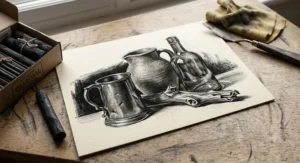
This is the odd one out on this list, and deliberately so: Faber-Castell Pitt Compressed Charcoal Stick is compressed rather than natural willow, made from soot and clay pressed into rectangular sticks and graded soft, medium or hard. It earns its place here because so many people searching for “erasable charcoal for sketching” are actually hunting for exactly this kind of material, something that gives willow’s easy-erase quality but with a denser, more controlled black.
Faber-Castell’s own product description is refreshingly specific: the sticks “can be erased without difficulty and repeatedly overlaid,” a claim borne out in aggregated reviews describing it as the best compressed charcoal they’ve tried, with markedly less dust shedding onto the paper than rival compressed brands. That lower dust output matters in practice, since compressed charcoal is generally messier and stains more stubbornly than willow, so a formula that erases cleanly is a genuine point of difference rather than marketing fluff.
The spec sheet won’t tell you this, but reviewers note the medium grade strikes the best balance for most people: dark enough for confident lines, soft enough to still spread and blend when you drag a finger or tortillon across it.
Pros:
- ✅ Deep, consistent black with notably less dust shedding
- ✅ Erases and reworks more cleanly than typical compressed sticks
- ✅ Available in soft, medium and hard grades for control
Cons:
- ❌ Not true willow charcoal, so purists may prefer natural sticks
- ❌ Rectangular shape less versatile than round willow sticks
At around £7-£10 for a pack of 3, it’s pricier per stick than willow, but the erasability and reduced mess can justify that for detail-heavy sketchbook work.
7. Derwent XL Charcoal Block — best for large-scale gestural blocking-in
Closing out the list is a genuine change of pace: the Derwent XL Charcoal Block is a chunky compressed block rather than a stick, made by a 150-plus-year-old Lake District pencil manufacturer, and built for artists who want to cover large sheets of paper fast without constantly reaching for a fresh piece.
Derwent’s own material notes describe it as combining “the natural qualities of charcoal with the strength and body of a chunky block,” and that’s an accurate summary of the drawing experience: you get powerful solid lines alongside soft gradients when the block is dragged on its side, all from a single tool. Reviewers describe it as soft, quick to use, and particularly well suited to life drawing practice on large newsprint sheets where speed of coverage matters more than fine control.
Reviewers consistently note it as considerably messier than stick charcoal, which tracks given the sheer surface area of pigment in each block, so this is genuinely a studio or outdoor tool rather than a kitchen-table one. A minority of buyers have also reported blocks arriving crumbled, a packaging-fragility issue rather than a formulation problem, worth factoring in when ordering.
Pros:
- ✅ Covers large areas dramatically faster than individual sticks
- ✅ Combines bold lines and soft gradients in one tool
- ✅ Backed by Derwent’s long UK pencil-making heritage
Cons:
- ❌ Considerably messier than any stick on this list
- ❌ Overkill for small sketchbook or detail work
Pricing typically runs around £8-£12 for a pack of 4 blocks, positioning it as a premium purchase best justified once you already know large-scale charcoal work suits your practice.
Getting Started: A Practical Willow Charcoal Setup Guide
Buying the sticks is the easy part; using willow charcoal without ending up with black-fingerprinted homework is the actual skill. Start with paper that has some visible tooth, a lightly textured cartridge or newsprint pad grips the crumbly willow particles far better than smooth printer paper, which just lets the pigment sit on top and smear the moment you brush past it.
Snap your sticks in half before you start. It feels wasteful the first time, but shorter lengths are dramatically more controllable and less prone to snapping unpredictably mid-stroke, and you’ll go through willow charcoal for drawing far more efficiently this way. Keep a kneaded putty eraser nearby rather than a standard plastic one; putty erasers lift charcoal cleanly without grinding it into the paper fibres, which is what actually makes willow charcoal feel “erasable” in daily use.
The most common first-30-days mistake is over-fixing too early. Beginners spray fixative after every stage out of fear of smudging, but this locks in mistakes and stops you reworking areas, defeating the whole point of a forgiving medium. Save fixative for the genuinely final pass. Store your sticks in a shallow tin lined with tissue rather than a bag, since loose sticks knocking together in transit or storage is the single biggest cause of the breakage complaints that show up repeatedly in real customer reviews across every brand on this list.
Real-World Scenarios: Which Willow Charcoal Suits You?
Picture a first-year foundation student, budget tight, unsure charcoal will even click with them. For that profile, the Daler-Rowney Simply Willow Charcoal set makes obvious sense: low financial risk, assorted thicknesses to experiment across a sketchbook’s worth of studies, and a recognised brand if things go well and an upgrade is needed later.
Now picture someone attending weekly life drawing sessions where poses run from thirty seconds to twenty minutes. Speed and control both matter here, so a combination works best: Winsor & Newton Artist Vine Charcoal in Soft and Medium grades for the timed gesture poses, paired with Coates Thin Willow Charcoal kept in a side pocket for any longer pose where facial or hand detail becomes relevant.
Finally, picture an illustration graduate building a portfolio of large, atmospheric character studies for print. Coverage speed and dramatic tonal range matter more than fine detail here, making the Derwent XL Charcoal Block for blocking in large shapes, finished with Faber-Castell Pitt Compressed Charcoal Stick for crisp, erasable final details, a genuinely complementary pairing rather than a duplicated purchase.
Problem → Solution: Fixing Common Willow Charcoal Frustrations
Problem: sticks keep snapping in the post. Solution: order from sellers who dispatch via Amazon Fulfillment where possible, and always snap sticks yourself into shorter lengths on arrival rather than fighting long, fragile pieces.
Problem: marks look grey and weak instead of deep black. Solution: this is almost always paper choice, not charcoal quality, switch to a paper with more visible tooth so more pigment catches per stroke, and build tone in layers rather than pressing hard on the first pass.
Problem: charcoal smudges the moment you touch the sheet. Solution: work top-to-bottom and left-to-right if you’re right-handed (or the mirror for left-handed artists), and rest a spare sheet of paper under your drawing hand as a barrier.
Problem: can’t get fine detail from a chunky stick. Solution: don’t force one stick to do every job, snap a thin edge off a broader piece, or keep a dedicated thin willow charcoal stick like the Coates Thin Willow Charcoal in the kit specifically for finishing touches.
Problem: unsure whether to buy natural or compressed charcoal. Solution: if erasability and reworking matter most, lean toward natural willow sticks or the Faber-Castell Pitt Compressed Charcoal Stick, both of which lift cleanly; if you need permanence and dust control, compressed generally wins.
How to Choose the Best Willow Charcoal: 6 Expert Criteria
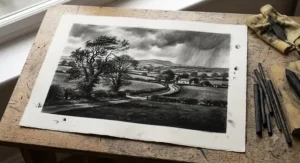
- Diameter first. Thin sticks (2-3mm) suit detail, medium (4-6mm) suits general drawing, thick (9mm+) suits loose gestural work — match this to what you’ll actually be drawing most often.
- Softness grade. Softer charcoal lays down darker, richer tone faster but wears down quicker; harder grades last longer and suit finer lines.
- Natural willow vs compressed. Natural sticks erase and blend more forgivingly; compressed sticks give denser, more controlled blacks with less dust.
- Sourcing and heritage. Brands with traceable, established production, Coates’ Somerset willow being the clearest UK example, tend to deliver more consistent kiln quality batch to batch.
- Pack size versus price-per-stick. A larger box of 25 medium sticks is usually better value than several small boxes, assuming you’ll actually use the volume.
- Fragility and packaging. Since breakage in transit is the single most common complaint across every brand reviewed here, favour sellers with solid packaging reputations and factor a few spare sticks into your order.
Willow Charcoal vs Vine Charcoal vs Compressed Charcoal: What’s Actually Different
According to Wikipedia’s overview of charcoal as an art medium, the three commonly used types of artists’ charcoal are compressed, vine and pencil forms, and understanding the practical gap between them matters more than the marketing copy suggests. Willow and vine charcoal are both natural sticks made by kiln-baking plant material without a binder, which is exactly why they crumble, smudge, and erase so readily, the particles simply aren’t glued to anything. Compressed charcoal, by contrast, mixes powdered charcoal with clay or wax binders and presses it into shape, producing a denser, more controlled black that resists smudging far better but also fights back harder when you try to erase or lighten it.
| Type | Erasability | Blackness | Best Use |
|---|---|---|---|
| Coates Willow Charcoal (natural) | Excellent | Deep but soft | Sketching, under-drawing, life drawing |
| Winsor & Newton Vine Charcoal (natural, graded) | Excellent | Adjustable by grade | Timed life drawing, tonal studies |
| Faber-Castell Pitt Compressed Charcoal Stick | Good | Very dense | Detail, dust-controlled sketching |
The analysis paragraph writes itself once you see it laid out: if your work involves a lot of reworking, corrections, or timed poses where you can’t afford to overcommit to a line, natural willow or vine charcoal like Coates Willow Charcoal or Winsor & Newton Artist Vine Charcoal is the safer choice. If you’re after a finished piece with minimal dust migration across the page, the Faber-Castell Pitt Compressed Charcoal Stick earns its higher price.
✨ Don’t Miss These Exclusive Deals!
🔍 Take your charcoal drawing practice to the next level with these carefully selected sticks. Click on any highlighted item to check current pricing and availability. These tools will help you create authentic, expressive drawings you’ll actually want to frame!
Is Willow Charcoal Erasable? Understanding Erasable Charcoal for Sketching
Genuinely, yes, and this is one of the most misunderstood points among people new to the medium. Because natural willow charcoal contains no binder, the particles sit loosely in the paper’s surface fibres rather than chemically bonding to them, which is precisely why a kneaded putty eraser can lift them back out almost completely, repeatedly, without tearing the page. This is fundamentally different from graphite pencil, which burnishes into the paper and resists full removal.
Charcoal marks stay far less permanent on the page than other media such as graphite, so lines can be erased and blended with relative ease, which is the entire reason tutors push beginners toward charcoal before pencil, it removes the fear of an irreversible mistake. What the spec sheet won’t tell you, but reviewers consistently note, is that this erasability has a ceiling: press hard enough into a heavily textured paper and some pigment will lodge permanently in the grooves, leaving a faint ghost even after erasing. For genuinely erasable charcoal for sketching, work in lighter layers and erase progressively rather than laying down one heavy pass and hoping to lift it all back out later.
Vine Charcoal for Life Drawing: What Tutors Actually Recommend
Life drawing has its own specific demands that separate it from studio sketchbook work, mainly speed and scale. According to Tate’s glossary definition of charcoal, the medium produces a line that is dense at the pressure point but more diffuse and powdery at the edges, making it less precise than hard graphite pencils and better suited to freer studies, which is exactly the quality that makes vine charcoal for life drawing so effective: a two-minute pose doesn’t reward precision, it rewards fast, confident gesture, and charcoal’s inherent looseness works with that pressure rather than against it.
Reviewers and tutors alike tend to recommend the Winsor & Newton Artist Vine Charcoal range specifically for this setting because of its graded hardness system, letting a life-drawing student switch from a Hard stick for a quick five-minute structural pose to an Extra-Soft stick for a longer twenty-minute tonal study without changing brands or worrying about inconsistent quality between sticks. Reviewers consistently note the sticks provide an even, predictable mark, which matters enormously when the model changes pose every few minutes and there’s no time to fight an unpredictable tool.
Features That Actually Matter (And Those That Don’t)
Diameter matters enormously, hardness grade matters enormously, and sourcing matters more than most buyers assume, Somerset-grown willow really does behave differently under a kiln than rushed imported alternatives, based on the consistent gap in review sentiment between Coates and generic unbranded sets. Packaging quality matters too, since breakage is the number one recurring complaint across every single product reviewed in this guide.
What matters considerably less, despite how it’s often marketed, is exact stick length. A five-inch stick and a four-inch stick behave identically once snapped down for use, so paying a premium purely for slightly longer sticks rarely translates into a better drawing experience. Colour of box or tin is pure packaging fluff with zero bearing on the mark quality inside. And while some sellers market “extra dust-free” willow charcoal as a premium feature, natural willow charcoal is inherently dusty by design, that’s the same crumbly quality that makes it blend and erase so well, so a genuinely dust-free stick is more likely to be compressed charcoal mislabelled than a superior willow product.
Willow Charcoal for Beginners vs Experienced Artists
Beginners generally get more value from mixed or medium boxes like Coates Willow Charcoal (Medium) or the Daler-Rowney Simply Willow Charcoal set, since a single consistent grade removes one variable while you’re still learning pressure control and paper handling. Experienced artists, by contrast, tend to build a mixed personal kit deliberately, a box of Coates Thin Willow Charcoal for detail, a graded set of Winsor & Newton Artist Vine Charcoal for life work, and something chunky like the Derwent XL Charcoal Block for large studies, because they already know which mark each stage of a drawing needs.
Reviewers who describe using the same brand for years, several specifically mentioning entire degree courses, tend to be experienced users who found one reliable core product and built variations around it rather than constantly switching brands. That’s a genuinely useful signal for beginners: pick one well-reviewed core box, learn its behaviour thoroughly, then diversify once you understand your own hand.
Long-Term Cost & Storage: Getting the Most from Every Stick
Willow charcoal is inexpensive per stick but genuinely fragile, so total cost of ownership depends more on storage habits than on which brand you buy. A £7 box of 25 medium Coates Willow Charcoal sticks that arrives intact and is stored properly can realistically deliver 50-plus usable pieces once snapped, working out to a cost-per-mark measured in pennies. The same box left loose in a bag, rattling against other art supplies, can lose a third of its contents to breakage before you’ve even opened it properly.
A shallow tin with a tissue or foam lining is the single best investment for extending charcoal life, costing next to nothing and dramatically reducing the breakage that shows up as a recurring complaint across Coates, Daler-Rowney, Winsor & Newton and Derwent products alike. Fixative spray is a secondary cost worth budgeting for, roughly £6-£10 for a can, since unfixed finished pieces will keep shedding pigment indefinitely.
Willow Charcoal Safety and Sourcing: What to Check
Most reputable willow charcoal sold in the UK, including the Coates Willow Charcoal range, conforms to ASTM D4236, the standard chronic-hazard labelling requirement for art materials, meaning it has been reviewed for chronic health hazards and appropriately labelled. As Britannica’s entry on charcoal drawing explains, charcoal’s defining characteristic as a medium is that it remains impermanent unless fixed with gum or resin, easily erased or smudged, which is a technique quality rather than a safety concern, but it does mean good ventilation and hand-washing after long sessions are sensible habits given the fine airborne dust natural charcoal produces.
For UK buyers specifically, sourcing matters too. Coates remains the only large-scale dedicated willow charcoal producer still operating on the Somerset Levels, and Jackson’s Art Supplies’ own coverage of the brand confirms the softness of Coates charcoal consistently earns strong reviews for its dense blacks and blendability, which is worth knowing if you ever want to compare notes from a recognised UK art retailer rather than relying on Amazon listings alone.
Frequently Asked Questions
❓ Is willow charcoal the same as vine charcoal?
❓ What's the best willow charcoal for beginners?
❓ Why does my willow charcoal keep snapping?
❓ Can you erase willow charcoal completely?
❓ Do I need fixative spray for willow charcoal drawings?
Conclusion: Choosing Your Best Willow Charcoal
There’s no single crown for best willow charcoal, only the right stick for the mark you’re trying to make. For an all-round first purchase, Coates Willow Charcoal (Medium) remains the sensible, well-reviewed default that most UK art tutors would point a beginner toward without hesitation. If detail work is your priority, don’t skip a box of Coates Thin Willow Charcoal alongside it. Life drawing regulars should look seriously at Winsor & Newton Artist Vine Charcoal for its graded hardness system, while anyone working large and loose will get more from the Derwent XL Charcoal Block or the chunky Faber-Castell Pitt Natural Charcoal Sticks.
Budget shouldn’t be a barrier to starting either; the Daler-Rowney Simply Willow Charcoal set proves you don’t need a big spend to find out whether this centuries-old, endlessly forgiving medium clicks with your hand. And if erasability with a denser black is what you’re chasing specifically, the Faber-Castell Pitt Compressed Charcoal Stick rounds out the list as a genuinely useful, slightly different tool worth having in the same kit. Wherever you land, remember that the fastest way to actually improve is simply to keep the charcoal moving across the page, mistakes included, since that’s a medium built, almost uniquely, to forgive them.
Recommended for You
- Graphite Sticks vs Graphite Pencils: 7 UK Picks for 2026
- 7 Best Graphite Sticks for Drawing in 2026 (UK Buyer’s Guide)
- Clutch Pencil vs Mechanical Pencil: 7 Best Artist Picks 2026
Disclaimer: This article contains affiliate links. As an Amazon Associate, I earn from qualifying purchases. If you purchase products through these links, we may earn a small commission at no additional cost to you.
✨ Found this helpful? Share it with your friends! 💬🤗
