In This Article
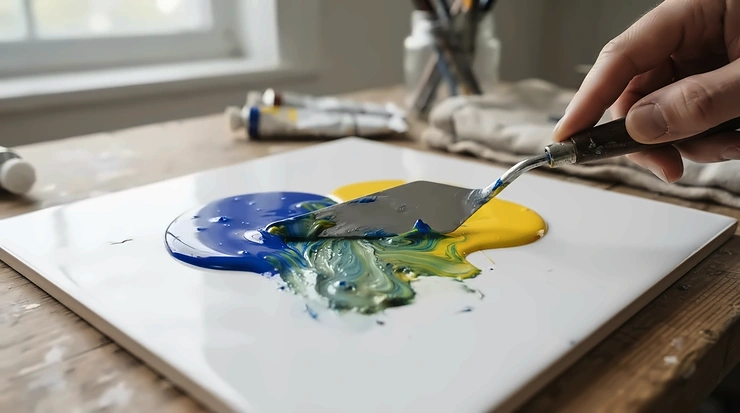
Fluid acrylics for pouring on canvas are low-viscosity acrylic paints, either ready-mixed or thinned with a pouring medium, that you tip onto a primed canvas and let gravity arrange. Their cream-like flow, strong pigment load and glossy, self levelling finish are what separate them from tube paint.

Pouring looks like pure chaos, but it’s really chemistry. Acrylic paint is pigment suspended in a polymer emulsion: water-based while wet, stubbornly water-resistant once dry. How that emulsion is thinned, extended and persuaded to separate decides whether your canvas looks like a nebula or a puddle of gravy.
That’s why the paint matters more than the fancy canvas. Choose well and the colour glides, blends and settles itself. Choose badly and you get cracks, mud and a lot of swearing at a wet rectangle.
This guide covers seven real, UK-available options. They range from ready-mixed acrylic pouring paints for beginners to professional-grade fluid acrylic paint for pour art. You’ll also get plain-English breakdowns of pouring medium compatibility, cells and lacing, and how to land a proper self levelling finish.
A quick note on method. Everything here is built from manufacturer specifications, UK retailer listings and published reviews. We haven’t poured these paints ourselves, so where review evidence is thin, we say so. Prices appear as ranges only and move constantly, so check current price on Amazon.co.uk before you buy.
Quick Comparison: Fluid Acrylics for Pouring on Canvas at a Glance
| Product | Format | Volume | Price range | Best For |
|---|---|---|---|---|
| Daler-Rowney System 3 Fluid Acrylic | Fluid concentrate (add medium) | 6 x 29.5ml | Around £10-£20 | Students and budget mixers |
| Pébéo Pouring Experiences | Pre-mixed with medium | 6 x 118ml | Around £25-£40 | Easy, glossy first pours |
| Arteza Acrylic Pouring Paint Set | Pre-mixed, high-flow | 32 x 60ml | Around £45-£75 | Colour-hungry beginners |
| Golden Fluid Acrylics Mixing Set | Professional fluid concentrate | 10 x 30ml | Around £35-£45 | Serious, lightfast work |
| Liquitex Acrylic Ink Pouring Set | Ultra-fluid ink plus matched medium | 3 x 30ml + 118ml | Around £20-£30 | Zero-guesswork compatibility |
| Art Ranger Basic Pouring Set | Ready-to-pour | 6 x 100ml | Around £20-£35 | A tidy, simple starter |
| Shuttle Art Pouring Paint | Pre-mixed kit | 36 x 60ml | Around £30-£50 | Big palette experimenters |
The pattern is clear once you read across. Pre-mixed sets like Pébéo Pouring Experiences and Arteza Acrylic Pouring Paint Set buy you speed. Concentrates like Golden Fluid Acrylics Mixing Set and System 3 Fluid Acrylic buy you control and, over time, lower cost per pour. The Liquitex Acrylic Ink Pouring Set sits in the middle, because the medium comes matched to the paint.
💬 Just one click — help others make better buying decisions too!😊
Top 7 Fluid Acrylics for Pouring on Canvas: Expert Analysis
1. Daler-Rowney System 3 Fluid Acrylic (6 x 29.5ml) — British-made budget colour concentrate
This six-bottle set is the sensible shoe of the pouring world: unglamorous, dependable and cheaper than most things that look flashier.
Each 29.5ml squeezy bottle holds a low-viscosity, opaque, creamy paint that Daler-Rowney pitches at pouring, dripping and general fluid techniques. The nozzle tops matter more than they sound. Dosing a few millilitres at a time makes repeatable paint-to-medium ratios far easier, and consistent ratios are the secret to consistent results. The small bottles also tell you something: this is concentrated colour, not a ready-to-pour puddle. Stretched with a decent medium, six bottles go surprisingly far.
Based on the spec comparison, System 3 Fluid Acrylic suits students and hobbyists who want to learn the craft properly rather than buy it pre-diluted. It’s thinner than tube paint but not pre-mixed, so it teaches ratios, which is useful education if you’re eyeing fluid acrylic paint for pour art long-term. The listing also cites strong lightfastness and good adhesion on canvas, board and paper.
Review evidence on the retailer pages we found is thin, so there’s no meaningful consensus to report. The brand’s heritage is the stronger signal here.
Pros:
- ✅ Made in the UK by a heritage brand
- ✅ Squeezy nozzle bottles for tidy dosing
- ✅ Opaque, flexible, lightfast fluid formula
Cons:
- ❌ Pouring medium must be bought separately
- ❌ Small bottles run out fast on big canvases
Price: around £10-£20 for the set (check current price). It’s strong value if you’re happy to mix your own.
2. Pébéo Pouring Experiences Studio Acrylics (6 x 118ml) — premixed, glossy, no maths required
Pébéo has done the arithmetic for you: these studio acrylics arrive already blended with medium, fluid, glossy and ready to pour.
The set contains six generous 118ml bottles in white, red, blue, turquoise, black and gold. That volume is enough for several canvases rather than a single nervous test pour. Pre-mixed means you skip the ratio guesswork, but you also lose some control. Making the paint thinner or thicker means adding your own water or medium. Pébéo suggests a few drops of silicone oil in the paint, or on the surface after pouring, to encourage cells.
The palette is cleverly practical. White and black give you tints and shades, red, blue and turquoise mix into purples and greens, and the gold adds a metallic shimmer for contrast. Here’s what the spec sheet won’t shout about: pre-mixed paint from a single maker is less likely to throw pouring medium compatibility surprises at you.
Retailer listings describe the range as excellent quality and good value, though we couldn’t verify review counts. Treat that as encouraging rather than conclusive.
Pros:
- ✅ Already mixed with pouring medium
- ✅ Large 118ml bottles per colour
- ✅ Includes white, black and gold essentials
Cons:
- ❌ Limited room to tweak consistency
- ❌ Six colours restrict palette variety
Price: around £25-£40. That’s fair value for a no-fuss, brand-trusted start.
3. Arteza Acrylic Pouring Paint Set (32 x 60ml) — widest palette, zero mixing
If your idea of heaven is a wall of colour, this 32-bottle set is the candy shop.
The range spans metallics, neons, pastels and primaries, and the paints are pre-mixed and high-flow. The listing states conformity to ASTM D-4236 and EN71 standards, which is reassuring if younger artists will be pouring too. At 60ml per bottle, each colour is a manageable dose rather than a lifetime supply. That suits experimentation, but be realistic about the maths: big canvases will drain your favourites quickly.
The honest analytical take is that the biggest strength here is variety, not depth. Having 32 colours means you can build harmonies without mixing, which is a gift for acrylic pouring paints for beginners who haven’t yet learned colour theory. It also means you can try pouring with multiple colour schemes without buying five separate sets.
Reviewers consistently praise the convenience, vivid colour and creamy, clump-free flow. One buyer wished for more black and white, and another reported splitting and crazing after using a different brand’s silicone oil. Silicone choice clearly matters.
Pros:
- ✅ Enormous colour range, including metallics and neons
- ✅ Ready to pour, so no ratio maths
- ✅ EN71-conformity claim on the listing
Cons:
- ❌ Limited quantities of black and white
- ❌ Silicone brand mismatches can cause splitting
Price: around £45-£75. It’s good value per colour, less so per millilitre.
4. Golden Fluid Acrylics Mixing Set (10 x 30ml) — the professional benchmark
Golden’s fluids are the paints other fluid acrylics get measured against.
The formula has the consistency of heavy cream, uses lightfast pigments rather than dyes, and contains no fillers or extenders. The set ships with a fluid application guide. In practice, strong pigment is why these bottles stretch so far: Golden’s own testing suggests as little as 1-5% fluid acrylic in its GAC 800 medium is optimal, with 10% as the ceiling. A 30ml bottle therefore behaves like a much bigger one.
Expert Reviews’ round-up of the best acrylic paint sets names Golden’s fluid range as its pick for fluid acrylics generally. That’s a useful independent signal, and it matches the product’s reputation among artists. This is the set for people planning to sell, gift or keep their fluid acrylic paint for pour art for decades, because lightfast pigment protects against fading.
The catch is that it isn’t ready to pour. You need a compatible medium, a little patience and a willingness to learn.
Pros:
- ✅ Pigment-rich, lightfast, filler-free formula
- ✅ Stretches enormously with pouring medium
- ✅ Application guide included in the set
Cons:
- ❌ Highest cost per millilitre here
- ❌ Not ready to pour, so some know-how needed
Price: around £35-£45. It’s superb value if you mix with a good medium; poor value if you wanted instant gratification.
5. Liquitex Professional Acrylic Ink Pouring Set — Deep Colours (3 x 30ml + 118ml medium) — matched ink-and-medium system
The most valuable thing in this box may be the tub, not the bottles.
Each set contains three 30ml acrylic inks (Iridescent Bright Gold, Deep Violet and Turquoise Deep) plus a 118ml Professional Pouring Medium. Liquitex describes the inks as ultra-fluid and developed for pouring and flow painting. Its pouring medium is designed not to crack in poured applications, and to form even puddles and skins. Ultra-fluid pigment means a little goes a long way, and a manufacturer-matched medium removes much of the pouring medium compatibility worry.
The palette is a tonal trio, so harmonies are built in. Deep violet and turquoise sit comfortably together, and the gold adds flash. That makes this a clever small-scale way to learn how pigment, medium and silicone behave, with fewer variables than a big mixed-brand haul.
The wider Liquitex ink line carries a sizeable review pool on one UK art retailer (67 reviews at the time of research). We couldn’t verify review content specific to this kit, so take the quality signal as general rather than set-specific.
Pros:
- ✅ Manufacturer-matched pouring medium included
- ✅ Tonal three-colour palette harmonises easily
- ✅ Ultra-fluid, pigment-dense inks
Cons:
- ❌ Only three colours in the box
- ❌ Small volumes for larger canvases
Price: around £20-£30. It’s good value as a low-risk entry to professional materials.
6. Art Ranger Basic Acrylic Pouring Set (6 x 100ml) — chunky bottles, tidy starter
This is the quiet, uncomplicated option: six colours, 100ml each, specially designed ready-to-pour acrylic paint.
The 100ml bottle size sits neatly between the compact 60ml sets and the larger 118ml bottles. Ready-to-pour means no ratios, no calculator and no tub of medium to buy. Treat six colours as a palette starter rather than a full studio, and check the listing carefully for the exact colourways and what else is in the box.
Our honest read is that this is a sensible choice for someone who wants a simple first set without 32 bottles competing for attention. The trade-off is evidence. We couldn’t verify a substantial pool of independent reviews, so there’s no consensus on long-term performance to report. Compared with Pébéo Pouring Experiences or Golden Fluid Acrylics Mixing Set, this one has a thinner public track record, so buy with realistic expectations.
Pros:
- ✅ Ready to pour with no mixing maths
- ✅ Generous 100ml bottle size
- ✅ Six-colour palette is simple to manage
Cons:
- ❌ Few independent reviews we could verify
- ❌ Less established than long-running art brands
Price: around £20-£35. It’s reasonable value for a straightforward starter, provided the listing contents match your needs.
7. Shuttle Art Acrylic Pouring Paint (36 x 60ml) — 36-colour palette for experimenters
Think of this as the big box of felt tips: more colours than strictly necessary, and that’s the joy.
The set offers 36 pre-mixed, high-flow 60ml bottles, and versions with a canvas, silicone oil, measuring cups and tablecloths exist, so check which bundle you’re buying. A 2026 beginner round-up reported that the paints poured straight from the bottle without thinning. It also found that one drop of silicone oil per cup gave clean cells on both a dirty pour and a flip cup. That matters because it suggests the paint is forgiving, which is exactly what acrylic pouring paints for beginners should be.
The analytical caveat is the same as for any large pre-mixed set: you can’t easily adjust the ratio. If you later want to tune viscosity for lacing, you’ll be adding your own medium or water to a formula that wasn’t designed for it. For learners, though, a big palette and simple pours are an excellent combination.
Pros:
- ✅ Huge palette for harmony experiments
- ✅ Pours without thinning, per one round-up
- ✅ Kit bundles include handy extras
Cons:
- ❌ Pre-thinned formula limits fine-tuning
- ❌ 60ml bottles drain quickly on large canvases
Price: around £30-£50. It’s strong value per colour if you want to explore.
How the Seven Compare on Paper
| Product | Medium needed? | Flexibility | Review evidence | Best For |
|---|---|---|---|---|
| System 3 Fluid Acrylic | Yes | High (you set the ratio) | Thin | Learning ratios on a budget |
| Pébéo Pouring Experiences | No | Low-medium | Limited | Glossy, simple pours |
| Arteza Acrylic Pouring Paint Set | No | Low | Positive themes | Beginners wanting colour variety |
| Golden Fluid Acrylics Mixing Set | Yes | Very high | Strong reputation | Archival, pro-level work |
| Liquitex Acrylic Ink Pouring Set | Included | Medium | General line strong | Compatibility confidence |
| Art Ranger Basic Pouring Set | No | Low | Thin | A quiet, simple start |
| Shuttle Art Pouring Paint | No | Low | Positive themes | Palette exploration |
Reading the table honestly: the left-hand column of “medium needed?” predicts almost everything else. The two concentrates, Golden Fluid Acrylics Mixing Set and System 3 Fluid Acrylic, ask more of you but reward you with control and economy. The pre-mixed sets win on speed. If you only want one decision shortcut, choose by how much tinkering you enjoy.
Your First Pour: A Practical Setup Guide for Fluid Acrylics for Pouring on Canvas
Amazon listings don’t tell you how to actually do this, so here’s a calm, step-by-step routine.
- Prepare the space. Cover the table with a bin bag or cheap tablecloth, and prop the canvas on four upturned cups so drips fall away from it. Check it’s level with a spirit level or phone app, because a tilted canvas will drag the whole pour sideways.
- Prime if needed. Most ready-stretched canvases are pre-primed. If yours is raw, use acrylic gesso first, because bare fabric soaks up thin paint.
- Mix each colour. Aim for the consistency of single cream. Pre-mixed sets like Arteza Acrylic Pouring Paint Set and Shuttle Art Pouring Paint can often go straight into cups. With concentrates like System 3 Fluid Acrylic, follow your medium’s ratio instructions.
- Add silicone sparingly. A common rule of thumb is up to three drops per roughly 30ml of paint and medium. More than that tends to make cells small and cramped.
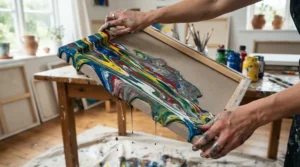
- Pour and tilt. For a dirty pour, tip all colours into one cup, invert it onto the canvas, lift away, then tilt gently to guide the flow to the edges.
- Dry flat and covered. Rest the canvas somewhere dust-free for at least a day. Thick pours can take several days to cure fully, so don’t prod it.
Maintenance tip: wipe cups and sticks with kitchen roll and bin it, rather than rinsing acrylic down the sink. Cap bottles tightly and store them upright.
Pour Problems Solved: Fixes for the Most Common Frustrations
Even good paint misbehaves occasionally. Here’s what usually goes wrong and how to fix it.
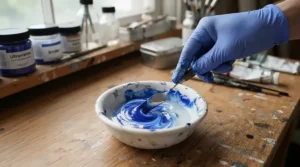
- Cracking or crazing. This is often down to unbalanced ratios, mixing incompatible brands, or an overly thick pour. Use a medium designed not to crack, such as the one in the Liquitex Acrylic Ink Pouring Set. Also let work dry at a steady room temperature, away from radiators.
- Muddy colours. Over-stirring and too many colours are the usual culprits. Limit yourself to three to five colours, and use white as a buffer between strong contrasts.
- Bubbles. Stir slowly rather than whisking. Some mediums recommend mixing and leaving the cup covered overnight so bubbles can rise out. A very brief, careful pass with a heat gun can also help, but keep it moving and away from anything flammable.
- Silicone splits and “fish-eyes”. This usually means too much oil, or an oil that doesn’t suit the paint. Cut back to two or three drops and keep the oil brand consistent, as one reviewer of the Arteza range noticed.
- Drips pooling at the edges. Run a gloved finger along the underside edge to clear them before they harden. It takes ten seconds and saves you sanding later.
Real-World Scenarios: Which Set Fits Your Life?
The student on £25 in a shared flat. Space is tight and the budget tighter. The Liquitex Acrylic Ink Pouring Set is a single, low-risk purchase because paint and medium arrive together. Alternatively, buy System 3 Fluid Acrylic and a small tub of medium if you want to learn ratios.
The weekend hobbyist with 40cm canvases. You pour every Saturday and want fewer tiny bottles to replace. Pébéo Pouring Experiences offers 118ml per colour, which makes it a sensible, glossy workhorse for regular pours.
The gift-giver buying for a creative teenager. Variety wins here. The Arteza Acrylic Pouring Paint Set and Shuttle Art Pouring Paint both put dozens of ready-to-pour colours in one box. For anything intended for children, check packaging for CE, UKCA or EN71 labelling before buying.
The artist planning to sell. Choose Golden Fluid Acrylics Mixing Set for lightfast pigment that won’t fade under gallery lighting, and pair it with a compatible medium.
✨ Don’t Miss These Exclusive Deals!
🔍 Take your fluid acrylics for pouring on canvas to the next level with these carefully selected products. Click on any highlighted item to check current pricing and availability. These sets will help you create stunning, authentic fluid art your family will love!
How to Choose Fluid Acrylics for Pouring on Canvas
Choosing well comes down to seven decisions, taken in order.
- Pre-mixed or concentrate? Pre-mixed paint is quicker and more forgiving. Concentrates cost less per pour and give you control.
- Check the viscosity. Aim for a heavy-cream consistency that flows but still has body, otherwise colours blend into mush.
- Look at pigment quality. Professional paints hold more pigment and are generally more lightfast. Student paints trade some strength for price.
- Match the medium. Use the medium recommended for your paint, or test on a small surface first.
- Match the volume to the canvas. Big canvases devour paint. Small bottles suit small boards and experiments.
- Pick a palette you’ll actually use. Thirty-six colours sounds exciting, but a tight six often produces cleaner work.
- Check safety labelling. If children will be involved, look for CE, UKCA or EN71 marks, and keep the space ventilated.
Acrylic Pouring Paints for Beginners: The Smartest First Purchase
Beginners usually make the same mistake: buying everything at once. The smarter move is a small, forgiving set.
Ready-to-pour acrylic pouring paints for beginners, such as the Arteza Acrylic Pouring Paint Set, the Art Ranger Basic Pouring Set and the Shuttle Art Pouring Paint, remove the hardest variable, which is the paint-to-medium ratio. Pébéo Pouring Experiences adds brand reassurance and bigger bottles. If you’d rather learn the fundamentals, the Liquitex Acrylic Ink Pouring Set teaches how medium and pigment interact using a matched system.
Start with three or four colours, one canvas and one technique, probably the dirty pour. Resist silicone oil on pour number one. Get the paint behaving first, then add cells.
Fluid Acrylic Paint for Pour Art vs Alternatives
Fluid acrylic paint for pour art isn’t the only route. Heavy body tube acrylics and craft paints can be thinned with medium, though results vary.
| Option | Flow | Colour strength | Effort | Best For |
|---|---|---|---|---|
| Concentrated fluid acrylics, e.g. Golden Fluid Acrylics Mixing Set | Excellent with medium | Very high | Medium-high | Archival, professional work |
| Pre-mixed pouring paint, e.g. Pébéo Pouring Experiences | Excellent out of the bottle | Good | Low | Beginners and quick sessions |
| Heavy body acrylic plus medium | Needs heavy thinning | High but harder to mix | High | Using paint you already own |
| Craft acrylic plus medium | Variable | Lower | Medium | Cheap experimenting |
Looking at the comparison, concentrated fluids and pre-mixed paints are far easier than thinning heavy body paint, which tends to be stiff and temperamental. Heavy body suits impasto work where you want brushstrokes to hold, so using it for pours wastes its strengths. If you’re buying new, fluid acrylic paint for pour art is the better starting point.
Pouring Medium Compatibility: What Actually Mixes
Pouring medium compatibility is where most “mystery cracking” begins. Mediums aren’t interchangeable, and neither are ratios.
Golden’s popular GAC 800 is a free-flowing acrylic medium that blends well with fluid acrylic lines. Golden’s own testing on paint additions into GAC 800 found that mixes didn’t craze, but many ratios weren’t practical for actual pouring. Its optimal range for fluid acrylics is a very low percentage of paint. Floetrol-based recipes sit at the other end, often around two parts medium to one part paint, and Liquitex Pouring Medium recipes commonly use a heaped tablespoon of paint per cup of medium.
Why the difference? Strongly pigmented fluids need far less paint to carry colour, so they can use a much higher proportion of medium. Cheaper, weaker paints need more paint in the mix.
Practical rules follow. Stick to one paint-and-medium system per painting. Test mixed batches on a spare board. Don’t add extra medium to pre-mixed sets like Arteza Acrylic Pouring Paint Set unless you want to thin them deliberately. Finally, remember that a matched pairing like the Liquitex Acrylic Ink Pouring Set is the lowest-risk route.
Cells and Lacing: Getting the Pattern You Want
Cells and lacing are the signature looks of pouring, and both are controllable.
Cells form when silicone oil creates surface tension that pushes against the surrounding paint and medium, opening round pockets as the paint dries. The rule of thumb is up to three drops per roughly 30ml of paint-and-medium mix, because too much oil produces tiny, cramped cells.
Lacing is the web-like effect where cells stretch into threads. Pourers generally get it from thinner mixes that spread further. A higher medium ratio thins the paint and encourages movement, while a lower ratio keeps it thicker and holds rounder, more defined cells. So if you want big, clean cells, keep the paint a touch thicker. If you want delicate lacing, thin it slightly and tilt with patience.
Product choice helps too. Pébéo Pouring Experiences recommends a few drops of oil, and one beginner round-up reported clean cells from a single drop per cup with Shuttle Art Pouring Paint. Use contrasting colours, because white or black makes lacing visible.
Self Levelling Finish: How to Get a Glass-Smooth Surface
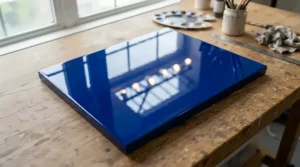
A proper self levelling finish comes from low-viscosity paint plus patience.
Fluid acrylics flow into a smooth, glossy film when left alone, which is exactly what the viscosity of pouring paints is designed to do. Your job is to stay out of the way. Check the canvas is genuinely level, because a slight tilt becomes a visible slope. Use cups to lift the canvas, so drips run off cleanly. Keep the drying space still and dust-free, perhaps with an upturned box over the canvas that doesn’t touch the paint.
Bubbles ruin gloss, so avoid vigorous stirring. Some manufacturers suggest mixing then leaving the cup covered overnight, which lets trapped air rise out before you pour.
Thicker pours dry slowly, so give them extra days before moving or varnishing. If you want a unified shine across all colours, apply an acrylic varnish once the painting is fully cured.
Long-Term Cost: What Fluid Acrylics Really Cost per Pour
Cost per pour tells a different story from the shelf price.
| Option | Price range | Volume | Value verdict | Best For |
|---|---|---|---|---|
| System 3 Fluid Acrylic | Around £10-£20 | 6 x 29.5ml | Cheap if you add medium | Budget learners |
| Golden Fluid Acrylics Mixing Set | Around £35-£45 | 10 x 30ml | Excellent once stretched | Long-term artists |
| Pébéo Pouring Experiences | Around £25-£40 | 6 x 118ml | Solid ready-to-pour value | Regular hobbyists |
| Arteza Acrylic Pouring Paint Set | Around £45-£75 | 32 x 60ml | Value per colour, not per ml | Palette explorers |
The maths flips when you account for dilution. Golden Fluid Acrylics Mixing Set looks expensive per bottle, but Golden’s technical notes on GAC 800 point to very low paint percentages, so each bottle covers far more canvas. Pre-mixed sets cost more per millilitre of finished, ready-to-use paint. If you pour weekly, concentrates repay the effort. If you pour twice a year, pre-mixed convenience is probably the better deal.
Maintenance is minimal: cap bottles tightly, store them upright away from heat and frost, and wipe nozzles clean so lids don’t weld shut.
Frequently Asked Questions
❓ Can I pour fluid acrylics for pouring on canvas without a medium?
❓ How long does a poured canvas take to dry?
❓ Do I need to prime a canvas before pouring?
❓ Are acrylic pouring paints safe for children?
❓ Should I varnish a finished pour?
Conclusion
Pouring is gloriously forgiving once you understand the basics, and the right paint makes understanding them easier. If you want instant results, the pre-mixed Pébéo Pouring Experiences, Arteza Acrylic Pouring Paint Set, Art Ranger Basic Pouring Set and Shuttle Art Pouring Paint are all sensible places to start. If you’d rather learn the craft and save money over time, System 3 Fluid Acrylic and Golden Fluid Acrylics Mixing Set reward the extra effort. And if you want the lowest-risk, matched-system start, the Liquitex Acrylic Ink Pouring Set is hard to argue with.
Whatever you choose, keep three things in mind. Match your medium to your paint, go easy on the silicone, and give the canvas time to level and dry in peace. Do that and your fluid acrylics for pouring on canvas will do most of the artistry for you.
✨ Ready to start pouring?
🎨 Compare the seven picks above, check current prices and availability, and choose the set that suits your canvas, your budget and your patience. Your first flowing masterpiece is closer than you think!
Recommended for You
- Heavy Body Acrylics For Impasto Beginners: 7 Proven Picks (2026)
- Students’ Acrylic Paints For School Art Lessons: 7 Best Buys (2026)
- Acrylic Paints For Small Flat Studio: 7 Smart Picks (2026)
Disclaimer: This article contains affiliate links. As an Amazon Associate, I earn from qualifying purchases. If you purchase products through these links, we may earn a small commission at no additional cost to you.
✨ Found this helpful? Share it with your friends! 💬🤗
