
In This Article
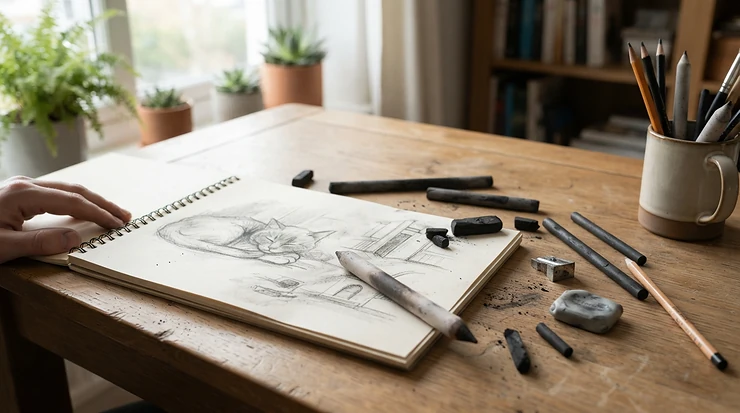
Charcoal is a wonderfully unruly medium. It goes down fast, smears if you so much as look at it, and can turn a delicate cheekbone into a grey puddle in three careless seconds. The tool that tames all of that is a humble roll of compressed paper that costs less than a coffee. Choosing the right blending stump for charcoal drawing is one of the cheapest upgrades in art, and one of the most dramatic.
This guide covers seven real products, how to match them to your style, and how to use them. It also covers the mistakes that quietly wreck smooth tones. Along the way you’ll get practical help with charcoal shading, tonal drawing and picking a sensible smudge tool without wasting money.
What Is a Blending Stump for Charcoal Drawing?
A blending stump for charcoal drawing is a tightly rolled, pointed cylinder of paper used to smooth, soften and move charcoal across the page. It replaces your fingertip. As Wikipedia’s entry on drawing stumps explains, finger smudging deposits skin oil on the paper, which makes the surface less receptive to further charcoal.
That one fact is reason enough to buy a stump. Here is the plan: a quick comparison, then seven detailed picks, then the how-to material that turns a cheap tool into good results.
Quick Comparison: Blending Stump for Charcoal Drawing at a Glance
| Product | Pack Format | Best For | Price Range |
|---|---|---|---|
| Derwent Paper Stumps | Multi-stump pack | Smooth, gentle gradation | Under £6 |
| Caran d’Ache Blending Stump | Pack of 2, medium size | Everyday premium blending | £3-£5 range |
| Faber-Castell Paper Wiper Blending Stump | Single stump | Blending and correcting | Under £5 |
| Mont Marte Pastel and Charcoal Blenders (7 Piece) | 4 stumps + 3 tortillons | Beginners wanting variety | Under £10 |
| Art Alternatives Stumps & Tortillons Set | 4 stumps + 6 tortillons | Budget bulk value | Under £10 |
| Pro Art Blending Stumps | Multi-pack | Dedicated enthusiasts | Check current price |
| Creative Mark Jumbo Rice Paper Blending Stump | Jumbo single | Large areas and skies | Check current price |
Prices are indicative ranges from the time of research and may vary by seller. Availability on amazon.co.uk differs between listings, particularly for US-based brands.
Looking at the table above, the Caran d’Ache Blending Stump and Derwent Paper Stumps are the safest all-rounders for most British sketchbook artists. The Mont Marte Pastel and Charcoal Blenders (7 Piece) and the Art Alternatives Stumps & Tortillons Set earn their place if you want several sizes without spending much. For big, soft areas such as skies, the Creative Mark Jumbo Rice Paper Blending Stump solves a problem the small stumps simply can’t.
💬 Just one click — help others make better buying decisions too!😊
Top 7 Blending Stump for Charcoal Drawing Picks: Expert Analysis
The analysis below draws on published specifications, retailer listings and the editorial verdicts of art publications. I haven’t hand-tested these products, so where review evidence is thin, I say so rather than inventing a consensus.
1. Derwent Paper Stumps — smooth rice-paper tips for gentle gradation
The headline feature is the rice-paper construction, which retailers describe as smoother than ordinary paper stumps. In practice that means the tip glides over charcoal instead of grabbing at it. You get soft, even transitions rather than the streaky, gritty ones a coarse tool can leave.
Each stump has a defined tip, which makes it more accurate than a fingertip and a lot tidier. The maker’s own advice is to clean and re-point the tip on a sandpaper block. That is the practical point many beginners miss. A stump isn’t disposable the moment it turns grey, because a few strokes on sandpaper restore the working end.
Based on the spec description, this is a strong choice if your charcoal shading leans towards portraits, soft fabric folds or anything where harsh edges would look wrong. It is less obviously the right tool for covering huge areas quickly, because standard stump widths simply take longer.
Reviewer sentiment on a UK art retailer’s listing is positive. Buyers describe it as an excellent blending tool for graphite and pastel work, though the review pool is small, so treat that as a pattern rather than a verdict.
Pros:
- ✅ Smooth rice-paper tip blends without scratching
- ✅ Defined point suits detail work
- ✅ Re-pointable on a sandpaper block
Cons:
- ❌ Small sizes slow down large-area blending
- ❌ Review volume is modest
Typically in the under-£6 range at the time of research. Good value for a tool you can refresh repeatedly.
2. Caran d’Ache Blending Stump — premium medium-size workhorse
The standout is simplicity: a pack of two medium stumps, each around 15cm long and 1cm in diameter, aimed squarely at pastel and charcoal. That diameter is the practical sweet spot. It’s broad enough to blend a cheek or a cloud in a few passes, yet still narrow enough that you can steer it around edges.
What most buyers overlook is how much a comfortable length matters over a long session. A 15cm stump sits in the hand like a pencil, which reduces cramping during the long, repetitive back-and-forth of tonal drawing.
Because the pack contains two, you can dedicate one to dark areas and keep the other pristine for light values. Wikipedia’s drawing-stump entry stresses keeping the tip clean when blending light tones so darker media isn’t dragged into them. A two-stump pack builds that habit in from day one.
The evidence on buyer opinion is sparse. The UK retailer page I found showed only a single review, which isn’t enough to characterise sentiment honestly. The brand’s reputation in artist materials carries the recommendation here, rather than a review consensus.
Pros:
- ✅ Medium size covers most everyday blending jobs
- ✅ Two stumps allow dark and light separation
- ✅ Comfortable pencil-like length
Cons:
- ❌ Costs more per stump than generic multi-packs
- ❌ Little verified review data
Expect a £3-£5 range. A fair premium if you value consistency.
3. Faber-Castell Paper Wiper Blending Stump — blends, lifts and corrects in one
This is a single stump marketed for blending, wiping and correcting, and that triple job is its hook. It is listed for use with soft pastel, graphite and natural or pressed charcoal. Retailer specifications put it at roughly 14cm by 1cm, so it’s close to the Caran d’Ache in feel.
The “wiper” idea deserves unpacking. Used with a lighter touch, a stump can lift charcoal rather than push it, which helps you pull back highlights or fix a heavy-handed tone. That makes it a clever bridge between a blending tool and a mild corrective tool.
The manufacturer’s guidance says it can be cleaned on a sandpaper block or a kneaded eraser. Using the eraser means you needn’t abrade the tip every time, which keeps the stump from shrinking as quickly. A putty rubber is usually already in a UK art kit, so there’s no extra purchase involved.
I couldn’t verify a sizeable review pool for this exact stump, so I won’t pretend one exists. The recommendation rests on the specification and the brand’s long pedigree in drawing materials.
Pros:
- ✅ Cleans on sandpaper or a putty rubber
- ✅ Handles blending and gentle correction
- ✅ Familiar 1cm diameter suits most work
Cons:
- ❌ Sold individually, so costs add up
- ❌ Verified review data is limited
Typically under £5. Best bought alongside others rather than as your only stump.
4. Mont Marte Pastel and Charcoal Blenders (7 Piece) — best beginner starter mix
Variety is the selling point: four paper stumps and three paper tortillons in one set. Listings describe the stumps as having a pointed end and a blunt end. That’s a handy combination, because you get a broad face for covering ground and a point for tight spots.
The tortillons are smaller and thinner, designed for small areas and fine detail. According to the listing, they can be cleaned by carefully tearing away the paper at the point and finishing with fine sandpaper. That’s a useful trick to learn early, since tortillons otherwise tend to be thrown away.
If you’re new to charcoal shading, a mixed set like this lets you discover which sizes you actually reach for. After a month you’ll probably know whether you want more large stumps or more fine tortillons. This is a cheaper way to find out than buying premium singles blind.
On reviews, I found product-page specifications rather than a deep body of verified user feedback. So the honest summary is that it is a sensible, low-risk starter set, not a proven crowd favourite.
Pros:
- ✅ Mix of stumps and tortillons in one pack
- ✅ Blunt and pointed ends on each stump
- ✅ Low outlay for experimenting
Cons:
- ❌ Quality consistency is unverified
- ❌ Tortillons wear out faster under heavy pressure
Usually under £10. Excellent value as a first set.
5. Art Alternatives Stumps & Tortillons Set — ten-piece grey felt value pack
This ten-piece set bundles four stumps and six tortillons. Both are made from soft grey paper felt. The stumps are double-ended and pointed. The tortillons are spiral-wound and single-ended, and they are described as more abrasive than stumps, which suits fast, thin blending.
That abrasiveness is a genuine trade-off. Quick blending is satisfying, but a harsher surface can disturb the paper’s tooth if you press hard. In my view, the tortillons are best saved for small, quick passes, while the stumps handle the broad, soft work.
ARTnews includes this brand’s set in its roundup of favourite blending tools. It praises the very smooth tips, which help avoid scratchiness on the paper. It also says the tools hold their structure unless you are extremely heavy-handed. That is a meaningful endorsement for a budget product.
UK availability for this US-originated brand can be inconsistent on amazon.co.uk. Check whether a listing ships from a UK seller to avoid delivery surprises.
Pros:
- ✅ Ten tools cover most blending tasks
- ✅ Sandpaper-friendly for repeated re-pointing
- ✅ Editorially praised for smooth tips
Cons:
- ❌ Tortillons can be abrasive on delicate paper
- ❌ UK availability may be patchy
Generally under £10. A strong choice if you want volume without sacrificing quality.
6. Pro Art Blending Stumps — the connoisseur’s pick, per ARTnews
The standout feature is reputation. In its roundup of the best tortillons and blending stumps, ARTnews notes that stumps made in Taiwan are considered by many artists to be among the best around, and names Pro Art as its headline recommendation. The publication hedges on why. It could be the paper, or a particular manufacturing technique.
That uncertainty is worth respecting. I can’t tell you what makes them better, and nobody in the sources can either. What I can say is that an editorial recommendation from a respected art publication is a more reliable signal than a handful of anonymous star ratings.
These suit artists who are already hooked on charcoal and want a tool that feels consistent session after session. If you do long, layered tonal drawing, consistency matters more than headline features. The risk is that pack contents and UK availability vary by listing, so read the description carefully.
Reviewer data on amazon.co.uk isn’t something I could verify for this specific brand, so rely on the editorial endorsement as your guide and check recent buyer comments yourself.
Pros:
- ✅ Strong editorial reputation among artists
- ✅ Consistent feel suits long sessions
- ✅ Sandpaper-cleanable stump format
Cons:
- ❌ Pack contents vary between listings
- ❌ UK availability needs checking
Check the current price, as UK listings vary. Worth it for committed users.
7. Creative Mark Jumbo Rice Paper Blending Stump — one-inch width for big skies
Where most stumps fight you on large areas, this one is built for them. ARTnews describes it as a one-inch-wide stump, ideal for blending large areas. That is roughly 2.5cm, more than double the diameter of a typical stump.
The practical difference is huge. Soothing a charcoal sky or a heavy studio backdrop with a 1cm stump is like painting a wall with a teaspoon. A jumbo stump covers ground in sweeping strokes and leaves a more even finish, with fewer visible passes.
The trade-off is precision. You can’t thread a one-inch stump into an eye socket. Treat it as a specialist supplement to a small set rather than a replacement, and use it for the first big pass before refining with smaller tools.
I couldn’t verify a broad base of UK reviews, so the case for this one rests on editorial praise and the obvious logic of its size. Availability on amazon.co.uk may be limited, so check the listing.
Pros:
- ✅ One-inch width speeds up large blends
- ✅ Rice-paper build for smooth tones
- ✅ Even coverage with fewer passes
Cons:
- ❌ Too broad for detail work
- ❌ Availability in the UK may be limited
Check the current price, as UK stock varies. A niche tool that earns its keep on big pieces.
Top 7 Comparison: What the Specs Mean Together
| Product | Key Spec | Upkeep | Best For |
|---|---|---|---|
| Derwent Paper Stumps | Rice paper, defined tip | Sandpaper block | Smooth gradation |
| Caran d’Ache Blending Stump | About 15cm x 1cm, pack of 2 | Re-point as needed | Everyday blending |
| Faber-Castell Paper Wiper Blending Stump | About 14cm x 1cm | Sandpaper or putty rubber | Blend and correct |
| Mont Marte Pastel and Charcoal Blenders (7 Piece) | 4 stumps, 3 tortillons | Tear and sand tortillons | Beginners |
| Art Alternatives Stumps & Tortillons Set | Grey paper felt, 10 pieces | Sandpaper block | Budget variety |
| Pro Art Blending Stumps | Taiwan-made, editorial favourite | Sandpaper block | Committed artists |
| Creative Mark Jumbo Rice Paper Blending Stump | About 1 inch wide | Sandpaper block | Large areas |
The pattern here is clear: width decides speed, and paper quality decides smoothness. Most artists will do best with a medium stump such as the Caran d’Ache Blending Stump plus a mixed set like the Art Alternatives Stumps & Tortillons Set. Add the Creative Mark Jumbo Rice Paper Blending Stump only if big areas dominate your work.
How to Choose a Blending Stump for Charcoal Drawing
Here is the quick method. Each step comes with the reasoning, so you can adapt it to your own style.
- Match the width to your subject. Portraits and fine detail want a 5-10mm stump. Skies, backgrounds and large still-life areas reward a wider tool. If you only buy one, choose a medium diameter around 1cm.
- Check the paper quality. Smooth, soft paper glides; coarse paper scratches. Rice-paper and felt-style stumps are generally gentler on charcoal than rough, loosely rolled ones.
- Prefer double-ended stumps for charcoal. When one end gets dirty, you flip it. The Virtual Instructor notes that stumps typically have two pointed ends, which makes them more economical than single-ended tortillons.
- Plan for cleaning. A stump that can be re-pointed on sandpaper or wiped on a putty rubber lasts far longer than one you bin after a single drawing.
- Buy a small mixed set first. You will quickly learn which sizes you reach for, and a set costs less than several premium singles.
- Check UK availability and delivery. For overseas brands, confirm the listing ships from a UK seller so you avoid import delays.
The method above works whether you’re picking a first paper stump for shading or upgrading a battered kit.
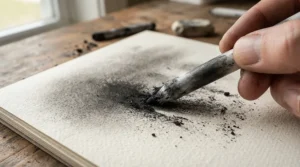
Paper Stump for Shading: Sizes, Points and Pressure
A paper stump for shading is only as good as the way you hold it. The tool is the same in a beginner’s and a professional’s hand. The difference is pressure, direction and patience.
Start with the size logic. A large stump pushes charcoal across wide areas and softens big transitions. A small stump drives tone into tight corners, such as the inner corner of an eye. Many artists find that three sizes cover nearly everything.
Pressure is where results diverge. Light pressure moves existing charcoal gently and preserves paper tooth. Heavy pressure grinds charcoal into the paper fibres, producing darker, smoother, but harder-to-correct tones. Think of it as the difference between stroking a cat and scrubbing a pan.
Direction matters too. A reliable tip from drawing guides is to keep your blending direction consistent with the form you’re drawing. Follow the curve of a cheek or the fall of a fold, and the shading looks natural rather than scribbled.
Finally, remember the double-ended advantage. Dedicate one end to dark tones and the other to light ones. A paper stump for shading that is kept clean on the light end will protect your highlights far better than any amount of careful erasing.
Charcoal Shading Step by Step: A Practical Usage Guide
Here’s a repeatable routine for charcoal shading that uses your stump as the controlled finishing tool.
Step 1: Prepare the paper. Choose paper with enough tooth to hold charcoal. Smooth cartridge paper blends easily but can clog; textured paper holds more pigment.
Step 2: Lay the tone lightly. Apply charcoal with gentle, even strokes. Think of the first layer as a veil rather than a finished tone. Heavy first layers are the main cause of muddy results.
Step 3: Blend with a clean stump. Hold it like a pencil and use small circular or back-and-forth motions. Wikipedia and drawing guides agree that gradations and evenly shaded tones come from this controlled technique.
Step 4: Build in layers. Add charcoal, blend, and repeat. Three thin layers outperform one thick one every time.
Step 5: Pull back highlights. Use a kneaded or putty eraser to lift light areas. A clean stump, used lightly, can also soften edges.
Step 6: Clean as you go. Rub the tip on scrap paper to remove excess charcoal. Re-point on sandpaper when the tip glazes over.
First-30-days mistakes to avoid: pressing too hard, using one dirty stump for everything, and blending before the shapes are drawn. Blending too early removes the structure you need.
If you’re unsure where to begin, practise a simple value strip: five boxes from light to dark, blended into one another. It takes ten minutes and teaches more than a dozen random sketches.
Tonal Drawing: Building Depth with a Smudge Tool
Tonal drawing is the discipline of describing form through light and dark rather than line. As Tate’s definition of drawing notes, drawings can contain tonal areas as well as lines, and charcoal is one of the most commonly used materials for it.
A smudge tool is what makes those tonal areas seamless. In traditional drawing, a smudge tool might be a stump, a tortillon, a chamois, a soft cloth or, less wisely, a finger. Each softens charcoal differently, and your choice affects the character of the final image.
For clean tonal drawing, think in three passes. First, establish your darkest darks and lightest lights so you know the range. Second, fill the mid-tones loosely. Third, use your stump to smooth the transitions, working from light to dark so you don’t drag heavy charcoal into pale zones.
The classic pitfall is over-blending. If every edge is softened, the drawing looks fogged. Keep a few hard edges, particularly where an object meets its darkest shadow, to preserve a sense of structure and depth.
Used well, a stump gives you control that a finger can’t. It lets you sculpt tone with precision while keeping skin oils off the page.
Tonal Blending Tool for Charcoal: Stumps vs Tortillons vs Alternatives
A tonal blending tool for charcoal can be a stump, a tortillon, a chamois or a finger. They are not interchangeable, and the differences are worth understanding.
| Tool | Strength | Weakness | Best For |
|---|---|---|---|
| Stump (for example the Caran d’Ache Blending Stump) | Solid, cleanable, double-ended | Slower on very large areas | General charcoal blending |
| Tortillon (for example in the Mont Marte Pastel and Charcoal Blenders (7 Piece)) | Fast, fine blending | Single-ended, harder to clean | Small details |
| Chamois | Soft, wide coverage | Less precise | Large soft tones |
| Finger | Convenient | Adds skin oils | Emergencies only |
According to the Virtual Instructor, tortillons are tightly rolled with only one sharp end and generally can’t be cleaned with sandpaper. Stumps are compressed, usually two-ended, and re-pointable. That is why, for charcoal, I’d lean towards stumps as the daily workhorse.
The comparison shows that a stump is the best all-round tonal blending tool for charcoal, because it balances precision with durability. Tortillons suit quick, delicate passes, and chamois suit big soft areas. If you need to cover broad ground, the Creative Mark Jumbo Rice Paper Blending Stump fills the gap better than a finger ever could.
Real-World Scenarios: Which Blending Stump for Charcoal Drawing Fits You?
Let’s make this concrete with three typical profiles.
The sketchbook beginner. You’re working at the kitchen table with a budget of around £10 and drawing a few times a week. The Mont Marte Pastel and Charcoal Blenders (7 Piece) gives you stumps and tortillons so you can discover your preferences. Add a putty rubber and a sandpaper block, and you have a complete starter kit.
The portrait hobbyist. You draw faces on Sunday afternoons and care about skin-smooth transitions. The Derwent Paper Stumps with their smooth rice-paper tips suit this well, and a Caran d’Ache Blending Stump pack gives you a premium medium-size option. Keep one stump for darks and one for lights.
The landscape and large-format artist. You work large, with skies and sweeping backgrounds, perhaps in a studio room with decent light. A Creative Mark Jumbo Rice Paper Blending Stump speeds up the broad areas, while a multi-size set like the Art Alternatives Stumps & Tortillons Set handles the detail. For this person, buying only small stumps would be the false economy.
Across all three, the tools are cheap relative to paper and charcoal. Spend your attention on matching size to subject, not hunting for a “perfect” brand.
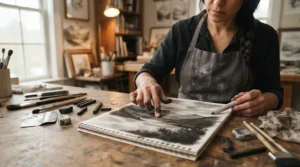
Problem → Solution Guide: Fixing Common Smudge Tool Headaches
Problem: your blends look streaky. Usually the stump is saturated or the pressure is uneven. Wipe the tip on scrap paper or re-point on sandpaper, then blend again with lighter, overlapping strokes.
Problem: black specks appear after blending. Loose charcoal particles are lodging in the paper’s tooth. Drawing guides suggest a kneaded eraser to lift them individually, and a lighter first layer prevents the issue.
Problem: highlights turn grey. You’ve dragged dark charcoal into light areas. Use a separate clean end of the stump for light values, as the Virtual Instructor’s guide recommends, and always blend from light towards dark.
Problem: the stump tip has gone flat or glazed. It’s clogged with pigment. Rub it on a sandpaper block, such as the one the Derwent Paper Stumps guidance recommends, or wipe it on a putty rubber as suggested for the Faber-Castell Paper Wiper Blending Stump.
Problem: you can’t reach small areas. Your stump is too fat. Switch to a tortillon from the Mont Marte Pastel and Charcoal Blenders (7 Piece), or sand a stump to a finer point.
None of these fixes costs more than a few pence, which is the real beauty of the stump. It forgives, provided you clean it.
Common Mistakes When Buying a Blending Stump for Charcoal Drawing
Buyers often trip over the same handful of pitfalls.
Buying only one size. A single stump forces you to compromise. Two or three sizes make a noticeable difference to speed and control.
Assuming tortillons and stumps are the same. They look similar, but they behave differently. Tortillons are single-ended and harder to clean, so heavy charcoal users often find stumps more economical.
Chasing a brand over a spec. A premium name doesn’t guarantee a better stump for your work. Check the size, the paper type and whether it can be re-pointed.
Ignoring sandpaper. Many sets omit it, then buyers wonder why their stumps die quickly. A cheap sandpaper block extends the life of every tool you own.
Overpaying for huge packs. Fifty identical stumps sound like a bargain until you realise you use three. A mixed set of six to ten is plenty for most artists.
Skipping UK availability checks. Some listings for overseas brands ship slowly or from abroad. Confirm the seller and delivery estimate before you buy.
Avoid these and you’ll dodge most of the frustration that puts beginners off charcoal.
Features That Actually Matter (And Those That Don’t)
What matters:
- Paper smoothness. It determines whether the tip glides or scratches.
- Re-pointable construction. If you can’t clean it, you’ll be rebuying constantly.
- Appropriate diameter. This sets your speed and precision.
- Double-ended design. It doubles the working life before cleaning.
What doesn’t:
- Fancy packaging. A tin looks nice but doesn’t change the blend.
- Huge piece counts. More isn’t better if half the sizes sit unused.
- Brand mystique. Editorial endorsements, such as ARTnews’s praise for Pro Art, are useful signals, but they shouldn’t override fit for your own work.
On paper, the difference between a good and mediocre stump comes down to materials and consistency. In daily use, it comes down to how clean you keep it. A well-maintained budget stump will outperform a neglected premium one every time.
Long-Term Cost & Maintenance
Stumps are cheap, but the economics are worth a glance, because maintenance habits change how many you’ll buy over a year.
| Approach | Typical Outlay | Longevity | Best For |
|---|---|---|---|
| Single premium stump pack (Caran d’Ache Blending Stump) | £3-£5 range | Long, with re-pointing | Regular users |
| Mixed beginner set (Mont Marte Pastel and Charcoal Blenders (7 Piece)) | Under £10 | Medium | Beginners |
| Bulk set (Art Alternatives Stumps & Tortillons Set) | Under £10 | Long if cleaned | Experimenters |
| Jumbo specialist (Creative Mark Jumbo Rice Paper Blending Stump) | Check current price | Long | Large-format work |
The takeaway is that cost per use is low across the board, so don’t agonise over a few pounds. A £5 stump that lasts months of weekly sessions works out at pennies per drawing. Your real recurring cost is charcoal and paper, not blenders.
Maintenance is simple. Re-point on sandpaper, use a putty rubber for light cleaning, keep stumps in a pencil case so tips don’t get crushed, and retire any that have gone soft or ragged. Work in a ventilated space and wipe down surfaces, since charcoal dust travels.
Frequently Asked Questions
❓ What size blending stump is best for charcoal shading?
❓ Can a paper stump damage my drawing paper?
❓ Is a stump better than a tortillon for charcoal?
❓ How often should I replace a blending stump?
❓ Where can I buy a blending stump for charcoal drawing in the UK?
Conclusion
A good blending stump for charcoal drawing is the cheapest way to make your work look more deliberate. The seven picks above cover every budget and style. The Caran d’Ache Blending Stump and Derwent Paper Stumps suit everyday blending, and the Faber-Castell Paper Wiper Blending Stump doubles as a gentle corrective tool. The Mont Marte Pastel and Charcoal Blenders (7 Piece) and Art Alternatives Stumps & Tortillons Set reward beginners and experimenters, and Pro Art Blending Stumps appeal to committed users who trust editorial reputation. For big skies and backdrops, the Creative Mark Jumbo Rice Paper Blending Stump is the specialist.
My honest advice is to start with a mixed set, learn which sizes you reach for, and then upgrade selectively. Keep your tips clean, work in thin layers, and let the stump finish the tone instead of fighting it. Master that, and your charcoal shading, tonal drawing and soft transitions will improve faster than any gadget could manage.
✨ Ready to blend like you mean it?
🎨 Check current prices on your favourite picks above, grab a sandpaper block while you’re at it, and give your next charcoal drawing the smooth, velvety finish it deserves!
Recommended for You
- Blending Brush For Pastel Art: 7 Best Picks For UK Artists (2026)
- Kneadable Eraser Vs Plastic Eraser: 7 Best Picks For Sketching (2026)
- Plastic Eraser For Graphite Sketching: 7 Flawless Picks (2026)
Disclaimer: This article contains affiliate links. As an Amazon Associate, I earn from qualifying purchases. If you purchase products through these links, we may earn a small commission at no additional cost to you.
✨ Found this helpful? Share it with your friends! 💬🤗
