In This Article
Every sketch has a moment of truth. The shading is nearly right, the jawline is nearly right, and then one stray line drags the whole thing sideways. What happens next depends on a humble white block that costs less than a coffee. Pick a good plastic eraser for graphite sketching and the mistake lifts away like it was never there. Pick a bad one and you get a grey halo, a rumpled patch of paper and a long, quiet sulk.
Most of us grew up calling the thing a “rubber”, and for decades the pink wedge on the pencil end did the job. Modern drawing is fussier. We work on thin sketchbook paper, we ink over pencil, and we expect line art to stay crisp. Vinyl and polymer erasers were built for that, as Wikipedia’s overview of erasers explains: they are softer and less abrasive than standard rubber, and graphite tends to leave with the crumbs rather than smearing across the page.
This guide covers seven real, widely stocked options: block erasers, a foam eraser and two precision click-style tools. Each is judged on its specifications and on what published tests and reviewers say. I can’t claim to have used them all, so you won’t find invented anecdotes here, only analysis you can check. Along the way we’ll cover a smudge-free eraser for pencil, a vinyl eraser for line art, graphite pencil drawing technique, clean erasing habits and line art correction.
Quick Comparison: Plastic Eraser for Graphite Sketching at a Glance
| Product | Format | Typical price range* | Best For |
|---|---|---|---|
| Staedtler Mars Plastic 526 50 | Sleeved block | Under £2 | All-round sketchbook work |
| Pentel Hi-Polymer | Block (small/medium) | Under £2 | Soft, deep, clean lifting |
| Tombow MONO Plastic | Sleeved block | Under £2 | Textured paper and daily use |
| Pilot Foam Eraser | Foam block | Under £3 | Fine lines on smooth paper |
| Faber-Castell 7081 N Vinyl Eraser | Block | Under £2 | Budget-friendly studio staple |
| Tombow MONO Zero | Refillable pen-style | Around £2-£5 | Detail work and line art |
| Pentel Clic Eraser | Click barrel | Around £2-£4 | Pocket-sized precision |
*Indicative ranges at the time of research. Prices vary by retailer and pack size, so check current price before buying.
Looking at the table, the block erasers cluster at the bottom of the price scale, so cost shouldn’t decide between them. What separates them is feel and format. Choose a block such as the Staedtler Mars Plastic 526 50 or Pentel Hi-Polymer for broad areas, and add a Tombow MONO Zero when you need surgical control. Most working artists end up owning one of each, and the pairing costs less than a sandwich.
💬 Just one click — help others make better buying decisions too!😊
Top 7 Plastic Eraser for Graphite Sketching Picks: Expert Analysis
1. Staedtler Mars Plastic 526 50 — the dependable benchmark
The Staedtler Mars Plastic 526 50 is the eraser other erasers get measured against. It is a slim white vinyl block in a cardboard sleeve, and it is made to lift graphite cleanly from paper, vellum and drafting film. Specialist retailer Cult Pens calls it the best plastic eraser around for simple pencil removal.
In practice, the firm block keeps edges crisp, so you can erase a straight highlight or tidy a border without rounding off the corners. The sleeve lets you peel back a fresh end as it wears. Based on the spec comparison, it suits anyone who wants predictable behaviour on ordinary sketchbook paper.
Published testing is broadly positive. In a well-known desk-blog rub-off comparison it performed above expectations on graphite and was runner-up on toothy paper. The same tester noted that newer foam erasers have since overtaken it on some surfaces.
Pros:
- ✅ Crisp edges for precise block erasing
- ✅ Widely stocked and easy to replace
- ✅ Handles graphite on paper and drafting film
Cons:
- ❌ Firmer than polymer rivals, so needs more pressure
- ❌ Overtaken by foam types in some tests
Price range: typically under £2, which makes it excellent value. Verdict: a safe first buy.

2. Pentel Hi-Polymer — soft, deep and famously clean
The Pentel Hi-Polymer wins fans for how little effort it takes. It is a soft white block, sold in small and medium sizes, that glides over graphite and lifts it in a few strokes. One review roundup describes it as leaving no smudges, dust or ghost markings. Another calls it probably the most popular vinyl eraser available and notes that it stays soft for its whole life.
That softness has a practical consequence: you can use a feather-light touch. That protects thin 80gsm sketchbook paper, which is why this pick suits beginners and heavy-handed shaders alike. A tester in the rub-off comparison also preferred the Japanese-market “Ain” Hi-Polymer to the Staedtler Mars Plastic 526 50 for cleaner erasing, though he admitted he doesn’t press hard.
Reviewers consistently describe it as gentle and efficient. I haven’t verified Amazon UK review counts, so treat the sentiment as aggregated from the independent sources above.
Pros:
- ✅ Very soft, so light pressure is enough
- ✅ Leaves little ghosting on lifted lines
- ✅ Stays supple through its working life
Cons:
- ❌ Softer block wears down faster
- ❌ Corners round off with heavy use
Price range: usually under £2 per block, with multipacks cheaper per piece. Verdict: arguably the best all-rounder here.
3. Tombow MONO Plastic — the cult favourite for everyday sketching
The Tombow MONO Plastic carries its blue, black and white sleeve like a badge of honour. It was a finalist in the rub-off comparison, did well on textured surfaces, and was sharp enough on lines to beat the Staedtler Mars Plastic 526 50 in an overtime round of one four-way pencil-blog test.
Its balance is the point. It is firm enough to keep a clean edge and gentle enough to protect paper. According to the pencil-blog write-up it is made in Vietnam, and commenters speak of it with remarkable loyalty. One says it has been their favourite for 30 years. Treat that as anecdotal, but the pattern is consistent.
On paper, this eraser suits anyone sketching on mixed surfaces. It copes with toothier cartridge paper where softer erasers can struggle.
Pros:
- ✅ Handles smooth and textured paper well
- ✅ Edge stays sharp for detail
- ✅ Strong long-term reputation among artists
Cons:
- ❌ Sleeve can loosen with repeated use
- ❌ Not as soft as polymer-style blocks
Price range: typically under £2. Verdict: superb everyday value.
4. Pilot Foam Eraser — the line-lifting specialist
The Pilot Foam Eraser looks like a different species. It is a Japanese-made foam block, and in side-by-side tests it keeps surprising people. In one four-way comparison on 80gsm paper with an HB graphite pencil, it came out best at erasing lines, with the Tombow MONO Plastic close behind.
The foam structure gives it a springy, almost cushioned feel. That helps on smooth paper, where you want a lightly sprung touch rather than a scrubby one. The desk-blog tester also found that foam erasers beat the Staedtler Mars Plastic 526 50 on coloured pencil over smooth paper, which is useful if your sketches mix media.
Reviewers describe it as gentle and clean, though foam can crumble faster than dense vinyl. Based on the spec comparison, it’s a strong second eraser for fine, light linework.
Pros:
- ✅ Top result for lifting fine lines in testing
- ✅ Cushioned feel protects thin paper
- ✅ Works on graphite and coloured pencil
Cons:
- ❌ Softer body crumbles quicker than vinyl
- ❌ Less crisp edge for hard geometry
Price range: roughly £1-£3. Verdict: worth adding for detail-led drawing.
5. Faber-Castell 7081 N Vinyl Eraser — a German-made studio staple
The Faber-Castell 7081 N Vinyl Eraser is the traditionalist of the group. It’s made in Germany, and it joined the four-way pencil-blog test using an HB Staedtler Mars Lumograph 100 on Rhodia paper. In that match the foam and Tombow MONO Plastic edged ahead on line erasing, so it isn’t the headline winner. It is, however, a proper vinyl block from a long-established maker.
What should you read into that? Mostly that the differences between good vinyl blocks are small. If you like Faber-Castell’s studio pencils and want a matching eraser, this makes sense, especially if it’s the cheapest block on offer at the time.
I couldn’t verify detailed Amazon UK review data for this model, so I won’t pretend otherwise. The independent test shows it performs credibly rather than spectacularly.
Pros:
- ✅ Proper vinyl block from an established maker
- ✅ Dependable on ordinary graphite grades
- ✅ Good fit for general studio use
Cons:
- ❌ Edged out by foam and MONO in testing
- ❌ Less sourced feedback than rivals
Price range: typically under £2. Verdict: solid, budget-friendly, rarely disappointing.
6. Tombow MONO Zero — precision for line art
The Tombow MONO Zero is a refillable pen-style eraser that earns its place the moment detail matters. Cult Pens stocks it in fine and broad versions, and the tips come as a small round point or a slim rectangle, roughly 2.3mm round and 2.5×5mm rectangular. Both are narrow enough to pick one hair-width highlight out of a dense shaded patch.
The refill system is its secret value. Instead of throwing the whole tool away, you swap the core, so the body becomes a long-term kit item. The independent reviewer behind one 2026 buying list rates it good for sketching, which fits its role: it’s a scalpel, not a sledgehammer.
Because the tip is small, large-area work is tedious. Pair it with a block eraser for the heavy lifting. Reviewers consistently praise the control; the main grumble is how quickly the thin core wears down.
Pros:
- ✅ Pinpoint tip for highlights and edges
- ✅ Refillable body reduces waste
- ✅ Ideal for tidy line art correction
Cons:
- ❌ Core wears quickly with heavy use
- ❌ Poor choice for large areas
Price range: around £2-£5 including refills sold separately. Verdict: essential second tool.
7. Pentel Clic Eraser — a pocket-sized precision click
The Pentel Clic Eraser is built like a pencil, with a retractable cylinder of soft vinyl inside the barrel. Wikipedia notes this click-style design typically uses soft vinyl, which suits graphite. That matters because the exposed tip stays clean in a pencil case instead of picking up grime from the bottom of your bag.
Pentel also lists a Clic Professional variant at Cult Pens, which signals that the format is taken seriously by artists. One review roundup names the Clic as its pick for artists. The practical gain is portability: no sleeve to peel, no block to lose, and a tip you can sharpen against scrap paper for fine work.
Compared with the Tombow MONO Zero, it feels a touch broader and less delicate. That’s a plus for medium-sized cleaning jobs and a minus for pinprick highlights.
Pros:
- ✅ Click mechanism keeps the tip clean
- ✅ Slim, pencil-case-friendly body
- ✅ Soft vinyl lifts graphite gently
Cons:
- ❌ Tip slightly broader than ultra-fine rivals
- ❌ Refill cores are an extra cost
Price range: typically around £2-£4. Verdict: great for sketching on the move.
Top 7 Specs and Sentiment Compared
| Product | Material | Standout trait | Sourced reviewer sentiment | Price range* | Best For |
|---|---|---|---|---|---|
| Staedtler Mars Plastic 526 50 | Vinyl | Crisp edges | Positive; overtaken by foam in one test | Under £2 | General sketchbooks |
| Pentel Hi-Polymer | Soft polymer | Very gentle | Strongly positive | Under £2 | Beginners, light touch |
| Tombow MONO Plastic | Vinyl | Balanced feel | Strongly positive | Under £2 | Mixed paper types |
| Pilot Foam Eraser | Foam | Fine-line lifting | Top for lines in one test | £1-£3 | Smooth paper, detail |
| Faber-Castell 7081 N Vinyl Eraser | Vinyl | German-made | Credible, not standout | Under £2 | Budget studio use |
| Tombow MONO Zero | Refillable vinyl | Pinpoint tip | Positive for sketching | £2-£5 | Line art precision |
| Pentel Clic Eraser | Soft vinyl | Click barrel | Positive for artists | £2-£4 | Portable precision |
*Indicative only; check current price.
The table shows a clear split: the top four are general-purpose erasers, while the last two are precision tools. If you can only afford one, the Pentel Hi-Polymer or Tombow MONO Plastic is the safest bet. Buy a pen-style option such as the Tombow MONO Zero second, once you know where your drawing habits demand more finesse.

What Is a Plastic Eraser for Graphite Sketching?
A plastic eraser for graphite sketching is a soft vinyl or polymer eraser designed to lift pencil marks from paper without abrasion. Instead of smearing graphite across the page, it pulls the pigment into small crumbs that you brush away. That makes it cleaner than standard rubber and gentler on delicate sketchbook paper.
The mechanics are simple. A pencil leaves a thin layer of graphite sitting on top of paper fibres, and an eraser works by friction, as McGill’s Office for Science and Society explains. The material’s job is to grab that graphite and let it go in crumbs. Vinyl does this well because it stays relatively gentle on the paper surface.
Plastic erasers aren’t magic. Hard novelty erasers made from cheap, highly plasticised vinyl tend to smear heavy marks rather than lift them, so shape and price aren’t a guide. Brand and material are. Stick to named drawing erasers like those above, and the “plastic” in the name stays a compliment.
How to Choose a Plastic Eraser for Graphite Sketching
- Match the eraser to your medium. Graphite on paper is the home turf for vinyl and polymer. Coloured pencil often needs foam or a sand-based option instead.
- Check paper weight and texture. Thin sketchbook paper rewards soft erasers such as the Pentel Hi-Polymer. Toothier paper copes better with firmer types like the Tombow MONO Plastic.
- Decide block or precision. Blocks cover large areas, while pen-style tools such as the Tombow MONO Zero rescue details.
- Consider edge sharpness. A firm block such as the Staedtler Mars Plastic 526 50 keeps square corners for tidy erasing.
- Think about refills. A refillable body saves money if you erase fine detail daily.
- Look at portability. Click erasers like the Pentel Clic Eraser live happily in a pencil case.
- Set a budget. Under £5 buys excellent options, so overspending rarely helps.
Based on the spec comparison, steps two and three decide the outcome for most people.
Smudge-Free Eraser for Pencil: Why Some Smear and Others Don’t
Smudging happens when an eraser pushes graphite around instead of removing it. A hard, cheap or dirty eraser burnishes the pigment into the paper fibres, leaving a pale grey cloud that no amount of rubbing will shift. A good smudge-free eraser for pencil does the opposite: it holds the graphite in tiny crumbs that fall away.
Three things control the outcome. First, material: soft vinyl and polymer shed graphite cleanly, which is why the Pentel Hi-Polymer has such a strong reputation. Second, cleanliness: an eraser coated in old graphite acts like a pencil, so wipe or trim the working face often. Third, pressure: heavy force grinds graphite into the page.
What the packaging won’t tell you, but reviewers note, is that a smudge-free eraser for pencil can still smear on glossy or heavily sized paper. In those cases, lighter pressure and a fresh corner of a Staedtler Mars Plastic 526 50 or a gentle Pilot Foam Eraser are your best defences. Treat “smudge-free” as a combination of tool and technique rather than a guarantee on the label.
Vinyl Eraser for Line Art: Precision Tools Compared
Line art punishes sloppy erasing. When you’re correcting a clean outline, a block eraser is rarely enough, because it takes the neighbouring lines with it. A vinyl eraser for line art needs a small, controllable tip, and the most capable choices come from the precision end of this list.
The Tombow MONO Zero is the standout. Its small round or rectangular tip lets you remove a single stray stroke and leave the line next to it untouched. The Pentel Clic Eraser is a sensible step up in tip size, with the tidy convenience of a click barrel. For lightly sketched construction lines beneath finished ink, a corner of a Pilot Foam Eraser is surprisingly effective, since the foam cushions the paper.
Here’s the practical rule: always erase toward the edge of your artwork, not into it. Place a clean sheet or a plastic stencil beside the line you’re correcting. That way the vinyl eraser for line art only touches what you intend. If you prefer to erase graphite before inking, wait until the ink is fully dry. Smudged ink is a different problem altogether.
Graphite Pencil Drawing: Matching Grades and Papers to Erasers
Graphite pencil drawing covers a surprisingly wide range of materials, and the eraser has to adapt. Hard grades such as 2H leave a light, shallow line that almost any plastic eraser lifts easily. Soft grades such as 6B sink deeper into paper fibres, and they respond best to a soft polymer such as the Pentel Hi-Polymer.
Paper matters just as much. Smooth cartridge and hot-pressed paper suit the Pilot Foam Eraser, which lifts fine lines without scuffing. Textured watercolour or toned paper benefits from the sturdier Tombow MONO Plastic. If you often work in a mixed kit, owning one soft block and one firm block covers most situations.
One more detail: graphite itself varies. A clay-bound pencil and a polymer-bound pencil behave differently under an eraser, and one tester speculated that the Magic Rub brand might suit polymer leads better. The takeaway is straightforward. If your favourite pencil resists a given eraser, don’t blame your technique first. Try a different eraser on a scrap of the same paper. It costs pennies and saves entire drawings.
Plastic Eraser vs Kneaded vs Rubber vs Gum: Which Belongs in Your Kit?
| Eraser type | Strength | Weakness | Example | Best For |
|---|---|---|---|---|
| Plastic/vinyl | Clean, precise lifting | Not for heavy tone reduction | Pentel Hi-Polymer | Corrections and clean-up |
| Kneaded | Lifts tone gently, no crumbs | Imprecise on fine lines | Staedtler Karat putty type | Softening shading |
| Standard rubber | Cheap, familiar | Can smear and abrade | Pink wedge erasers | Rough scribbles |
| Art gum | Gentle on soft paper | Messy residue | Gum blocks | Large light areas |
| Sand/abrasive | Removes ink and stubborn marks | Rough on paper | Tombow MONO Sand | Ink, coloured pencil |
Looking at the comparison, plastic erasers win on cleanliness and accuracy, which is exactly what sketching needs. Kneaded erasers beat them for softening tone, so the two work as a pair rather than rivals. Standard rubber and gum have their uses, but both leave more residue and mess. If you can only buy one, the Tombow MONO Plastic or Pentel Hi-Polymer is the more versatile pick.
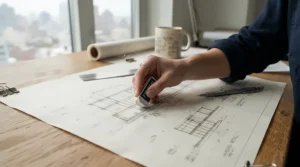
Clean Erasing: A Practical Usage Guide for the First 30 Days
Clean erasing is a habit, not a purchase. Follow this simple routine and any eraser on this list performs better.
Week one: set up. Trim any stained corner of your Staedtler Mars Plastic 526 50 or sleeve-style block with a craft knife, giving you a fresh, square working edge. Keep a scrap of the same paper beside you for test erasures.
Week two: build habits. Use light, short strokes in one direction. Back-and-forth scrubbing generates heat and friction that can burnish graphite into the page. Lift stubborn marks with repeated gentle passes rather than one hard push.
Week three: manage the crumbs. Sweep crumbs away with a soft brush or the side of your hand held clear of the drawing. Smearing crumbs with a palm is the quickest route back to a grey halo.
Week four: maintain. Wipe a dirty eraser on a clean sheet of scrap paper until it stops leaving grey streaks. Store blocks in their sleeves, and keep click types capped or retracted.
Common first-month mistakes include pressing too hard, ignoring a dirty eraser, and using a precision tool for large areas. Avoid those three and your clean erasing will improve noticeably.
Line Art Correction: Fixing Mistakes Without Redrawing
Line art correction is where small tools earn their keep. These are the five most common problems and how to solve each.
Problem 1: a stray line beside a good one. Use a Tombow MONO Zero with a stencil or clean paper strip as a guard. The narrow tip removes only the offending stroke.
Problem 2: faint ghosting after erasing. Switch to a softer eraser such as the Pentel Hi-Polymer and use lighter pressure. Heavy pressure embeds graphite.
Problem 3: eraser crumbs dragging across fresh ink. Wait until the ink is fully dry, then brush the crumbs away rather than wiping them.
Problem 4: paper surface fluffing up. You’re pressing too hard. A Pilot Foam Eraser cushions the paper more kindly and is better suited to delicate surfaces.
Problem 5: erasing construction lines inside a finished drawing. Use the corner of a Pentel Clic Eraser and work in tiny dabs. The slim barrel gives better visibility than a bulky block.
If a mistake survives all of that, accept it and fold it into the drawing. Some of the best sketches are corrections that became features.
Real-World Scenarios: Matching an Eraser to Your Drawing Style
The student with a tight budget. Say you’re sketching life drawings in an A4 sketchbook, three evenings a week. A Pentel Hi-Polymer block plus a Faber-Castell 7081 N Vinyl Eraser as a spare keeps costs low, and both handle HB to 4B graphite. Total spend: well under £5.
The illustrator inking over pencils. If you finish pieces in ink on smooth Bristol-style board, the Tombow MONO Zero gives you the precision, and the Pilot Foam Eraser clears light construction lines without scuffing the surface. Expect to replace refills monthly with daily use.
The commuter sketcher. Drawing on trains with a pocket sketchbook calls for portability. A Pentel Clic Eraser slips into a pencil case, and a Tombow MONO Plastic in a jacket pocket covers larger corrections.
The all-round hobbyist. If you’re unsure what you’ll draw next month, the Staedtler Mars Plastic 526 50 is the reliable generalist. It copes with most papers and grades, and it’s available almost everywhere.
Each profile follows the same logic: pick for paper, grade and portability, then add a precision tool once your drawings demand it.
Long-Term Cost and Maintenance of a Plastic Eraser for Graphite Sketching
A plastic eraser for graphite sketching is one of the cheapest long-term kit items you’ll ever own. A block costing under £2 can last months of regular sketching, so the cost per session is a rounding error. That makes ROI mostly about the time and paper you save, not the pennies you spend.
Precision tools have a different cost profile. The Tombow MONO Zero and Pentel Clic Eraser need refill cores, so the body is a one-off purchase and the cores a recurring one. Even then, annual spend for a regular user stays modest, and you avoid discarding a whole tool each time.
Maintenance is straightforward. Keep blocks clean, store them away from heat, and never leave a vinyl eraser pressed against plastic items, since plasticisers can migrate between materials. Replace an eraser when it becomes hard, glossy or starts to streak, because a worn eraser smudges more than it lifts. One small habit, trimming a dirty corner every few weeks, can nearly double a block’s useful life.
Safety and Materials: What’s Actually in a Vinyl Eraser?
Many “plastic” erasers are made from polyvinyl chloride, blended with plasticisers to keep them soft. That’s why a quality vinyl block feels pliable and why very cheap novelty versions can feel hard or sticky. Vinyl is a different material from natural rubber latex, which also means it avoids the latex-allergy issue that sometimes affects rubber users.
In the UK and EU, stationery sold to children is expected to meet product safety rules, and reputable brands carry the relevant markings. If you’re buying for a child or a classroom, choose named brands such as Staedtler or Pentel over unbranded novelty erasers, and look for a CE or UKCA mark on the packaging.
Some retailers describe particular erasers as phthalate-free, PVC-free or latex-free. These claims vary by product and region, so check the maker’s own wording rather than assuming. Because material formulations change, I can’t confirm every claim for every product listed here. Always read the packaging on the version you actually buy.
FAQ
❓ Where can I buy a smudge-free eraser for pencil in the UK?
❓ How much should I spend on a vinyl eraser for line art?
❓ Can a plastic eraser remove ink as well as pencil?
❓ Will a plastic eraser tear thin sketchbook paper?
❓ Which plastic eraser for graphite sketching suits beginners best?
Conclusion
The best plastic eraser for graphite sketching is the one that matches your paper, your pencil grades and the kind of corrections you make most. For most people, that means starting with a soft block like the Pentel Hi-Polymer or a balanced all-rounder such as the Tombow MONO Plastic. Add a Tombow MONO Zero or Pentel Clic Eraser once line art correction becomes part of your routine.
Remember what the evidence actually says. Independent tests suggest that foam and polymer options such as the Pilot Foam Eraser can outperform the traditional Staedtler Mars Plastic 526 50 on some surfaces, though that classic remains a superb, widely stocked benchmark. The Faber-Castell 7081 N Vinyl Eraser is a credible budget alternative. None of these costs much, so the real investment is learning technique: light pressure, clean edges and patient clean erasing.
Pair that with sensible habits from this guide, and graphite pencil drawing becomes far less stressful. Mistakes become small, fixable events instead of artistic disasters.
✨ Ready to upgrade your sketching kit?
🛒 Click any highlighted product above to check current pricing and availability on Amazon UK, and give your next drawing the clean, crisp finish it deserves!
Recommended for You
- Kneadable Eraser For Charcoal Drawing: 7 Ultimate Picks (2026)
- Electric Eraser For Artists: 7 Best Picks For Flawless Lines (2026)
- Erasers Under £10 for Artists: 7 Best Picks, No Smudges (2026)
Disclaimer: This article contains affiliate links. As an Amazon Associate, I earn from qualifying purchases. If you purchase products through these links, we may earn a small commission at no additional cost to you.
✨ Found this helpful? Share it with your friends! 💬🤗
