

In This Article
Heavy body acrylics for impasto beginners are stiff, thick-bodied acrylic paints that hold their shape when pushed around with a brush or palette knife, leaving raised ridges instead of flat, self-levelling strokes. A buttery consistency and a generous pigment load do the heavy lifting, so texture looks bold, colours stay strong and happy accidents are easy to scrape back.
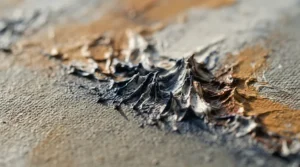
Tate’s art-term entry on impasto describes it as an area of thick paint or texture, and it points to Frank Auerbach among the painters who pushed the idea to extremes. You don’t need to go that far. A few confident ridges of paint can make a landscape look carved rather than painted.
Here’s the catch. The shelf is crowded with tubes that all say “acrylic” and then behave like double cream, cake icing or watery gravy. So I’ve compared seven real, UK-available options on the things that decide impasto success: viscosity, pigment strength, tube size and cost per 100ml. The sources are maker specifications, UK retailer listings and aggregated review sentiment. I haven’t painted with these tubes for this article, and I won’t pretend otherwise. What you get is spec-driven analysis, honest caveats and practical guidance.
Two of the seven are medium-viscosity “bridge” paints, and I’ve flagged them clearly. Prices are ranges only, so check current price and availability on Amazon UK before you buy.
Quick Comparison: 7 Heavy Body Acrylics for Impasto Beginners at a Glance
Here’s the short version before the deep dive.
| Product | Tube size | Viscosity (maker/retailer wording) | Price range per tube | Best For |
|---|---|---|---|---|
| Liquitex Professional Heavy Body | 59ml | Heavy body | Around £7–£11 | Crisp peaks, serious learners |
| Golden Heavy Body | 59ml | Heavy body | From around £11 | Pigment purists, long-term painters |
| Daler-Rowney Cryla Heavy Body | 75ml | Heavy body | Around £7–£11 | Mid-range balance, bigger tube |
| Winsor & Newton Professional Acrylic | 60ml | Thick (listed as heavy or medium) | Around £7–£11 | Creamy blending, smooth knife work |
| Daler-Rowney System3 Heavy Body | 59ml | Heavy body | Around £3–£6 | Tight budgets, practice sessions |
| Liquitex Basics | 118ml | Medium viscosity | Around £4–£6 | Large-tube underpainting |
| Amsterdam Standard Series | 120ml | Medium body, thick | Around £4–£7 | High-volume coverage |
Looking at the comparison above, Daler-Rowney System3 Heavy Body is the cheapest way into genuinely stiff paint. Liquitex Professional Heavy Body and Golden Heavy Body cost more per tube but reward you with the strongest peaks and the richest tinting. Daler-Rowney Cryla Heavy Body sits in the middle with a roomier 75ml tube. Liquitex Basics and Amsterdam Standard Series give you far more paint per pound, but expect softer ridges unless you stiffen them with gel.
💬 Just one click — help others make better buying decisions too!😊
Top 7 Heavy Body Acrylics for Impasto Beginners: Expert Analysis
Each entry below turns the spec sheet into real-world meaning: what the numbers do on the canvas, who each paint suits, and where it will let you down.
1. Liquitex Professional Heavy Body — the benchmark for crisp peaks
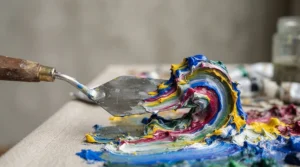
The headline trait is peak retention. Drag a knife through a dollop and the ridge stands up instead of slumping back into the puddle.
Liquitex sells it in 59ml tubes across more than 100 colours, with 138ml tubes and 473ml or 946ml pots for selected shades. That range lets you buy small tubes for coloured accents and one big pot of white, which is where most of your paint will go. Stockists note the line dates back to 1963 and dries to a flexible satin film. Flexibility is the quiet hero of impasto, because rigid thick paint is what cracks.
Based on the spec comparison, this is the sensible pick for a beginner who wants to know what proper heavy body feels like. It becomes the yardstick for judging every other tube. The trade-off is cost per millilitre, which sits above the student lines.
On review sentiment, one UK retailer’s page showed 4.9 out of 5 across 96 reviews at the time of research. Consistency and colour strength were the recurring themes. Treat that as a retailer’s own review pool, not independent testing.
Pros:
- ✅ Holds sharp knife ridges and brush ridges
- ✅ Flexible when dry, which helps thick films resist cracking
- ✅ Huge colour range plus larger tubes and pots
Cons:
- ❌ Costs more per ml than student-grade lines
- ❌ Small 59ml tubes empty quickly on impasto work
Price: around £7–£11 per 59ml tube. It’s good value if you want a reliable benchmark.
2. Golden Heavy Body — the pigment purist’s choice
Golden’s selling point is restraint. The maker states that no fillers, extenders, opacifiers, toners or dyes are added.
Heavy Body was the first product Golden ever released, back in 1980. Its technical notes describe every colour as thixotropic: stiff in the tube, looser under pressure, then firm again once you stop pushing. That is exactly the behaviour that keeps knife ridges standing. In the UK the full range comes in 59ml tubes, with larger sizes for selected colours.
The spec sheet also holds a quiet warning for beginners. Each colour is formulated around its pigment. Colours that tolerate a higher pigment load dry opaque and matte, while more reactive pigments dry glossier and more transparent. Your finished impasto may therefore show patches of different sheen. That’s normal, not a fault.
Honestly, this is a “grow into it” paint. Painters who know they’ll keep going get the most from it. Casual experimenters may find the price a hurdle. Review evidence is thin: a UK retailer’s page showed roughly 30 reviews, too few for firm star-rating conclusions. Several 2026 buying roundups call it the professional benchmark, but those are opinions, not tests.
Pros:
- ✅ Pure-pigment approach with no added fillers
- ✅ Thixotropic behaviour keeps ridges upright
- ✅ Mixes with a wide family of mediums and gels
Cons:
- ❌ Premium pricing that climbs with pigment series
- ❌ Sheen varies from colour to colour
Price: from around £11 per 59ml tube, rising for specialist pigments. It’s premium value rather than entry-level value.
3. Daler-Rowney Cryla Heavy Body — British-made thick paint with a long pedigree
The standout feature is provenance. Daler-Rowney says it makes Cryla in England, in Bracknell, and calls it the first acrylic colour launched in Europe.
Tubes hold 75ml, about 27% more paint than a 59ml tube. The range offers 87 colours, a uniform eggshell finish and minimal wet-to-dry colour shift, according to the maker’s notes. For impasto, a uniform finish means thick passages read as one surface rather than a patchwork of gloss and matt. Minimal colour shift means the ridge you mixed wet is the ridge you get dry. Stockist notes also warn that Cryla can’t be re-wetted once dry, so wash brushes promptly.
On paper this is the balanced choice. It’s heavy body and made in Britain, and per-ml pricing sits below Liquitex Professional Heavy Body. It also suits thick acrylic paint for textured canvas work on panels and board, which stockists recommend alongside canvas.
Review evidence is limited. One stockist listing showed a single five-star review when I checked, so the verified sentiment pool is small. Maker and stockist descriptions agree on its thick, buttery character.
Pros:
- ✅ Bigger 75ml tube than most rivals
- ✅ Even eggshell finish across the range
- ✅ Heavy body that retains brush and knife marks
Cons:
- ❌ Small verified review pool
- ❌ Dried paint can’t be re-wetted
Price: around £7–£11 per 75ml tube. This is arguably the best value among the true heavy body options.
4. Winsor & Newton Professional Acrylic — creamy, stringless handling
The pitch here is smoothness. Retailer descriptions highlight a thick, creamy consistency with no stringiness, meaning paint that doesn’t pull into threads when you lift the knife.
It’s sold in 60ml and 200ml tubes, in roughly 74 to 77 colours, with a satin finish. One retailer cites a working time of around 20–30 minutes on the palette, which varies with thickness. Here’s a wrinkle worth knowing: some stockists label it heavy body, while Cass Art’s listing classes it as medium body. Read that as “thick, but probably at the softer end of heavy”. Expect softer ridges than Daler-Rowney Cryla Heavy Body or Golden Heavy Body, and dry brush and layered knife work rather than towering peaks.
Who is it for? Beginners who value smooth blending and gentle impasto brush marks over sculptural relief. One UK retailer showed 150-plus reviews, a sizeable pool, with comments leaning towards rich, creamy colour. Again, that’s retailer feedback, not lab testing.
Pros:
- ✅ Smooth, creamy, stringless handling
- ✅ 200ml tubes available for big jobs
- ✅ Large UK review pool
Cons:
- ❌ Retailers disagree on heavy versus medium body
- ❌ Premium colours climb in price
Price: around £7–£11 per 60ml tube for standard colours. Good value if you want creaminess over stiffness.
5. Daler-Rowney System3 Heavy Body — the cheapest true heavy body
This one is the budget route to genuinely stiff paint. Daler-Rowney describes the line as reformulated and “powered by Cryla”, with more pigment than before.
You get 59ml tubes in 27 colours, plus 500ml pots in five. Retailers describe a uniform eggshell finish, and the paint is made in England. Twenty-seven colours is plenty for learning to mix from primaries, and it keeps you away from decision paralysis.
One trap catches beginners constantly. System3 Original is a medium-viscosity paint sold under almost the same name, in 59ml and 150ml tubes. Check the label says Heavy Body before you click anything.
Cass Art lists it for students and hobbyists, which is a fair reading. For learning how thick paint behaves, cheap is a feature, because you’ll waste paint while learning. Heavy-body-specific reviews were scarce when I looked. Broader System3 reviews mostly praise value, but that’s feedback on the wider range.
Pros:
- ✅ Lowest entry price for real heavy body
- ✅ Made in England with Cryla-derived formulation
- ✅ Starter sets of six tubes are easy to find
Cons:
- ❌ Only 27 colours
- ❌ Heavy-body-specific reviews are scarce
Price: around £3–£6 per 59ml tube. This is the best value for low-risk practice.
6. Liquitex Basics — the budget bridge with big tubes
Size is the standout. You get 118ml per tube, double the volume of most heavy body competitors, for a student-friendly price.
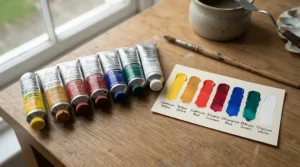
The range offers 72 colours. UK retailers list it as medium viscosity with a buttery feel, and Liquitex says it uses the same fine-art pigment formulation as the Professional line but with a lighter load. It also mixes with Liquitex Professional paints and mediums. In practice that means softer peaks, and colours that tint a little less aggressively when you add white.
The smart workaround is a heavy gel. Mix some into Liquitex Basics to stiffen it for taller ridges. Liquitex’s own Basics leaflet lists a Gloss Heavy Gel among its mediums. That turns a medium paint into a workable impasto tool for a few pounds extra.
Reviewers on international retail listings say much the same: a thick, creamy texture and good pigments, but lower concentration than heavy body. That squares with Liquitex’s own description.
Pros:
- ✅ Large 118ml tubes at student prices
- ✅ Intermixable with Liquitex Professional paints
- ✅ Gel can stiffen it for taller peaks
Cons:
- ❌ Medium viscosity, so ridges soften
- ❌ Lighter pigment load than professional lines
Price: around £4–£6 per 118ml tube. Smart value for underpainting and bulk coverage.
7. Amsterdam Standard Series — the biggest tube, thick but softer
The headline is volume: 120ml tubes, with 250ml tubes and larger bottles also available in the range.
Royal Talens makes it in the Netherlands from a 100% acrylic resin binder. The range runs to around 70 core colours plus metallics. UK stockists list it as medium body with a thick, creamy feel and a satin finish, and dosing nozzles are sold for precise lines. That thickness suits loaded brushwork and dry-brush texture. It won’t give you sculptural ridges without help from a gel.
Think of Amsterdam Standard Series as the workhorse for covering large thick acrylic paint for textured canvas work areas cheaply. Then add a heavy body paint such as System3 Heavy Body or Cryla Heavy Body for the final raised passages. Reviewers on international listings praise pigment richness and consistent colour. I couldn’t verify a UK-specific review pool.
Pros:
- ✅ Largest tube volume in this list
- ✅ Wide colour range with metallics
- ✅ Thick, creamy feel for loaded strokes
Cons:
- ❌ Medium body, so peaks need gel support
- ❌ No verified UK review pool
Price: around £4–£7 per 120ml tube. Good value for volume, not for peak retention.
Here is the full spec-and-evidence comparison.
| Product | Approx. cost per 100ml | Finish | Review evidence found | Best For |
|---|---|---|---|---|
| Liquitex Professional Heavy Body | Around £12–£19 | Satin | 4.9/5 across 96 reviews (one UK retailer) | New painters wanting a benchmark |
| Golden Heavy Body | From around £19 | Varies by pigment | About 30 reviews (one UK retailer) | Pigment-focused long-term painters |
| Daler-Rowney Cryla Heavy Body | Around £9–£15 | Eggshell | Small pool, limited | Value-minded beginners wanting stiff paint |
| Winsor & Newton Professional Acrylic | Around £12–£18 | Satin | 150+ reviews (one UK retailer) | Smooth, creamy handling |
| Daler-Rowney System3 Heavy Body | Around £5–£10 | Eggshell | Heavy-body-specific reviews scarce | Practice and tight budgets |
| Liquitex Basics | Around £3–£5 | Satin | International listings only | Underpainting with gel |
| Amsterdam Standard Series | Around £3–£6 | Satin | International listings only | Bulk coverage |
Looking at the per-100ml column, the real price gap is between the three heavy body professionals and the two large-tube student lines, not within each group. Daler-Rowney Cryla Heavy Body and Daler-Rowney System3 Heavy Body are the pragmatic middle ground, because they give you stiff paint without Golden-level pricing. If review volume matters to you, Winsor & Newton Professional Acrylic and Liquitex Professional Heavy Body have the strongest evidence behind them.
✨ Don’t Miss These Exclusive Deals!
🔍 Take your first textured painting to the next level with these carefully selected paints. Click on any highlighted product name to check current pricing and availability. A couple of sturdy tubes now will help you create the bold, ridged surfaces you’ve been admiring in galleries!
How to Choose Heavy Body Acrylics for Impasto Beginners
The quickest way to choose heavy body acrylics for impasto beginners is to buy by viscosity label first, then pigment strength, then price. Here’s the sequence I’d follow.
- Read the viscosity, not the brand. Many ranges include several body types, and System3 Original and System3 Heavy Body look nearly identical on a shelf.
- Check the pigment load claims. Prefer lines that explain their pigments and avoid vague “hue” colours with no colour index codes when you want maximum strength.
- Judge peak retention. If you can, squeeze a dab onto a palette and lift it with a knife. A good heavy body paint holds a clean peak without sagging.
- Match tube size to usage. Impasto burns paint, so a 59ml tube of white disappears fast. Consider larger tubes for white and smaller ones for accent colours.
- Start with a limited palette. White, a warm and cool primary of each colour, and one earth colour teaches mixing faster than twenty tubes ever will.
- Budget for a heavy gel. It stretches expensive paint and stiffens softer student paints, which makes it the cheapest upgrade in impasto.
If you’re torn between two options, choose the one with the larger tube, because beginners waste paint while learning. That’s not a judgement, just a fact of practice.

Pigment Load: Why It Decides Whether Your Impasto Looks Rich or Chalky
Pigment load is simply how much pigment sits in the paint relative to the binder. It matters more in impasto than in thin painting, because thick passages show off colour depth and opacity directly.
Golden’s own heavy body technical notes explain that Heavy Body colours are formulated differently depending on the pigment. Colours that tolerate a higher pigment load dry to a more opaque, matte finish. It’s a useful reminder that “high pigment load” isn’t one single setting. It varies colour by colour, even within one brand.
What does this mean in practice? A lighter pigment load, as with Liquitex Basics, means colour weakens faster when you mix in white. You need more paint for the same intensity. A higher load, as with Liquitex Professional Heavy Body, keeps mixes alive for longer, so each tube goes further despite the higher sticker price.
Beginners also meet the word “hue”. A cadmium yellow hue, as in System3 Heavy Body starter sets, is a formulated substitute for a costly pigment. It’s perfectly usable, but it behaves differently from the original. Here’s a quick test: mix equal parts of your colour and titanium white on a palette. If the result looks chalky or pastel immediately, the pigment load is probably light. If it stays saturated and creamy, you’ve found a strong tube.
Buttery Consistency: What It Means in Practice (and How to Test It)
Buttery consistency is the marketing phrase on nearly every heavy body tube, and it does describe something real: a smooth, thick paint that moves under pressure but doesn’t flow on its own. Retailers liken Liquitex’s version to butter left out at room temperature. That’s a good mental image: spreadable, but still holding a ridge.
Three behaviours define a genuinely buttery paint.
- It stands up. Golden’s notes say Heavy Body paints retain brush strokes and palette-knife marks.
- It doesn’t string. Winsor & Newton Professional Acrylic is promoted for having no stringiness, so the paint doesn’t pull away in threads.
- It’s smooth, not gritty. Gritty paint catches in the brush and spoils clean ridges.
The test is simple. Scoop some onto a palette knife and flip it. The paint should cling, then release cleanly. Temperature matters too. A cold studio stiffens paint, while a hot room softens it and shortens working time.
One warning: don’t thin heavy body paint with water to “loosen it up”. That wrecks the very buttery consistency you paid for. If you need it softer, use a fluid medium. Golden notes that its fluid mediums can thin Heavy Body.
Thick Acrylic Paint for Textured Canvas Work: Surfaces, Tools and Setup
Thick acrylic paint for textured canvas work needs a surface that can carry the weight. Ordinary stretched canvas handles moderate texture, but heavier loads can make thin canvas flex. Daler-Rowney Cryla Heavy Body stockist notes recommend wooden panels, art board or canvas, and that’s sensible advice. Deep-edge canvas or a primed panel is a safer bet when you want serious relief.
Priming matters too. Two coats of gesso give thick acrylic paint for textured canvas work a consistent tooth to grip. Without it, heavy ridges can look uneven where paint absorbs differently.
For tools, Liquitex lists synthetic brushes, hog brushes and palette knives for its heavy body range. Here’s how each behaves.
- Hog brushes are stiff and hold a load, which gives pronounced impasto brush marks.
- Synthetic brushes are springier and good for controlled dabs.
- Palette knives deliver flat planes and sharp ridges, and they’re the fastest route to a distinctly textured look.
Set up a palette you can wipe clean, such as a tear-off pad or a sheet of glass. Keep the paint area close, because thick paint dries on your tools surprisingly fast. Tilt the easel slightly forward. You’re loading paint by weight, and gravity is part of your technique.
Impasto Brush Marks: A First-30-Days Practice Guide
Impasto brush marks are learnable in a month if you practise them deliberately rather than hoping they’ll happen by accident.
Week 1: load and drag. Fill a stiff brush with paint and drag it across a primed board without pressing hard. Notice how the bristles leave parallel ridges. Repeat in several directions.
Week 2: stab and lift. Press the brush down and pull away to leave a peak. Vary the pressure and brush size. This is the stroke that makes foliage, waves and clouds feel physical.
Week 3: introduce the knife. Spread paint flat, then drag the edge to create ridges. Keep the knife clean between strokes, because dried paint on the blade scratches the surface.
Week 4: layer. Lay down a flat colour, let it dry, then add raised accents on top. This teaches you how much texture you can add without muddying the colours beneath.
Mistakes to avoid in the first 30 days: overworking a stroke until it flattens, scrubbing wet paint, and buying twenty colours instead of six. Also wash brushes promptly. Some heavy body paints, such as Cryla, can’t be re-wetted once dry.
Heavy Body Acrylic Colours for Beginners: Three Starter Palettes for Three Budgets
Heavy body acrylic colours for beginners work best when you start small. Here are three realistic profiles.
The student on a shoestring. A six-tube Daler-Rowney System3 Heavy Body starter set typically covers titanium white, cadmium yellow hue, cadmium red hue, ultramarine, burnt sienna and mars black. Expect it in the high-£10s to high-£20s range. That’s everything needed to learn mixing and basic texture.
The weekend hobbyist. Buy six Daler-Rowney Cryla Heavy Body tubes individually: white, a primary yellow, a warm red, a blue, one earth and a black. The total typically lands in the mid-£40s to mid-£60s range. Check the colour chart for exact shade names.
The committed learner. Choose Liquitex Professional Heavy Body or Golden Heavy Body for the same six colours, and add a larger tube of white. Liquitex also sells larger whites and blacks, which suits how quickly white disappears.
In every case, buy fewer colours and more white. A limited palette teaches you more about colour than a rainbow set, and it keeps the money for a heavy gel, a palette knife and a few decent boards.
Problem → Solution: Fixing the Five Most Common Impasto Headaches
1. Peaks slump. The paint is too soft or you’ve thinned it. Switch to genuine heavy body, skip the water, and stiffen medium-body paints such as Amsterdam Standard Series with a heavy gel.
2. Cracking. Liquitex says its heavy body paint stays flexible in thick films, which helps. Cracks usually come from flexing supports or from stacking very thick layers too quickly. Use a rigid panel and build in stages.
3. Muddy marks. You’re mixing on the canvas. Mix on the palette, load the brush, lay the stroke once and leave it.
4. Stiff, lumpy paint. Dried paint is clogging the tube cap or your brush. Wipe the threads, keep lids tight and wash brushes straight away.
5. Colours dry duller. Some paints shift between wet and dry. Cryla and Liquitex both advertise minimal shift. Make a small swatch and let it dry before committing a whole painting.
Heavy Body Acrylics vs Oils and Soft Body: Which Texture Tool Fits a Beginner?
Impasto has long belonged to oil painting. Wikipedia’s overview of impasto lists painters from Rembrandt to Pollock among its practitioners, and many of those worked in oils. So why choose heavy body acrylics for impasto beginners instead? Mostly because they dry faster and clean up with water. You can layer within hours rather than waiting days, which makes learning feel quicker and less messy.
Oil has real advantages. It stays workable for much longer, which suits soft blending, and its slow drying can feel luxurious. Soft body acrylics, meanwhile, are smoother and more fluid, so they suit glazing and flat colour better than ridges.
| Paint type | Texture hold | Drying | Cleanup | Best For |
|---|---|---|---|---|
| Heavy body acrylics | Excellent peaks | Fast | Water | Beginners wanting quick layered texture |
| Oil paint | Excellent, long working time | Slow | Oil or solvent-based | Slow blending, painterly softness |
| Soft body acrylics | Moderate | Fast | Water | Smooth coverage, glazing |
| Medium student acrylics such as Liquitex Basics | Moderate, stiffened by gel | Fast | Water | Budget practice and underpainting |
The table shows the trade-off clearly. Heavy body acrylics give the best texture-per-hour for beginners, while oils reward patience. If you love to blend wet-into-wet, add a slow-drying medium or consider oils later. For everything else, thick acrylic is the friendlier start.
Long-Term Cost & Maintenance: What Impasto Really Costs Per Painting
Impasto is paint-hungry, so cost per 100ml matters more than cost per tube. At the time of research, Liquitex Basics and Amsterdam Standard Series worked out at roughly £3–£6 per 100ml. Daler-Rowney System3 Heavy Body sat around £5–£10, Cryla around £9–£15, and the premium Liquitex Professional Heavy Body and Golden Heavy Body at around £12–£19 or more. Check current prices, because they change.
Three habits keep costs sensible.
- Use gel as bulk. A heavy gel stretches expensive paint without weakening the texture.
- Underpaint cheaply. Block in large areas with a big-tube student paint, then add heavy body ridges on top.
- Protect your tubes. Wipe threads, close lids firmly and store tubes cap-down so air doesn’t skin the paint.
Maintenance is minimal but non-negotiable: clean knives immediately, wash brushes in lukewarm water and soap before the paint cures, and never leave brushes standing in water.
Common Mistakes When Buying Heavy Body Acrylics for Impasto Beginners
Most disappointing purchases come from the same handful of errors.
Buying by name, not viscosity. A familiar brand name doesn’t guarantee a stiff paint, as the System3 Original versus System3 Heavy Body split shows.
Chasing a huge set. Thirty small tubes won’t teach you more than six well-chosen ones, and the white runs out first.
Ignoring the surface. Thin, bouncy canvas can undermine even the best paint. Choose firm boards or deep-edge canvas.
Expecting student paint to behave like professional paint. Liquitex Basics is a good paint, but it’s a lighter pigment load and a softer body. Use gel and adjust your expectations.
Skipping research on colour names. “Hue” paints are substitutes, not identical pigments.
For a broader primer on acrylic types from a UK art retailer, Cass Art’s guide to the diversity of acrylic paint is a useful companion. Read it alongside this guide before you commit to a set.

FAQ
❓ What is the best heavy body acrylic for impasto beginners on a tight UK budget?
❓ Do I need gel medium as well as heavy body acrylic colours for beginners?
❓ Can I use thick acrylic paint for textured canvas work on ordinary stretched canvas?
❓ How long do impasto brush marks take to dry?
❓ Is Liquitex Professional Heavy Body worth paying more than student paint?
Conclusion
The best heavy body acrylics for impasto beginners aren’t necessarily the most expensive. They’re the ones whose body, pigment load and tube size match how you’ll actually paint.
Here’s the short version. If you want the cleanest peaks and a benchmark to learn from, pick Liquitex Professional Heavy Body. If pigment purity matters and your budget is generous, choose Golden Heavy Body. For British-made value and a bigger tube, Daler-Rowney Cryla Heavy Body is hard to beat. Daler-Rowney System3 Heavy Body is the low-risk practice tube, Winsor & Newton Professional Acrylic suits smooth, creamy handling, and Liquitex Basics and Amsterdam Standard Series earn their place as large-tube underpainters when paired with a heavy gel.
Remember that review evidence for several of these paints is thin, and I’ve said so wherever it applies. Use the spec comparisons, buy a small starter palette, and let your own impasto brush marks tell you what you prefer. Check current prices on Amazon UK before you commit.
Recommended for You
- Students’ Acrylic Paints For School Art Lessons: 7 Best Buys (2026)
- Acrylic Paints For Small Flat Studio: 7 Smart Picks (2026)
- Ruler For Architectural Drawing: 7 Best Picks For UK Drafters (2026)
Disclaimer: This article contains affiliate links. As an Amazon Associate, I earn from qualifying purchases. If you purchase products through these links, we may earn a small commission at no additional cost to you.
✨ Found this helpful? Share it with your friends! 💬🤗
