

In This Article
Students’ acrylic paints for school art lessons are water-based, student-grade paints made of pigment suspended in an acrylic polymer emulsion, sold in tubes, bottles or pots built for heavy classroom use. They trade some pigment concentration for a lower price and wide availability, so a whole class can paint confidently without the budget collapsing.

Picture a Year 9 class in the last ten minutes of a Friday lesson. Brushes are drying into tiny claws, one palette has become a grey puddle, and somebody has just discovered that Cadmium Red Hue plus Burnt Umber makes the colour of a wet cardboard box. The paint wasn’t the villain, exactly. The wrong paint for the job usually is.
That’s why choosing students’ acrylic paints for school art lessons deserves more thought than grabbing the cheapest listing. Pigment strength decides whether colour looks rich or chalky. An easy clean formulation decides whether the final five minutes are tidying or panic. And format, whether bottles, tubes or acrylic paint pots for art classes, decides who can share what.
I’ve compared seven real sets across budgets, from bulk bottles for whole departments to a compact classroom acrylic paint set for teenagers building their own GCSE art supplies kit. A note on method: this is research, not a testing diary. It draws on manufacturer and supplier specifications, published reviews and honest reasoning about what the numbers mean in a classroom. Where I couldn’t verify independent review data, I say so.
Quick Comparison: Seven Sets at a Glance
Here’s the shortlist, before we dig into the detail.
| Product | Format | Best For | Price range |
|---|---|---|---|
| Classmates Student Acrylic 6 x 500ml | 6 bottles | Whole-department stock, KS3 | Around £25-£35 |
| Chromacryl Acrylic Essentials 12 x 500ml | 12 bottles | Broad shared palette | Bulk-pack pricing; check current price |
| Daler-Rowney System3 Acrylic Introduction Set 10 x 22ml | 10 tubes | Individual pupil kits | Around £15-£25 |
| Daler-Rowney System3 Assorted Set 8 x 150ml | 8 tubes | Group tables | Mid range; check current price |
| Winsor & Newton Galeria Acrylic 10 x 60ml | 10 tubes | Pupils aiming higher | Upper-mid; check current price |
| Liquitex Basics Acrylic 12 x 22ml | 12 tubes | Colour theory, personal kits | Around £12-£25 |
| Amsterdam Standard Series 12 x 20ml | 12 tubes | GCSE pupils | Around £15-£25 |
Looking at the comparison above, the Classmates Student Acrylic set wins on raw volume per pound, while Chromacryl Acrylic Essentials widens the palette so pupils mix less and paint more. If you’re buying a classroom acrylic paint set for teenagers to own personally, the tube sets from Liquitex Basics and Amsterdam Standard Series are far easier to carry home. Prices reflect UK retailer listings at the time of research, so check current price and pack contents on amazon.co.uk, as seller bundles vary.
💬 Just one click — help others make better buying decisions too!😊
Top 7 Students’ Acrylic Paints for School Art Lessons: Expert Analysis
1. Classmates Student Acrylic 6 x 500ml — best bulk bottles for busy art rooms
Three litres of paint in one box is the headline here. The set covers Process Black, Titanium White, Cadmium Yellow Hue, Cadmium Red Hue, Burnt Umber and Ultramarine Blue. In practice that’s a primaries-plus-earth palette: enough for colour wheels, tonal studies and a respectable range of mixed greens and oranges. The paint is water-based and solvent-free, and the supplier states the bottles are 30% recycled and the paint is made in the UK. Those “Hue” names flag pigment substitutes rather than costly real cadmiums, which is normal at this level but means pigment strength is the compromise to watch.
Based on the spec comparison, this is a department-stocking choice: pour into palettes, refill from the bottle, repeat. It’s a poor fit for one pupil wanting a pencil-case-sized set. I couldn’t verify a meaningful volume of independent reviews for this exact set, so treat the claims above as supplier-reported rather than proven by user feedback.
Pros:
- ✅ Huge volume for the money
- ✅ Solvent-free, water-based formula
- ✅ Bottles pour cleanly into shared palettes
Cons:
- ❌ Only six colours, so pupils must mix
- ❌ Bulky to store per individual pupil
Price and value: UK education suppliers listed it around £25-£35, roughly a penny per millilitre. Check current price. Value verdict: outstanding for whole-class volume.

2. Chromacryl Acrylic Essentials 12 x 500ml — school-focused twelve-colour bottle range
The twelve-bottle pack (supplier code CHAJ12) is built around school use. The supplier describes it as water-resistant when dry, non-toxic, intermixable and high in pigment concentration, and says it can be thinned for watercolour-style washes. That last point matters in a mixed-ability room, because one paint can cover both bold opaque layers and delicate tonal washes.
On paper, twelve colours means fewer muddy mixes and less wasted paint. A pupil who can reach straight for a green, rather than blending one from scratch, gets on with the actual painting. What the spec sheet won’t tell you is how strong the pigment really is: the high-pigment claim is the supplier’s, and I couldn’t find enough independent reviews to confirm it. A cheap swatch test before committing the whole department is wise (see the pigment strength section below).
This set suits departments that want one shared palette per table without constant top-ups.
Pros:
- ✅ Twelve colours reduce mixing frustration
- ✅ Designed specifically for school use
- ✅ Thins for watercolour-style effects
Cons:
- ❌ Large upfront outlay for small groups
- ❌ Pigment claims lack independent review backing
Price and value: bulk-pack pricing, so check current price. Value verdict: strong for large departments, overkill for a single class.
3. Daler-Rowney System3 Acrylic Introduction Set 10 x 22ml — soft-body starter with a real mixing palette
Ten tubes of 22ml arrive in a thoughtful spread: Lemon Yellow, Cadmium Yellow Hue, Cadmium Red Hue, Crimson, Ultramarine, Emerald, Yellow Ochre, Burnt Umber, Mars Black and Titanium White (contents may vary by seller). Two yellows and two reds is the clever bit. A warm and a cool of each primary gives pupils cleaner oranges and purples than a single-primary set ever could. The paint is UK-made, water-based and creamy, which suits brushwork rather than thick impasto.
A published roundup from Gathered singles out the System3 range as a student-focused favourite, and retailer reviews of the 59ml tubes lean positive on quality and price, though that’s range-level feedback rather than this exact set.
The catch is arithmetic. A Hobbycraft listing works out at around £9 per 100ml, which makes tubes several times dearer per millilitre than bottles. Lovely for individual kits, costly for whole-class painting.
Pros:
- ✅ Warm and cool primaries improve colour mixing
- ✅ UK-made with a consistent wider range
- ✅ Tube size suits individual pupil kits
Cons:
- ❌ Small tubes empty quickly in busy lessons
- ❌ Much higher cost per millilitre than bottles
Price and value: around £15-£25; check current price. Value verdict: good personal starter, poor bulk buy.
4. Daler-Rowney System3 Assorted Set 8 x 150ml — school-sized tubes for sharing
At 150ml per tube, this set (supplier code 06-1405) sits neatly between pocket tubes and bottles. Eight tubes give 1.2 litres in total, and the supplier describes the paint as durable, water-resistant and well adhering. That’s practical on mixed surfaces such as card, board and primed paper. Tubes also make portion control easier than bottles: a squeeze delivers a pea-sized amount rather than a glug.
Here’s what most buyers overlook: it belongs to the same system as the intro set, so pupils who start on small tubes can graduate to this size without relearning how the paint behaves. UK education suppliers also stock System3 in 500ml singles, which creates a sensible top-up path when one colour runs out faster than the rest.
I couldn’t locate verified reviews specific to this set, and its colours are listed simply as “assorted”, so confirm the exact contents before ordering.
Pros:
- ✅ Larger tubes suit sharing between pupils
- ✅ Same paint family as smaller System3 sets
- ✅ Easier portion control than open bottles
Cons:
- ❌ Assorted colours: contents need checking
- ❌ Not pourable like bottles
Price and value: mid range, so check current price. Value verdict: a balanced middle option for group tables.
5. Winsor & Newton Galeria Acrylic 10 x 60ml Set — satin-finish step-up with pot sizes for top-ups
The Galeria range offers 60 colours, with high opacity and a satin finish that retains brushstrokes. For a pupil studying texture or mark-making, that’s a genuine advantage over flatter paints. The range also comes in 60ml and 120ml tubes and in 250ml, 500ml and 1-litre pots, and it’s described as compatible with Winsor & Newton’s Artists’ Acrylic and mediums. In effect, this set can be the starter for a department that later buys acrylic paint pots for art classes in the same range.
Opacity matters because pupils often paint light over dark; strong coverage means fewer layers and less frustration. The satin sheen can catch the light when photographing sketchbook pages, though, so tilt the page.
Review evidence is thin: one retailer listing for a related Galeria set showed only three reviews, too few to generalise. The brand’s own pigment strength claims are credible but unverified here.
Pros:
- ✅ Sixty-colour range for later expansion
- ✅ Pots from 250ml to 1 litre for top-ups
- ✅ Satin finish retains brushstrokes
Cons:
- ❌ Higher cost per millilitre than bottles
- ❌ Sheen can glare in photographs
Price and value: upper-mid band; check current price. Value verdict: worthwhile when pupils will outgrow basic sets.
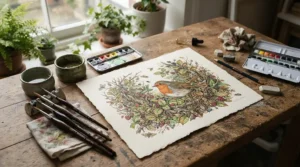
6. Liquitex Basics Acrylic 12 x 22ml Set — widest everyday palette in small tubes
Twelve tubes include named primaries (Primary Yellow, Primary Red, Primary Blue), alongside Phthalocyanine Green, Mars Black, Titanium White, Cadmium Orange Hue, Alizarin Crimson Permanent Hue, Dioxazine Purple, Light Green Permanent and Burnt Sienna. Named primaries are a gift for colour theory lessons: pupils can see exactly why three tubes produce so much. Retail descriptions say the pigments are bead-milled much like the professional lines, and that Basics is intermixable with them.
Descriptions of the paint’s thickness vary: some call it heavy body, while the brand-aligned listings say medium consistency. In practice, expect buttery paint that holds a stroke without being stiff. Liquitex itself describes student paints as having enough pigment for dependable, if not ideal, performance, which is an honest and useful framing.
I couldn’t verify review volumes for this exact set, so the verdict rests on specifications and the brand’s own positioning.
Pros:
- ✅ Named primaries suit colour theory
- ✅ Intermixes with Liquitex professional paints
- ✅ Twelve colours cover most project needs
Cons:
- ❌ Small tubes drain fast on larger work
- ❌ Better for personal kits than whole-class pouring
Price and value: around £12-£25 in UK listings, so check current price. Value verdict: a smart personal set for ambitious pupils.
7. Royal Talens Amsterdam Standard Series 12 x 20ml Set — best lightfastness for GCSE-bound pupils
This is the step-up pick. The Standard Series uses a 100% acrylic emulsion binder, and retailer information rates most colours at lightfastness ++ to +++, meaning work should stay bright for years. The range spans around 70 hues plus metallic and fluorescent options, and the paint is described as medium viscosity, fast drying and virtually odourless. That quick drying time is gold during a timed practical session, and a nuisance for beginners who leave paint on a palette.
For GCSE art supplies, lightfastness is the quiet selling point: portfolio pieces that sit in folders or hang on walls for months shouldn’t fade. A US retailer lists the 12 x 20ml set at roughly 4.8 out of 5, though I couldn’t see the number of ratings behind it, so treat that as encouraging rather than conclusive.
Pros:
- ✅ 100% acrylic binder aids durability
- ✅ Strong lightfastness ratings on most colours
- ✅ Fast drying suits timed practical sessions
Cons:
- ❌ Tubes of 20ml drain quickly on large pieces
- ❌ Fast drying wastes paint on palettes
Price and value: around £15-£25 in UK listings; check current price. Value verdict: excellent for pupils taking art seriously.
Practical Usage Guide: Setting Up a Classroom Paint Station That Stays Tidy
Great paint still fails in a chaotic room. Here’s a setup that suits bottles, tubes and pots alike.
Before the lesson: Decant bottle paint into small lidded pots rather than letting pupils squeeze directly from a 500ml bottle. Label each pot clearly so Cadmium Yellow Hue doesn’t wander into the black. Cover tables, and put out two water pots per pair: one “dirty”, one “clean”.
During the lesson: Teach pupils to take a coin-sized amount, then return for more. Acrylic dries by water evaporating, so mist palettes lightly rather than drowning them. Keep white sparingly, as it dilutes everything it touches.
After the lesson: Allow a firm five-minute cleaning window. Brushes should be washed while the paint is still wet, because dried acrylic is water-resistant and won’t simply rinse away. Wipe bottle necks and tube threads, since crusted lids are the number one reason paint gets thrown away.
Weekly maintenance: Check lids, top up pots and remove skinned paint from palettes.
Common first-month mistakes: over-dispensing, leaving brushes to soak bristle-down and forgetting to close lids. Fix those three and your paint budget will stretch noticeably further.

Real-World Scenarios: Three Art Rooms, Three Budgets
Scenario 1: A KS3 department with six classes and a tight budget. If you’re supplying hundreds of pupils across a term, choose the Classmates Student Acrylic 6 x 500ml set, then add a few single bottles in extra colours. Environment: shared tables, frequent use, pupils aged 11-14. Reasoning: volume beats variety here, and mixing is a curriculum goal anyway.
Scenario 2: A Year 10 pupil buying their own GCSE art supplies. Budget around £20, home and school use, weekly painting. The Liquitex Basics Acrylic 12 x 22ml or Amsterdam Standard Series 12 x 20ml set fits a school bag and a portfolio. Add one large tube of white, which always disappears first.
Scenario 3: A mixed GCSE group sharing a studio table. Several pupils, moderate budget, work on card and board. A Winsor & Newton Galeria Acrylic 10 x 60ml set plus a Daler-Rowney System3 Assorted Set 8 x 150ml gives sharing capacity and a top-up path. In effect, this builds a miniature classroom acrylic paint set for teenagers that can grow as the course does.
Problem → Solution Guide: Five Common Classroom Paint Headaches
1. Paint dries on the palette. Offer small amounts, mist lightly, or use a lidded tray. Slower-drying habits matter most with Amsterdam Standard Series paints, which dry quickly.
2. Colours look dull and streaky. Usually this is thin application or low pigment strength. Add a second layer once the first is touch-dry rather than loading one thick coat.
3. Mixes turn to mud. Limit pupils to three colours per mix. A set such as Liquitex Basics Acrylic with named primaries makes this easier to teach.
4. Brushes harden overnight. Wash while wet and stand them bristle-up. A five-minute routine saves a department real money.
5. Bottles crust shut. Wipe the neck after pouring, and keep spare lids. This matters most with large bottle sets such as Chromacryl Acrylic Essentials.
How to Choose Students’ Acrylic Paints for School Art Lessons
Seven checks, in order of importance:
- Count your pupils, then pick the format. Whole classes suit bottles; individuals suit tubes. Mixing the two works well.
- Test pigment strength. A swatch beats a brochure, and the next section explains how.
- Insist on water-based, non-toxic labelling. Check the product label and the supplier’s safety data sheet rather than relying on a listing summary.
- Check the palette. Two reds and two yellows beat one of each, especially for colour theory.
- Prefer an easy clean formulation. Water-based paint that rinses while wet saves lesson time.
- Plan top-ups. Choose a range, such as Daler-Rowney System3 or Winsor & Newton Galeria, that sells the same paint in larger sizes.
- Compare cost per millilitre, not pack price.
Remember that the national curriculum for art and design in England expects pupils to try a range of techniques and media including painting. Reliable colour mixing, not exotic colour, is the real foundation.
Pigment Strength: Why It Decides Whether Pupils Get Rich Colour
Pigment strength describes how much colour a paint carries relative to its binder and filler. Student acrylics generally contain less pigment than professional paints and often use “hue” substitutes for expensive pigments. That’s why a cheap yellow can look wan on dark card.
A simple test takes two minutes. Swatch each colour thick on white paper, then mix an equal amount with white to see how well it tints. Strong paints stay vivid when lightened; weak ones go chalky quickly. Next, paint a stripe over black marker to check coverage.
How do the seven sets compare? Winsor & Newton Galeria advertises strong pigment strength and high opacity. Liquitex Basics is candid that it offers dependable rather than ideal pigment. Chromacryl Acrylic Essentials claims high pigment concentration, though independent confirmation is lacking. Treat all claims as hypotheses until your own swatches back them up.
Easy Clean Formulation: What It Really Means in a Busy Art Room
“Easy clean formulation” is shorthand for water-based paint that washes from brushes, hands and tables while wet. Acrylic is water-soluble until it dries, then becomes water-resistant, so cleaning speed matters more than any product name. Wet paint can be rinsed away; dry paint needs scrubbing.
Supplier descriptions of Chromacryl Acrylic Essentials highlight easy clean-up, and Classmates Student Acrylic is described as water-based and solvent-free. That’s the baseline for any decent classroom paint.
Practical tips: wipe palettes and brushes with paper towel before rinsing, which keeps residue out of the sink. Warm soapy water helps with skin. Aprons and rolled sleeves prevent most laundry arguments. And keep a damp cloth at each table, because the best easy clean formulation in the world can’t fix a ten-minute-old splash that’s already dry.

GCSE Art Supplies: What Year 10 and 11 Pupils Actually Need
AQA’s GCSE Art and Design specification stresses that handling materials effectively, skilfully and safely underpins every assessment objective. It also includes an externally set assignment with a preparatory period followed by ten hours of supervised time. Reliable, quick-drying paint that behaves the same way from week to week is therefore worth more than exotic colour.
A sensible kit for GCSE art supplies looks like this:
- a twelve-colour tube set, such as Amsterdam Standard Series or Liquitex Basics Acrylic
- one large tube of titanium white
- a few synthetic brushes in different sizes
- heavyweight paper or primed board
Examiners assess the quality of making, not the price per tube. If budget is tight, upgrade paint only where fading would hurt, for example on final pieces. Winsor & Newton Galeria works well as the in-between choice, with room to expand later.
Acrylic Paint Pots for Art Classes: Bottles, Pots or Tubes?
The container shapes how paint is used. Here’s how the main formats compare.
| Format | Best For | Strength | Watch-out |
|---|---|---|---|
| 500ml bottles (Classmates Student Acrylic, Chromacryl Acrylic Essentials) | Whole classes | Lowest cost per ml | Needs decanting |
| 150ml tubes (Daler-Rowney System3 Assorted Set) | Group tables | Controlled portions | Not pourable |
| 20-60ml tubes (Liquitex Basics, Amsterdam Standard Series, Galeria) | Individual kits | Portable, tidy | Empties quickly |
| 250ml-1L pots (Galeria range) | Studio top-ups | Easy scooping | Skin forms if left open |
As the table shows, bottles win on price while tubes win on tidiness. For most departments, acrylic paint pots for art classes should hold the shared basics, whereas tubes belong in personal kits. The cheapest-looking option isn’t always the cheapest to use if paint dries out in an open pot.
✨ Don’t Miss These Exclusive Deals!
🔍 Take your art room to the next level with these carefully selected paints. Click on any highlighted product name to check current pricing and availability. These sets will help your pupils create bold, confident work they’ll be proud to display! 🎨
Classroom Acrylic Paint Set for Teenagers: Matching Paint to Ages 11-16
Teenagers want results that look “real”, fast. A classroom acrylic paint set for teenagers should therefore offer strong colour, reliable coverage and a palette that doesn’t feel childish.
For Key Stage 3, shared bottles are ideal: pupils learn mixing without worrying about wasting a tube. For Key Stage 4, personal tube sets become more attractive, because pupils start developing a recognisable style and want their own colours to hand. Liquitex Basics Acrylic and Amsterdam Standard Series both suit this transition.
A US retailer lists the Amsterdam 12 x 20ml set as suitable for ages 13 and over, so always read the pack label rather than assuming. Safety matters most with younger or more impulsive pupils: look for clear non-toxic labelling, and keep paint away from mouths and eyes. Finally, let older pupils choose some colours themselves. Ownership improves care, and tidy habits follow.
Long-Term Cost and Value Analysis
Pack price tells you little; cost per millilitre tells you almost everything. Here’s how the sets compare using the listed UK prices at the time of research.
| Product | Total volume | Price range | Approx. cost per ml | Best For |
|---|---|---|---|---|
| Classmates Student Acrylic 6 x 500ml | 3,000ml | Around £25-£35 | ~1p | Whole departments |
| Chromacryl Acrylic Essentials 12 x 500ml | 6,000ml | Check current price | Not verified | Large shared stock |
| Daler-Rowney System3 Introduction Set 10 x 22ml | 220ml | Around £15-£25 | ~7-11p | Personal kits |
| Daler-Rowney System3 Assorted Set 8 x 150ml | 1,200ml | Check current price | Not verified | Group tables |
| Winsor & Newton Galeria 10 x 60ml | 600ml | Check current price | Not verified | Step-up kits |
| Liquitex Basics 12 x 22ml | 264ml | Around £12-£25 | ~5-9p | Colour theory |
| Amsterdam Standard Series 12 x 20ml | 240ml | Around £15-£25 | ~6-10p | GCSE pupils |
Looking at the numbers, bottles cost roughly a tenth of what small tubes do per millilitre, which is why departments stock bottles and pupils buy tubes. The tubes aren’t a bad deal, though: you’re paying for portability, colour choice and often better lightfastness. Over a school year, the cheapest route is usually a bottle basic palette, plus a small number of quality tubes for pupils who need them. Prices vary by seller and date, so check current price before buying.
Common Mistakes When Buying Students’ Acrylic Paints
Buying only tubes for a whole class. It looks tidy and costs far more per millilitre.
Ignoring “hue” labels. A cheaper substitute pigment isn’t wrong, but it changes strength and opacity.
Forgetting white. It’s the first colour to vanish, so buy extra.
Over-thinning with water. Heavy dilution weakens the paint film. Liquitex’s guidance on acrylic paint explains that an acrylic medium, rather than lots of water, keeps the binder balance stable when you want thinner paint.
Skipping top-up planning. If your range doesn’t come in larger sizes, you’ll end up rebuying whole sets for a single empty tube.
Trusting pack photos. Contents of “assorted” sets vary, so check the colour list.

FAQ
❓ Which is better for students: Liquitex Basics or Daler-Rowney System3?
❓ What is the cheapest way to stock a whole art room with acrylics?
❓ What does 'hue' mean on an acrylic paint label?
❓ Do GCSE pupils need artist-quality acrylics?
❓ Can you wash acrylic paint down the school sink?
Conclusion
Choosing students’ acrylic paints for school art lessons comes down to matching paint to people. For whole classes, the Classmates Student Acrylic 6 x 500ml and Chromacryl Acrylic Essentials 12 x 500ml bottle sets deliver volume at a bargain cost per millilitre. For individual pupils, the Daler-Rowney System3 Introduction Set, Liquitex Basics Acrylic and Amsterdam Standard Series sets offer portable, well-judged palettes. The Daler-Rowney System3 Assorted Set and Winsor & Newton Galeria sit in between, with room to grow through larger sizes and pots.
Whatever you buy, judge pigment strength with a swatch, prioritise an easy clean formulation, and plan top-ups early. Remember that acrylic paint pots for art classes suit shared basics while tubes suit personal kits, and that GCSE art supplies don’t need to be luxurious, merely reliable. A well-chosen classroom acrylic paint set for teenagers will repay itself in less waste, better colour and calmer lessons.
✨ Ready to stock your art room?
🎨 Click on any highlighted product name above to check current pricing and availability, and give your pupils paint that works as hard as they do! 🖌️
Recommended for You
- Acrylic Paints For Small Flat Studio: 7 Smart Picks (2026)
- Ruler For Architectural Drawing: 7 Best Picks For UK Drafters (2026)
- Set Square For Technical Drawing: 7 Brilliant UK Picks (2026)
Disclaimer: This article contains affiliate links. As an Amazon Associate, I earn from qualifying purchases. If you purchase products through these links, we may earn a small commission at no additional cost to you.
✨ Found this helpful? Share it with your friends! 💬🤗
